Wellness is sometimes treated as though it sits outside serious healthcare—a collection of lifestyle ideas, complementary practices, and personal choices that begin where medicine ends. Modern research paints a more interesting picture.
Some of the strongest influences on long-term health are also among the most familiar: physical activity, nutrition, restorative sleep, stress management, social connection, and avoiding harmful exposures. At the same time, researchers are increasingly studying mind-body and complementary approaches such as meditation, yoga, tai chi, acupuncture, relaxation practices, and biofeedback to determine where they may be useful, how they work, and where the evidence remains uncertain.
The result is a more mature understanding of wellness. Wellness is not an alternative to medical care. It is part of a broader effort to understand how everyday behaviors, environments, relationships, mental states, and healthcare can work together to support the whole person.
That perspective lies at the heart of Mind Body Works.
Why Wellness and Prevention Matter More Than Ever
Modern medicine has transformed human health. Vaccines, antibiotics, surgery, advanced imaging, medications, emergency care, and sophisticated treatments save lives every day. Preventive medicine is also an established part of modern healthcare.
Yet much of healthcare necessarily focuses on people once illness has already developed. Meanwhile, a substantial share of the global disease burden is associated with chronic conditions influenced by a combination of genetics, physiology, environment, social conditions, and modifiable behaviors.
The World Health Organization reports that noncommunicable diseases—including cardiovascular disease, cancer, chronic respiratory disease, and diabetes—caused at least 43 million deaths in 2021, representing about 75% of non-pandemic-related deaths worldwide. Tobacco use, physical inactivity, unhealthy diets, harmful alcohol use, and air pollution are among the important risk factors. World Health Organization
That does not mean every chronic disease is preventable. Genetics, aging, socioeconomic circumstances, environmental exposures, access to healthcare, and many other factors matter. But it does mean that prevention, early detection, healthier environments, and sustainable lifestyle behaviors can make an important difference.
The Scale of the Challenge
Several current global health measures illustrate why prevention and whole-person health deserve serious attention:
- Physical inactivity: About 31% of adults worldwide—approximately 1.8 billion people—did not meet recommended physical-activity levels in 2022. WHO estimates that continued physical inactivity could cost public healthcare systems roughly $300 billion between 2020 and 2030. World Health Organization
- Overweight and obesity: In 2022, approximately 2.5 billion adults were overweight, including more than 890 million living with obesity. Worldwide adult obesity has more than doubled since 1990. World Health Organization
- Diabetes: The International Diabetes Federation estimates that 589 million adults ages 20–79 were living with diabetes in 2024, with the number projected to reach 853 million by 2050. International Diabetes Federation
- High blood pressure: An estimated 1.4 billion adults ages 30–79 had hypertension in 2024, yet only about 23% had their blood pressure under control. World Health Organization
- Mental health: WHO’s 2025 global update estimates that more than one billion people live with a mental disorder, while major gaps remain in access to appropriate care and support. World Health Organization
These numbers point toward a fundamental reality: health cannot be addressed exclusively in the doctor’s office. What happens throughout everyday life matters too.
From Treating Disease to Supporting Health
The distinction between medical treatment and wellness does not need to be an either-or choice.
A person who develops hypertension, diabetes, depression, chronic pain, or cardiovascular disease may require professional diagnosis, medication, therapy, surgery, or other established medical treatment. At the same time, physical activity, nutrition, sleep, stress management, rehabilitation, social support, and other lifestyle factors may influence risk, symptoms, recovery, quality of life, or overall health.
This broader perspective is increasingly reflected in the concept of whole-person health.
The National Center for Complementary and Integrative Health, part of the U.S. National Institutes of Health, describes whole-person health in terms of interconnected biological, behavioral, social, and environmental domains. Its research strategy emphasizes understanding how these domains interact rather than viewing every condition or organ system in isolation. NCCIH
That approach closely parallels a central Mind Body Works principle: the mind, body, behaviors, environment, and lived experience continually influence one another.
The Strongest Foundations of Everyday Wellness
Not every wellness claim requires an exotic intervention. Some of the most consequential practices are remarkably ordinary.
Physical Activity
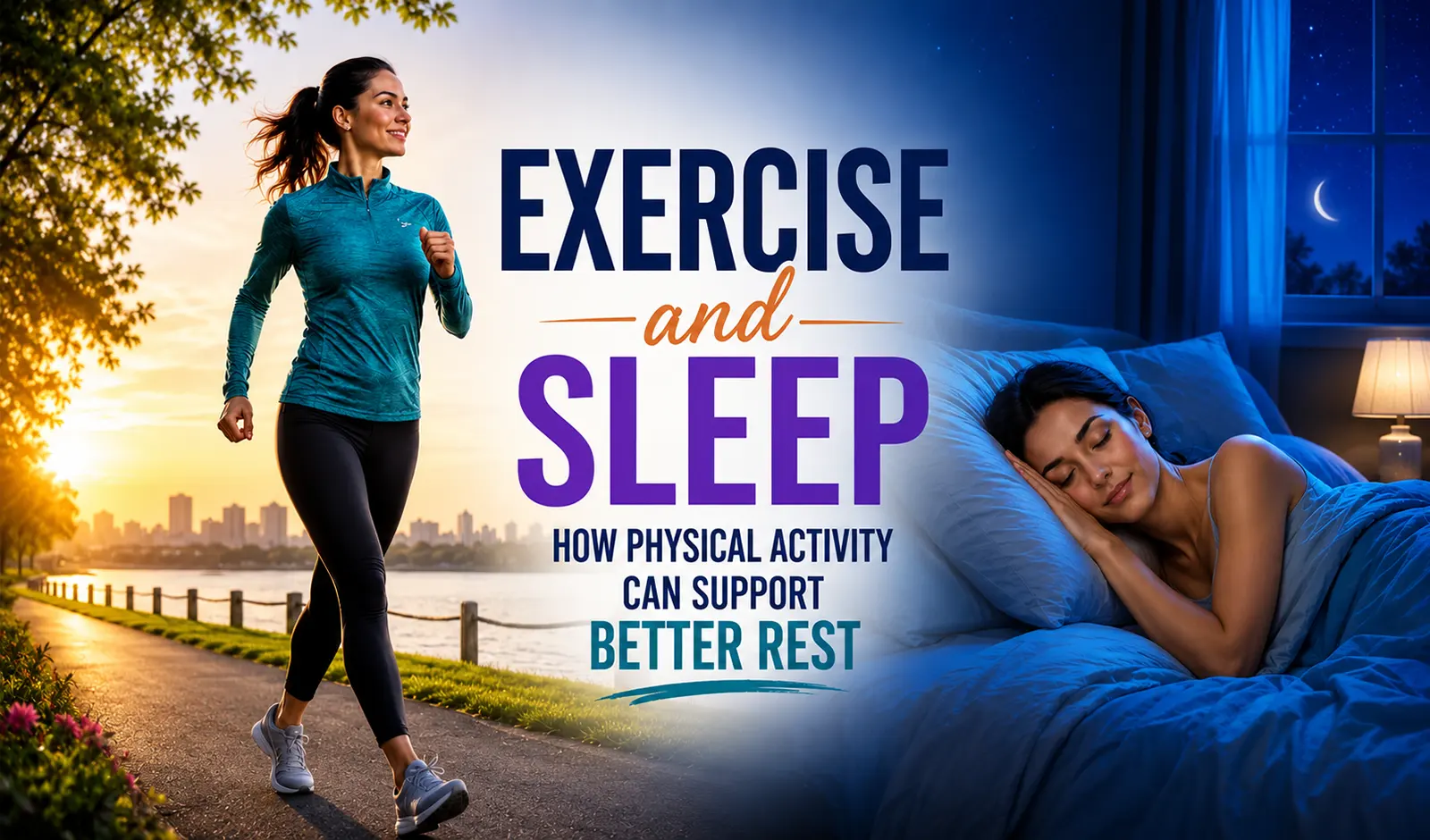
The evidence supporting regular physical activity is extensive. WHO reports that physical activity contributes to the prevention and management of cardiovascular disease, diabetes, and some cancers while also supporting mental health, brain health, and overall well-being. World Health Organization
Movement can include walking, strength training, cycling, swimming, recreational activity, balance work, mobility exercises, and many other forms. The important principle is not finding one perfect exercise—it is building movement into life consistently and appropriately.
Nutrition
Healthy eating is another major foundation. WHO’s updated guidance emphasizes four broad principles—adequacy, balance, moderation, and diversity—rather than one universal diet for everyone. Healthy dietary patterns can help protect against malnutrition and reduce the risk of several noncommunicable diseases. World Health Organization
This is particularly important because nutrition advice is often surrounded by competing diets, dramatic claims, and rapidly changing trends. Evidence-informed nutrition tends to focus less on miracle foods and more on sustainable dietary patterns.
Sleep and Recovery
Sleep is not simply downtime. It is an important biological process involved in cognition, metabolism, emotional regulation, immune function, and recovery. Insufficient sleep is associated with multiple chronic health problems, and the CDC identifies adequate sleep as one component of chronic-disease prevention. CDC
Stress and Mental Well-Being
Stress is also both psychological and physiological. Stress-management practices cannot remove every challenge in life, but relaxation techniques, physical activity, sufficient recovery, supportive relationships, mindfulness practices, and appropriate professional care can all contribute to healthier ways of responding to pressure.
This is one reason the boundary between “mental” and “physical” wellness is increasingly difficult to draw. The two continually interact.
What About Meditation, Yoga, Acupuncture, and Other Integrative Approaches?
This is where wellness evidence requires more nuance.
It would be inaccurate to say that every complementary or mind-body practice has been proven effective. It would be equally inaccurate to assume that none of them has meaningful scientific support.
The evidence varies substantially by practice, condition, outcome, population, study quality, and comparison treatment.
For example, NCCIH reports that research suggests acupuncture may be helpful for some pain conditions, including certain types of back or neck pain, knee osteoarthritis pain, and postoperative pain. Researchers also recognize that both specific physiological effects and nonspecific treatment effects may contribute to outcomes. NCCIH
For chronic low-back pain, evidence reviews have found potential benefit from several mind-body or complementary approaches, including yoga, tai chi, mindfulness-based stress reduction, acupuncture, biofeedback, progressive muscle relaxation, and spinal manipulation, although the quality and magnitude of evidence differ among approaches. NCCIH
Meditation and mindfulness have also been studied for stress, anxiety, depression, pain, sleep, and other outcomes. Some findings are encouraging, but NCCIH notes that many studies vary in quality and methodology and that results should not be interpreted as proof that meditation can treat every condition for which it is promoted. NCCIH
That distinction is central to responsible wellness education.
Evidence for one use does not automatically establish evidence for every use.
If yoga helps some people with chronic low-back pain, that does not prove every claim made about yoga. If acupuncture shows benefit for certain pain conditions, it does not validate unrelated claims. If meditation supports stress management, it should not be presented as a replacement for necessary psychiatric or medical treatment.
Wellness becomes more credible when claims remain proportional to the evidence.
Understanding the Research Evidence Pyramid
This is why the Research Evidence Pyramid is useful.
At its lower levels are observations, case reports, personal experiences, and anecdotes. These can be extremely valuable because observation is often where scientific inquiry begins. Someone notices an effect, asks a question, and develops a hypothesis.
But an observation cannot easily tell us why something happened.
Perhaps a person’s symptoms improved because of an intervention. Or perhaps the condition improved naturally, another behavior changed, expectations influenced the experience, or multiple factors acted together.
Controlled studies help researchers separate these possibilities.
Randomized clinical trials go further by assigning participants randomly to comparison groups, reducing the likelihood that pre-existing differences between groups explain the outcome.
Systematic reviews and meta-analyses then examine multiple studies together. When the underlying research is rigorous and sufficiently comparable, these analyses can provide a broader picture than any single trial.
There is an important qualification, however: being higher on the pyramid does not automatically make research flawless. A meta-analysis of weak studies can still produce uncertain conclusions. A poorly designed randomized trial may be less informative than a strong observational study. Different research questions also require different study designs.
The pyramid is therefore best understood as a guide to how evidence is built, not as an automatic scoring system.
Science Is a Process, Not a Single Study
One of the easiest mistakes in health reporting is to treat a new study as the final answer.
Scientific knowledge rarely develops that way.
A study produces a finding. Other researchers attempt to reproduce or challenge it. Different populations are studied. Methods improve. Larger trials may follow. Systematic reviews bring findings together. Occasionally, conclusions change as better evidence becomes available.
That is not a weakness of science. It is how science corrects itself.
For Mind Body Works, an evidence-informed approach therefore means looking beyond exciting headlines and asking deeper questions:
How was the research designed? How many people participated? Was there a comparison group? Was the result replicated? How large was the benefit? Were there risks? Does the evidence apply to the population being discussed? Do multiple high-quality studies generally point in the same direction?
Those questions help separate promising ideas from established conclusions.
Wellness Is Becoming a Major Global Priority
Interest in wellness is no longer marginal.
The Global Wellness Institute estimates that the global wellness economy reached approximately $6.8 trillion in 2024, representing about 6.1% of global GDP. It projects the sector could approach $9.8 trillion by 2029. Global Wellness Institute
The Institute divides the wellness economy into 11 broad sectors encompassing areas such as physical activity, healthy eating and nutrition, mental wellness, traditional and complementary medicine, wellness tourism, workplace wellness, prevention and personalized medicine, and other wellness-related industries. Global Wellness Institute
These numbers demonstrate enormous public interest—but they require an important distinction.
Market size is evidence of demand, not evidence of medical effectiveness.
A product, therapy, device, supplement, or wellness trend does not become scientifically valid merely because millions of people use it or billions of dollars are spent on it. Each health claim still needs to be evaluated on its own evidence.
That distinction is increasingly important as wellness becomes both more influential and more commercialized.
Moving Beyond “Conventional vs. Alternative”
The older debate often positioned conventional medicine on one side and alternative medicine on the other.
A more useful question today is:
What does good evidence show, what is reasonably safe, and how can useful approaches be integrated responsibly?
NCCIH now explicitly distinguishes complementary approaches—used alongside conventional medicine—from approaches used instead of established medical care. Its model of integrative health emphasizes coordinated use of conventional and complementary approaches within a whole-person framework. NCCIH
That shift matters.
A person should not have to choose between appreciating mindfulness and receiving appropriate mental-health treatment, between practicing yoga and obtaining physical therapy when needed, or between improving nutrition and taking medically necessary medication.
Whole-person wellness can include both personal responsibility and professional care.
The Mind Body Works Approach to Wellness Evidence
Mind Body Works was created around the idea that people deserve health and wellness information that is both accessible and responsible.
We are interested in established science, emerging research, traditional practices, behavioral science, mind-body approaches, wellness technologies, and the many ways people seek to improve their quality of life.
But interest does not require unquestioning acceptance.
Our goal is to distinguish among what is strongly supported, what appears promising, what remains uncertain, and what has not yet been demonstrated.
That means recognizing evidence where it exists while also respecting its limits.
It means recognizing that personal experience can be meaningful without assuming that one person’s experience proves cause and effect.
It means being willing to update conclusions as research evolves.
And perhaps most importantly, it means remembering why wellness evidence matters in the first place.
The purpose of research is not simply to accumulate studies. It is to help people make better-informed decisions about their health, habits, and lives.
From Evidence to Everyday Life
Wellness is most valuable when knowledge becomes practical.
Research may tell us that physical activity matters, but individuals still need realistic ways to move more. Nutrition science may identify healthier dietary patterns, but those patterns must work within real cultures, budgets, preferences, and daily routines. Sleep science can explain why rest matters, but people need habits and environments that make sufficient sleep possible.
The same principle applies across wellness.
Information becomes useful when people can understand it, evaluate it, and translate it into sustainable choices.
That is where evidence and personal growth meet.
At Mind Body Works, we believe the future of wellness does not depend on discovering one perfect therapy or one universal formula for health. It lies in developing a better understanding of the many factors that influence well-being—and learning how to bring credible knowledge into everyday life.
Evidence gives us a foundation. Awareness helps us understand ourselves. Thoughtful action turns what we learn into meaningful change.