
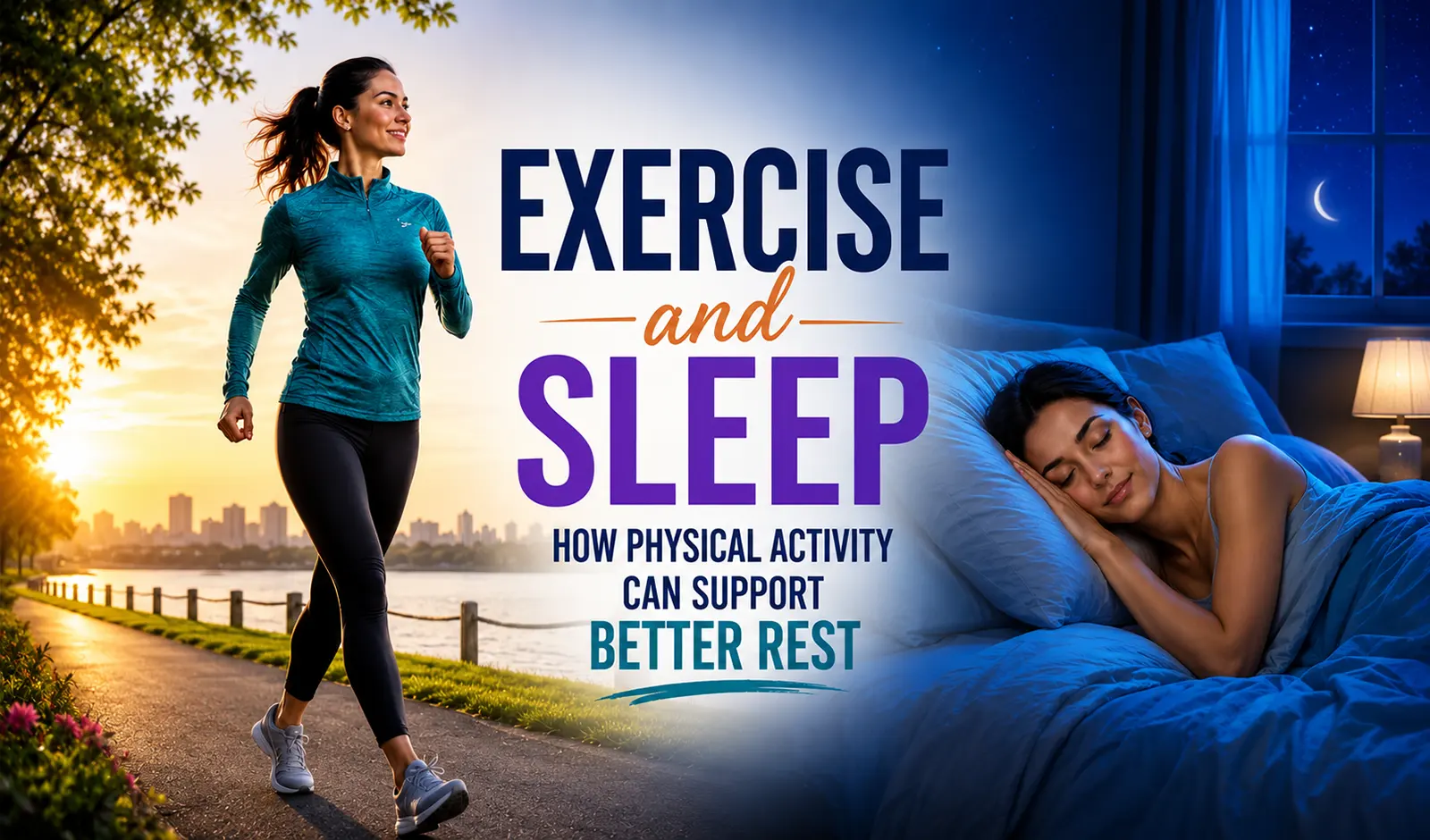














Exercise and sleep are often treated as separate parts of a healthy lifestyle. One belongs to the active hours of the day; the other belongs to the quiet hours of the night. In reality, the two are deeply connected.
Regular physical activity can help the body become more prepared for restorative sleep, while adequate sleep supports the energy, recovery, and motivation needed to stay physically active. This creates a valuable cycle in which movement during the day can contribute to better rest at night—and better rest can make movement easier the next day.
Research increasingly supports this relationship. A 2025 systematic review and meta-analysis of 81 randomized controlled trials involving more than 6,000 participants found that exercise improved both subjective sleep quality and objectively measured sleep efficiency. More recent research continues to reinforce physical activity as an important lifestyle strategy for supporting healthy sleep.
Why Sleep Matters So Much
Sleep is not simply a period when the body shuts down. It is an active biological process involved in memory, emotional regulation, metabolic function, immune activity, cardiovascular health, and physical recovery.
Most adults need at least seven hours of sleep per night, although individual needs vary. Quality matters as well as quantity. Healthy sleep should generally feel restorative and reasonably continuous rather than being repeatedly interrupted throughout the night.
When sleep is consistently inadequate, the effects can extend throughout waking life. Concentration may decline, mood can become less stable, physical performance can suffer, and maintaining healthy habits can become more difficult.
This is one reason exercise and sleep deserve to be considered together rather than as isolated behaviors.
“Movement and sleep are partners in a healthy daily rhythm: activity gives the body a reason to recover, and rest gives the body the capacity to move again.”
Pull Quote
Exercise Can Improve Sleep Quality
One of the clearest findings in physical-activity research is that people who exercise regularly often sleep better.
The current U.S. Physical Activity Guidelines recognize improved sleep as one of the benefits of being physically active. Greater amounts of moderate-to-vigorous activity have been associated with shorter time needed to fall asleep, better sleep efficiency, improved sleep quality, more deep sleep, and less daytime sleepiness.
The CDC likewise lists improved sleep quality among the immediate benefits that can follow moderate-to-vigorous physical activity.
That does not mean every workout guarantees a perfect night’s sleep. Sleep is influenced by many factors, including stress, light exposure, caffeine, medications, medical conditions, bedroom environment, and sleep schedules. But regular movement can improve one important part of that larger picture.
Exercise May Help You Fall Asleep More Easily
For many people, the challenge is not simply staying asleep—it is getting to sleep in the first place.
Exercise appears capable of influencing sleep latency, the amount of time between attempting to sleep and actually falling asleep. The effect varies among studies and individuals, but physically active adults generally report better sleep than those who remain inactive.
Part of the explanation may involve the contrast between activity and recovery. Exercise challenges the cardiovascular, muscular, metabolic, and nervous systems during the day. As the body subsequently recovers, biological processes associated with rest become increasingly important.
The exact pathways are complex and still being studied, but the practical pattern is increasingly clear: a body that has been appropriately active during the day is often better prepared to settle into rest at night.
Physical Activity Can Improve Sleep Efficiency
Sleep duration alone does not tell the whole story. Someone might spend eight hours in bed while spending considerable portions of that time awake.
Researchers therefore use another measure called sleep efficiency—the percentage of time in bed that is actually spent sleeping.
In the 2025 meta-analysis of exercise and sleep in the general population, exercise significantly improved objectively measured sleep efficiency. Aerobic exercise performed particularly well in comparisons among exercise types.
A separate 2025 network meta-analysis examining adults with sleep disorders found that exercise interventions improved sleep efficiency and reduced time spent awake after initially falling asleep.
These findings suggest that physical activity may influence not only how long we sleep but how effectively the nighttime sleep period is used.
Exercise and Deep Sleep
Sleep occurs in repeating stages throughout the night, including lighter non-REM sleep, deeper slow-wave sleep, and REM sleep.
Deep sleep is particularly associated with physical restoration and recovery. Research reviewed for the U.S. Physical Activity Guidelines has found that greater levels of moderate-to-vigorous physical activity are associated with increased deep sleep.
More recent research in people with sleep disorders has also found increases in slow-wave sleep following exercise interventions.
This does not mean exercise should be used to manipulate individual sleep stages as though sleep were a performance score. Consumer sleep trackers also cannot measure sleep architecture with the precision of laboratory testing.
The more useful goal is simpler: create conditions that support restorative sleep as a whole.
Exercise Can Reduce Stress Before Bedtime Arrives
Sleep problems are often connected to what happens long before someone gets into bed.
A stressful day can leave the mind active at night. Thoughts continue circulating, muscles remain tense, and the transition from daytime activity to sleep becomes difficult.
Physical activity can help regulate this state. The CDC notes that even a single bout of moderate-to-vigorous exercise can reduce short-term feelings of anxiety, while regular activity is associated with broader mental-health benefits.
Exercise is not a cure for chronic stress, anxiety disorders, or insomnia, but it can provide a healthy physiological outlet during the day. Walking, cycling, swimming, strength training, yoga, or another enjoyable form of movement can create separation from work demands and give attention somewhere else to go.
Sometimes better sleep begins not with what we do at bedtime, but with how we use our waking hours.
Walking Can Be Surprisingly Effective
You do not need an exhausting workout to support sleep.
A large 2026 meta-analysis examining 200 randomized trials and more than 23,000 adults found that several forms of exercise improved subjective sleep quality. Walking was among the activity types showing particularly favorable effects in the analysis.
Walking has several advantages as a sleep-supportive activity. It is accessible, relatively easy to recover from, and can be performed regularly without requiring intense physical effort. When performed outdoors during daylight hours, it can also provide exposure to natural light—another important influence on the body’s sleep-wake rhythm.
This makes something as simple as a morning or afternoon walk potentially valuable on several levels at once: movement, daylight, stress relief, and a break from sedentary time.
Strength Training Can Support Sleep Too
Aerobic exercise receives much of the attention in discussions about sleep, but resistance training belongs in the conversation as well.
Studies included in modern sleep reviews have found improvements from strength training and programs combining aerobic and resistance exercise. In people with sleep disorders, research has also identified benefits from resistance-based and mixed exercise programs.
Strength training creates a different physiological challenge from walking or cycling, but it still contributes to total physical activity and recovery demands. It also supports muscle, bone, metabolic health, and physical function—all important components of overall healthy living.
There is no need to choose between cardiovascular exercise and strength training solely for sleep. A balanced activity program can provide both.
Mind-Body Exercise Offers Another Option
Exercise does not always need to be vigorous to influence sleep.
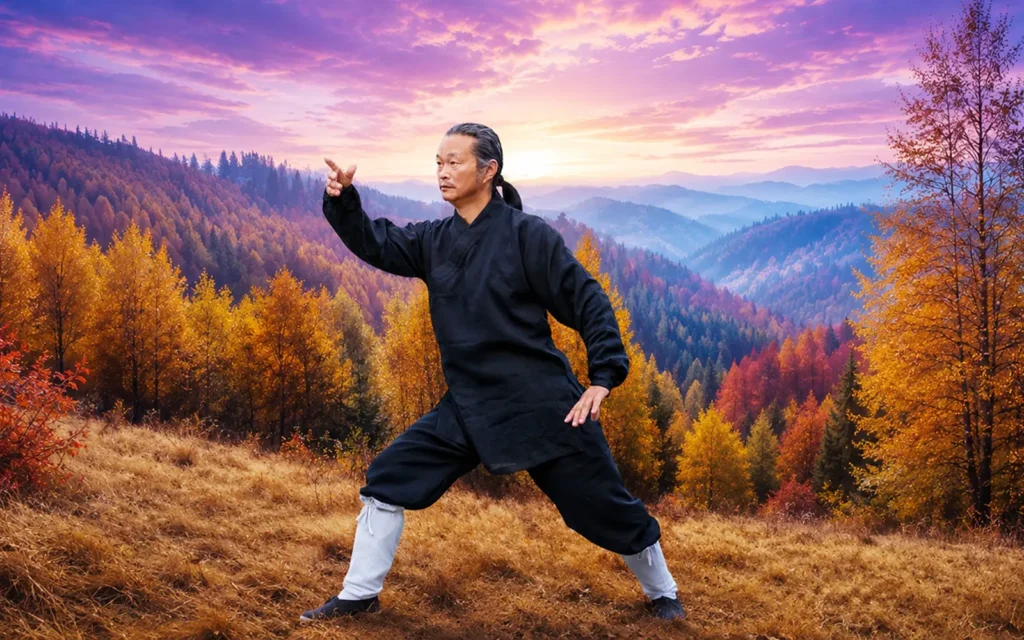
Yoga, tai chi, qi-gong, and similar mind-body practices combine movement with controlled breathing, balance, attention, and relaxation. Several recent systematic reviews have found favorable sleep outcomes from these forms of activity.
Their potential value may extend beyond physical exertion alone. The combination of movement, concentration, slower breathing, and reduced arousal can create a very different experience from a demanding cardiovascular workout.
For someone who enjoys vigorous exercise earlier in the day, gentle mobility work, yoga, or tai chi later in the evening may offer a complementary way to transition toward rest.
How Much Exercise Do You Need for Better Sleep?
There is no precise exercise prescription that guarantees better sleep for everyone. Research varies widely in activity type, duration, intensity, and participant characteristics.
For general health, adults are advised to work toward:
- 150 to 300 minutes of moderate-intensity aerobic activity per week, or
- 75 to 150 minutes of vigorous-intensity aerobic activity, or an equivalent combination,
- plus muscle-strengthening activity on at least two days each week.
These recommendations are designed for overall health rather than sleep alone. Still, they provide a useful framework for building an active lifestyle that can support healthy sleep along with cardiovascular, metabolic, muscular, and mental well-being.
If someone is currently inactive, there is no need to reach these targets immediately. Starting with ten- or fifteen-minute walks and gradually increasing activity can be a far more sustainable approach.
Does Exercise Have to Be Vigorous?
No.
One of the encouraging findings from sleep research is that benefits have been observed across multiple exercise intensities and styles. Moderate aerobic exercise, walking, resistance training, mind-body activities, and mixed programs have all shown potential benefits.
Intensity should therefore be matched to the individual rather than chosen simply because harder exercise sounds more effective.
For a sedentary person, brisk walking may provide a substantial stimulus. Someone with greater fitness might need faster walking, cycling, running, swimming, or more challenging exercise to produce the same relative effort.
The best exercise for sleep may ultimately be the type you enjoy enough to perform consistently without leaving yourself chronically exhausted.
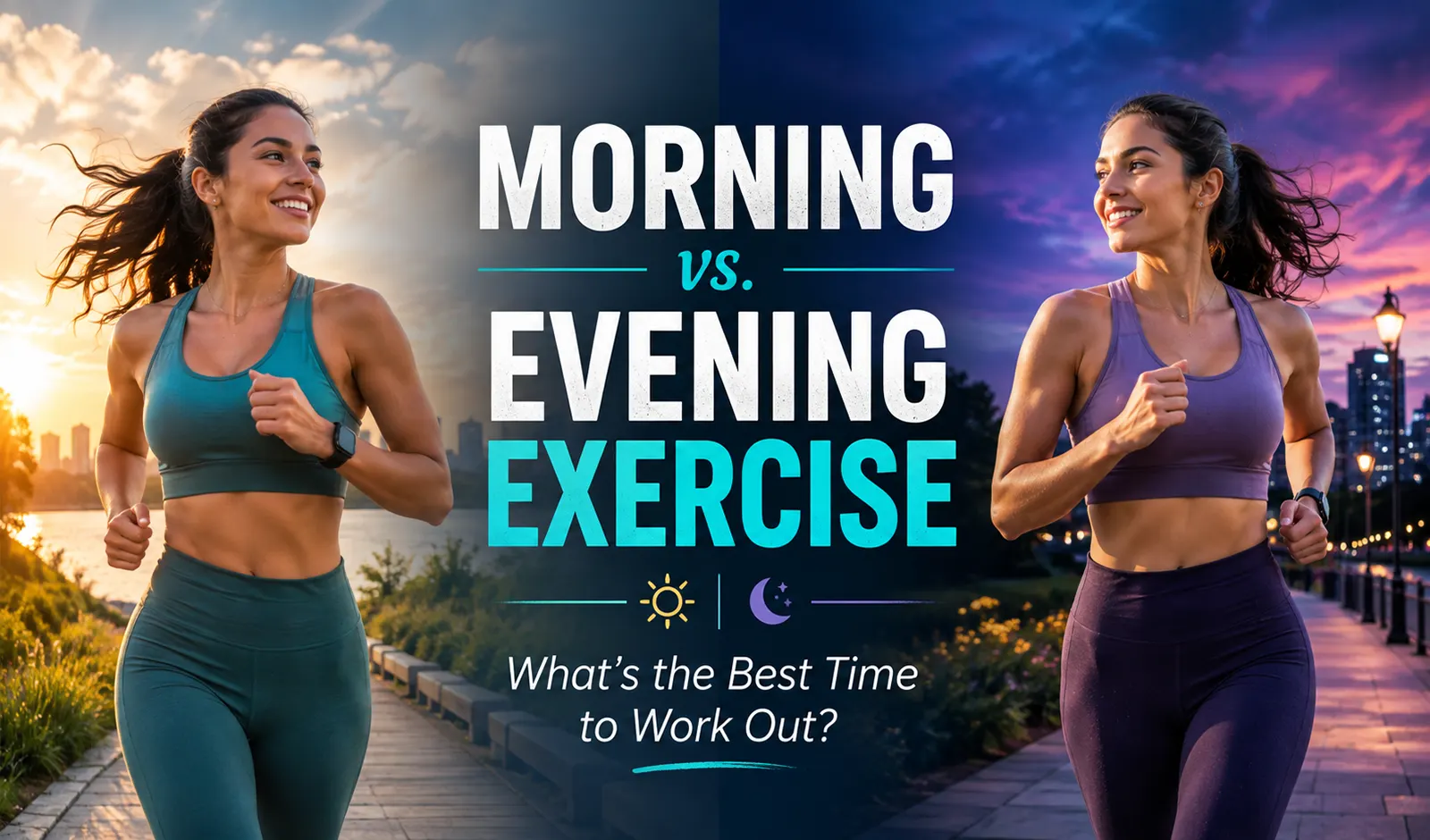
Morning Exercise Has Advantages—but It Is Not Mandatory
Morning exercise works particularly well for some people. It creates a predictable routine, gets physical activity completed before the day’s obligations accumulate, and can be combined with morning daylight exposure.
Light exposure early in the day is particularly relevant because light helps regulate circadian rhythms—the biological timing system that influences when we feel alert and when we begin preparing for sleep. The CDC specifically recommends obtaining natural light earlier in the day and suggests a morning or lunchtime walk as one strategy.
However, there is no strong evidence that everyone must exercise in the morning to sleep well.
A 2025 systematic review examining exercise timing found that the relationship between time of day and health outcomes varies among individuals and conditions. Another 2025 meta-analysis comparing morning and evening exercise found no significant overall difference in sleep latency based simply on exercise timing.
Consistency may matter more than chasing a universally “perfect” exercise hour.
Is Evening Exercise Bad for Sleep?
For years, people were commonly advised to avoid evening exercise because it might make the body too alert to sleep.
The evidence is more nuanced.
Moderate evening exercise does not appear to disrupt sleep for everyone, and studies have found that many people can exercise later in the day without meaningful sleep problems. A systematic review of evening high-intensity exercise found that exercise ending approximately two to four hours before bedtime generally did not disrupt overall nighttime sleep in healthy adults.
However, very strenuous exercise performed close to bedtime may be different. A large 2025 study involving more than four million nights of wearable data found that later and more demanding exercise was associated with delayed sleep onset, shorter sleep, poorer sleep quality, and elevated nighttime heart rate. Exercise ending at least four hours before sleep was not associated with those changes. Because the study was observational, it cannot establish cause and effect, but its scale makes the pattern noteworthy.
The practical lesson is not that evening exercise is forbidden. It is to pay attention to how your own body responds.
Let Your Sleep Tell You Whether the Timing Works
Some people can finish a vigorous workout in the evening, shower, eat, and sleep comfortably. Others remain physically and mentally activated for hours afterward.
Individual differences matter.
If evening exercise fits your schedule and you sleep well afterward, there may be little reason to change it. If you repeatedly find yourself lying awake after late high-intensity sessions, experiment with moving hard workouts earlier while keeping evening activity lighter.
Possible evening-friendly options include:
- An easy walk
- Gentle cycling
- Mobility exercises
- Light stretching
- Relaxed yoga
- Tai chi or qi-gong
- Lower-intensity resistance work, when personally well tolerated
Instead of following a rigid rule, use your sleep response as feedback.
Exercise Outdoors When You Can
An outdoor workout may provide something indoor exercise cannot: meaningful exposure to natural daylight.
Light is one of the major environmental signals regulating circadian timing. Bright daytime light helps reinforce the contrast between active daytime hours and the darker evening period when the body begins preparing for sleep.
This makes outdoor walking, hiking, cycling, gardening, or other daytime activity particularly appealing from a Healthy Living perspective. You are not simply exercising—you are combining movement with one of the environmental cues involved in maintaining a healthy sleep-wake rhythm.
A morning or lunchtime walk is therefore an elegantly simple habit: physical activity and natural light delivered at the same time.
More Exercise Is Not Always Better
If moderate exercise can improve sleep, it might seem logical that extremely demanding exercise should improve it even more.
That is not necessarily the case.
Exercise is a form of physiological stress. Appropriate training followed by sufficient recovery creates adaptation. Excessive training without enough recovery can instead produce persistent fatigue, soreness, elevated stress, reduced performance, and disturbed sleep.
This is particularly relevant for athletes and highly active individuals, but the principle applies more broadly. Exercise should leave enough resources for recovery rather than continuously pushing the body into exhaustion.
Healthy movement supports sleep best when it exists within a larger pattern that also includes adequate nutrition, recovery, stress management, and rest.
Sleep and Exercise Work in Both Directions
The relationship between exercise and sleep is not one-way.
Exercise can support sleep, but sleep also helps support exercise. A 2026 review of research through 2025 describes the relationship as bidirectional: regular physical activity can improve sleep quality and duration, while adequate sleep supports recovery and physical performance.
This makes intuitive sense. After a good night’s sleep, exercise often feels easier. Motivation may be higher, coordination may be better, and the body is better prepared for physical effort.
After a poor night, the opposite may happen. A demanding workout can feel disproportionately difficult, making it tempting to skip activity altogether.
The most sustainable approach is therefore not to prioritize sleep or exercise at the expense of the other. They are partners.
Don’t Turn Exercise Into Another Bedtime Pressure
There is one psychological trap worth avoiding.
Once someone learns that exercise can improve sleep, it can become tempting to think, “I have to exercise today or I won’t sleep tonight.” That kind of pressure can make healthy habits feel like obligations and may create unnecessary anxiety around sleep.
Exercise should instead be viewed as one supportive ingredient in a healthy sleep pattern.
Other important habits include:
- Maintaining reasonably consistent sleep and wake times
- Getting sufficient daylight during the day
- Keeping the bedroom dark, quiet, and comfortable
- Limiting caffeine later in the day when it interferes with sleep
- Reducing stimulating screen exposure close to bedtime
- Allowing time to wind down before attempting sleep
- Addressing persistent stress or medical sleep problems appropriately
Sleep is influenced by the entire day, not by one isolated behavior.
A Practical Movement Routine for Better Sleep
For someone who wants to use physical activity as part of a healthier sleep routine, the plan does not need to be complicated.
During the Day
Aim to include regular movement rather than remaining sedentary for long uninterrupted periods. Walking is an excellent starting point, particularly if it can be performed outdoors.
Several Times Each Week
Include purposeful aerobic activity that noticeably raises heart rate and breathing. Brisk walking, cycling, swimming, dancing, hiking, and similar activities can all contribute.
At Least Twice Each Week
Include strength training for the major muscle groups. This supports overall health and complements aerobic exercise.
In the Evening
If vigorous exercise leaves you overstimulated, shift demanding sessions earlier and use gentler movement later in the day. Walking, stretching, mobility work, or mind-body exercise may fit well into an evening routine.
Above All, Be Consistent
An occasional demanding workout is less valuable than a sustainable pattern of activity that becomes part of everyday life.
The body responds to what we do repeatedly.
When Exercise Is Not Enough
Physical activity can support healthier sleep, but persistent sleep problems should not simply be treated with harder workouts.
Chronic insomnia, loud snoring accompanied by breathing interruptions, significant daytime sleepiness, restless legs, unusual nighttime behaviors, or ongoing difficulty sleeping can indicate conditions that deserve professional evaluation.
Exercise has shown promise as a complementary intervention even among people with insomnia and some sleep disorders. A 2026 systematic review of randomized trials found meaningful improvements across several exercise approaches for adults with insomnia.
But lifestyle strategies should complement appropriate medical care rather than delay it.
Move During the Day, Rest More Naturally at Night
Better sleep is often approached entirely from the perspective of bedtime: turn off the lights, put away the phone, cool the room, and try to relax.
Those habits can certainly matter, but healthy sleep begins much earlier.
The body experiences the entire twenty-four-hour day as one continuous biological cycle. Daylight, movement, meals, mental activity, social interaction, and periods of rest all contribute to the signals that distinguish active daytime hours from nighttime recovery.
Regular exercise strengthens that contrast. We ask the body to move, work, circulate blood, use energy, and respond to physical challenges during the day—and then allow it to recover.
That is why exercise and sleep fit so naturally together within Healthy Living. Neither is an isolated task to check off a list. They are complementary parts of a daily rhythm.
Move enough to give the body a reason to recover, and protect enough rest to give the body the capacity to move again tomorrow.
Disclaimer
This article is intended for general educational purposes and is not a substitute for individualized medical advice. Persistent insomnia, excessive daytime sleepiness, loud snoring with breathing interruptions, or other ongoing sleep problems may require evaluation by a qualified healthcare professional. People with medical conditions or significant physical limitations should seek appropriate guidance before beginning or substantially changing an exercise program.