










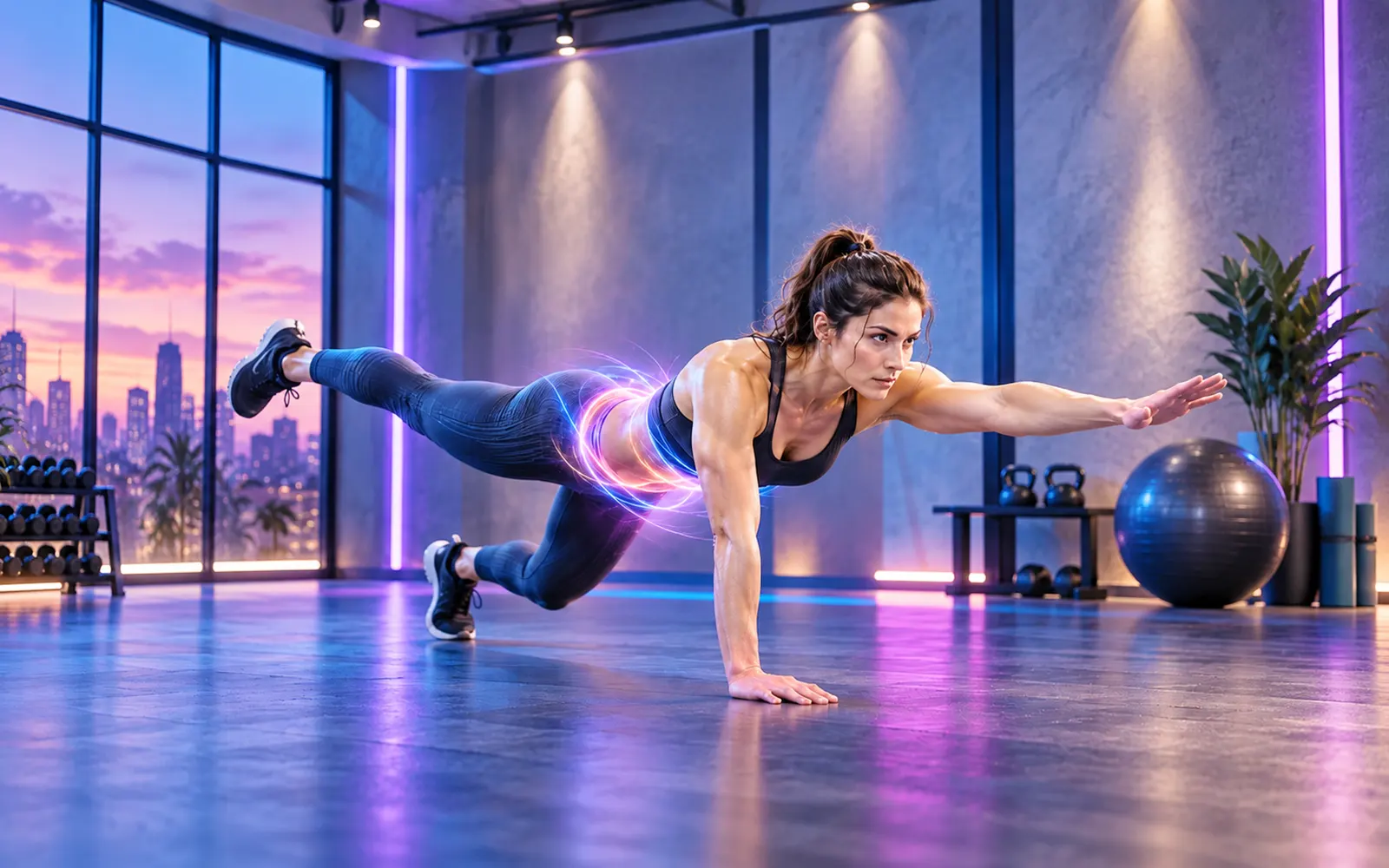
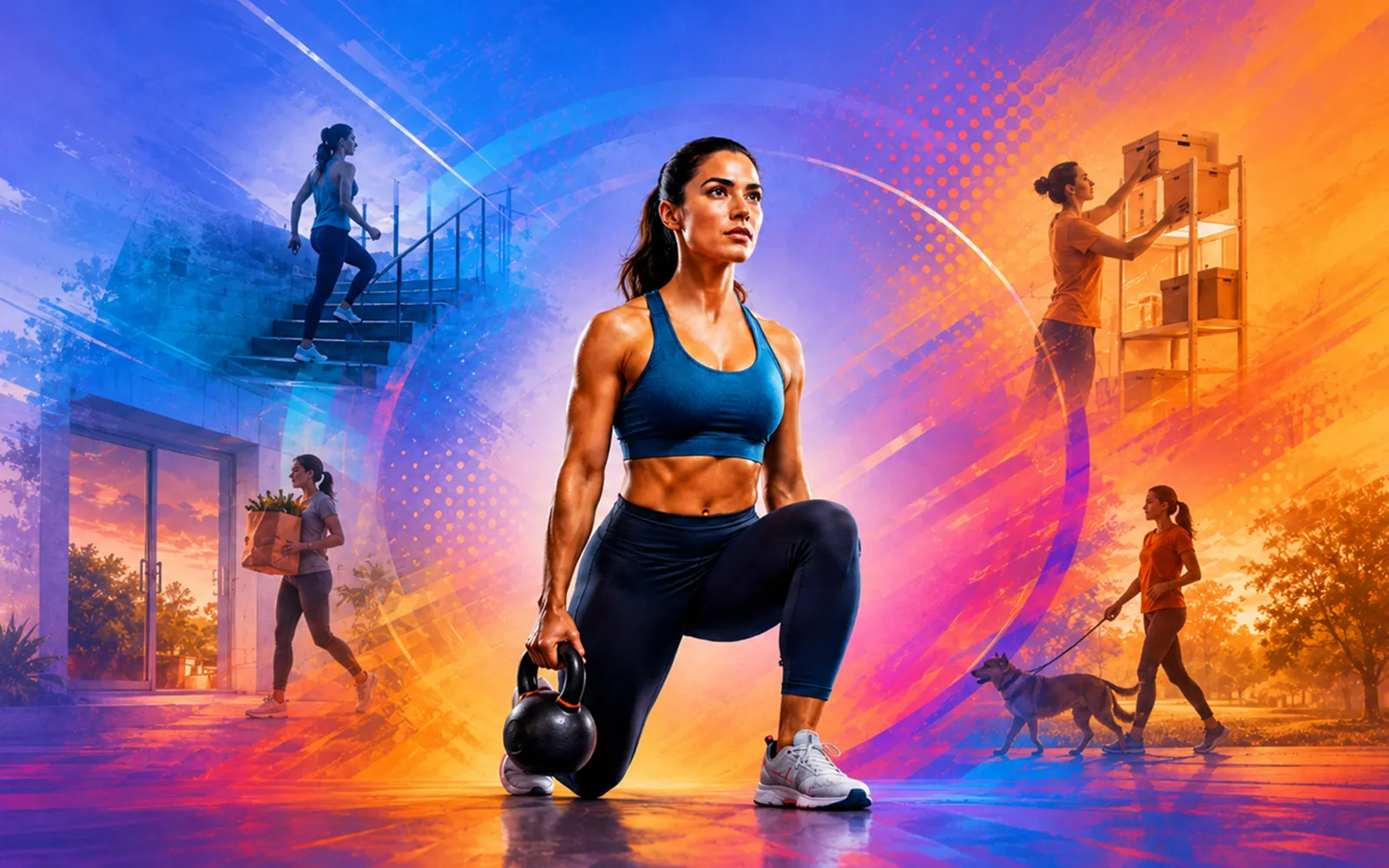

Fitness is often measured by numbers: how much weight you can lift, how far you can run, or how many repetitions you can complete. But one of the most meaningful measures of physical fitness is much simpler: How well does your body help you move through everyday life?
That is the idea behind functional fitness. Rather than training solely for appearance or athletic performance, functional exercise develops the strength, balance, mobility, coordination, and endurance needed for the movements we perform every day. Getting out of a chair, carrying groceries, climbing stairs, reaching overhead, lifting something from the floor, playing with children, gardening, and walking across uneven ground all require the body to coordinate multiple physical abilities at once.
Functional fitness is fitness with a practical purpose. The goal is not simply to become stronger in the gym, but to build a body that is capable, adaptable, and prepared for life outside it.
What Is Functional Fitness?
Functional fitness refers broadly to exercise designed to improve the body’s ability to perform meaningful movements and everyday physical tasks. Instead of focusing exclusively on isolated muscles, functional training often involves several joints and muscle groups working together.
Think about standing up from a chair. Your hips, knees, ankles, core, and postural muscles must coordinate to produce the movement. Carrying a bag involves grip strength, shoulder stability, core control, posture, and the ability to walk while managing an external load. Reaching into a high cabinet requires mobility and stability working together.
Functional training prepares the body for these kinds of integrated demands.
This does not mean that traditional exercises such as squats, rows, presses, or resistance-machine exercises are somehow “nonfunctional.” Many conventional strength exercises build the physical foundation that makes functional movement possible. The difference lies primarily in how training is selected and applied toward a real-world goal.
“The most meaningful kind of fitness is the strength, balance, and freedom to keep doing the things that make life active and fulfilling.”
Pull Quote
Training Movements, Not Just Muscles
Traditional strength programs are often organized around individual muscle groups: chest, back, shoulders, arms, or legs. Functional fitness takes a broader view by considering the fundamental movement patterns people repeatedly use throughout life.
Several patterns appear again and again:
- Squatting and sitting — lowering the body and standing back up
- Hinging — bending through the hips to pick something up
- Pushing — moving an object away from the body
- Pulling — drawing an object toward the body
- Carrying — transporting an object while maintaining posture and control
- Stepping and lunging — climbing stairs, stepping over obstacles, or changing levels
- Rotating and stabilizing — turning, reaching, and resisting unwanted movement
- Walking and balancing — moving confidently through changing environments
A well-designed functional fitness program strengthens these patterns progressively rather than simply repeating the exact motions of daily life.
For example, a squat can strengthen the muscles used when rising from a chair. A loaded carry can develop the grip, trunk stability, and walking control needed to handle groceries. Step-ups can strengthen the movement involved in climbing stairs.
The gym becomes a place to prepare for life rather than an activity completely separate from it.
The Five Foundations of Functional Fitness
Functional movement depends on more than muscular strength alone. Everyday physical capability emerges from several systems working together.
Strength
Strength gives the body the ability to produce force. It helps us rise from the floor, carry objects, climb stairs, push open a heavy door, or lift something safely.
Resistance training remains one of the most important foundations of functional fitness. Modern exercise research continues to show that progressive resistance training improves not only muscular strength but also measures of physical performance such as gait speed, balance, and stair-climbing ability.
Balance and Stability
Life rarely happens in perfectly controlled positions. We step off curbs, walk across uneven surfaces, turn quickly, reach sideways, and sometimes have to recover when we lose our footing.
Balance training improves the body’s ability to maintain or regain control of its position. Core and joint stability also help the body transfer force efficiently while keeping movement controlled.
This becomes increasingly important with age, when maintaining balance can contribute to confidence, mobility, and independence.
Mobility
Mobility is the ability to move joints comfortably through useful ranges of motion while maintaining control. Adequate mobility in the hips, shoulders, ankles, and spine can make common activities—from reaching overhead to bending toward the floor—easier and more efficient.
Functional fitness therefore does not simply ask, “Are you flexible?” It asks whether you can access the movement you need and control your body within that range.
Coordination
Many everyday tasks require several movements to occur simultaneously. You might walk while carrying bags, turn while reaching for something, or step onto a curb while maintaining balance.
Functional training can challenge the nervous system to coordinate these movements more effectively. Over time, repeated practice can make movement feel smoother, more confident, and increasingly automatic.
Endurance
Strength is useful only if the body can continue functioning throughout the demands of the day. Walking through an airport, shopping, sightseeing, doing yard work, or spending an active afternoon with family all require muscular and cardiovascular endurance.
Functional fitness therefore works best when it exists alongside regular aerobic activity rather than replacing it.
Why Functional Fitness Matters at Every Age
Functional fitness is sometimes marketed primarily toward older adults, but its principles are valuable throughout life.
For younger adults, functional training can establish strong movement patterns and physical versatility. During middle age, it can help preserve strength, mobility, and physical capacity while counteracting increasingly sedentary lifestyles. Later in life, these same abilities become particularly important for maintaining independence.
The purpose changes slightly across the lifespan, but the underlying principle remains the same: maintain the physical capacity to do the things that matter to you.
This is one reason functional fitness can be more motivating than exercising exclusively for appearance. The benefits become noticeable in daily experience. Stairs feel easier. Heavy bags feel lighter. Getting down to the floor becomes less intimidating. Long walks require less effort. Household projects become more manageable.
Fitness begins to show up in life.
Functional Fitness and Healthy Aging
The practical value of functional training becomes especially clear as we get older. Physical capacity can gradually decline when strength, balance, power, and mobility are not regularly challenged.
Research examining functional-task exercise in older adults has found improvements in areas such as activities of daily living and mobility. Balance and functional training have also been associated with better physical functioning and reduced falls among older populations.
The objective is larger than exercise performance. It is preserving independence.
Being able to stand from a chair without assistance, carry household objects, walk confidently, climb steps, maintain balance, and recover from small physical challenges can have enormous consequences for quality of life.
Functional fitness encourages us to train these capabilities before they become limitations.
Functional Fitness and Strength Training Work Together
It is important not to create a false choice between functional fitness and traditional strength training. They complement one another.
Strength training increases the body’s capacity to produce force. Functional training helps translate that capacity into useful movement. In many good programs, the distinction nearly disappears because compound resistance exercises are themselves highly functional.
A squat strengthens the legs and hips. A row strengthens the back and arms. A deadlift pattern teaches the body to generate force through the hips. A farmer’s carry challenges grip, posture, trunk stability, and gait simultaneously.
The strongest approach is often to build strength first and then teach the body to use it well.
Functional training should therefore be viewed as an expansion of sound fitness principles rather than a replacement for them.
What a Functional Workout Can Look Like
Functional training does not require elaborate equipment or complicated exercises. Dumbbells, resistance bands, kettlebells, cable machines, body weight, and even household objects can provide effective resistance.
A balanced session might include movements such as:
- A squat or sit-to-stand variation
- A hip-hinge or deadlift pattern
- A pushing movement
- A rowing or pulling movement
- Step-ups or lunges
- A loaded carry
- A core-stability exercise
- A balance or coordination drill
The exact exercises should reflect the individual’s abilities, experience, physical limitations, and goals.
Someone who wants to hike comfortably may emphasize leg strength, step-ups, balance, and cardiovascular conditioning. A person who wants to remain independent later in life may prioritize chair stands, carrying strength, walking, balance, and getting safely down to and back up from the floor.
Functional fitness becomes most meaningful when the training matches the life you want to live.
Progression Is Still Essential
Because functional exercise often looks practical or simple, it can be tempting to overlook one of the fundamental principles of fitness: the body needs an appropriate challenge in order to adapt.
If an exercise becomes effortless, some form of progression may be needed. That might mean gradually increasing resistance, repetitions, movement range, duration, complexity, or control.
A bodyweight squat might progress to a goblet squat. A light carry might gradually become heavier or longer. Step-ups may become slightly higher or incorporate additional resistance.
Progression does not have to be aggressive. Small, consistent increases in challenge can accumulate into substantial improvements over time.
Quality remains more important than novelty. Functional fitness does not need unstable surfaces, complicated combinations, or unusual equipment to be effective. A simple movement performed with appropriate resistance and excellent control may provide far greater value than an elaborate exercise performed poorly.
Everyday Life Can Become Part of Your Training
One particularly appealing aspect of functional fitness is that its principles can extend beyond formal workouts.
Taking the stairs, carrying groceries, gardening, walking on varied terrain, getting up and down from the floor, or performing household tasks can all challenge physical abilities in meaningful ways.
These activities do not necessarily replace structured exercise, but they reinforce an important principle: the body adapts to how we use it.
A physically capable life is supported not only by scheduled workouts but by maintaining movement throughout the day.
Measuring Fitness by What Your Body Can Do
Modern fitness culture often emphasizes appearance, body weight, or athletic benchmarks. Functional fitness offers another way of measuring progress.
Can you climb stairs more comfortably than you could six months ago? Can you carry something that once felt heavy? Can you move through a deeper squat? Is your balance improving? Can you spend a day walking without feeling exhausted? Can you get down to the floor and stand back up with greater ease?
These are meaningful achievements because they represent improvements that extend beyond the gym.
Physical fitness becomes more valuable when it increases freedom—the freedom to move, participate, explore, work, travel, play, and remain engaged with life.
Building a Body for the Life Ahead
The ultimate goal of functional fitness is not to become exceptionally good at performing gym exercises. It is to develop the physical capacity needed to participate fully in everyday life.
Strength allows us to handle physical demands. Mobility gives us access to movement. Balance keeps us steady. Coordination helps everything work together. Endurance allows us to keep going.
When these qualities are trained consistently, exercise becomes an investment in what the body will be capable of tomorrow.
Functional fitness reminds us that the most important question may not be how impressive a workout looks, but whether it helps us move through life with greater strength, confidence, and independence.
Disclaimer
This article is intended for general educational purposes and is not a substitute for individualized medical, physical therapy, or exercise advice. People with injuries, significant balance problems, chronic health conditions, or prolonged inactivity should consult an appropriate healthcare or qualified fitness professional before beginning or substantially changing an exercise program.