












Yoga is often associated with stretching, relaxation, and graceful poses, but that description captures only part of what the practice can offer. Depending on the style and intensity, yoga can challenge muscles, improve flexibility and mobility, develop balance and coordination, strengthen the core, and cultivate a greater awareness of how the body moves.
That combination makes yoga especially interesting from a fitness perspective. Rather than isolating one element of physical conditioning, many yoga practices bring strength, flexibility, balance, breathing, and focused attention together in a single movement experience.
Modern exercise science increasingly recognizes the value of this kind of multicomponent activity. The U.S. Physical Activity Guidelines describe yoga as an activity that can combine muscle strengthening, balance training, light aerobic activity, and flexibility, while the National Center for Complementary and Integrative Health reports research supporting benefits for general wellness, balance, stress management, sleep, and several aspects of physical function.
Yoga therefore offers something distinctive: a way to train the body while simultaneously becoming more aware of how the body moves, stabilizes, breathes, and responds to challenge.
Yoga Is More Than Stretching
One of the most common misconceptions about yoga is that it is primarily a flexibility exercise. Flexibility is certainly an important part of the practice, but many yoga poses require considerable muscular effort to maintain alignment, support body weight, stabilize joints, and control movement.
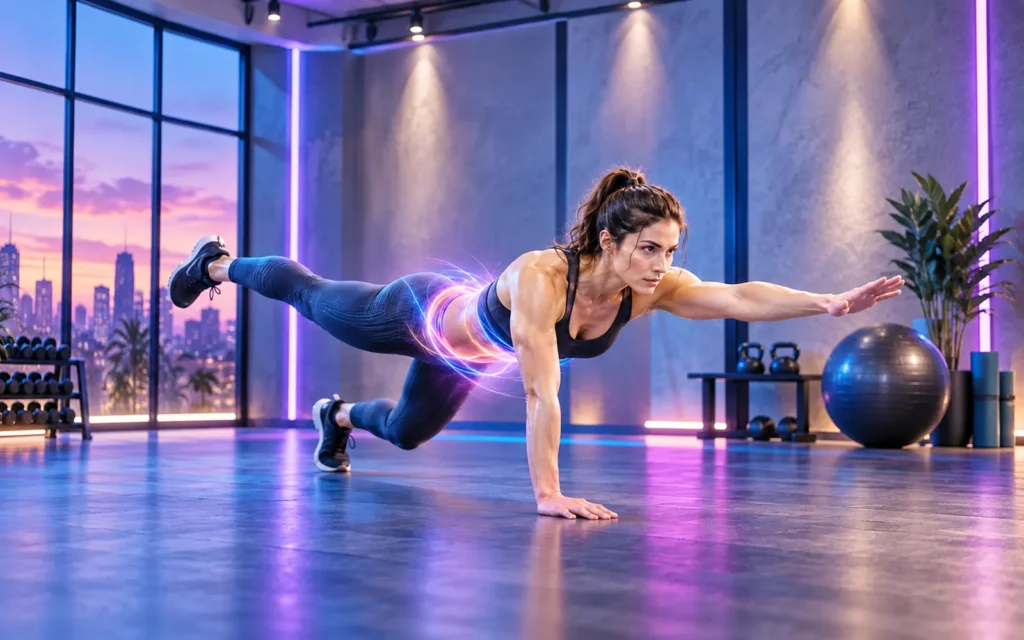
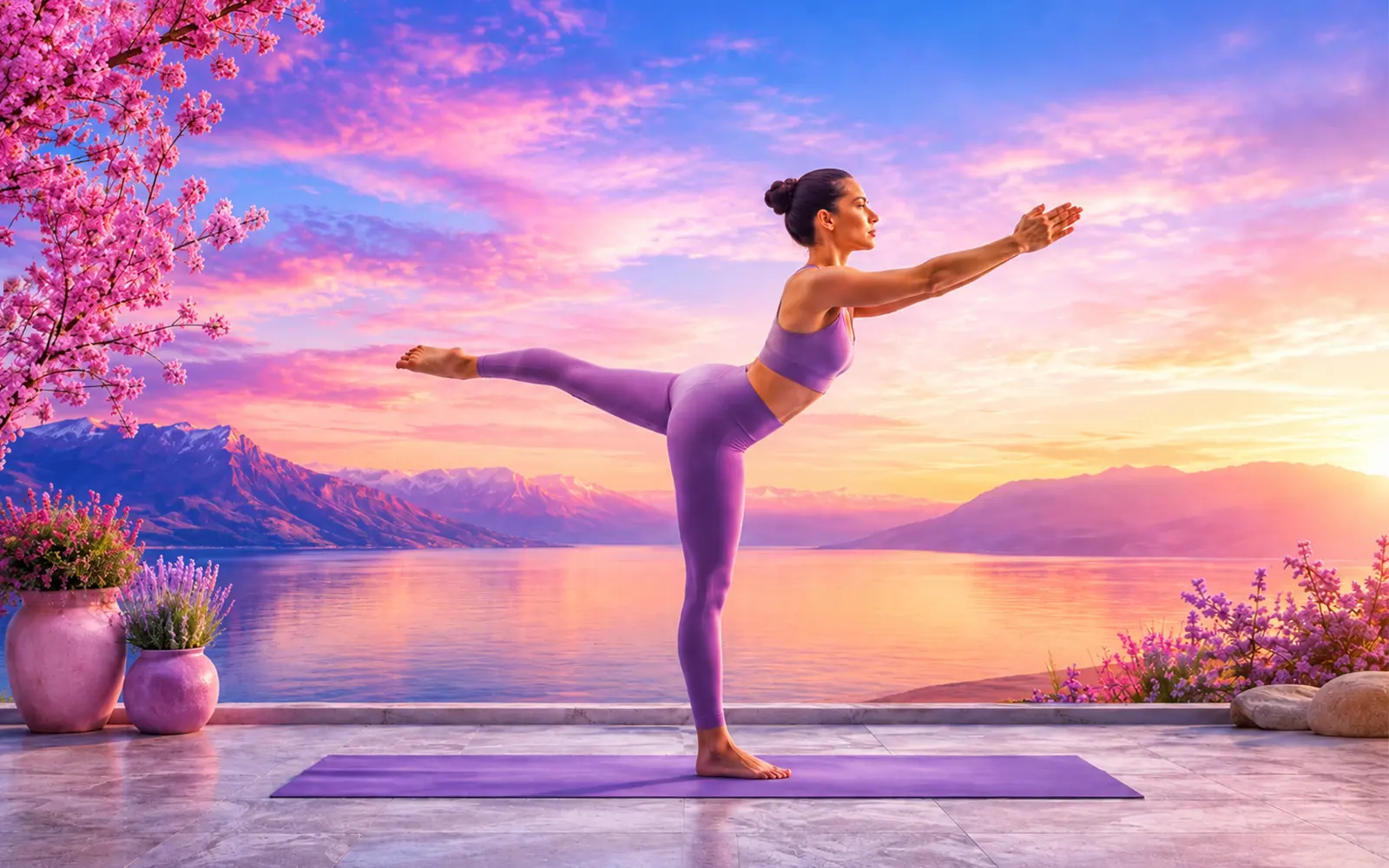
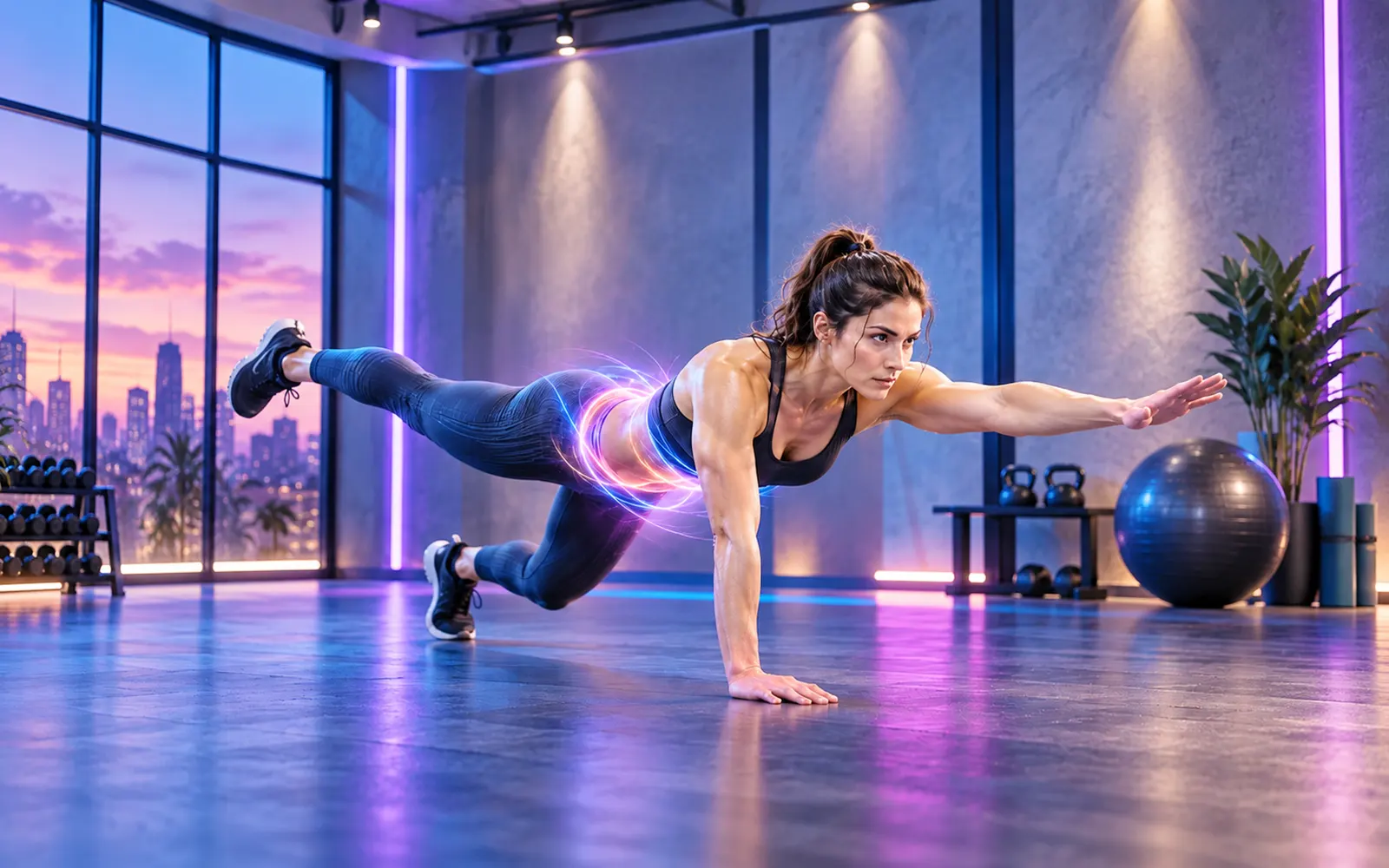
Consider holding a plank, maintaining a chair pose, balancing in Warrior III, or slowly transitioning from a standing position toward the floor. The muscles may not always be moving through repeated contractions as they would during traditional weight training, but they are still producing force and often working isometrically—contracting while maintaining a relatively fixed position.
The Centers for Disease Control and Prevention specifically notes that some yoga postures can qualify as muscle-strengthening activity. The Physical Activity Guidelines also recognize yoga as a multicomponent practice because different poses may challenge several dimensions of fitness at once.
That makes yoga much more than passive stretching.
A well-designed yoga session can ask the body to lengthen, stabilize, support, balance, and coordinate—all within the same practice.
“Yoga brings strength, flexibility, balance, breath, and awareness into one practice—training not only how far the body can move, but how well it can move.”
Pull Quote
How Yoga Builds Functional Strength
Traditional strength training often increases resistance by adding weight. Yoga frequently creates resistance by changing body position, leverage, gravity, and the amount of body weight being supported.
In poses such as plank, downward-facing dog, side plank, chair pose, bridge, and the warrior variations, muscles throughout the body must remain active to maintain posture. The shoulders, arms, chest, back, abdomen, hips, thighs, and lower legs may all participate depending on the position.
Research supports yoga’s potential to improve muscular fitness. A controlled 12-week Hatha yoga study involving adults found improvements in measures of muscular strength and endurance as well as flexibility, while another randomized trial found yoga comparable with conventional stretching-and-strengthening exercise for several functional fitness outcomes.
Strength Through Time Under Tension
One reason yoga can challenge muscles effectively is time under tension. Holding a pose for several breaths requires muscles to continue generating force even when the body appears relatively still.
Chair pose is a good example. The movement may look simple, but holding the hips lowered while keeping the torso controlled requires sustained work from the thighs, hips, and core. A plank similarly requires the abdominal muscles, shoulders, chest, back, and legs to work together to maintain the body’s position.
This type of muscular endurance has practical value beyond the yoga mat. Everyday movement frequently requires us to stabilize the body rather than simply produce one powerful contraction.
Standing upright, carrying objects, climbing stairs, maintaining posture, and catching ourselves when balance shifts all depend on muscles working together.
The Core Is Working Through Much of the Practice
Yoga does not always isolate the abdominal muscles with traditional exercises, yet the core is involved in nearly every controlled movement and balancing posture.
The core includes more than the visible abdominal muscles. It encompasses a network of muscles around the abdomen, lower back, pelvis, hips, and diaphragm that helps stabilize the trunk and transfer force between the upper and lower body.
When you move slowly from plank into downward-facing dog, balance on one leg, hold Warrior III, or maintain an upright spine during a standing pose, the core continuously makes small adjustments to control alignment.
That creates an important form of functional strength: the ability to stabilize the body while other parts of the body move.
Flexibility: Creating Greater Freedom of Movement
Flexibility refers to the ability of muscles and surrounding tissues to allow movement through an available range of motion. Yoga repeatedly exposes the body to controlled positions that lengthen muscles around the hips, hamstrings, shoulders, spine, chest, calves, and other regions.
With regular practice, movements that once felt restricted may gradually become more comfortable. Research involving older adults has also found improvements in flexibility following yoga interventions, alongside benefits in muscular strength and balance.
The goal, however, is not to turn the body into something extraordinarily flexible.
Useful flexibility means having enough range of motion to move comfortably and efficiently through daily life.
Reaching overhead, bending toward the floor, turning the torso, stepping over an obstacle, getting up from a chair, and moving comfortably through exercise all depend partly on adequate range of motion.
Yoga provides a structured way to explore and gradually expand that movement capacity.
Flexibility and Mobility Are Not Quite the Same Thing
Although the terms are often used interchangeably, flexibility and mobility describe related but somewhat different qualities.
Flexibility generally refers to how much a muscle and surrounding tissues can lengthen. Mobility goes further: it includes the ability to actively control movement through a joint’s usable range of motion.
Someone may have enough flexibility to move a leg into a particular position with assistance but lack the muscular control to move and stabilize the leg there independently. Yoga often challenges both qualities because practitioners are not merely stretching into positions—they are frequently moving into them under muscular control and then maintaining them.
That combination can make yoga particularly useful for developing movement that is not only larger in range, but also more controlled.
Balance: A Conversation Between the Brain and Body
Standing on one leg looks simple until the body begins to sway.
Balance is an active neurological and muscular process. The brain continually integrates information from vision, the inner ear, joints, muscles, and sensory receptors while the body makes tiny corrections to keep its center of mass under control.
Yoga challenges this system in poses such as tree pose, eagle, half moon, and Warrior III. Even ordinary standing poses become balance exercises when the base of support narrows or the body changes position.
A 2025 systematic review of 18 randomized controlled trials found that yoga significantly improved balance in healthy individuals. Other research in adults over 60 has likewise reported improvements in balance, flexibility, and muscular strength following yoga interventions.
Why Balance Becomes Increasingly Important With Age
Balance is easy to take for granted when it works well. As we age, however, maintaining the ability to stabilize the body, change direction, step confidently, and recover from small losses of balance becomes increasingly important for independence.
Yoga is particularly interesting in this context because many poses combine leg strength, core stability, sensory awareness, coordination, and balance challenges within the same movement. Current CDC guidance similarly recognizes yoga as a multicomponent physical activity that may incorporate both strengthening and balance work for older adults.
Practicing balance does not require mastering dramatic poses. Simply standing with a narrower base, shifting weight deliberately, or practicing a supported one-leg position can challenge the system.
As balance improves, the pose can gradually become more demanding.
Yoga Develops Body Awareness
There is another aspect of fitness that is difficult to see in a photograph: proprioception, or the body’s ability to sense its position and movement in space.
During yoga, attention repeatedly moves toward physical details. Where is the weight distributed through the feet? Are the knees aligned with the toes? Is one shoulder higher than the other? Is the pelvis rotating? Are you holding unnecessary tension in the jaw or neck?
This type of awareness encourages the brain to pay closer attention to sensory information coming from muscles, joints, and movement.
Over time, practitioners may become better at recognizing subtle differences in posture, alignment, balance, tension, and movement quality. That heightened awareness can be useful not only during yoga but also during strength training, walking, sports, and ordinary daily movement.
Breathing Changes the Experience of Exercise
Breathing is one of the elements that distinguishes yoga from many conventional exercise routines.
Instead of treating breathing as something that simply happens in the background, yoga often makes it part of the movement itself. A practitioner may inhale while lengthening or opening the body and exhale while moving deeper into another position, creating a deliberate rhythm between breathing and movement.
The breath also becomes a useful feedback system.
If breathing suddenly becomes strained, rushed, or difficult to control, the body may be telling you that you have moved beyond a comfortable level of effort. Returning to smoother breathing can encourage a more sustainable pace and help keep attention connected to the body.
This is part of what makes yoga mindful movement rather than movement alone.
The Mind-Body Side of Physical Fitness
Traditional fitness is often described through measurable outcomes: strength, endurance, speed, flexibility, body composition, and cardiovascular capacity.
Yoga adds another dimension—attention.
Instead of completing repetitions while thinking about something else, the practice repeatedly brings awareness back to posture, breathing, balance, muscular effort, and physical sensation. That continuous attention may be one reason yoga occupies an interesting space between physical exercise and mind-body practice.
NCCIH reports that yoga research has found potential benefits for stress management, emotional well-being, sleep, and balance in addition to its physical applications.
This does not separate yoga from fitness. In many ways, it broadens the definition.
Fitness becomes not only the ability to make the body perform, but also the ability to feel, control, and regulate movement more deliberately.
Yoga Can Support Better Movement in Everyday Life
The ultimate value of flexibility, strength, and balance is not simply the ability to perform impressive poses.
It is the ability to move through life more comfortably and confidently.
Yoga trains many movement patterns that resemble ordinary human activity: standing, reaching, rotating, bending, squatting, pushing, stabilizing, shifting weight, rising from the floor, and maintaining balance.
A practice that improves these abilities may support what exercise science calls functional fitness—physical capacity that helps us perform everyday activities effectively.
For a younger athlete, that might mean better movement awareness and mobility. For a middle-aged adult, it might mean maintaining strength and range of motion while spending long hours sitting. For an older adult, it may mean preserving balance, mobility, and confidence with movement.
The poses may be the same, but the purpose can evolve throughout life.
Yoga and Posture: Strength Meets Awareness
Good posture is not simply a matter of standing perfectly straight. It depends on muscular endurance, joint mobility, body awareness, and the ability to comfortably organize the body against gravity.
Many yoga poses encourage the spine to lengthen while the shoulders, hips, pelvis, and feet assume deliberate positions. Maintaining those positions requires both muscular activity and awareness of alignment.
This can make yoga particularly useful for people who spend long periods sitting at desks, driving, or working on computers. Opening the chest and hips, strengthening the trunk, moving the spine through different directions, and simply becoming more aware of habitual posture can provide a useful counterbalance to a predominantly sedentary day.
The goal is not rigid posture.
Healthy posture is adaptable posture—the ability to move easily between positions rather than remaining trapped in one.
Yoga as Active Recovery
Not every workout needs to push the body toward maximum effort.
Lower-intensity yoga can fit naturally between more demanding training days by encouraging gentle movement, controlled breathing, and comfortable mobility without placing the same demands on the body as heavy resistance training or vigorous cardiovascular exercise.
For someone who runs, cycles, lifts weights, hikes, or participates in sports, yoga can provide an opportunity to spend focused time on areas that often receive less attention:
Rather than functioning through one single “exercise molecule,” physical activity appears to create a whole-body biological environment that supports brain health.
- Hip and shoulder mobility
- Hamstring and calf flexibility
- Trunk rotation
- Balance and coordination
- Controlled breathing
- Body awareness
- Gentle movement on recovery days
The intensity can also be adjusted. A restorative or gentle class can emphasize mobility and relaxation, while a stronger Hatha, Vinyasa, or power-style session may place considerably greater demands on muscular endurance and coordination.
That versatility is one of yoga’s strengths.
Different Styles of Yoga Create Different Fitness Experiences
“Yoga” describes a broad family of practices rather than one standardized workout.
Some forms move slowly and emphasize alignment. Others link poses together continuously, creating a more dynamic experience. Some emphasize long-held stretches and relaxation, while others require significant bodyweight strength and muscular endurance.
Hatha Yoga
Hatha is often used as a broad term for posture-based yoga, but many classes carrying this name move at a moderate pace and spend time developing individual poses. It can be a useful entry point for learning alignment, breathing, balance, and foundational movements.
Vinyasa Yoga
Vinyasa links poses together in flowing sequences coordinated with breathing. Because movement is more continuous, the practice can place greater demands on muscular endurance, coordination, and sometimes cardiovascular effort.
Power Yoga
Power-oriented yoga generally emphasizes stronger, more athletic sequences. Planks, lunges, standing poses, and repeated transitions can create a challenging bodyweight workout.
Gentle and Restorative Yoga
Gentle forms place greater emphasis on comfortable mobility, stretching, breathing, and relaxation. They can be particularly useful on lighter training days or for people who prefer a gradual introduction to movement.
There is no single “best” style.
The best choice depends on what you want from the practice.
Yoga and Healthy Aging
One of the strongest arguments for including yoga in a long-term fitness plan is that many of the qualities it develops become increasingly valuable with age.
Strength helps us rise from chairs and climb stairs. Flexibility and mobility help us reach, bend, dress, and move comfortably. Balance and coordination help us navigate changing surfaces and recover when our center of gravity shifts.
A systematic review and meta-analysis involving community-dwelling adults age 60 and older found yoga associated with improvements in balance, flexibility, and muscular strength. A separate systematic review of randomized trials also reported significant improvements in balance among healthy participants.
Yoga is therefore not simply about becoming more flexible.
It can become part of maintaining the physical capabilities that support movement, independence, and confidence throughout life.
How Yoga Fits Into a Complete Fitness Program
Yoga can occupy several roles within an active lifestyle.
For some people, it becomes the primary form of structured exercise. For others, it complements walking, resistance training, swimming, cycling, running, or recreational sports.
A balanced weekly fitness routine might combine:
- Aerobic activity for cardiovascular endurance
- Resistance or strength training for muscular strength and bone health
- Yoga for mobility, flexibility, balance, bodyweight strength, and movement awareness
- Everyday movement such as walking, stairs, gardening, and recreational activities
- Recovery through adequate sleep and lighter movement days
Current U.S. guidelines recommend that adults accumulate at least 150 minutes of moderate-intensity aerobic activity each week and perform muscle-strengthening activity on at least two days. Some yoga postures can contribute to strengthening, while yoga can also provide valuable flexibility and balance work within that broader fitness picture.
The important idea is not to fit exercise into rigid categories.
Movement practices can complement one another.
A person who lifts weights may benefit from greater mobility. A runner may benefit from balance and body awareness. Someone who practices yoga may benefit from walking or other aerobic activity.
Together, these different forms of movement create a more complete foundation for fitness.
Starting Yoga: Keep It Simple
Beginning yoga does not require being flexible.
In fact, becoming more comfortable with movement is one of the reasons many people start.
A beginner practice can focus on a small number of fundamental positions and movement patterns rather than attempting advanced poses. Learning how to move comfortably, breathe naturally, and understand basic alignment is more important than how deeply you can stretch.
A simple foundation might include:
- Mountain pose for posture and body awareness
- Chair pose for leg and core strength
- Warrior poses for lower-body strength, mobility, and stability
- Tree pose for balance
- Downward-facing dog for whole-body movement and muscular endurance
- Bridge pose for hip and posterior-chain engagement
- Cat-cow movements for spinal mobility
- Child’s pose for comfortable rest and recovery
Progress in yoga does not have to mean performing increasingly complicated poses.
It can mean better balance, smoother movement, easier breathing, greater control, improved range of motion, or simply feeling more comfortable in your own body.
Progress Without Chasing Perfection
Yoga can sometimes appear intimidating because images of advanced practitioners emphasize extreme flexibility and difficult balancing poses.
That is not the standard by which progress needs to be measured.
One of the most productive ways to approach yoga is to compare today’s movement with your own previous experience. Perhaps you can hold a pose more comfortably, maintain balance a little longer, breathe more smoothly during a challenging position, or reach through a slightly larger range of motion.
Those small changes accumulate.
The goal is not to perform the perfect pose. The goal is to develop a body that moves with greater strength, freedom, awareness, and confidence.
The Takeaway
Yoga occupies a unique place in fitness because it asks several physical systems to work together.
A single practice can challenge muscular strength and endurance, encourage flexibility and mobility, develop balance, recruit the core, improve movement awareness, and coordinate breathing with physical effort. Research increasingly supports several of these physical benefits, particularly improvements in balance, flexibility, and functional strength.
Perhaps yoga’s greatest strength is this integration.
Strength without mobility can feel restrictive. Flexibility without control has limited usefulness. Balance requires strength, sensation, and coordination. Breathing influences how we experience effort. Attention brings all of these elements together.
Yoga trains them as parts of one moving system.
That is why the practice can be valuable to beginners and experienced athletes alike, and why it can remain relevant across different stages of life. The poses may change, the intensity may change, and individual goals may change—but the underlying practice continues to ask the same fundamental questions:
Can you move with control?
Can you maintain your balance?
Can you create strength without unnecessary tension?
Can you explore greater freedom of movement?
And can you remain aware of your body while doing it?
When those abilities improve together, fitness becomes about more than how much weight we can lift or how far we can run.
It becomes the ability to move through life with strength, flexibility, balance, and confidence.
Medical Disclaimer
This article is provided for general educational and wellness purposes only and is not intended as medical advice, diagnosis, treatment, or individualized exercise instruction. Yoga is generally considered a safe form of physical activity for healthy people when practiced appropriately, but exercises and poses may need to be modified according to age, fitness level, pregnancy, mobility limitations, injuries, joint or spinal conditions, cardiovascular concerns, or other health circumstances. Individuals with medical conditions or significant physical limitations should consult an appropriate healthcare professional and, when possible, learn from a qualified yoga instructor who can provide appropriate modifications. Stop any exercise that causes sharp pain, dizziness, unusual shortness of breath, or other concerning symptoms.