











The Mediterranean diet is often introduced through a handful of famous foods.
Olive oil.
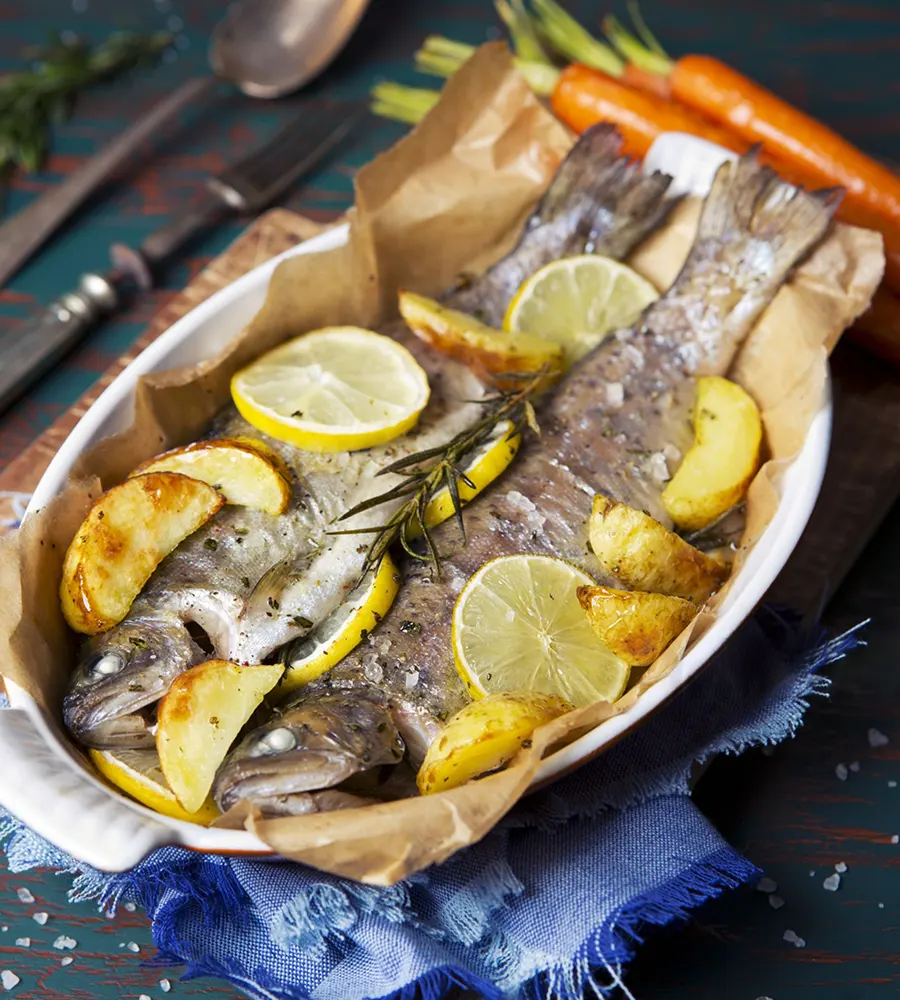
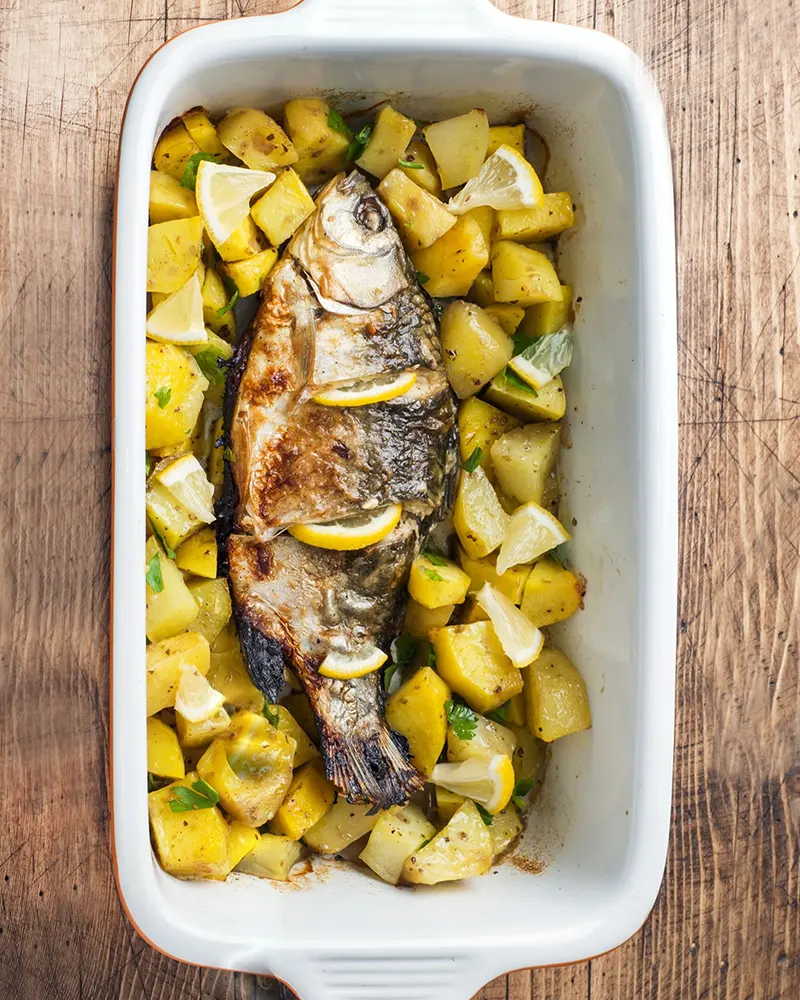
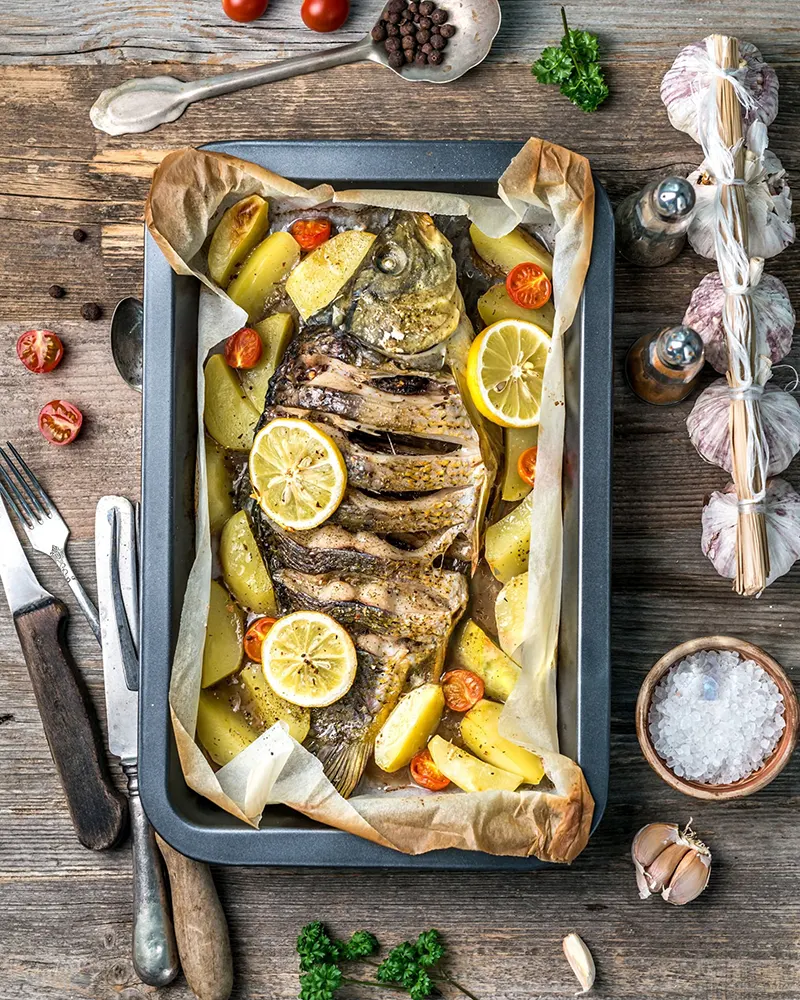
Fish.
Tomatoes.
Nuts.
Whole grains.
Those foods deserve attention, but they can also distract from the larger lesson.
The Mediterranean diet is not healthy because olive oil has a special ability to cancel an otherwise poor diet. Fish does not need to appear at every dinner. Nuts are not medicine. And eating one Mediterranean-style meal does not transform everything else someone eats.
What matters is the whole way of eating.
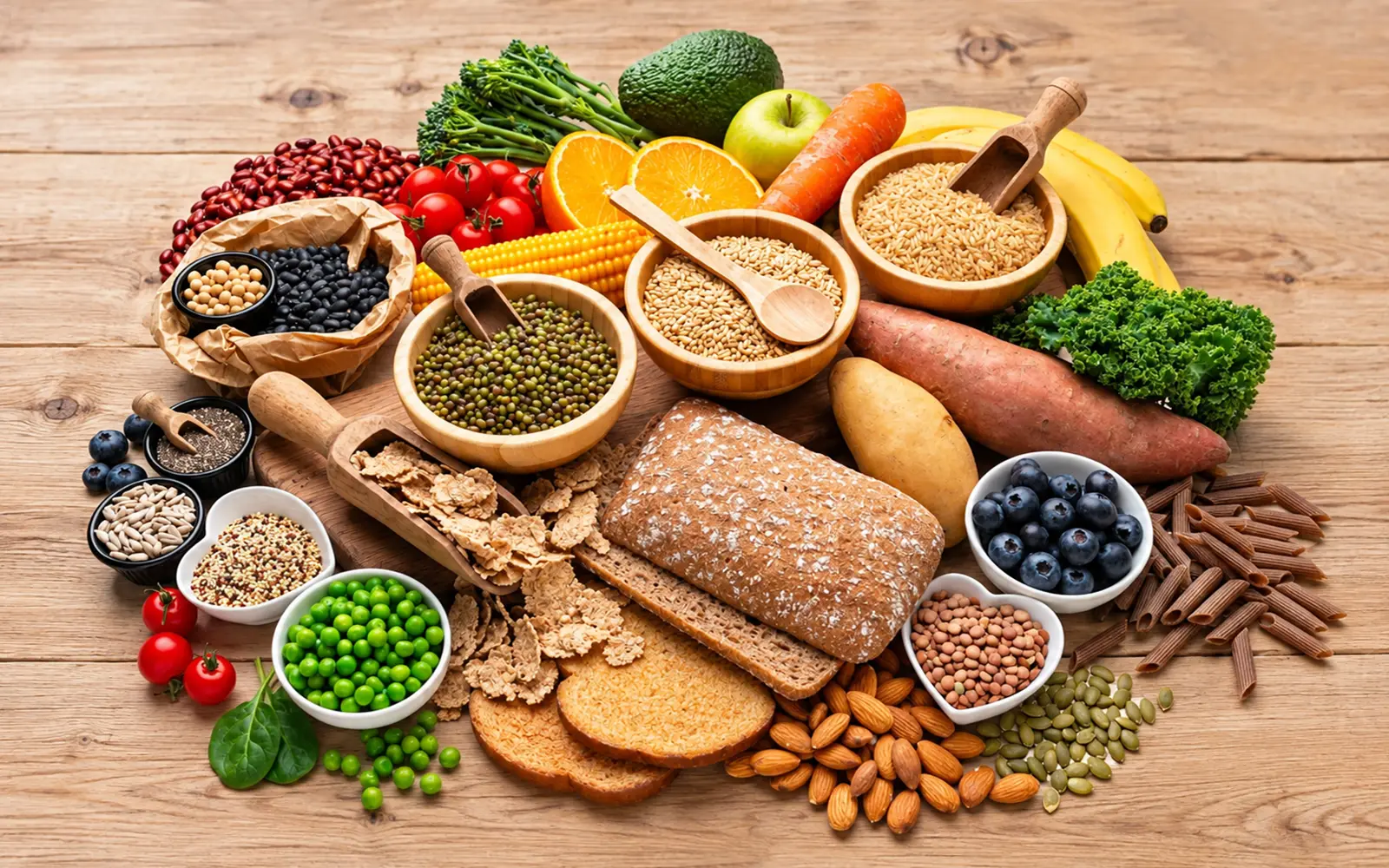
Vegetables and fruits appear often. Beans and lentils become ordinary foods rather than occasional side dishes. Whole grains replace more refined grains. Olive oil and other unsaturated fats take the place of some butter and saturated fats. Fish and seafood appear more often, while red and processed meats become less frequent. Nuts and seeds contribute useful fats, fiber, and protein. Sugary drinks, sweets, and highly processed foods occupy less space.
No single choice has to carry the entire diet.
The benefit comes from making many reasonably good choices repeatedly.
And that is what makes the Mediterranean approach especially useful in real life: it gives us a direction for eating rather than a rigid set of rules.
The Mediterranean Diet Is Not One Menu
There is no single authentic Mediterranean diet.
Traditional foods in Greece differ from those in southern Italy, Spain, Lebanon, Morocco, Turkey, and other regions surrounding the Mediterranean Sea.
One cuisine may feature chickpeas.
Another may rely heavily on lentils.
Some use pasta.
Others use bread, bulgur, potatoes, couscous, or rice.
Seafood consumption varies. So do dairy foods, herbs, vegetables, and cooking traditions.
What these ways of eating have historically shared is more important than the exact recipes: abundant plant foods, relatively simple meals, legumes and grains, unsaturated fats, and a smaller role for red meat, sweets, and highly refined foods.
The American Heart Association describes Mediterranean-style eating in similar terms, emphasizing vegetables, fruits, grains, beans, nuts and seeds, olive oil, and moderate amounts of fish, poultry, eggs, and dairy, with less red meat and fewer highly processed foods.
That means you do not need to learn Mediterranean cooking to benefit from the idea.
You need to understand what foods are doing most of the work in the diet.
Start With What Takes Up the Most Space
A useful way to understand Mediterranean eating is to look at what appears most often.
Plant foods occupy a large part of the diet.
Not because animal foods are forbidden, but because vegetables, fruits, beans, lentils, whole grains, nuts, seeds, and plant oils form much of the nutritional foundation.
That automatically changes what the diet contains.
Fiber increases.
Potassium and magnesium tend to increase.
The diet contains a broader variety of plant compounds.
More of the carbohydrates come from whole grains, legumes, vegetables, and fruits instead of refined starches and added sugars.
More of the fat comes from unsaturated sources such as olive oil, nuts, seeds, and fish rather than primarily from butter, fatty meats, or heavily processed foods.
And because the plate can hold only so much food, choosing more of these foods naturally leaves less room for other choices.
That last point is crucial.
What You Eat More Of Changes What You Eat Less Of
Nutrition is often discussed as though foods can simply be added indefinitely.
Add olive oil.
Add nuts.
Add fish.
Add vegetables.
But a healthy way of eating is not created by piling beneficial foods on top of everything already being eaten.
Replacement matters.
If olive oil replaces butter in some meals, the fat composition of the diet changes.
If beans replace processed meat twice a week, both the protein source and fiber intake change.
If fruit replaces dessert several evenings each week, added sugar may fall while fiber and micronutrients rise.
If oatmeal replaces a highly sweetened breakfast food, the quality of carbohydrate changes.
If nuts replace chips as a frequent snack, the nutritional package changes again.
This is one reason current American Heart Association guidance focuses not on one special food but on a broader set of choices: more vegetables and fruits, whole grains, healthy protein sources and unsaturated fats; fewer ultra-processed foods, added sugars, sodium, and foods high in saturated fat.
Mediterranean eating becomes much easier to understand when we think in terms of better substitutions rather than nutritional additions.
Vegetables Are Not Decoration
In many meals, vegetables occupy a relatively small supporting role.
A few leaves beside the entrée.
A spoonful of peas.
A tomato slice on a sandwich.
Mediterranean-style eating tends to reverse that relationship.
Vegetables can become a substantial part of the meal itself.
A bowl of lentil soup with vegetables.
Roasted vegetables alongside fish.
Tomatoes, cucumbers, greens, beans, herbs, and olive oil forming much of a lunch.
Vegetable-based pasta sauces.
Eggplant, peppers, onions, greens, squash, artichokes, and other vegetables used generously rather than symbolically.
This matters because increasing vegetables does more than add vitamins.
It changes the meal’s volume, fiber, potassium, energy density, and overall nutritional composition.
A practical takeaway is therefore simple:
Do not merely ask whether a meal contains a vegetable. Ask whether vegetables have a meaningful presence in the meal.
Beans and Lentils Deserve a Bigger Role
Legumes may be one of the most underused parts of Mediterranean-style eating in many American diets.
Beans, lentils, chickpeas, and peas contribute both protein and carbohydrate, but they also provide something many animal-protein foods do not: substantial fiber.
They can become the center of a meal rather than a side dish.
Lentil soup.
Bean stew.
Chickpeas with vegetables.
Beans added to salads.
Hummus with vegetables and whole-grain bread.
A bean-based meal replacing meat once or twice during the week changes several things at once: protein remains available, fiber rises, saturated fat can fall, and the variety of plant foods increases.
You do not have to become vegetarian.
Simply allowing legumes to become a normal main food rather than an occasional ingredient can shift the quality of the diet substantially.
“The Mediterranean diet matters not because every meal must be Mediterranean, but because it shows how ordinary food choices, repeated over time, can add up to a healthier way of eating.”
Whole Grains Change the Carbohydrate Conversation
The Mediterranean diet is not a low-carbohydrate diet.
Traditional Mediterranean cuisines include bread, pasta, grains, potatoes, and legumes.
The more useful question is what kinds of carbohydrate foods dominate.
Whole grains retain more of the grain’s original components and typically provide more fiber and micronutrients than highly refined grains.
That means the practical decision is not necessarily:
Should I stop eating bread or pasta?
It may be:
Can I choose whole-grain bread more often?
Could oatmeal replace a highly refined breakfast?
Could barley, bulgur, brown rice, or another whole grain appear regularly?
A Mediterranean way of eating does not require fear of carbohydrates.
It encourages choosing carbohydrate foods that bring more nutrition with them.
Olive Oil Matters Most When It Replaces Something
Extra-virgin olive oil has become almost synonymous with Mediterranean eating.
It deserves its reputation as a useful source of predominantly unsaturated fat, and it contains phenolic compounds that have attracted considerable research interest.
But olive oil is most practical when understood as a replacement fat, not a health supplement.
Use it to dress vegetables instead of relying on creamy dressings high in saturated fat.
Cook with it where appropriate instead of using butter as the automatic default.
Use it as part of meals built around vegetables, legumes, grains, or fish.
The PREDIMED trial provides important clinical evidence here. More than 7,400 adults at high cardiovascular risk were assigned to Mediterranean diets supplemented with either extra-virgin olive oil or nuts, or to advice to follow a reduced-fat diet. During follow-up, major cardiovascular events occurred less often in both Mediterranean-diet groups. The trial was republished with corrected analyses after researchers identified randomization irregularities, and the revised findings remained favorable.
The appropriate conclusion is not that olive oil prevents heart attacks by itself.
The participants changed a much broader way of eating.
Olive oil contributed to that way of eating; it was not a substitute for it.
Nuts Are Valuable, but More Is Not Always Better
Nuts provide unsaturated fats, fiber, protein, minerals, and other plant compounds.
A small serving can make a nutritious snack or become part of breakfast, salads, vegetables, or other meals.
But nuts are also energy-dense.
So are olive oil, seeds, and many other nutritious Mediterranean foods.
Healthy does not mean calorie-free.
This is another place where practical nutrition is better than food mythology.
The goal is not to add unlimited nuts and olive oil because studies associate Mediterranean eating with health benefits.
It is to let these foods replace less favorable choices in sensible amounts.
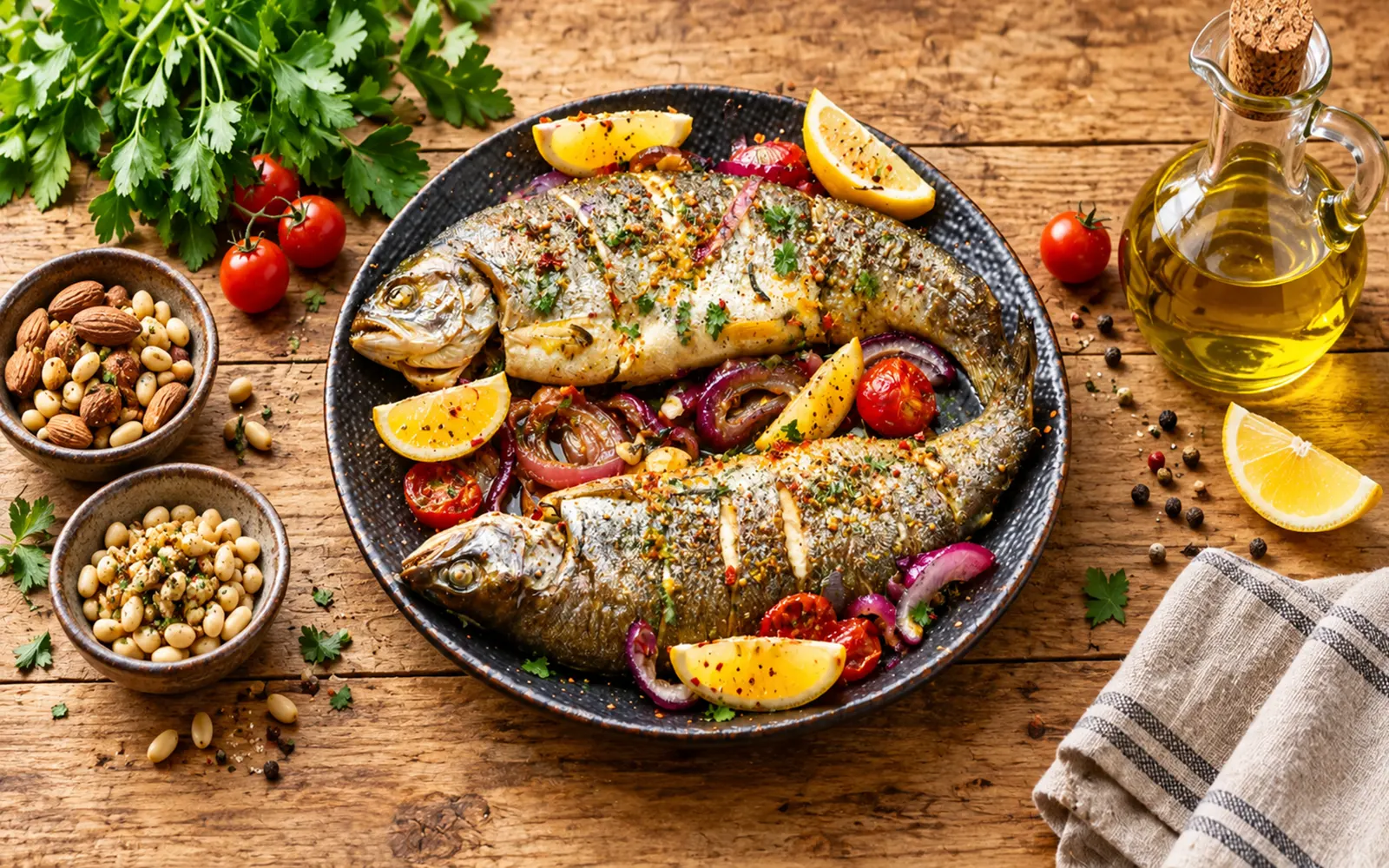
Fish Can Shift the Kind of Protein You Eat
Fish and seafood are another characteristic component of many Mediterranean diets.
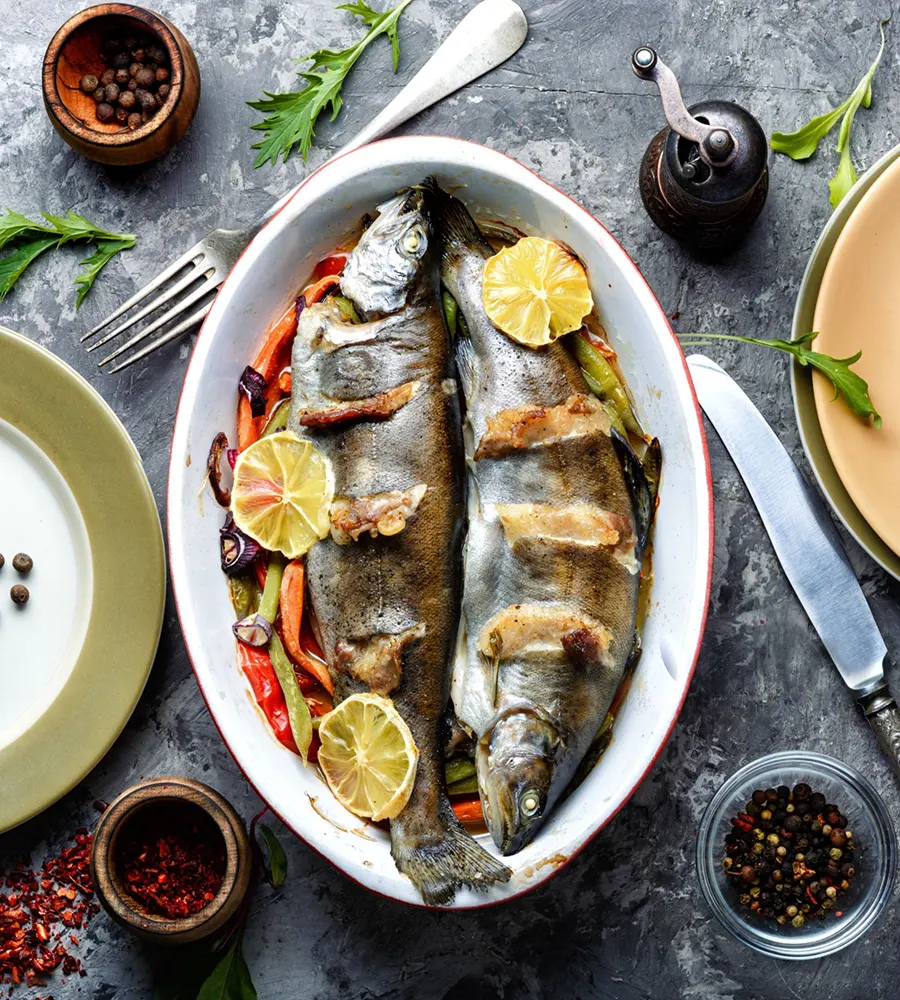
They provide protein, and certain fish—such as salmon, sardines, trout, herring, and mackerel—also provide substantial amounts of long-chain omega-3 fatty acids.
But the practical benefit extends beyond adding fish.
When fish takes the place of processed meat or some meals centered on fatty red meat, the entire nutritional composition changes.
This is another recurring theme:
The Mediterranean approach does not simply tell us what to add.
It changes the proportions and frequency of different foods.
Someone who does not eat fish can still use Mediterranean principles through beans, lentils, nuts, seeds, whole grains, vegetables, fruit, and other healthy protein sources.
One food is never the entire strategy.
Red Meat Does Not Have to Disappear
Mediterranean-style eating is not defined by banning red meat.
It generally gives red meat—and particularly processed meat—a smaller role.
That is much more realistic than turning food into an allowed-versus-forbidden system.
Someone who enjoys beef or lamb does not have to stop eating it entirely.
Instead, meat can become less frequent, portions can become more moderate, and some meals can shift toward seafood, poultry, beans, lentils, or other protein sources.
Processed meats such as bacon, sausages, salami, and similar products deserve particular restraint because contemporary cardiovascular guidance consistently recommends limiting them.
The practical principle is frequency, not purity.
Fruit Can Do More Than Sit Beside Breakfast
Fruit plays another surprisingly useful role.
It provides fiber, water, vitamins, minerals, and phytochemicals.
But in traditional Mediterranean-style eating, fruit can also take the place of something else.
It can become dessert.
That one change illustrates the entire philosophy.
An orange after dinner.
Berries with yogurt.
A pear.
Melon.
Fresh fruit with a small handful of nuts.
There is nothing wrong with enjoying dessert.
But if fruit becomes the usual ending to a meal and richer sweets become less frequent, the everyday diet changes without requiring a formal restriction.
That is how a way of eating becomes sustainable: the healthier choice becomes ordinary rather than exceptional.
Dairy, Eggs, and Poultry Can Fit Comfortably
Mediterranean eating is sometimes portrayed as though everything must be vegetables, fish, and olive oil.
That is unnecessarily restrictive.
Eggs, yogurt, cheese, milk, and poultry have long appeared in Mediterranean cuisines, although amounts and traditions vary greatly across regions.
These foods can comfortably fit.
The important issue remains what the overall diet looks like.
Plain yogurt with fruit and nuts fits differently into the diet from a highly sweetened dairy dessert.
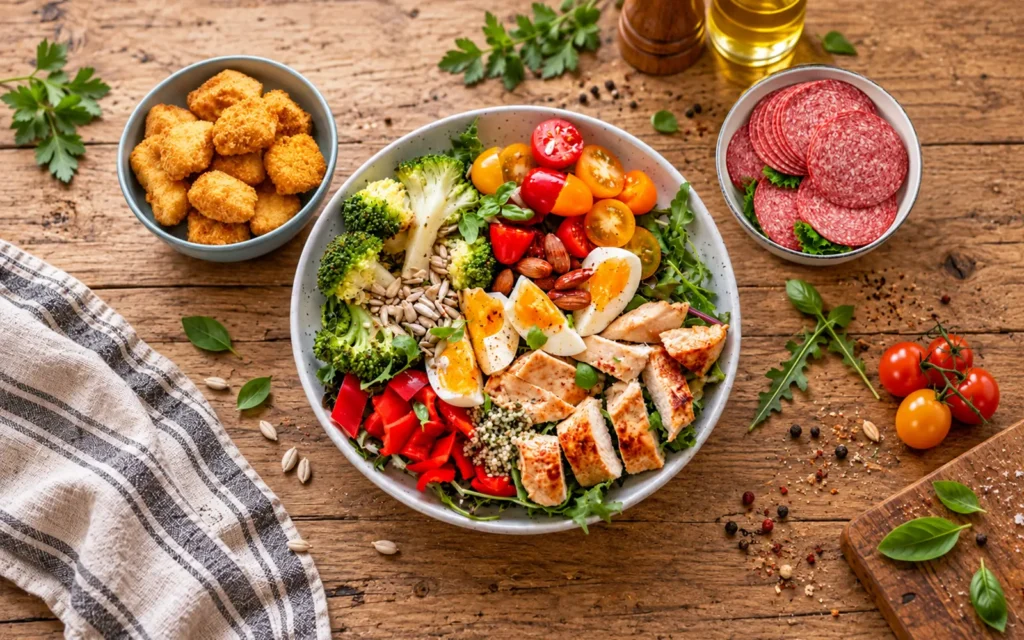
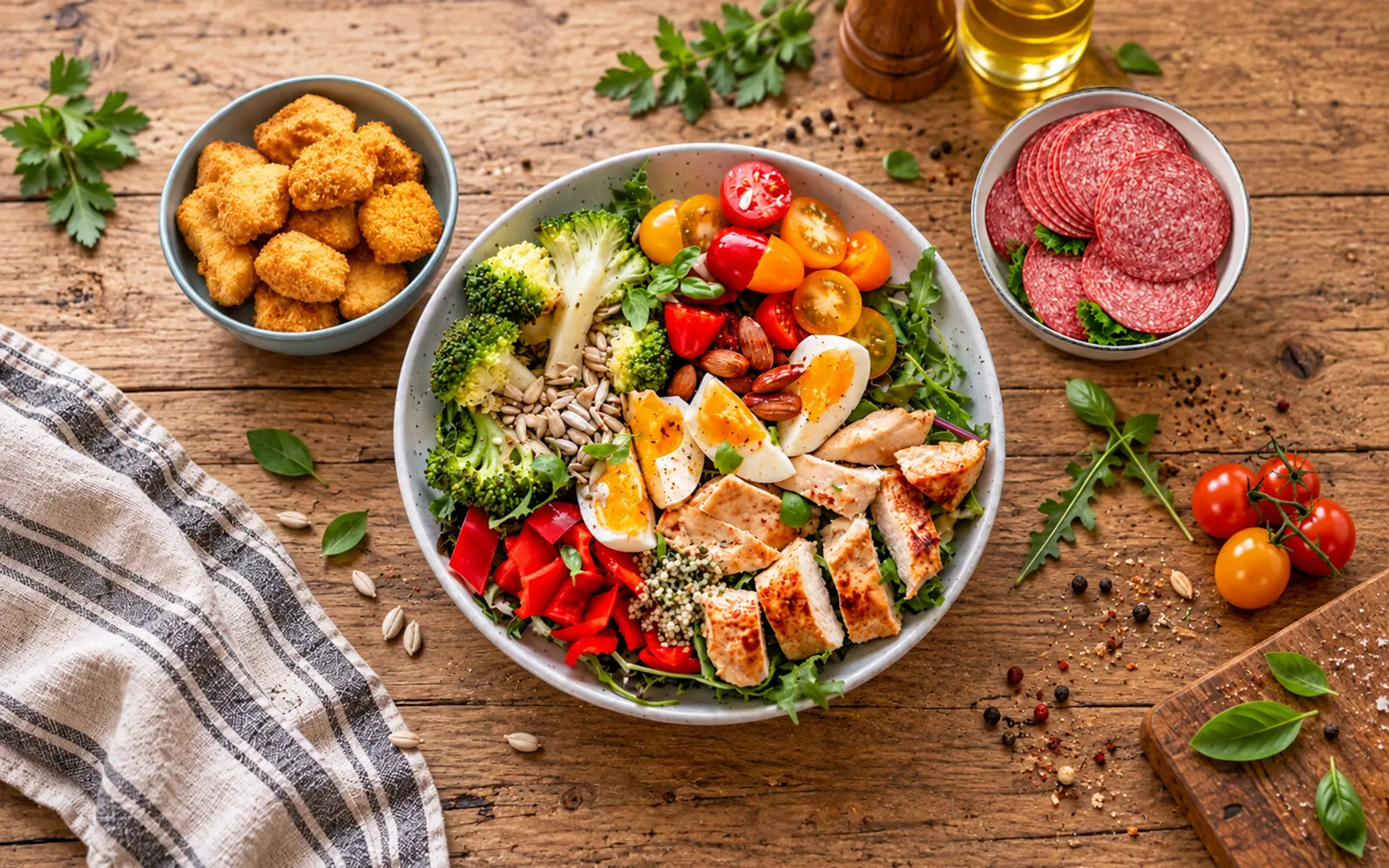
Grilled chicken with vegetables and beans is different from heavily breaded fried chicken with refined sides and a sugary drink.
Cheese used as part of a vegetable-rich meal is different from a meal in which cheese and processed meat dominate.
Context matters.
The Clearest Health Evidence Is Cardiovascular
The Mediterranean diet has been studied across many health outcomes, but some of the most persuasive evidence concerns cardiovascular health.
The corrected PREDIMED trial found fewer major cardiovascular events among high-risk adults assigned to Mediterranean diets supplemented with extra-virgin olive oil or nuts.
The CORDIOPREV trial asked a different question. More than 1,000 people who already had coronary heart disease were assigned to a Mediterranean diet or a low-fat diet and followed for seven years. Major cardiovascular events occurred less frequently in the Mediterranean group. The study population was predominantly male, so the exact result should not be assumed to apply identically to every population, but the trial provides important long-term evidence in people with established heart disease.
This is one reason the American Heart Association continues to recommend Mediterranean-style eating as a credible way to support cardiovascular health.
For readers, the important conclusion is straightforward:
This is not simply a fashionable diet. It is a well-studied way of eating with substantial evidence behind it, particularly for cardiovascular health.
The Metabolic Evidence Points in the Same Direction
The Mediterranean approach also fits well with what we know about metabolic health.
A 2025 systematic review encompassing nearly one million participants found that greater adherence to a Mediterranean diet was associated with a lower incidence of type 2 diabetes, with the overall observational evidence judged to be of moderate certainty.
Among people who already have type 2 diabetes, randomized trials have also found modest improvements in measures such as HbA1c and fasting glucose compared with control diets.
Why might this way of eating help?
There is probably no single mechanism.
More fiber.
Better carbohydrate quality.
More unsaturated fats.
Fewer sugary beverages and refined foods.
More legumes.
More vegetables.
Different protein sources.
Possible improvements in body weight and waist circumference for some people.
Each contributes something.
The benefit is easier to understand when we stop looking for one metabolic hero.
The Longevity Evidence Is Encouraging
Large observational studies also consistently find that people who more closely follow Mediterranean-style eating tend to have lower overall mortality.
A 2026 systematic review conducted for the Italian Mediterranean Diet Guidelines included 54 cohort studies, approximately 1.83 million participants, and more than 346,000 deaths. Greater adherence was associated with progressively lower all-cause mortality, with the overall evidence rated moderate certainty.
Because these are observational data, they cannot prove that the diet alone lengthens life.
People who eat differently may also exercise differently, smoke less, have different socioeconomic circumstances, or engage in other health behaviors.
But the direction of the evidence is consistent with the randomized cardiovascular findings and with established knowledge about many of the foods emphasized.
The practical message does not require claiming immortality from olive oil.
It simply reinforces that this is a credible long-term way to eat, not a short-lived diet trend.
You Do Not Need Wine to Follow a Mediterranean Diet
Wine is one tradition that should not be mistaken for a health requirement.
Historically, wine has accompanied meals in some Mediterranean cultures, which is why older descriptions of the diet sometimes included moderate alcohol consumption.
That does not mean people should begin drinking for health.
Current American Heart Association guidance is explicit: if you do not drink alcohol, do not start. If alcohol is consumed, intake should be limited.
A Mediterranean way of eating loses nothing essential when alcohol is absent.
Vegetables still matter.
Beans still matter.
Whole grains still matter.
Olive oil, nuts, fruits, and fish still matter.
Wine is optional.
Health does not require it.
What Mediterranean Eating Looks Like in Everyday Life
The most useful Mediterranean diet is not the one you can describe perfectly.
It is the one you can actually eat.
The following principles can guide ordinary food decisions without requiring special recipes:
- Make vegetables and fruits routine, not occasional. Let vegetables occupy a substantial place at lunch and dinner, and use fruit regularly for snacks or dessert.
- Eat beans, lentils, or chickpeas often enough that they become familiar foods. They can replace some meat-based meals rather than merely accompany them.
- Choose whole grains more often than refined grains. Think oats, whole-grain bread, barley, bulgur, brown rice, or other culturally appropriate whole grains.
- Use unsaturated fats as your usual fats. Olive oil is traditional and well studied, but the larger goal is replacing some saturated fat with unsaturated sources.
- Choose fish, seafood, legumes, nuts, seeds, poultry, and other nutritious protein sources more often than processed meat and frequent large servings of red meat.
- Keep sugary drinks, sweets, and highly processed snack foods from becoming everyday staples. They do not have to disappear; they simply should not displace more nourishing foods.
- Think in substitutions rather than additions. The most useful question is often not “What healthy food can I add?” but “What can this healthier choice replace?”
That final principle may be the easiest one to carry into the grocery store.
A Mediterranean Breakfast Does Not Have to Look Mediterranean
Breakfast could be oatmeal with berries, walnuts, and plain yogurt.
It could be whole-grain toast with eggs, tomatoes, and fruit.
It could be a culturally familiar breakfast built from beans, vegetables, whole grains, or other minimally processed foods.
Nothing requires feta cheese or olives at 8 a.m.
The same is true at lunch and dinner.
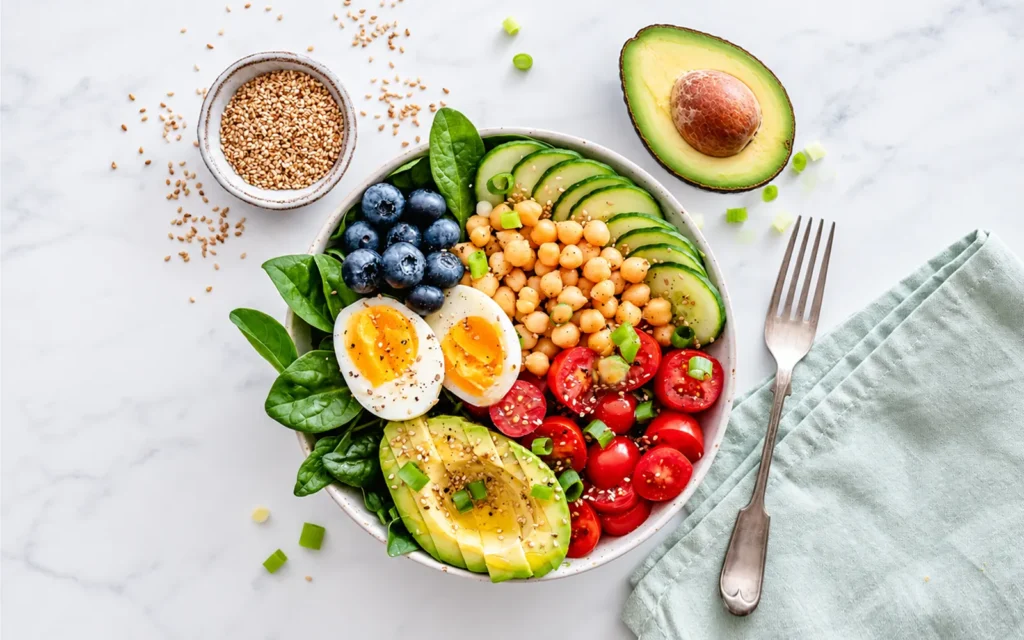
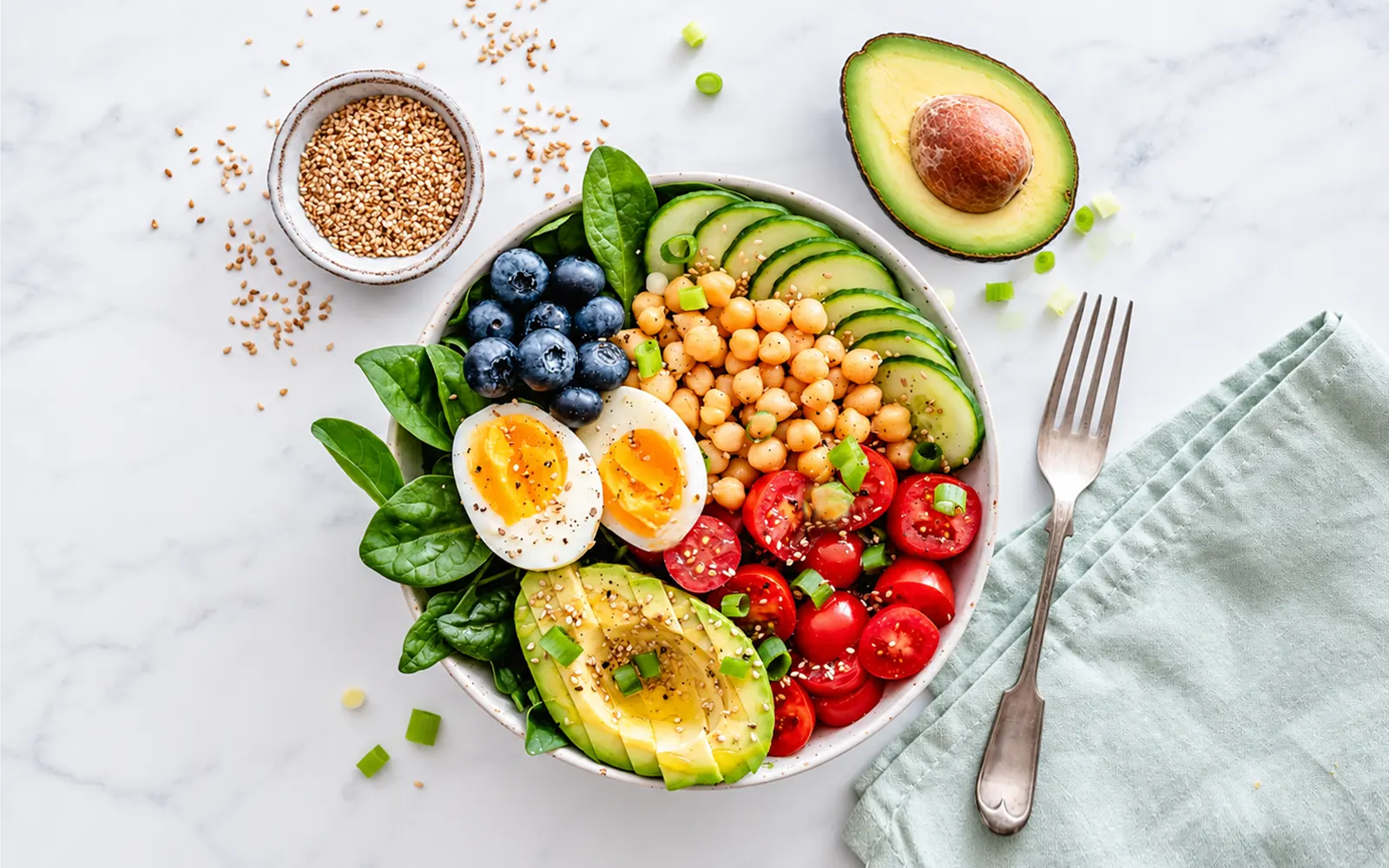
A black-bean bowl with brown rice, vegetables, avocado, and salsa can follow many of the same nutritional principles without being Mediterranean cuisine.
So can an Asian-inspired meal built around vegetables, tofu, brown rice, and a modest amount of unsaturated oil.
Or an Indian meal based on lentils, vegetables, whole grains, herbs, and spices.
The lesson is transferable.
Mediterranean principles do not require Mediterranean recipes.
The Grocery Cart May Matter More Than the Recipe Book
If you want to move toward Mediterranean-style eating, the grocery cart is a better place to begin than a specialty cookbook.
Buy more foods from which meals can be built:
vegetables,
fruit,
beans and lentils,
whole grains,
nuts and seeds,
fish or other healthy protein sources,
plain yogurt or other appropriate dairy foods,
and unsaturated plant oils.
When those foods are routinely available at home, meals begin changing naturally.
When the house is stocked primarily with refined snacks, sweets, processed meat, and convenience foods, willpower has to fight the environment several times every day.
Healthy eating becomes easier when the foods needed to support it are already there.
Frozen and Canned Foods Still Count
Mediterranean-style eating does not require farmers’-market perfection.
Frozen vegetables are vegetables.
Frozen berries are berries.
Canned tomatoes can be extremely useful.
Canned chickpeas and beans can turn a meal into something substantial in minutes.
Canned salmon, sardines, or tuna can make seafood practical.
Whole-grain bread does not need to be baked at home.
The current cardiovascular evidence increasingly favors minimally processed foods over diets dominated by ultra-processed products, but processing and nutrition are not the same thing.
The practical goal is nourishing food, not culinary hardship.
You Can Start Without Changing Everything
People often abandon dietary changes because the starting point feels too large.
Mediterranean eating does not require an overnight transformation.
If vegetables are currently rare, increase them.
If refined grains dominate, replace some with whole grains.
If meat appears every night, make one or two meals bean- or fish-based.
If butter is the primary cooking fat, use olive oil or another unsaturated oil more often where appropriate.
If sugary drinks are routine, make water the usual beverage.
If sweets are the automatic dessert, let fruit take that role more often.
Each change may seem modest.
Together, they alter the entire way of eating.
Do Not Turn a Flexible Diet Into Another Set of Rules
The Mediterranean diet’s flexibility is one of its greatest practical strengths.
That can be lost if we turn it into a purity test.
You do not need to eat fish a prescribed number of times every week to receive any benefit.
You do not need to eliminate red meat.
You do not need to avoid every dessert.
You do not need imported olive oil, exotic grains, or expensive specialty foods.
And you do not need to feel guilty when a meal does not fit the ideal.
Health reflects what we do repeatedly far more than what happens at one dinner.
That principle is consistent with the broader evidence on healthy eating: durable food choices matter more than nutritional perfection.
It Is Not the Only Healthy Way to Eat
Mediterranean-style eating has a strong evidence base.
That does not make it the only scientifically credible diet.
Other well-designed approaches—including DASH-style eating and carefully planned vegetarian diets—share many of its strengths.
They emphasize vegetables and fruits.
Whole grains.
Legumes.
Nuts.
Healthy protein sources.
Unsaturated fats.
And fewer foods high in refined carbohydrates, added sugars, sodium, saturated fat, or heavy industrial processing.
The Mediterranean diet may therefore be most useful not as a rigid identity but as a practical demonstration of what a healthy way of eating can look like.
The Real Lesson Is Bigger Than Mediterranean Food
A healthy diet rarely succeeds because one extraordinary ingredient compensates for everything else.
It succeeds because the foods eaten most often reinforce one another.
Vegetables bring fiber and micronutrients.
Legumes bring fiber and protein.
Whole grains improve carbohydrate quality.
Nuts and olive oil provide unsaturated fats.
Fish changes the mix of protein and fat.
Fruit can replace sweets.
Less processed meat makes room for other proteins.
Fewer sugary drinks make water the ordinary beverage.
None of those decisions needs to be dramatic.
Together, they become powerful.
The Mediterranean diet matters not because every meal must be Mediterranean, but because it shows how ordinary food choices, repeated over time, can add up to a healthier way of eating.
That is the takeaway worth carrying beyond this article.
Do not search for the one food that will make your diet healthy.
Build meals from foods that already bring something valuable with them.
Let vegetables and plant foods occupy more space.
Choose better sources of fat and carbohydrate.
Vary your protein.
Let highly processed foods and sweets become smaller parts of the whole.
And improve what you already eat one substitution at a time.
That is Mediterranean eating at its most useful—not a cuisine to imitate perfectly, but a way of making everyday food decisions more supportive of long-term health.
Nutrition and Health Disclaimer
This article is intended for general educational purposes and is not individualized nutrition or medical advice. Dietary needs can differ substantially for people with diabetes requiring medication adjustment, kidney disease, food allergies, gastrointestinal disorders, malnutrition, eating disorders, swallowing difficulties, or other medical conditions. People who require therapeutic dietary modification should seek individualized guidance from an appropriately qualified healthcare professional or registered dietitian. Alcohol is not required for Mediterranean-style eating, and people who do not drink alcohol should not begin drinking for presumed health benefits.