









Protein may be the most celebrated nutrient of the moment.
It appears prominently on yogurt containers, snack bars, cereals, shakes, powders, breads, and foods that would once have been marketed for entirely different reasons. Grocery shelves increasingly promise “high protein,” while fitness culture often treats protein almost as shorthand for building muscle.
Protein deserves attention.
But not because everyone needs to turn every meal into a protein challenge.
Its importance is much broader—and more interesting—than that.
Protein provides amino acids the body uses to build, maintain, replace, and regulate an extraordinary range of structures and processes. Muscle is one of them, but so are enzymes, transport proteins, antibodies, connective tissues, many signaling molecules, and proteins involved throughout the body’s organs and cells. The World Health Organization describes dietary protein as supplying building blocks for both structural tissues and functional molecules such as enzymes and hormones.
And unlike a nutrient with one fixed requirement throughout adulthood, the practical importance of protein changes with what the body is being asked to do.
A growing child is constructing new tissue.
Pregnancy adds the demands of maternal and fetal growth.
Exercise creates remodeling and repair.
Illness or injury may increase tissue breakdown or recovery demands.
Later in life, maintaining muscle becomes progressively more important even as appetite and total food intake may decline.
The nutrient is the same.
The biological circumstances are not.
Protein Is Really About Amino Acids
When we eat protein, the digestive system breaks much of it down into amino acids and small peptides that can be absorbed and reused.
Those amino acids enter a constantly changing metabolic pool.
The body can assemble them into new proteins, modify them for other purposes, or—when necessary—use their carbon skeletons as an energy source.
This continuous construction and breakdown is known broadly as protein turnover.
Your muscle proteins today are therefore not simply the same molecules you built years ago and stored permanently. Tissues are continually being maintained, repaired, dismantled, and rebuilt.
Human proteins are assembled from amino acids, but not every amino acid has to come directly from food. The body can manufacture several of them.
Others are indispensable, or essential, amino acids because we cannot synthesize enough of them ourselves and must obtain them through the diet. Protein quality partly reflects whether a food provides these essential amino acids in useful proportions and how effectively its protein can be digested and absorbed.
That is why protein nutrition is about more than the number of grams on a label.
The body ultimately needs usable amino acids.
Muscle Gets the Attention, but Protein Works Throughout the Body
Muscle is an obvious place to see protein at work because muscle can grow, shrink, strengthen, and respond visibly to training.
But dietary protein supports far more than skeletal muscle.
Proteins provide structural components of skin and connective tissues. Enzymes enable chemical reactions. Antibodies participate in immune defense. Transport proteins move substances through blood and across cell membranes. Protein is involved in tissue repair and wound healing.
This broader role becomes particularly important during periods of growth, recovery, or inadequate food intake.
When dietary energy and protein are insufficient, the body still needs amino acids for essential functions. It can obtain some by breaking down existing body proteins.
That is one reason maintaining adequate protein intake matters: the body’s protein-containing tissues are functional assets, not merely an aesthetic reserve.
“Protein matters not because more is always better, but because the body is always building, maintaining, repairing, and adapting—and the amount that best supports those jobs changes with the life we are asking the body to live.”
How Much Protein Do We Need? The Answer Is More Complicated Than One Number
Protein recommendations can appear surprisingly contradictory.
One source says 0.8 grams per kilogram of body weight per day.
Another says 1.2 to 1.6 grams.
Sports guidance may suggest still more.
Why?
Part of the answer is that these numbers do not always address exactly the same question.
The longstanding U.S. Dietary Reference Intake establishes an adult Recommended Dietary Allowance of 0.8 g/kg/day. The RDA is intended to meet the nutrient requirement of nearly all healthy people in a population; it should not be interpreted as a maximum intake.
The guidance landscape is also changing.
The current Dietary Guidelines for Americans, 2025–2030, released in 2026, now presents a broader protein target of 1.2–1.6 g/kg/day as part of its current dietary guidance. Meanwhile, the formal protein DRI remains under review through the joint U.S.-Canadian Dietary Reference Intake process.
That distinction is important.
The older 0.8 g/kg figure remains the formal adult RDA. The newer Dietary Guidelines use a higher target intended to support broader nutritional goals. Exercise organizations and geriatric-nutrition experts may recommend different amounts again for particular populations.
Rather than treating one number as universally correct and all others as wrong, it is more useful to ask:
What outcome, life stage, activity level, and health condition is the recommendation intended to support?
Protein Needs Change Because the Body’s Job Changes
Protein requirements and priorities are not identical throughout life.
Several periods deserve particular attention:
- Growth: children and adolescents are not only maintaining existing tissue; they are building new tissue as the body develops.
- Pregnancy and lactation: additional protein supports maternal changes, fetal growth, and later milk production.
- Regular exercise: endurance and resistance training increase protein turnover, remodeling, and recovery demands.
- Illness, injury, or recovery: some conditions increase protein breakdown or make preserving lean tissue more difficult, although medical circumstances can also change what intake is appropriate.
- Older adulthood: maintaining muscle becomes increasingly important, while the muscle-building response to a given amount of dietary protein may become less robust.
This is why an individual’s appropriate intake cannot always be inferred from age alone—or from a generic number printed on a nutrition website.
Growing Bodies Need Protein for More Than Maintenance
Children need protein because growth requires new biological material.
The proportionate protein requirement per kilogram of body weight is therefore generally higher in early life and gradually declines as growth slows. WHO protein-requirement models explicitly separate the protein needed for maintenance from the additional amount required for growth in infants, children, and adolescents.
This does not mean children need protein powders or specialized high-protein products under ordinary circumstances.
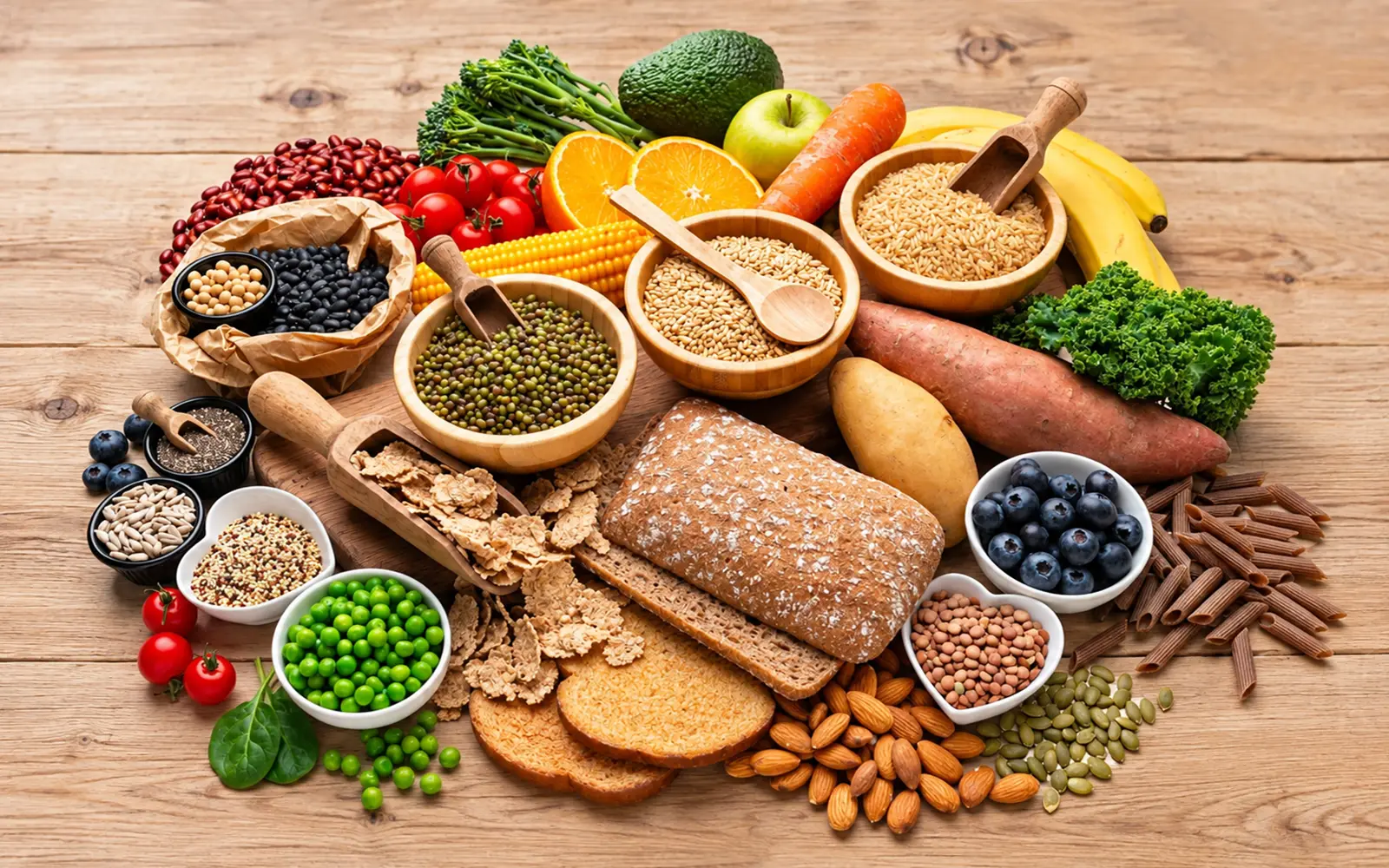
A varied diet containing appropriate combinations of dairy or fortified alternatives, eggs, beans, lentils, soy foods, seafood, meats, poultry, nuts, seeds, grains, and other foods can contribute protein along with energy and the many micronutrients required for growth.
In childhood especially, protein should not be considered in isolation from adequate total nutrition.
A growing body needs enough food—not simply more of one macronutrient.
Pregnancy and Lactation Change the Equation Again
Pregnancy requires additional protein because new maternal and fetal tissues are being formed.
The established U.S. DRI raises the protein RDA during pregnancy to approximately 1.1 g/kg/day and during lactation to about 1.3 g/kg/day, compared with the longstanding adult RDA of 0.8 g/kg/day.
But pregnancy nutrition is another example of why one nutrient should not dominate the conversation.
Protein matters alongside adequate energy, iron, folate, iodine, choline, calcium, essential fatty acids, and other nutrients.
A diet can be high in protein and still be nutritionally incomplete.
Protein is one part of the construction project.
It is not the whole blueprint.
Exercise Changes What the Body Does With Protein
Muscle provides perhaps the clearest example of nutrition and physiology working together.
Resistance exercise creates a signal that tells muscle tissue to adapt.
Dietary protein supplies amino acids that can be used in that remodeling process.
Neither should be confused with the other.
Eating protein without loading the muscles does not reproduce the effects of resistance training.
And training without adequate nutrition makes adaptation more difficult.
A large systematic review of 74 randomized trials found that increasing daily protein intake produced modest additional gains in lean body mass when combined with resistance exercise. The benefits were not limitless; adding progressively more protein does not continue increasing muscle indefinitely.
Sports-nutrition recommendations have therefore traditionally used higher ranges than basic population reference values. Professional guidance commonly places exercising adults around 1.2–2.0 g/kg/day, depending on training demands, energy availability, goals, and other circumstances.
The practical message is not that everyone who exercises needs the highest possible intake.
It is that a physically active body may have different nutritional priorities from a sedentary one.
After 60, Protein Becomes a Different Kind of Priority
One of the most important changes in protein nutrition occurs later in life.
Aging muscle can become somewhat less responsive to the anabolic effect of a given meal. Researchers often describe this as anabolic resistance.
That phrase does not mean older muscle has lost the ability to grow or repair.
Quite the opposite.
A 2026 systematic review and meta-analysis found modest reductions in resting and post-meal muscle protein synthesis in older compared with younger adults, while the anabolic response to exercise remained substantially preserved.
This distinction matters.
Older adults can still respond to both dietary protein and resistance exercise.
They may simply benefit from giving the body a sufficiently strong signal.
Expert groups focused on healthy aging have therefore often recommended around 1.0–1.2 g/kg/day for healthy older adults, with higher individualized amounts sometimes recommended during illness, malnutrition, or recovery.
The current U.S. Dietary Guidelines also place substantial emphasis on protein and nutrient density as people age. Earlier federal dietary surveillance found that protein-food intake tended to decline in the oldest age groups, particularly among adults over 70.
That creates a nutritional paradox.
Calorie needs may decline with age.
Protein remains important.
So the diet may need to become more nutrient-dense even as total food intake becomes smaller.
The Partnership Between Protein and Strength Training Becomes Especially Valuable With Age
Protein can provide the raw material for muscle.
It cannot give muscle a reason to remain strong by itself.
Mechanical loading provides that reason.
This is why the combination of protein adequacy and resistance exercise is more compelling than either idea considered in isolation.
Recent randomized-trial syntheses in older adults show that resistance training itself substantially improves strength and muscle adaptation, while protein supplementation can provide additional benefit in some populations—particularly where baseline intake is inadequate or sarcopenia is already present.
That is an important distinction for Nutrition.
The objective should not be to sell protein as a substitute for movement.
Nutrition supplies resources.
Training creates demand.
Together, they help maintain the tissue we depend on for physical function.
Does It Matter When We Eat Protein?
Protein discussions often move quickly from how much to when.
Should protein be consumed immediately after exercise?
At breakfast?
Before bed?
Evenly across every meal?
The biology gives these questions some plausibility. Protein ingestion stimulates muscle protein synthesis, and older adults may require a larger protein and essential-amino-acid stimulus at a meal than younger adults to obtain a comparable response.
But long-term evidence about the perfect daily distribution remains less definitive than popular nutrition advice sometimes suggests.
A systematic review examining even versus skewed protein distribution found some evidence associating a more even pattern with greater muscle mass, but insufficient evidence to conclude that even distribution reliably improves strength or protein turnover.
A more recent review reached a similar conclusion: the biological rationale for distributing meaningful protein across meals is strong, particularly in older adults, but the long-term effects on body composition remain less certain than the short-term muscle-protein-synthesis data.
So there is little reason to turn the clock into another source of food anxiety.
For many people, a sensible priority is:
first obtain enough protein across the day, then consider whether most of it is being concentrated into one meal while the others contain very little.
Protein Quality Matters—but “Complete” and “Incomplete” Can Oversimplify the Story
Protein foods differ in amino-acid composition and digestibility.
Many animal-derived proteins contain essential amino acids in proportions well suited to human needs and tend to be highly digestible.
Plant proteins are more variable.
But the common statement that plant foods contain “incomplete protein” can be misleading if it suggests they contain no essential amino acids or cannot support human protein needs.
Most protein-containing plant foods contain all essential amino acids, but one or more may occur in relatively lower proportions, and digestibility may differ. Across a varied diet, different protein sources can complement one another.
Modern protein-quality research therefore looks not only at total grams but at digestible indispensable amino acids available from foods and from the diet as a whole.
A 2025 meta-analysis comparing plant and animal proteins in randomized trials found a small average advantage of animal protein for muscle-mass outcomes, particularly for some non-soy plant proteins, but no significant overall difference for muscle strength or physical performance. Soy and milk protein did not differ significantly for muscle-mass changes in the pooled comparison.
Newer muscle-protein-synthesis evidence similarly suggests that differences between plant and animal proteins exist but are often modest and depend on age, protein source, quantity, amino-acid composition, and the rest of the diet.
So the useful question is not:
Which protein source wins?
It is:
Does my overall diet provide enough usable protein and essential amino acids while also giving me the other nutrients and foods I want it to provide?
A Protein Food Is More Than Its Protein
This is one of the most important ideas in practical nutrition.
Salmon is not simply protein.
It also supplies omega-3 fatty acids and micronutrients.
Lentils provide protein alongside fiber, carbohydrate, folate, minerals, and phytochemicals.
Yogurt can provide protein with calcium and other nutrients.
Nuts and seeds provide protein along with unsaturated fats and fiber.
Eggs contain protein but also multiple vitamins, minerals, fats, and other compounds.
Soy foods contribute protein within a very different nutritional package from meat.
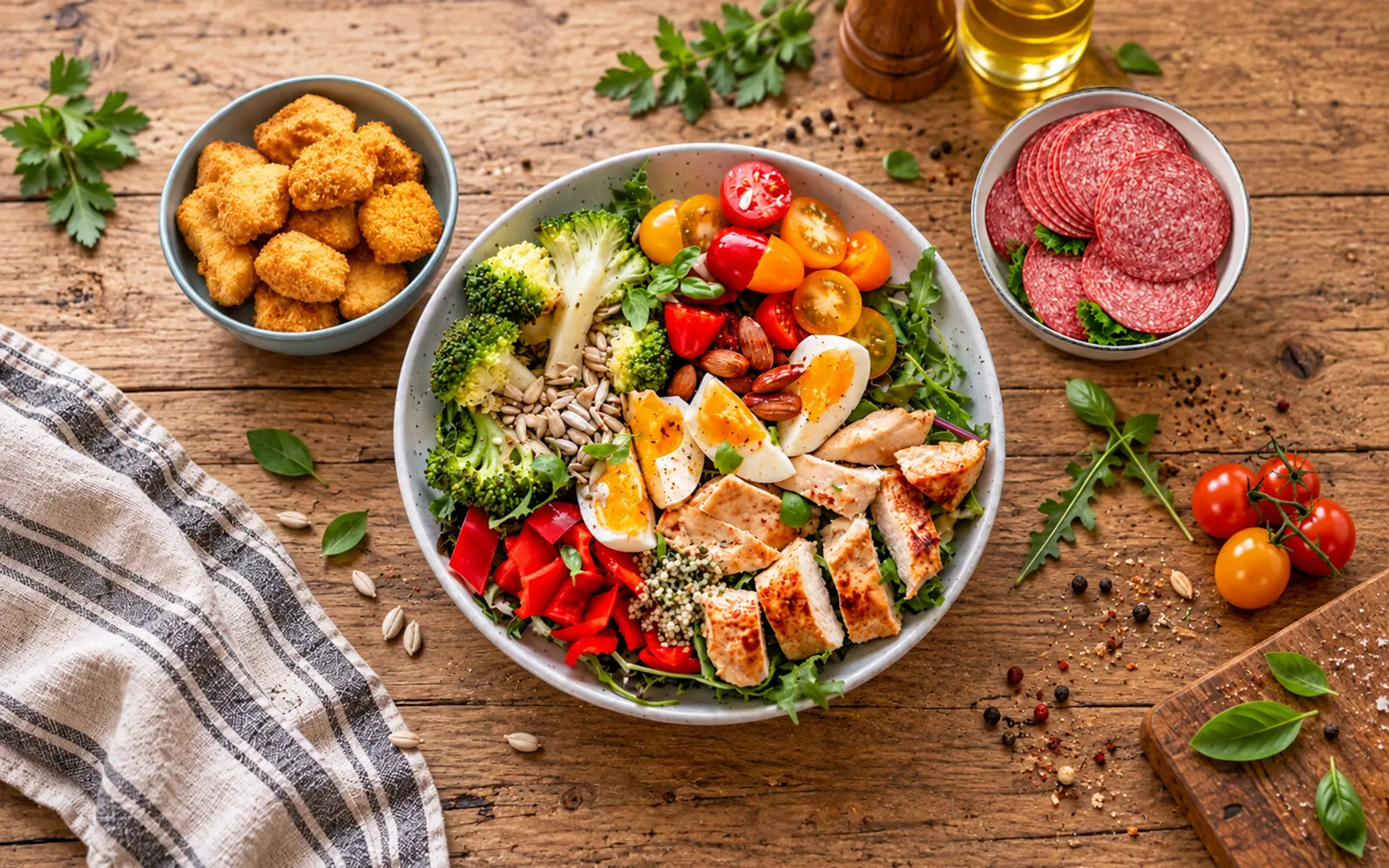
The National Institute on Aging therefore recommends variety among protein sources—including seafood, eggs, legumes, nuts, seeds, soy, and lean meats or poultry—rather than reducing the decision to protein grams alone.
This is where nutrition differs from nutrient arithmetic.
A food is a package.
The nutritional value of that package depends on much more than one number on the label.
You Do Not Have to Eat Animal Protein to Meet Protein Needs
A thoughtfully constructed vegetarian or vegan diet can provide adequate protein.
Plant-based eating does require some awareness of total intake and variety, particularly when calorie intake is low or protein needs are relatively high.
Legumes and soy foods can make substantial contributions. Nuts, seeds, grains, vegetables, and other foods add smaller amounts that accumulate across the day.
For people with greater needs—older adults, athletes, or those eating relatively little food—higher-protein plant foods, thoughtful combinations, or fortified products can make meeting requirements easier.
The important principle is not that plant proteins must be combined perfectly at every meal.
The body maintains an amino-acid pool, and proteins eaten throughout the day contribute to it.
Variety across the overall diet matters more than constructing a perfectly complementary protein pairing every time you sit down to eat.
Supplements Are Convenient, Not Automatically Superior
Protein powders can be useful.
They are portable.
They are easy to measure.
They may help an athlete meet a high protein target, an older adult with a small appetite increase intake, or someone with limited time add protein without preparing another full meal.
But a protein supplement is not inherently more effective because it comes in a container labeled for fitness.
Whole foods provide protein along with other nutrients and often contribute more to the overall dietary pattern.
A supplement solves a particular problem well:
conveniently delivering protein.
If that problem does not exist, there may be little reason to create it.
This is especially relevant in a food environment where protein is increasingly added to products simply because the word itself has become marketable.
The presence of extra protein does not automatically transform a food into a healthier choice.
More Protein Is Not Always More Useful
Protein has a biological purpose.
Once sufficient amino acids are available for current needs, eating progressively larger amounts does not force the body to build unlimited additional muscle.
Excess amino acids are not stored in a dedicated protein reservoir for some future workout. Nitrogen must be removed, and the remaining carbon compounds can enter pathways involved in energy production, glucose formation, or fat metabolism depending on the body’s circumstances.
For healthy adults, clinical trials of higher-protein diets have generally not shown clear biochemical evidence of kidney injury over the durations studied. A 2026 meta-analysis of randomized trials found increased estimated filtration with high-protein diets but no consistent rise in creatinine suggesting renal injury; importantly, most trials were relatively short, leaving long-term effects less certain.
That evidence applies to people without chronic kidney disease.
Kidney disease changes the discussion substantially.
Kidney Disease Is an Important Exception
Protein intake can require individual medical management in chronic kidney disease.
The 2024 KDIGO international clinical guideline suggests approximately 0.8 g/kg/day for many adults with stages G3–G5 chronic kidney disease and advises avoiding high protein intake above 1.3 g/kg/day in people with CKD who are at risk of progression. The same guideline emphasizes individualized dietary management and recognizes that frailty, sarcopenia, and metabolic instability can alter the appropriate target.
This is exactly why broad nutrition advice needs boundaries.
A protein amount that is perfectly reasonable for a healthy, resistance-training adult may not be appropriate for a person with significant kidney disease.
Nutrition becomes more individualized as medical complexity increases.
Protein Needs Can Rise While Appetite Falls
This is particularly important in later life.
A person may need to pay more attention to protein at the same time that eating becomes less appealing.
Taste and smell can change.
Chewing may become harder.
Large meals can feel less comfortable.
Social isolation can reduce motivation to prepare food.
Illness may reduce appetite.
Financial or practical limitations can narrow food choices.
A recent review of protein and aging highlighted many of these barriers and noted that protein intake often becomes more difficult to maintain as people grow older.
So telling an older person simply to “eat more protein” may miss the real problem.
The more useful question could be:
How can we make adequate protein easier to eat within the amount of food this person actually wants and can comfortably manage?
That may lead toward smaller protein-rich meals, softer foods, yogurt, eggs, fish, tofu, soups containing legumes, milk or fortified soy beverages, or other choices suited to the individual.
The best nutritional strategy is one that can actually be eaten.
Protein Should Strengthen the Diet, Not Crowd It Out
The current enthusiasm for protein can create another unintended problem.
Every increase in one part of the diet changes the room available for something else.
A person can pursue so much protein that vegetables, fruit, whole grains, legumes, healthy fats, and fiber-rich foods begin disappearing from the plate.
That would be a strange definition of nutritional success.
Protein belongs within a larger dietary pattern.
The current U.S. Dietary Guidelines place protein alongside vegetables, fruits, whole grains, dairy or alternatives, and healthy fats rather than presenting it as the sole organizing principle of healthy eating.
Nutrition is rarely improved by turning one valuable nutrient into the entire diet.
Think in Meals Before You Think in Supplements
For most people, protein intake can become more understandable by looking at ordinary eating patterns.
Does breakfast contain virtually none?
Does lunch contain a modest amount?
Does nearly all of the day’s protein arrive at dinner?
Are protein-rich foods present regularly?
Are those foods providing other valuable nutrients?
Is total food intake adequate?
For an older adult, is appetite making protein difficult to obtain?
For an athlete, is training volume changing recovery demands?
For someone eating entirely plant-based, is there enough variety and total intake?
Those questions tell us more than simply asking whether a pantry contains protein powder.
The most useful protein strategy is usually not exotic.
It is deliberate enough to meet the body’s needs and flexible enough to fit real life.
Protein Changes Meaning Across a Lifetime
Early in life, protein supports growth.
Through adulthood, it helps maintain and continually rebuild tissues.
During pregnancy and lactation, demands rise to support new biological work.
During training, it participates in adaptation and recovery.
During illness or injury, nutritional needs can change again.
And later in life, adequate protein becomes increasingly important as we work to preserve muscle, strength, function, and physical independence.
The lesson is not that everyone should continually eat more protein as they age.
It is that the same nutrient can serve different priorities at different stages of life.
That is a more useful way to think about protein than treating it as either a fitness product or a number to maximize.
Protein matters not because more is always better, but because the body is always building, maintaining, repairing, and adapting—and the amount that best supports those jobs changes with the life we are asking the body to live.
A good diet does not worship protein.
It gives the body enough of it, from foods that contribute to an overall nourishing pattern, at the times in life when that need deserves particular attention.
Nutrition and Health Disclaimer
This article is intended for general educational purposes and is not individualized nutrition or medical advice. Protein needs can vary substantially with age, body size, pregnancy or lactation, physical activity, total energy intake, illness, injury, frailty, and other factors. People with chronic kidney disease, significant liver disease, metabolic disorders, malnutrition, swallowing difficulties, unexplained weight loss, or other medical conditions affecting nutrition should seek individualized guidance from an appropriately qualified healthcare professional or registered dietitian before substantially changing protein intake.