








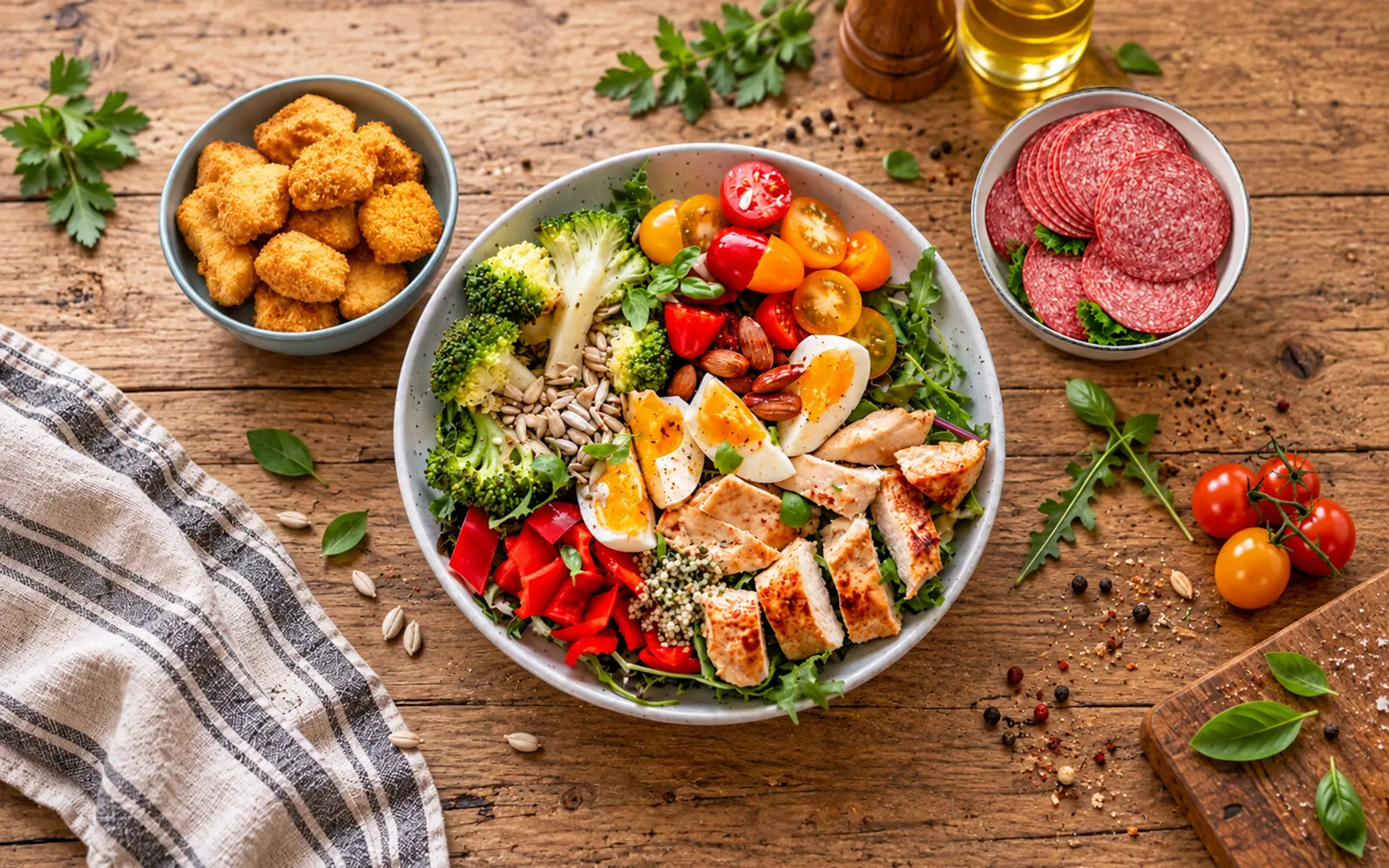

Walk through almost any supermarket and you will encounter foods in radically different forms.
Fresh apples sit a few aisles away from apple-flavored snack bars.
Potatoes share the store with potato chips.
Whole oats appear alongside brightly sweetened breakfast cereals.
Chicken breasts, frozen dinners, canned beans, yogurt, pastries, nuts, soft drinks, whole-grain bread, and candy may all technically be described as “processed” to some degree.
That is where nutrition advice can become unnecessarily confusing.
The important distinction is not between food that has been touched by processing and food that has not.
The more useful distinction is between foods that largely retain their original nutritional structure and products that have been extensively reformulated from refined ingredients and are designed for convenience, shelf life, intense palatability, and easy consumption.
The practical message is straightforward:
Build most of your diet around whole or minimally processed foods. Use nutritious processed foods where they make life easier. Limit foods that are highly or ultra-processed, particularly when they begin replacing vegetables, fruits, legumes, whole grains, nuts, seeds, and other nutrient-rich foods.
That conclusion is increasingly supported by both public-health guidance and scientific research. The current Dietary Guidelines for Americans emphasize whole, nutrient-dense foods and recommend reducing highly processed foods, particularly those high in refined carbohydrates, added sugars, excess sodium, and less favorable fats.
Processing Itself Is Not the Problem
Before discussing what can go wrong with processed foods, it helps to remove one misconception.
Processing is not automatically harmful.
Humans have been processing food for thousands of years.
Cooking makes many foods safer and easier to digest.
Fermentation produces foods such as yogurt.
Freezing preserves fruits and vegetables.
Canning allows beans, tomatoes, fish, and other foods to remain safe and available for months.
Pasteurization dramatically improves the safety of milk.
Grinding grain makes bread possible.
None of these processes automatically turns a nutritious food into an unhealthy one.
Consider frozen broccoli.
It has been harvested, washed, cut, usually briefly blanched, frozen, packaged, transported, and stored.
That is considerable processing.
Yet it remains broccoli.
The same principle applies to canned beans, plain yogurt, frozen berries, canned tomatoes, oatmeal, and many other useful foods.
The health concern begins to increase when processing does something fundamentally different: when a food is largely broken apart, refined, reformulated, combined with other refined ingredients, and turned into a product whose nutritional and physical properties can be very different from those of the original foods.
That is where ultra-processed foods enter the discussion.
“The goal is not to eliminate processing from our food. It is to keep processing from replacing the foods that nourish us best.”
What Makes Whole Foods Different?
Whole and minimally processed foods tend to retain more of the structures in which nutrients naturally occur.
An orange contains sugar, but it also contains water, fiber, vitamins, plant compounds, and intact cellular structures.
A handful of almonds contains fat, but it also provides protein, fiber, minerals, and a physical food matrix that requires chewing and digestion.
Beans contain carbohydrate, but they also provide fiber, protein, resistant starch, minerals, and substantial volume.
These characteristics influence how food is eaten, digested, absorbed, and experienced.
Whole and minimally processed foods frequently provide combinations of:
- fiber, which supports digestive health and can influence fullness, blood glucose, cholesterol, and the gut environment;
- protein, which contributes to tissue maintenance and can support satiety;
- vitamins and minerals, delivered within the food rather than added simply to improve a product’s nutritional profile;
- water and physical volume, which can make foods satisfying without concentrating enormous amounts of energy into a small portion;
- intact food structure, requiring more chewing and generally slowing the rate at which food is consumed.
None of these features makes every whole food perfect.
The point is that whole foods generally arrive with a nutritional package that is difficult to reproduce simply by taking refined ingredients apart and putting selected nutrients back in.
What Are Ultra-Processed Foods?
The most widely used scientific classification comes from the NOVA system.
Under NOVA, ultra-processed foods are generally industrial formulations made largely from substances extracted from foods or manufactured from food components, often combined with flavors, sweeteners, colors, emulsifiers, stabilizers, and other ingredients that create a finished product quite different from the original foods.
Common examples can include many:
- soft drinks,
- packaged sweets and pastries,
- candy,
- chips and similar snack products,
- sweetened breakfast cereals,
- instant noodles,
- processed meat products,
- some frozen prepared meals,
- and many packaged desserts and convenience foods.
The United States is currently working toward a uniform federal definition of ultra-processed foods, so classification is still evolving. But FDA acknowledges a substantial body of research linking high consumption of foods commonly considered ultra-processed with obesity, cardiovascular disease, type 2 diabetes, and other adverse outcomes.
For everyday eating, however, you do not need to memorize a scientific classification system.
The practical issue is easier to recognize.
If most of a product comes from refined starches, sugars, oils, isolated proteins, flavor systems, and other reconstructed ingredients rather than recognizable whole foods, it deserves more scrutiny as an everyday food.
Why Ultra-Processed Foods Can Make It Easier to Overeat
One of the strongest concerns about ultra-processed foods is not that one ingredient suddenly becomes poisonous.
It is that the final product can make consuming a great deal of energy remarkably easy.
Many ultra-processed foods are:
energy-dense,
soft or easy to chew,
quick to eat,
highly palatable,
available in large portions,
low in fiber relative to calories,
and combinations of refined carbohydrate, fat, salt, or sweetness that encourage continued eating.
This matters because appetite does not respond only to calorie totals printed on a package.
It also responds to the rate at which we eat, the amount of chewing involved, the volume of food, protein and fiber content, texture, stomach distension, sensory experience, and signals that develop as a meal progresses.
Food that disappears quickly can deliver a large amount of energy before those processes have had much time to contribute to fullness.
This is not merely theoretical.
A Controlled Experiment Showed What Can Happen
One of the most important experiments in this field was conducted at the National Institutes of Health.
Twenty adults lived at the NIH Clinical Center and alternated between an ultra-processed diet and an unprocessed diet.
The diets offered similar amounts of calories, macronutrients, sugar, sodium, and fiber, and participants were allowed to eat as much as they wanted.
During the ultra-processed diet, they voluntarily consumed about 500 more calories per day.
They gained weight.
During the unprocessed diet, they ate less and lost weight.
That does not mean every ultra-processed food makes everyone overeat.
It does demonstrate something important:
The form in which food is presented can affect how much we consume, even when many conventional nutrient measurements appear similar.
More recent research strengthens that idea.
A 2025 randomized crossover trial compared minimally processed and ultra-processed diets that were both designed to comply with healthy-eating guidelines. Participants lost weight on both diets, but they lost significantly more on the minimally processed diet.
So nutrient composition matters—but food processing and food structure can matter too.
Eating Quickly May Be Part of the Problem
Researchers are beginning to understand why.
A 2026 controlled trial compared two diets that were both ultra-processed but differed in how quickly the foods could be eaten.
When participants were given the slower-eating ultra-processed foods, they consumed substantially fewer calories than when they were given foods designed to be eaten rapidly.
That finding helps make the subject more practical.
The problem with many ultra-processed foods may not be a mysterious property hidden somewhere inside the package.
Part of the problem may be that industrial processing can produce foods that allow us to consume a lot of energy very quickly with relatively little chewing, volume, or natural resistance.
Think about the difference between eating several apples and drinking a large sweetened beverage.
Or eating boiled potatoes versus a large bag of potato chips.
Or eating oats with fruit versus a highly refined breakfast product.
The foods may share ingredients or nutrients.
The eating experience is very different.
Ultra-Processed Foods Often Concentrate What We Already Know Should Be Limited
Processing can also bring several established nutritional concerns together in the same product.
Many ultra-processed foods contain substantial amounts of:
refined carbohydrate,
added sugars,
sodium,
saturated fat,
and calories,
while providing relatively little fiber, potassium, or other nutrients naturally abundant in minimally processed plant foods.
That does not describe every ultra-processed food.
But it describes enough of them that diets dominated by these products often become nutritionally unbalanced.
A soft drink contributes energy without fiber or meaningful fullness.
A packaged pastry may combine refined flour, sugar, fat, and high energy density while supplying little fiber.
Processed snack foods can deliver substantial sodium and calories in portions that are easy to consume quickly.
These foods do not need to be “toxic” to become detrimental when they occupy too much of the diet.
Their impact can arise simply because they make it easier to consume more calories and fewer protective foods at the same time.
What Happens When Ultra-Processed Foods Dominate the Diet?
The long-term evidence points in a consistent direction.
A major 2024 umbrella review combined evidence from studies involving nearly 10 million participants. Higher exposure to ultra-processed food was associated with increased risk across multiple health outcomes, with particularly notable evidence involving cardiovascular disease, type 2 diabetes, obesity, and mortality.
Another large review found moderate-certainty evidence linking greater ultra-processed-food consumption with increased risk of all-cause mortality, cardiovascular disease, type 2 diabetes, and colorectal cancer.
An updated 2026 umbrella review likewise concluded that high ultra-processed-food intake was predominantly associated with adverse outcomes, including chronic metabolic and cardiovascular disease, while acknowledging that the evidence is stronger for some outcomes than others.
Much of that long-term research is observational, which means it cannot prove that processing alone caused every outcome.
But the consistency of the associations, together with controlled feeding evidence showing higher spontaneous calorie intake and greater weight gain on ultra-processed diets, makes the practical conclusion increasingly difficult to ignore:
A diet heavily dependent on ultra-processed foods is not the healthiest way to eat.
The Harm Is Also in What Ultra-Processed Foods Replace
Suppose someone eats cookies instead of fruit.
The difference is not simply that cookies have something undesirable in them.
The person also missed the fruit.
A sugary breakfast product may replace oats, berries, nuts, or eggs.
A fast-food meal may replace vegetables, legumes, whole grains, and minimally processed protein.
A packaged snack may replace nuts or yogurt.
Over time, this displacement matters enormously.
A diet cannot be rich in vegetables, fruits, legumes, whole grains, nuts, seeds, and other nutrient-dense foods if most of the available calories are already coming from products that contain very little of them.
This is why nutrition is not only about removing harmful exposures.
It is also about making room for beneficial foods.
Not Every Processed Food Belongs in the Same Category
This is the distinction the previous version did not make forcefully enough.
There is a major difference between processed and ultra-processed.
Processed foods that can comfortably fit into a healthy diet include:
- canned beans,
- frozen vegetables,
- frozen fruit,
- plain yogurt,
- canned fish,
- whole-grain bread,
- tofu,
- natural nut butter,
- canned tomatoes,
- and many minimally sweetened or lightly processed foods.
These foods have undergone processing, but the original food remains recognizable and much of its nutritional value remains intact.
They can make healthy eating easier rather than harder.
There is no nutritional prize for soaking every bean from dry, milling every grain yourself, or refusing frozen vegetables.
Convenience processing can be extremely useful.
The goal is not to eliminate technology from food.
The goal is to distinguish processing that preserves or prepares food from processing that reconstructs food into something nutritionally very different.
Whole-Grain Bread Shows Why the Distinction Matters
Bread is a good example.
A loaf made largely from whole-grain flour, water, yeast, and a modest amount of salt has obviously been processed.
Yet it can still provide whole-grain carbohydrate, fiber, minerals, and useful nutrition.
A highly refined packaged product made primarily from refined flour, added sugars, oils, flavorings, and multiple other ingredients may also be called bread.
Placing both into the same category simply because they are processed would tell us almost nothing.
The same applies to yogurt.
Plain yogurt made from milk and bacterial cultures is processed through fermentation.
A heavily sweetened dessert-style yogurt can contain much more added sugar and a very different nutritional profile.
Processing tells us part of the story. The resulting food tells us the rest.
The Ingredient List Is Useful, but You Do Not Need to Fear It
There is also no reason to become frightened by every ingredient you do not recognize.
A long ingredient name is not automatically harmful.
An unfamiliar ingredient is not automatically toxic.
And the health concerns surrounding ultra-processed foods have not been proven to result from one universal category of additives.
The more useful question is what the product has become overall.
Does it still resemble a nutritious food?
Does it provide meaningful fiber or protein?
Is added sugar one of the dominant ingredients?
Is sodium unusually high?
Is the food mostly refined starch, sugar, and fat?
Is it easy to consume large quantities without becoming satisfied?
Does it routinely replace a more nutritious option?
Those questions lead to better decisions than counting syllables in the ingredient list.
A Simple Way to Think About Food Processing
For everyday purposes, foods can be thought of in three broad groups—not as rigid scientific categories, but as a practical guide.
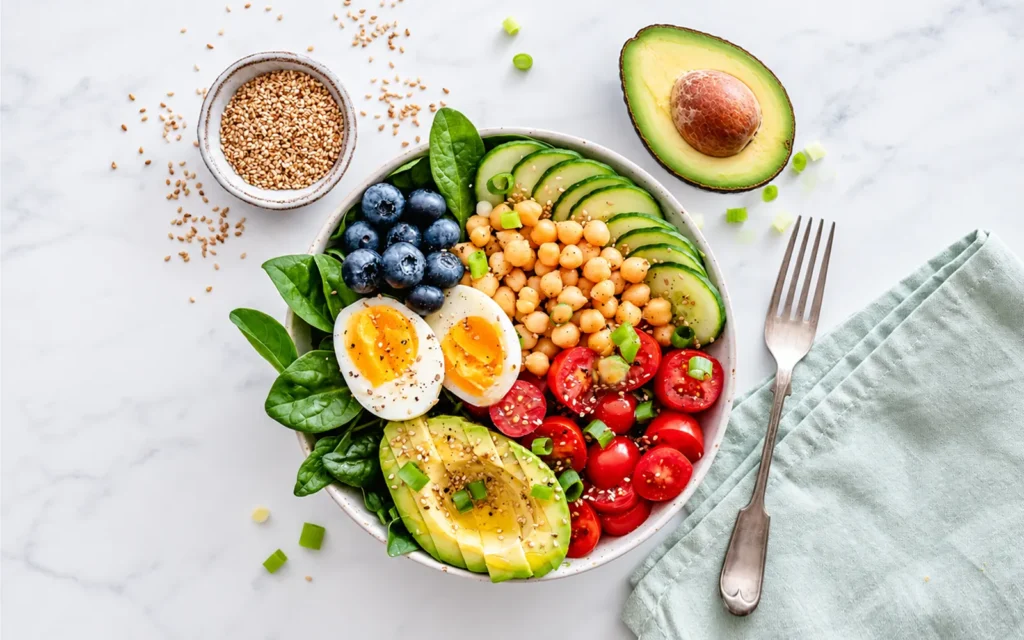
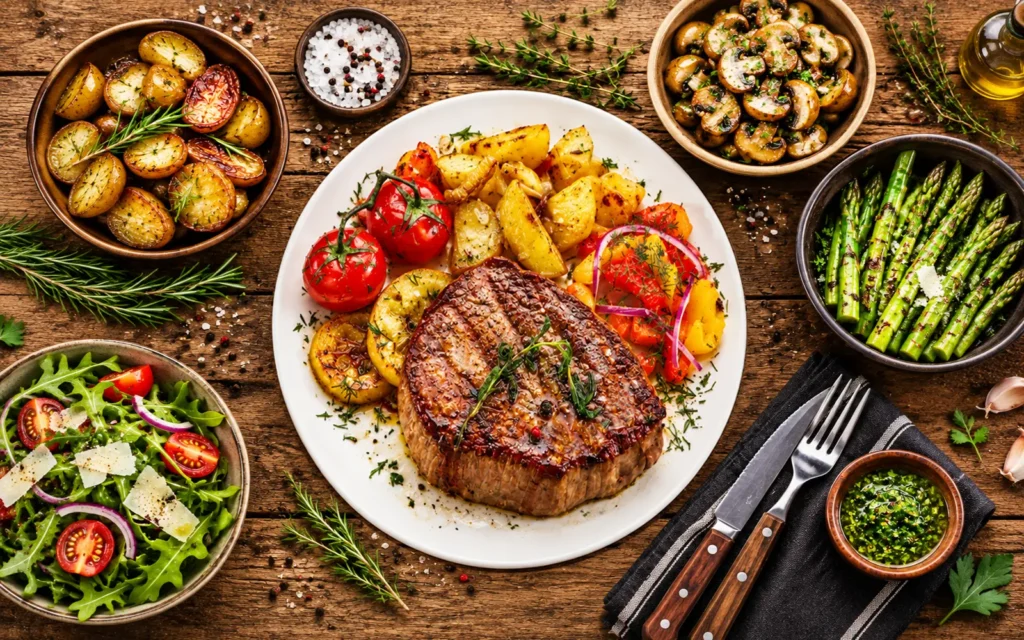
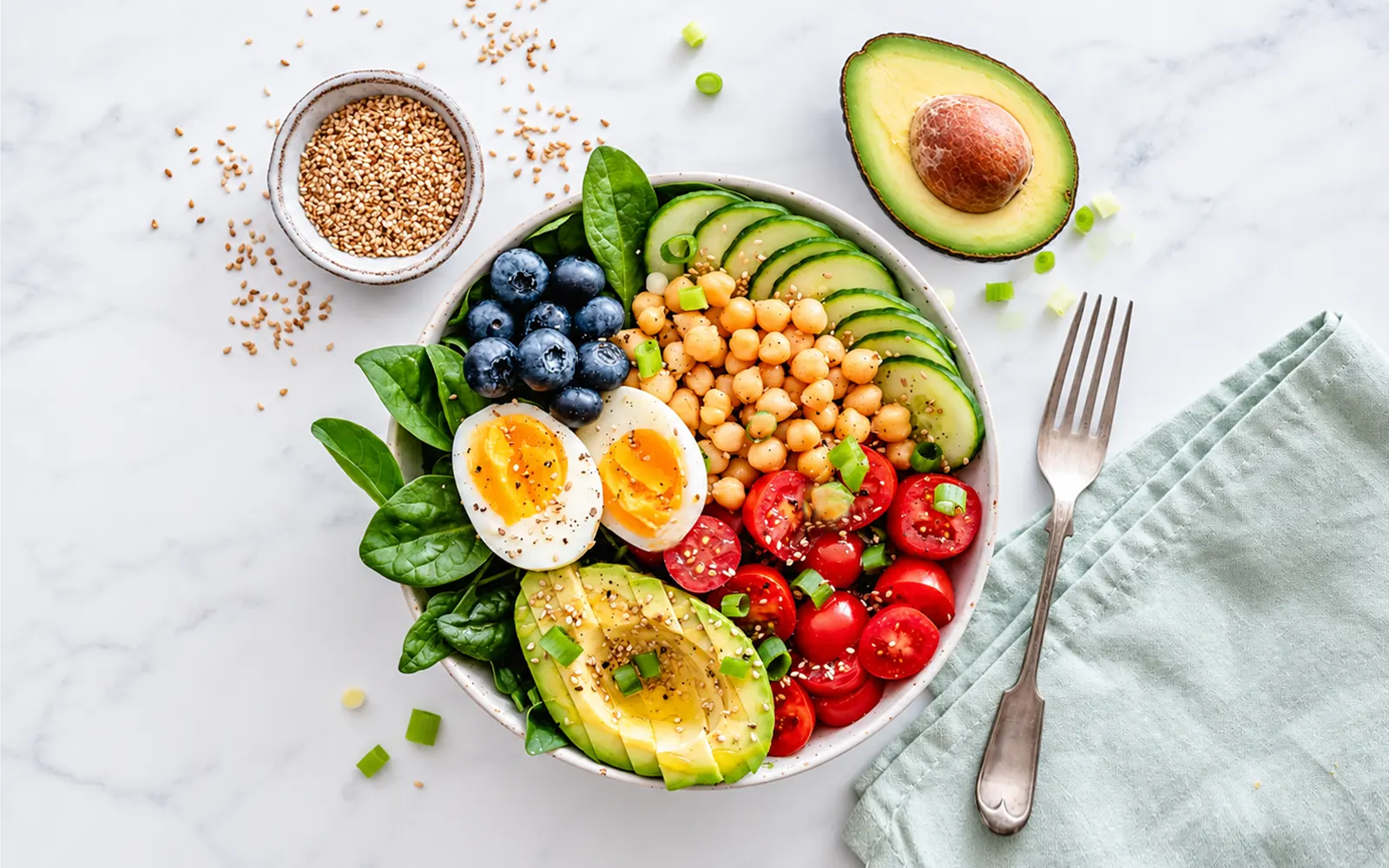
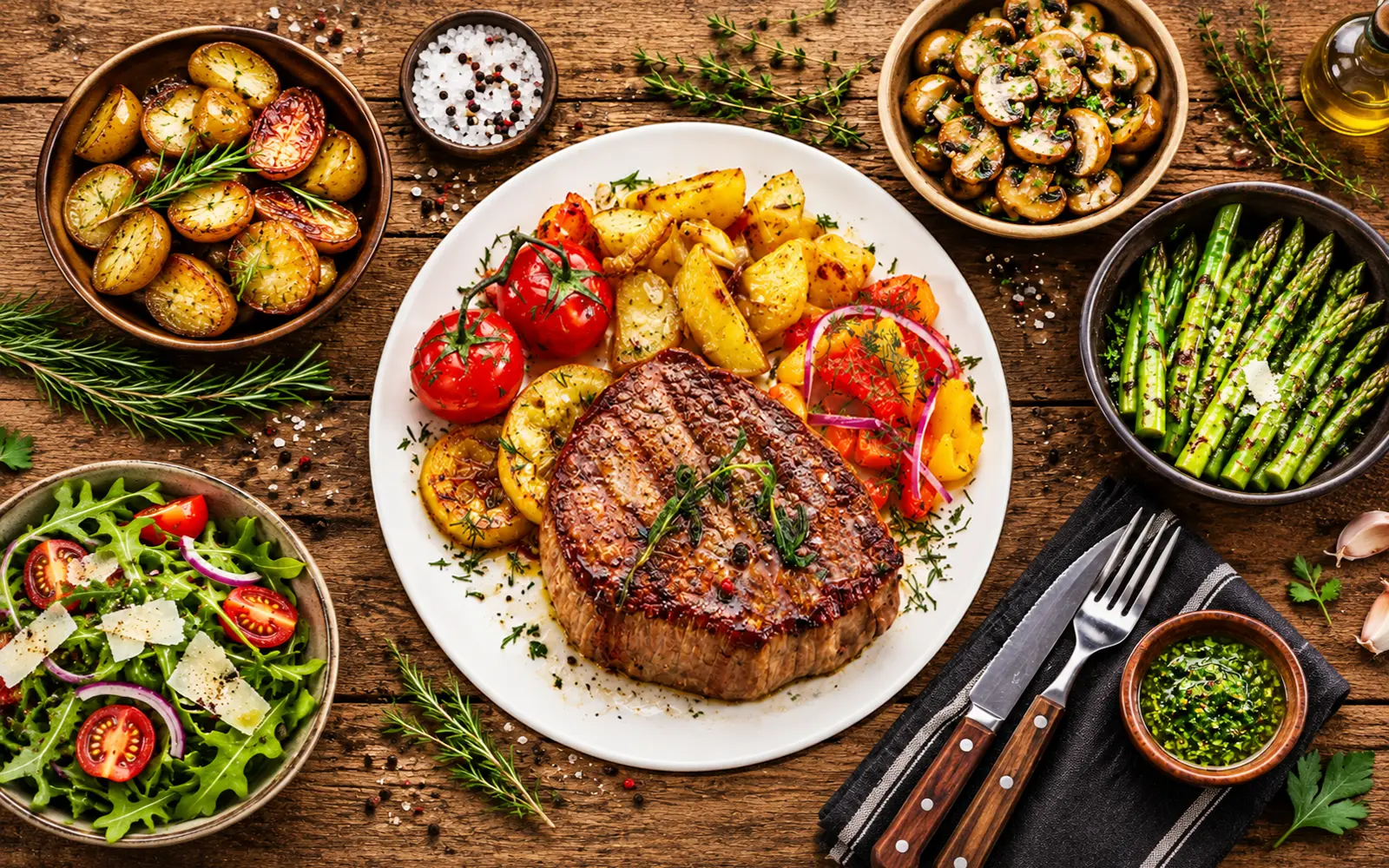
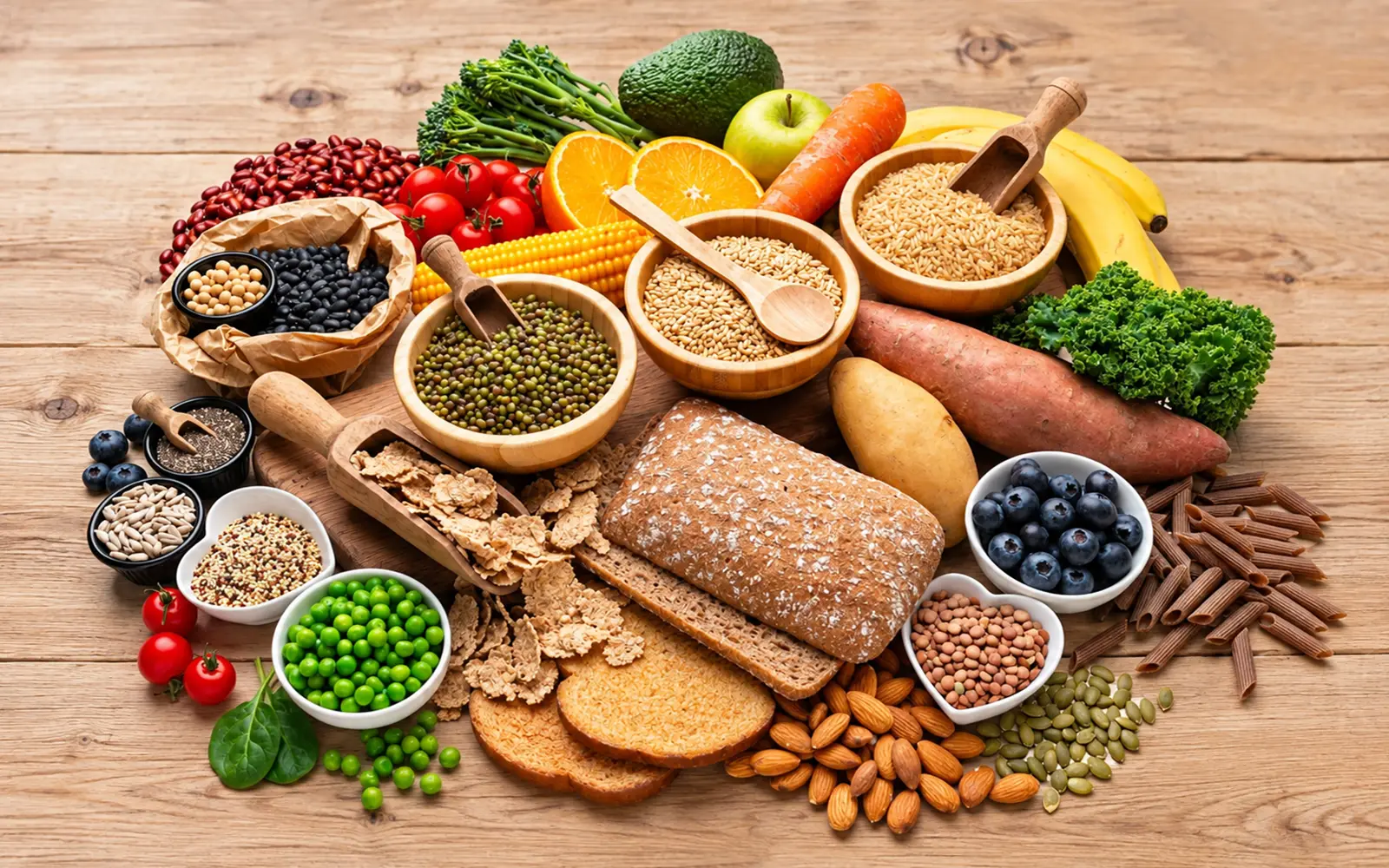
Make these the foundation: vegetables, fruits, beans, lentils, whole grains, nuts, seeds, eggs, fish, minimally processed meats, plain dairy foods, and other foods close to their original form.
Use nutritious processed foods freely when they help: frozen produce, canned beans, canned fish, plain yogurt, tofu, whole-grain breads, canned tomatoes, natural nut butters, and similar foods that remain nutritionally recognizable.
Limit foods that are highly refined and easy to overconsume: sugary drinks, candy, packaged pastries, many chips and snack foods, processed meats, heavily sweetened cereals, desserts, and many fast-food or ready-to-eat products built largely from refined ingredients.
This is not a system of forbidden foods.
It is a way of deciding which foods should dominate the diet and which should remain occasional.
You Do Not Need a Perfect Diet to Benefit
Nutrition often becomes less useful when advice turns into purity.
Eating a packaged snack occasionally does not undo an otherwise nourishing diet.
A frozen dinner during a busy week is not a nutritional failure.
A dessert does not transform someone into an unhealthy eater.
What matters more is what happens repeatedly.
If most meals are built from vegetables, fruits, legumes, whole grains, nuts, seeds, nutritious protein sources, and minimally processed foods, occasional ultra-processed products occupy a relatively small role.
If breakfast, lunch, dinner, snacks, and beverages are routinely built from highly refined packaged products, the situation is fundamentally different.
The health concern is not one cookie.
It is dietary dependence on foods like the cookie.
The Grocery Store Test
When deciding whether a food deserves a regular place in your diet, you do not need an app or a scientific classification chart.
Ask a few simple questions:
- Can I still recognize the food it came from?
- Does it provide useful nutrition—especially fiber, protein, vitamins, minerals, or healthy fats?
- Is it mainly made from whole-food ingredients, or mostly from refined starches, sugars, oils, and isolated components?
- Would it be easy to eat a very large amount quickly?
- What food is it replacing in my diet?
- Is this a convenience food I use sometimes, or has it become the foundation of how I eat?
The final question may be the most important.
A food’s effect depends partly on frequency and context.
Whole Foods Usually Make Healthy Eating Easier
The advantage of whole and minimally processed foods is not that nature has stamped them with a special purity.
Their advantage is practical.
Their nutrients tend to arrive together.
Their fiber has not usually been stripped away.
Their structure often slows eating.
Their water and volume can contribute to fullness.
They are less likely to concentrate large amounts of refined sugar, starch, fat, and salt into a small amount of food.
And choosing them automatically increases the proportion of vegetables, fruits, legumes, whole grains, nuts, seeds, and other nutrient-rich foods in the diet.
That combination is difficult to reproduce by focusing only on individual nutrients printed on a label.
Ultra-Processed Foods Make an Unhealthy Diet Easier Too
The opposite is also true.
Ultra-processed food has extraordinary advantages from the standpoint of convenience.
- It is portable.
- Shelf-stable.
- Consistent.
- Fast.
- Highly palatable.
- Often inexpensive per calorie.
- Available almost everywhere.
Those qualities help explain why it has become such a large part of modern diets.
But the very features that make these products easy to sell, store, carry, and consume can also make it easier for them to displace foods that better support long-term health.
The issue is not that food companies discovered one dangerous ingredient.
The larger issue is that the modern food environment can make highly refined, rapidly consumed, calorie-dense products the easiest foods to eat all day long.
So, Is Processing Always a Problem?
No.
Freezing vegetables is not the problem.
Canning beans is not the problem.
Fermenting yogurt is not the problem.
Pasteurizing milk is not the problem.
Cooking and preserving food are not the problem.
The concern is a diet dominated by foods that have been so extensively reformulated that they bear relatively little resemblance to the foods from which their ingredients originated—and that tend to make refined calories easier to consume while displacing more nutrient-dense foods.
That is the distinction worth remembering.
Whole and minimally processed foods should provide the foundation. Nutritious processed foods can make that foundation practical. Ultra-processed foods are best kept from becoming the foundation itself.
The science of ultra-processed food will continue to evolve. Researchers will learn more about eating rate, food structure, additives, appetite, the microbiome, and which product categories carry the greatest risk.
But we do not need every mechanism solved before making a useful choice.
We already know enough to favor foods that still resemble food.
“The goal is not to eliminate processing from our food. It is to keep processing from replacing the foods that nourish us best.”
Nutrition and Health Disclaimer
This article is intended for general educational purposes and is not individualized medical or nutrition advice. Dietary needs can vary with age, health conditions, medications, metabolic disorders, food allergies, gastrointestinal conditions, and nutritional status. People requiring therapeutic dietary modification should seek individualized guidance from an appropriately qualified healthcare professional or registered dietitian.