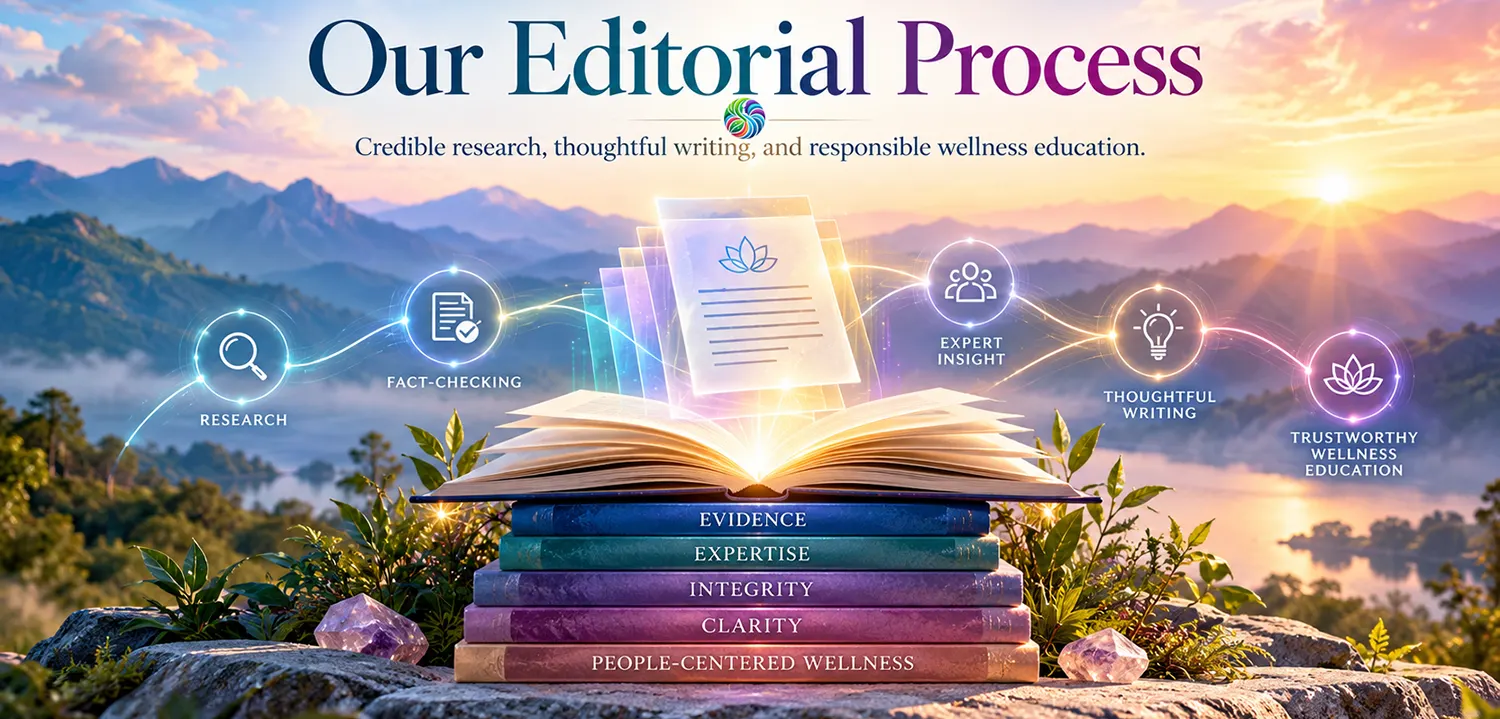
Our commitment to credible research, responsible reporting, meaningful education, and information you can trust.
At Mind Body Works Foundation, we believe that knowledge has the power to change lives—but only when that knowledge is accurate, understandable, and genuinely useful.
Health and wellness information influences important decisions about how people live, think, eat, exercise, manage stress, care for their bodies, and approach their personal development. We recognize that publishing information about these subjects carries a responsibility that extends beyond producing engaging articles.
Our mission is to help people expand their understanding of whole-person well-being through credible research, thoughtful education, practical guidance, and an open-minded approach to lifelong learning.
We explore a broad spectrum of subjects, including physical health, mental wellness, fitness, nutrition, healthy aging, personal growth, scientific discoveries, wellness technologies, and traditional or emerging wellness practices. Each requires careful consideration of the available evidence, the reader’s interests, and the practical implications of the information we present.
Our editorial process is designed around a fundamental principle: provide trustworthy information that empowers readers to think independently, make informed decisions, and take meaningful steps toward healthier, more purposeful lives.
This page explains the editorial principles that guide our work, how we approach scientific research, how we distinguish established knowledge from emerging ideas, and the standards we use to develop and evaluate our educational content.
Our Editorial Philosophy
Credible Knowledge. Clear Understanding. Practical Value.
We believe that responsible wellness education requires more than reporting scientific findings or presenting popular health recommendations. It requires understanding the subject, examining the available evidence, recognizing important limitations, and translating what we learn into information that people can realistically use.
Our editorial philosophy rests on three interconnected commitments.
Credibility means grounding evidence-dependent information in authoritative research, representing scientific findings accurately, and making appropriate distinctions between established knowledge, emerging research, and personal experience.
Clarity means explaining sophisticated subjects in language that is accessible without oversimplifying important concepts or compromising scientific accuracy.
Practical value means helping readers understand why information matters and how it may relate to their everyday lives, personal goals, or broader understanding of well-being.
We believe scientific responsibility and an encouraging editorial voice can coexist. Readers should be able to explore health and wellness topics without encountering unnecessary fear, exaggerated promises, confusing technical language, or an endless series of competing arguments.
Our objective is not simply to provide more information. It is to provide greater understanding.
How We Select Our Topics
Our editorial process begins by identifying subjects that align with the Mind Body Works mission and offer meaningful educational value.
We consider the relationship between each proposed topic and the broader dimensions of whole-person wellness. We also consider what readers are likely to want to understand, whether credible information is available, and how the subject can contribute to practical knowledge or personal growth.
Our major editorial areas include:
- Energy Healing: Traditional practices, practitioner perspectives, reported experiences, proposed mechanisms, and scientific investigations associated with energy-based approaches, with attention to relaxation, well-being, and the distinction between established evidence and emerging ideas.
- Fitness: Movement, strength, mobility, physical adaptation, exercise, and functional performance, with a focus on building physical capability, supporting healthy aging, and maintaining independence and quality of life over time.
- Healthy Living: Everyday behaviors and environments that support long-term healthand well-being, including movement, sleep, recovery, stress management, healthy habits, and practical lifestyle choices.
- Mental Wellness: Stress, emotional well-being, resilience, cognition, mindfulness, relaxation, and the mind-body connection, with practical guidance for supporting mental balance, emotional regulation, and everyday psychological well-being.
- Nutrition: Food, nutrients, dietary patterns, hydration, metabolism, and the relationship between nutrition and health, with an emphasis on practical understanding, balanced choices, and supporting the body’s everyday needs.
- Personal Growth: Lifelong learning, motivation, confidence, purpose, creativity, habits, resilience, and human potential, exploring how people can continue developing, adapting, and creating meaningful change throughout life.
- Science: Research, discoveries, biological mechanisms, and scientific developments that deepen our understanding of the mind and body, while helping readers make sense of how emerging knowledge may relate to health and well-being.
- Wellness Tech: Emerging technologies, wearable devices, biofeedback, digital health tools, and other innovations that may support personal well-being, with attention to what these tools can measure, where they are useful, and their practical limitations.
Each editorial category has a distinct educational purpose, but the subjects themselves frequently overlap.
For example, an article about resistance training may focus primarily on physical adaptation. Another article might explore how exercise influences mood and cognitive function. Both concern physical activity, but each addresses a different question and requires a different editorial approach.
We select the primary category according to the article’s central purpose rather than assigning categories simply because a topic touches several aspects of wellness.
Our aim is to develop a comprehensive educational resource in which individual articles complement one another while contributing to a broader understanding of whole-person well-being.
Research Comes Before Writing
Research is fundamental to our editorial process.
For articles involving scientific, physiological, psychological, nutritional, medical, technological, or other evidence-dependent claims, the research process begins before the article is developed.
We seek to understand the available knowledge surrounding a subject, identify important findings, examine relevant limitations, and determine what conclusions can reasonably be supported.
Our source selection prioritizes established scientific and medical institutions, government health agencies, academic research organizations, peer-reviewed scientific literature, systematic reviews, meta-analyses, professional associations, and well-designed primary research.
Depending on the subject, these may include resources published by organizations such as the National Institutes of Health, the Centers for Disease Control and Prevention, the World Health Organization, universities, medical research institutions, and recognized scientific journals.
We do not consider an institution’s reputation or a study’s publication status sufficient by itself. The research must also be relevant to the question being examined, and its conclusions must be interpreted appropriately.
Secondary educational resources can provide valuable background information and help identify areas requiring further investigation. However, where stronger primary or institutional evidence is available, we prefer to rely on that evidence for important scientific and factual claims.
Why We Look Beyond Individual Studies
Scientific knowledge develops through an ongoing process of investigation, testing, replication, and reassessment.
An individual study may produce an interesting finding without establishing a definitive conclusion. The reliability of that finding depends on several considerations, including study design, the participants examined, the intervention or exposure investigated, the outcomes measured, the magnitude of the results, and whether other research supports similar conclusions.
When appropriate, we examine the broader body of available evidence rather than relying exclusively on isolated studies.
Systematic reviews and meta-analyses can provide particularly useful perspectives because they evaluate findings across multiple studies. However, their conclusions still depend on the quality, relevance, and comparability of the underlying research.
Our goal is to present conclusions that reflect the strength of the evidence—not simply the most interesting or attention-grabbing findings.
Readers interested in understanding this process more deeply can explore our educational resource, Research Evidence Pyramid, within the Wellness Foundations section.
How We Evaluate Scientific Evidence
One of our most important editorial responsibilities is distinguishing what research demonstrates from what it merely suggests.
Health and wellness research frequently includes findings that are encouraging but not yet conclusive. Other findings may be supported by substantial scientific investigation, while some subjects remain poorly understood or have received relatively little rigorous research.
We approach these differences carefully.
Established evidence refers to findings supported by a substantial and reasonably consistent body of credible research.
Emerging evidence refers to promising findings that may justify further investigation but are not yet supported sufficiently to establish broad conclusions.
Preliminary findings may come from early-stage experiments, small clinical studies, laboratory investigations, or other research that helps generate hypotheses.
Associations describe relationships between variables but do not necessarily demonstrate that one causes the other.
Traditional explanations and reported experiences can provide historical, cultural, practitioner-based, or personal perspectives, but they should not automatically be presented as scientifically established mechanisms or treatment effects.
These distinctions influence how we interpret research and communicate its findings.
We avoid presenting preliminary discoveries as settled science, converting correlation into causation, or implying that a treatment has been proven effective for conditions that have not been adequately investigated.
We also recognize that scientific understanding can change as better evidence becomes available.
A commitment to accuracy requires both confidence when evidence is strong and appropriate humility when important questions remain unanswered.
Our Approach to Emerging and Traditional Wellness Practices
Mind Body Works explores a wider range of subjects than those traditionally associated with conventional health education.
Our editorial interests include established wellness practices, developing scientific fields, mind-body approaches, traditional healing systems, complementary practices, wellness technologies, and subjects for which proposed mechanisms or clinical applications remain under investigation.
We approach these topics with intellectual curiosity and respect.
Traditional practices may possess significant historical or cultural importance. Personal experiences may generate meaningful questions. Emerging research may reveal possibilities that deserve further scientific investigation.
At the same time, historical use, practitioner explanations, preliminary experiments, and personal testimonials are not interchangeable with established clinical evidence.
Our responsibility is to distinguish among these different forms of information and help readers understand their appropriate significance.
When discussing emerging or less-established practices, we seek to explain what the practice involves, how its proponents understand it, what experiences have been reported, what relevant scientific research exists, and what important questions remain unresolved.
Where appropriate, we also address safety considerations and the importance of avoiding delays in necessary medical care.
We do not believe responsible research requires automatically dismissing an unfamiliar subject. Nor does open-mindedness require accepting claims that have not been demonstrated.
Our approach is to investigate thoughtfully, communicate accurately, and allow the available evidence to inform our conclusions.
Turning Complex Research Into Understandable Information
Scientific publications are generally written for researchers and professionals within specialized disciplines. Their terminology, methodology, statistical analysis, and technical detail may not be immediately accessible to a general audience.
An important part of our editorial work is translating that information into clear, original educational content.
We aim to explain complex biological processes, scientific concepts, behavioral mechanisms, and emerging developments without requiring readers to possess specialized medical or scientific training.
Technical terminology is used when it contributes meaningfully to understanding. When an unfamiliar term is necessary, we explain it in context rather than assuming readers already understand it.
Our articles focus on the broader meaning and practical relevance of scientific findings instead of mechanically reporting one study after another.
We seek to preserve important scientific distinctions while presenting information in a natural and engaging editorial style.
The depth of explanation varies according to the subject. An article examining neuroscience may require more discussion of research methodology and biological mechanisms than an article about developing a daily walking habit.
What remains consistent is our commitment to helping readers understand the subject without overwhelming them.
Originality and Our Editorial Voice
Every Mind Body Works article is developed specifically for its subject.
Although our publications share a recognizable editorial identity, we do not believe every topic should follow the same structure, tone, sequence, or presentation.
An article about motivation may benefit from relatable examples and thoughtful reflection. A nutrition article may require a more detailed explanation of dietary patterns and biological processes. An article about wearable technology may need to distinguish direct measurements from estimates and explain the practical limitations of consumer devices.
The subject determines the most appropriate approach.
Our editorial voice is intended to be knowledgeable without being intimidating, encouraging without becoming promotional, and scientifically responsible without becoming unnecessarily academic.
We strive for cohesive, natural writing that gives ideas sufficient room to develop. Headings, examples, emphasis, and occasional lists support comprehension rather than dictate a repetitive format.
We also avoid presenting wellness as an endless collection of rules or suggesting that good health requires perfection.
Our readers have different circumstances, abilities, resources, interests, and goals. We aim to respect those differences while offering useful information that can support informed personal choices.
Making Information Useful in Everyday Life
Scientific accuracy is essential, but our responsibility does not end with presenting research findings.
We also consider what the reader can meaningfully learn from the information.
An article about protein should help readers understand its nutritional importance and practical dietary relevance. An article about sleep should explain the factors that influence rest and identify realistic habits that may support it. An article about resilience should explore what the concept means and offer useful perspectives on adapting to life’s challenges.
Our educational approach emphasizes practical clarity alongside scientific accuracy.
This does not mean simplifying every research question into one universal recommendation. Individual circumstances matter, and some subjects require greater qualification than others.
It does mean avoiding unnecessary methodological debates or excessive technical detail when those discussions would obscure the central information readers came to understand.
Our objective is to help readers develop informed, realistic perspectives that they can apply within the context of their own lives.
Medical Responsibility and Reader Safety
Mind Body Works is an educational resource, not a substitute for individualized medical care.
Our articles are intended to improve understanding of health, wellness, lifestyle, scientific research, and personal development. They do not provide individualized diagnoses, prescribe treatment, or establish a medical relationship with readers.
Health information can have consequences, so we apply greater care when addressing subjects that may influence medical decisions, medication use, mental-health treatment, nutritional restrictions, physical activity in the presence of illness, or other potentially consequential choices.
When important safety considerations directly affect the reader’s understanding of a subject, those considerations belong within the relevant article—not solely in a general disclaimer.
We also distinguish general wellness information from clinical treatment.
For example, mindfulness and relaxation practices may support stress management without replacing professional mental-health care when it is needed. Physical activity may provide substantial health benefits while still requiring appropriate modification for people with certain medical conditions.
General medical disclaimers are included when warranted by the subject, usually at the conclusion of the article, without repeatedly interrupting the educational discussion.
Our aim is to encourage informed participation in personal well-being while recognizing the essential role of qualified healthcare professionals.
Our Editorial Review and Quality Standards
Developing an article involves more than producing a finished draft.
Mind Body Works maintains an established editorial and article production standard that defines expectations for research, originality, evidence interpretation, readability, responsible health communication, and final editorial completeness.
Our editorial review framework considers whether the finished article fulfills its educational purpose and whether the information is presented accurately and responsibly.
This includes examining whether important claims are adequately supported, scientific uncertainty is represented proportionately, the subject receives appropriate coverage, and the article remains accessible to its intended audience.
We also consider whether the article offers meaningful practical value, reflects the appropriate editorial category, avoids unnecessary repetition, and maintains the professional yet approachable voice associated with Mind Body Works.
Our published editorial standards should not be confused with a claim that every article has undergone independent clinical review.
Editorial evaluation and formal medical review are different processes. We do not automatically represent our articles as having been approved by a physician, medical specialist, or independent medical review board. Any specialist review attributed to an individual article should accurately identify the review performed.
This distinction is part of our commitment to describing our content responsibly rather than relying on credentials or review claims that do not accurately represent the work involved.
Fact-Checking and Research Verification
Accuracy depends on more than selecting reputable sources.
Scientific findings, statistics, research conclusions, quotations, institutional statements, and other specific factual claims must be represented faithfully.
For evidence-dependent articles, our editorial standard calls for an internal research record documenting the principal authoritative sources consulted, the important findings derived from those sources, and material uncertainties or limitations that influenced the article.
This internal documentation provides a basis for checking significant claims and revisiting the underlying research when necessary.
Our verification approach emphasizes the relationship between the claim being made and the evidence actually supporting it.
A study involving a small population should not automatically be described as representative of everyone. Research identifying an association should not be reported as definitive proof of causation. A preliminary experiment should not be presented as clinical confirmation.
Statistics and unusually precise claims deserve particular attention because their accuracy can depend on population, study design, publication date, and the definitions used by researchers.
When reliable support cannot be established, the appropriate response is to revise, qualify, or omit the claim rather than create an impression of certainty that the evidence does not justify.
Sources, References, and Transparency
We believe readers should be able to understand where important scientific information originates.
Our editorial standard emphasizes authoritative sources and clear attribution when a particular institution, statistic, direct quotation, or research finding is central to an article.
Depending on the subject, sources may be identified naturally within the article or presented in a separate references section.
Not every article requires an extensive bibliography. Some subjects involve well-established general knowledge that can be explained accurately without repeatedly identifying individual studies. Other subjects—particularly emerging technologies, controversial claims, complex scientific developments, or rapidly evolving health research—may benefit from more visible supporting references.
We aim to provide sufficient transparency for meaningful verification without overwhelming the reader with unnecessary citations.
The research supporting an article may therefore be more extensive than the references visible in the finished publication.
Our internal research documentation helps preserve that distinction: maintaining research accountability while allowing published articles to remain readable and engaging.
Keeping Information Current
Scientific knowledge evolves.
New studies are published, clinical guidelines change, statistical estimates are revised, technologies develop, and researchers gain a clearer understanding of previously uncertain questions.
The pace of change varies considerably by subject.
An article discussing a rapidly developing wellness technology may require particularly recent research. An article explaining an established biological principle may appropriately rely on foundational scientific work. Historical subjects may require authoritative publications from much earlier periods.
We therefore select research according to its quality, relevance, scientific importance, and appropriate recency rather than imposing an arbitrary publication-date requirement on every article.
Our editorial approach also recognizes the importance of revisiting existing content when meaningful new information becomes available.
Material changes in scientific understanding, updated recommendations, revised statistics, identified inaccuracies, or other developments affecting the article’s conclusions may warrant reassessment or revision.
We do not equate reliability with simply having a recent publication date. A meaningful update should reflect substantive changes or verification, not merely make older content appear new.
Our goal is to keep information useful and accurate as knowledge develops.
Reporting New Research Responsibly
New scientific discoveries can generate considerable excitement, particularly when they concern subjects such as healthy aging, brain function, nutrition, stress, sleep, or emerging wellness technologies.
However, early research findings are frequently more limited than the headlines surrounding them.
When discussing new discoveries, our editorial approach is to place the findings within their proper scientific context.
We consider the study’s design, limitations, population, and relationship to previous research. We also distinguish laboratory findings from clinical outcomes and early observations from well-established conclusions.
An exciting discovery may be worth exploring even when its practical applications remain uncertain.
We believe readers benefit from understanding both the significance of an emerging finding and the questions that researchers have not yet answered.
Our purpose is to encourage informed curiosity rather than create excitement through exaggerated predictions.
Independence and Responsible Wellness Communication
The wellness industry offers valuable services, technologies, and educational opportunities. It also operates within a commercial environment in which marketing claims can sometimes exceed the available scientific evidence.
Mind Body Works approaches wellness information from an educational perspective.
Our editorial conclusions should be guided by the available evidence, the relevance of the subject, and its potential value to readers—not by a product’s popularity, commercial appeal, celebrity endorsement, or marketing promises.
We believe that responsible wellness communication requires distinguishing scientifically supported benefits from promotional claims.
This principle is particularly important when discussing supplements, commercial programs, medical devices, wearables, emerging therapies, or products associated with rapidly developing wellness trends.
Our objective is to help readers understand what a product, practice, or intervention may offer, what evidence supports it, what limitations remain, and which claims require additional scrutiny.
Popularity is not proof of effectiveness, and commercial success is not a substitute for scientific validation.
Digital Tools and Editorial Accountability
Modern digital tools can assist with information discovery, organization, drafting, editing, and the presentation of educational material.
These tools can be useful, but they do not independently establish the accuracy of health information.
Regardless of the tools used during content development, our editorial standards require important factual and scientific claims to be supported by credible sources.
Automatically generated explanations, summaries, references, or conclusions must not be treated as verified scientific evidence simply because they appear authoritative.
The same principles of originality, accuracy, evidence evaluation, and responsible communication apply throughout the editorial process.
The quality of the final publication—not the sophistication of the tools involved—remains the central measure of our editorial work.
Corrections, Feedback, and Continuous Improvement
Maintaining credible educational resources requires a willingness to correct mistakes, reconsider conclusions, and improve existing material.
We recognize that scientific information is complex and that even carefully developed educational content may require clarification or revision.
Reader feedback can play a valuable role in identifying factual errors, unclear explanations, outdated information, broken references, or subjects deserving additional attention.
We welcome constructive feedback and encourage readers to contact Mind Body Works when they encounter information that may require review.
Substantive concerns should be evaluated against the relevant sources and the article’s original context. Where corrections or revisions are warranted, the objective is to improve accuracy and preserve the intended educational value.
Continuous improvement is an essential part of responsible publishing, particularly in fields where knowledge continues to develop.
Our Commitment to Readers
Every reader arrives at Mind Body Works with a different reason for being here.
Some are interested in physical health or healthy aging. Others want to understand the mind-body connection, improve everyday habits, explore nutrition, learn about mindfulness, evaluate a new wellness technology, or continue developing their personal potential.
Our responsibility is to respect those different interests while maintaining consistent standards of editorial quality.
We want readers to encounter information that is understandable without being superficial, encouraging without being exaggerated, and evidence-informed without becoming unnecessarily technical.
We aim to explain established knowledge confidently, explore emerging subjects thoughtfully, acknowledge important uncertainty, and communicate practical ideas without promoting unrealistic expectations.
Above all, we want readers to feel that Mind Body Works is a resource dedicated to helping them learn rather than persuading them to adopt a predetermined belief or purchase a particular solution.
To learn more about the mission, values, and whole-person approach that guide our work, visit our About Us page.
Knowledge That Supports a Healthier, More Purposeful Life
Our editorial process is ultimately an expression of the Mind Body Works mission.
We believe education can help people better understand their minds and bodies, recognize the importance of everyday habits, explore meaningful possibilities for personal development, and make more informed decisions about their well-being.
Achieving that goal requires ongoing attention to research, accuracy, clarity, originality, transparency, and the evolving nature of scientific knowledge.
But it also requires remembering that behind every article is a person seeking understanding.
Our commitment is to make credible wellness knowledge more accessible, practical, and meaningful—providing readers with information that supports independent thinking, lifelong learning, and healthier, more purposeful lives.