













Think about the last time you came down with a significant infection.
You may have expected the sore throat, congestion, fever, or body aches.
But something else probably changed too.
You felt tired. Your motivation dropped.
Concentrating became harder.
Food may have seemed less appealing.
You wanted to lie down rather than socialize.
Even your mood may have felt flatter, more irritable, or less interested in things you normally enjoy.
Those changes are easy to dismiss as simply “feeling sick.” But modern neuroscience has revealed something much more interesting.
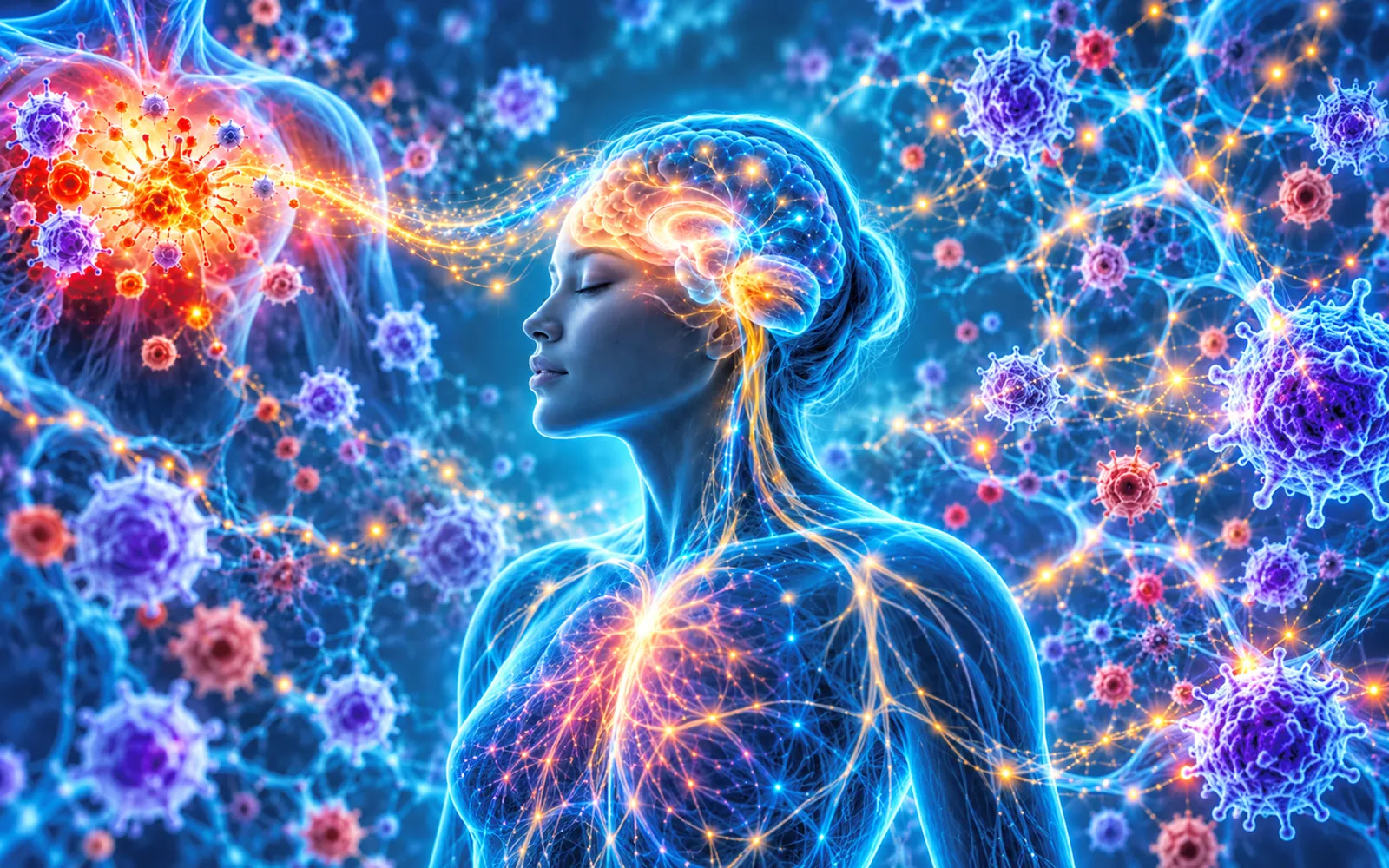
The immune system can actively communicate with the brain and change how we feel, think, behave, and use energy.
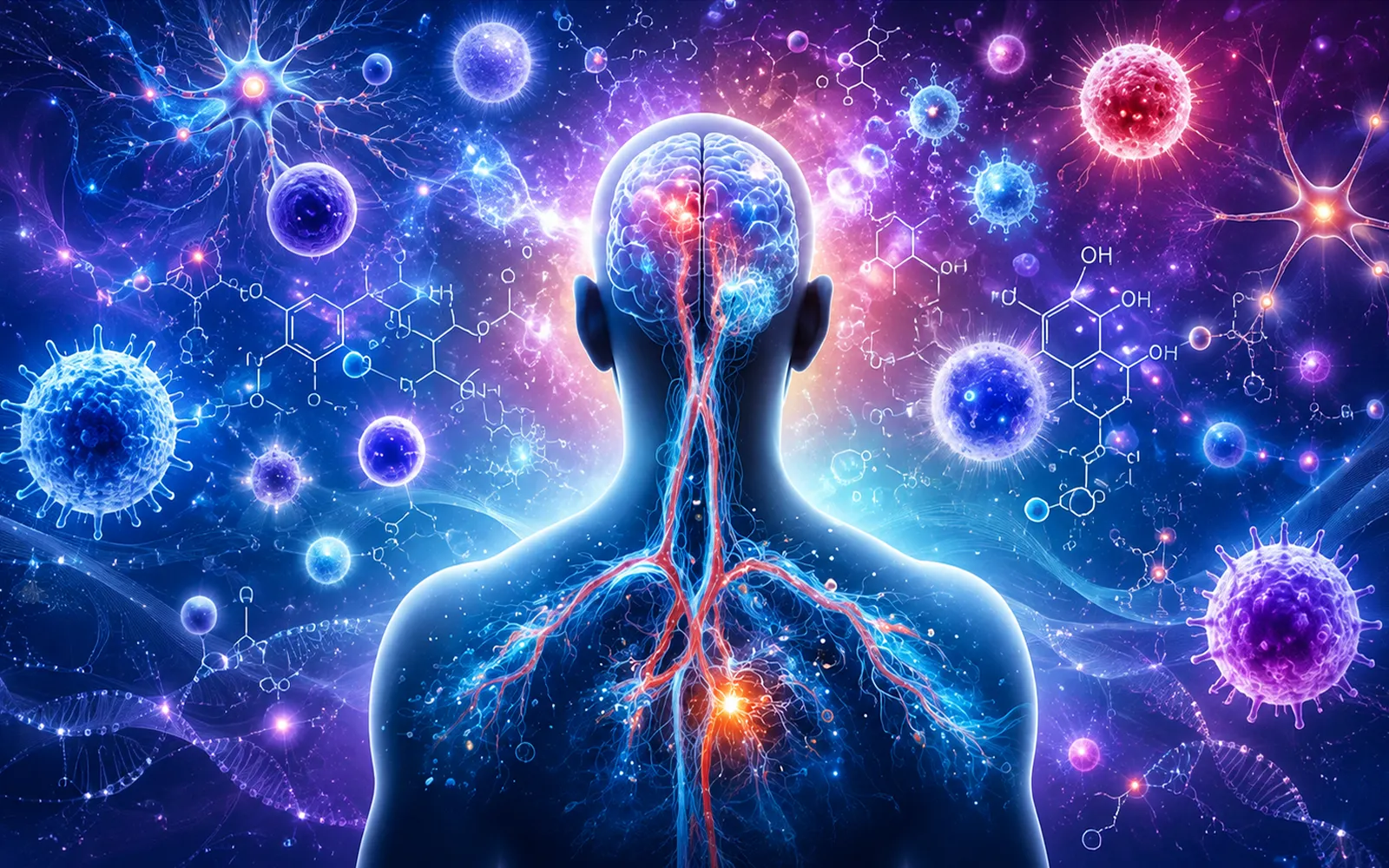
Inflammatory signals produced while the body responds to infection or injury do not remain isolated in the affected tissue. They participate in a broader communication network connecting immune cells, blood vessels, nerves, hormones, and the brain.
Scientists increasingly describe the nervous and immune systems not as separate systems that occasionally interact, but as parts of an integrated network continuously exchanging information. A major 2025 review in Nature Reviews Immunology describes this nervous–immune communication as central to the body’s responses to infection, injury, psychological stress, and circadian signals. Nature
That discovery changes how we understand inflammation.
Inflammation is not simply swelling somewhere in the body.
It can also become information the brain receives—and responds to.
Inflammation Is First a Protective Response
The word inflammation often sounds automatically negative.
But inflammation is one of the body’s fundamental protective systems.
When immune cells detect infection, tissue injury, or another threat, they release signaling molecules that help coordinate a response. Blood flow may increase. Immune cells move toward affected tissue. Chemical signals recruit additional defenses and help organize repair.
Without inflammation, ordinary injuries would heal poorly and infections could spread with little resistance.
The problem is therefore not inflammation itself.
It is inflammation occurring at the wrong intensity, for too long, or in the wrong biological context.
An acute inflammatory response that helps the body fight an infection is very different from persistent immune activation that remains elevated for months or years.
This distinction is especially important when we begin talking about the brain.
“Mood, energy, and thinking are not produced by the brain in isolation. They emerge from a brain that is continuously listening to—and communicating with—the rest of the body.”
Cytokines Carry Messages Between Cells
Among the best-known inflammatory messengers are molecules called cytokines.
Cytokines are small signaling proteins that allow immune cells and other cells to communicate. Some promote aspects of inflammation. Others help regulate or resolve it.
Frequently studied cytokines include:
- interleukin-1 beta, or IL-1β;
- interleukin-6, or IL-6;
- tumor necrosis factor alpha, or TNF-α;
- and numerous chemokines and regulatory molecules that help organize immune activity.
Calling these substances simply “bad” would be misleading.
Many cytokines have normal physiological roles. Their effects depend on where they are produced, how much is present, how long the signal lasts, which receptors respond, and what else is happening in the body.
During infection, however, increasing inflammatory signaling can communicate an important message:
Something is wrong. Resources need to be redirected. Behavior needs to change.
The brain helps coordinate that response.
How Does the Immune System Reach the Brain?
The brain is protected from unrestricted exposure to substances circulating in the blood by the blood-brain barrier.
That does not mean it is cut off from the immune system.
Immune information can reach the brain through several routes.
Cells lining blood vessels can detect inflammatory molecules and transmit signals toward brain tissue.
Certain regions at the brain’s interfaces are especially responsive to circulating signals.
Peripheral nerves—including sensory pathways associated with the vagus nerve—can carry information about inflammation occurring elsewhere in the body.
Signals can also influence immune activity in the meninges and other tissues surrounding the brain.
Once that information arrives, brain cells can generate their own responses.
This communication also works in the opposite direction. Neural and hormonal systems influence immunity through autonomic pathways, stress hormones, and other mechanisms.
The result is not a one-way immune message sent to a passive brain.
It is a brain-body conversation.
Meet the Brain’s Immune Cells
Within the brain, one of the most important participants in that conversation is the microglia.
Microglia are specialized immune cells that reside throughout the central nervous system.
Older descriptions sometimes portrayed them mainly as emergency responders that became active only when something went wrong.
We now know their normal role is far more sophisticated.
Microglia continuously survey their environment.
They participate in clearing cellular debris.
They interact with neurons and other brain cells.
They contribute to tissue maintenance and aspects of synaptic function.
They respond to infection, injury, and changes in the brain environment.
Contemporary research therefore treats microglia as important participants in normal brain biology—not merely cells that create inflammation. Reviews of aging and brain disease emphasize their capacity to play both protective and potentially harmful roles depending on biological context. PubMed Central (PMC)
That distinction matters.
Immune activity in the brain is not inherently damaging. Dysregulated or prolonged immune activity is where concern grows.
Why Illness Can Change Behavior
One of the clearest examples of immune-to-brain communication is something scientists call sickness behavior.
Despite the name, this is not simply a collection of unfortunate symptoms.
It appears to be a coordinated biological response.
During significant infection or inflammation, people and other animals often experience:
- fatigue and reduced activity;
- increased desire to rest or sleep;
- decreased appetite;
- reduced motivation;
- less interest in social interaction;
- greater sensitivity to discomfort;
- difficulty concentrating;
- and changes in mood or emotional responsiveness.
These responses may help redirect resources toward immune defense and recovery.
If fighting an infection requires energy, spending less energy exploring, exercising, seeking food, or engaging socially can temporarily make biological sense.
Researchers have studied this phenomenon for decades, and immune signaling to the brain is now recognized as an important mechanism behind it. Nature
This gives fatigue during illness a different interpretation.
It is not simply that the muscles have run out of energy.
The brain can actively reduce the drive to expend energy.
Fatigue Can Be a Biological Instruction
Fatigue is one of the most common experiences during inflammatory illness.
It can feel frustrating because the body may be physically capable of moving while motivation to do so has almost disappeared.
Neuroimmune research suggests that this distinction matters.
Inflammatory signaling can influence brain systems involved in arousal, motivation, reward, sleep, and energy allocation. The result can be a powerful sense that activity is unusually effortful.
From the body’s perspective, that may be adaptive.
Rest reduces competition for resources while immune and metabolic systems deal with the immediate challenge.
This does not mean every case of persistent fatigue is caused by inflammation.
Fatigue can result from sleep disorders, anemia, medication effects, endocrine problems, cardiovascular disease, depression, nutritional deficiencies, neurological conditions, overtraining, and many other causes.
But inflammation provides an important explanation for something almost everyone has experienced:
when the immune system becomes highly active, our willingness and ability to expend energy can change with it.
Inflammation Can Influence Mood
The connection between inflammation and mood has become one of the most active areas of psychoneuroimmunology.
Researchers first noticed that inflammatory illnesses and certain immune-activating medical treatments could sometimes produce depressive-like symptoms.
Experimental studies then provided more direct evidence.
When researchers induce a temporary inflammatory response in healthy volunteers using carefully controlled immune challenges, participants can develop short-lived increases in fatigue, low mood, reduced pleasure, and feelings of social disconnection. PubMed
That tells us something important:
Immune activation can influence emotional experience.
But it does not tell us that depression is simply an inflammatory disease.
Major depression is highly heterogeneous.
Genetics, stress, trauma, social conditions, sleep, neurobiology, physical illness, hormones, behavior, and many other factors can contribute.
A large 2026 meta-analysis examining more than 423,000 participants found modest associations between depression and several blood inflammatory markers, including CRP and IL-6, but the relationships varied by marker, sex, and study design. PubMed
Current research therefore supports a more precise conclusion:
Inflammation appears to be an important biological pathway in some forms or circumstances of depression, not a universal explanation for depression itself.
That distinction moves the science forward without oversimplifying mental health.
Why Motivation May Change Before Mood Does
Inflammation may not affect every emotional function equally.
Researchers are particularly interested in anhedonia—a reduced ability to experience reward or pleasure—and motivational changes.
When the immune system signals that the body is dealing with a threat, the brain may reduce the reward value of activities that normally encourage exploration and effort.
A social outing feels less appealing.
Food may become less rewarding.
Tasks require more effort.
Exercise suddenly seems unthinkable.
That can look psychologically similar to certain features of depression.
But during a short infection, the underlying biological purpose may be very different: conserve energy, reduce exposure, and prioritize recovery.
Problems may arise when inflammatory signaling becomes prolonged or disconnected from a short-term protective need.
Researchers are now studying whether this distinction could eventually help identify subgroups of people whose depressive symptoms involve more prominent immune or metabolic pathways. A 2025 Nature Reviews Neurology review describes neuroimmune, metabolic, and oxidative pathways as increasingly important parts of the biological picture of major depressive disorder while emphasizing its complexity. Nature
Inflammation Can Affect Thinking Too
Anyone who has tried to work through a bad flu knows that cognition can change during illness.
Words come more slowly.
Concentration wanders.
Complex tasks feel exhausting.
Memory may seem less reliable.
This phenomenon is sometimes informally called brain fog, although that term describes an experience rather than a single diagnosis.
Experimental research in humans supports the idea that acute inflammatory activation can affect aspects of cognition and emotional processing.
Studies have reported changes in memory, attention, reaction time, social perception, and cognitive effort, although not every experiment finds the same effect. A systematic review of experimental inflammatory challenges found particularly consistent changes in social and emotional processing, with more variable effects across specific cognitive tests. ScienceDirect
In other words, inflammation does not simply “turn down the brain.”
Different neural systems may respond differently.
Why Memory and Attention May Be Vulnerable
The brain must constantly decide where to direct limited processing resources.
During an immune challenge, those priorities can change.
Sleepiness increases.
External exploration decreases.
Pain or bodily sensations may demand more attention.
Motivation falls. Metabolic priorities shift.
Inflammatory signaling can also influence neurotransmission and neural circuits involved in memory and executive function.
Recent reviews link higher inflammatory activity with poorer cognitive performance in some populations and discuss possible roles for cytokine signaling, blood-brain-barrier changes, and microglial responses. PubMed
But the relationship should not be simplified into:
more inflammation equals less intelligence.
Acute, chronic, peripheral, and central inflammation are not interchangeable.
Age matters. Disease context matters. Duration matters.
Different inflammatory molecules can have different effects.
And some cytokine signaling is involved in normal learning and neural function.
The biological question is one of regulation, not elimination.
Acute and Chronic Inflammation Tell Different Stories
This may be the most important distinction in the entire article.
Acute inflammation
Acute inflammation occurs in response to a short-term challenge such as an infection or injury.
It rises. It coordinates defense and repair.
Then regulatory systems normally help bring the response back down.
The resulting fatigue, reduced appetite, altered sleep, and lower motivation can be part of an adaptive recovery program.
Chronic inflammation
Chronic inflammation persists.
It can accompany autoimmune disease, chronic infection, metabolic dysfunction, persistent tissue injury, some cancers, obesity-related metabolic disturbance, and numerous other conditions.
Aging itself is also associated with changes in immune regulation sometimes described as inflammaging.
When inflammatory signaling continues for long periods, the biological consequences can be very different from those of a short immune response.
Prolonged systemic inflammation has been associated with cardiovascular disease, metabolic disease, neurodegenerative disorders, cognitive decline, and certain psychiatric conditions.
That does not mean one inflammatory molecule causes all of those conditions.
It means chronic dysregulation of immune signaling can become one component in larger disease processes.
The Aging Brain Adds Another Layer
Inflammation becomes especially interesting in aging.
The immune system changes with age.
So do blood vessels, metabolism, the blood-brain barrier, microglia, and the brain’s ability to recover from injury.
The National Institute on Aging notes that inflammation tends to increase with aging and may contribute to changes affecting brain function. National Institute on Aging
Microglia also change with age.
They remain essential for brain maintenance, but their response patterns can shift, particularly in the presence of accumulated cellular damage or disease.
Neuroinflammation has become a major area of research in Alzheimer’s disease and other neurodegenerative disorders. A 2025 review in Nature Reviews Immunology describes substantial genetic, experimental, epidemiological, and neuropathological evidence that immune processes participate in Alzheimer’s disease biology. Nature
That does not mean ordinary inflammation inevitably leads to dementia.
It means immune biology is now recognized as one of the major systems involved in how the brain ages.
Blood Inflammation Is Not the Same as Brain Inflammation
This distinction is easy to lose.
A blood test may measure C-reactive protein, or CRP.
Other research tests may measure IL-6, TNF-α, or other immune markers.
These measurements can provide information about systemic inflammatory activity.
They do not directly tell us that the brain is inflamed.
Likewise, an elevated CRP result cannot explain by itself why someone feels tired, depressed, or cognitively foggy.
CRP can rise for many reasons.
- Infection.
- Injury.
- Chronic disease.
- Obesity.
- Smoking.
- Autoimmune activity.
- Other medical conditions.
Measuring inflammation in the central nervous system is much more difficult and may involve cerebrospinal fluid, imaging techniques, or research biomarkers.
This is why the phrase “I have brain inflammation” should not be inferred casually from nonspecific symptoms or a routine blood test.
Neuroinflammation Is Not One Single State
Even the term neuroinflammation can create an overly simple picture.
The brain’s immune response involves multiple cell types, molecules, tissues, and stages.
Microglia may clear debris in one context and contribute to damaging signaling in another.
Astrocytes can participate in inflammatory regulation while also supporting neurons.
Cytokines can assist normal communication at one concentration and disrupt function when signaling becomes excessive or prolonged.
Peripheral immunity may influence the brain without immune cells directly invading brain tissue.
And neurological diseases can generate inflammatory responses that may initially be attempts at repair.
Modern neuroscience is therefore moving away from the idea of inflammation as a single switch that is either “on” or “off.”
It is better understood as a dynamic biological program whose effects depend on context.
Stress Can Enter the Conversation From the Other Direction
The immune system can influence the brain.
But the brain can influence immunity too.
Psychological stress activates autonomic and hormonal systems—including the sympathetic nervous system and the hypothalamic-pituitary-adrenal axis.
Those systems communicate with immune tissues and can alter immune-cell activity.
Short-term stress can produce very different effects from prolonged stress.
Sleep also participates in this two-way relationship.
A 2025 review describes sleep and inflammation as bidirectionally linked: inflammatory signals can alter sleep, while insufficient or disturbed sleep can in turn affect inflammatory regulation. Springer
This is one reason mind-body biology is increasingly difficult to divide into neat categories.
The nervous, endocrine, immune, metabolic, and behavioral systems continually influence one another.
The Goal Is Not to Eliminate Inflammation
Once people hear that chronic inflammation is associated with many diseases, a tempting conclusion follows:
Inflammation must be suppressed as much as possible.
That would be a mistake.
We need inflammatory responses.
We need immune surveillance.
We need wound healing.
We need the ability to respond rapidly to infection.
Even cytokines involved in inflammatory responses participate in normal biological regulation.
The healthier goal is appropriate immune regulation.
Strong enough when protection is needed.
Controlled enough to avoid unnecessary tissue damage.
Able to resolve when the threat has passed.
That is much closer to how the immune system is designed to function.
What This Science Means in Everyday Life
Understanding neuroimmune communication does not require turning daily life into an anti-inflammatory program.
It does, however, reinforce several practical principles:
- Treat persistent symptoms as information rather than automatically labeling them “inflammation.” Fatigue, low mood, and cognitive difficulties have many possible causes.
- Take infections and chronic medical conditions seriously. Appropriate diagnosis and treatment matter more than attempting to suppress inflammation independently.
- Protect sleep. Sleep and immune regulation influence each other, and adequate sleep also supports mood, cognition, and metabolic health.
- Stay physically active within your abilities. Regular activity benefits cardiovascular, metabolic, cognitive, and mental health and also influences immune regulation. CDC
- Eat for overall health rather than searching for one anti-inflammatory food. A balanced dietary pattern helps support cardiovascular and metabolic systems that are closely connected with brain health.
- Avoid smoking and excessive alcohol use. Both can adversely affect multiple systems involved in long-term health and inflammation. CDC
- Manage cardiovascular and metabolic health. Blood pressure, diabetes, cholesterol, and vascular health all influence the environment in which the brain operates. National Institute on Aging
None of these habits acts as an instant switch that “turns off brain inflammation.”
Their value is broader.
They help maintain the systems that regulate inflammation, circulation, metabolism, sleep, and brain function over time.
There Is No Simple Home Test for an “Inflamed Brain”
The growing public interest in inflammation has created a market for tests, supplements, diets, and programs claiming to identify or reverse neuroinflammation.
The science is not that simple.
A routine CRP measurement can provide clinically useful information in appropriate circumstances, but it is nonspecific.
It cannot diagnose depression caused by inflammation.
It cannot determine whether someone’s brain fog is inflammatory.
And it cannot tell whether microglia are behaving abnormally.
Researchers are working to develop better biomarkers precisely because the relationship between peripheral inflammation and brain function is complex.
Even in depression—one of the most intensively studied areas—the association between inflammatory markers and symptoms is modest and heterogeneous across populations. PubMed
That complexity is not a failure of the science.
It is a more accurate description of human biology.
Why This Research Is Still So Important
If inflammation does not explain every mood change or cognitive problem, why is the field attracting so much attention?
Because identifying a biological pathway in even a subset of people can matter enormously.
Researchers are investigating whether inflammatory profiles might eventually help distinguish different forms of depression, predict treatment responses, identify people at greater neurological risk, or reveal new therapeutic targets.
Some studies of anti-inflammatory treatments for depression have produced encouraging findings in people with elevated inflammatory markers, but results remain mixed and biomarker-guided treatment is not yet routine clinical practice. A 2025 systematic review and meta-analysis specifically examining depressed individuals with elevated inflammation concluded that the therapeutic picture remains promising but incomplete. PsychiatryOnline
This is where precision medicine may eventually become important.
Instead of assuming that everyone with the same symptom has the same underlying biology, clinicians may increasingly be able to identify different pathways leading to similar experiences.
Fatigue may have several biological routes.
Depression may have several routes.
Cognitive slowing may have several routes.
Inflammation could be one of them.
The Brain Is Listening to the Body
Perhaps the most important lesson from neuroimmune science is philosophical as much as biological.
The brain is not an isolated command center sitting above the body.
It is continually receiving information about what is happening throughout the organism.
- Blood pressure.
- Hormones.
- Nutrients.
- Temperature.
- Gut signals.
- Pain.
- Oxygen.
- Immune activity.
When the immune system detects danger, the brain receives that information and helps reorganize behavior.
Rest becomes attractive.
Effort becomes expensive.
Food and social interaction may lose some of their usual appeal.
Attention can turn inward.
These changes can be inconvenient, but during a short illness they may represent an intelligently coordinated response.
The difficulty comes when signals that evolved to help us through a temporary challenge become persistent.
That is where inflammation shifts from an adaptive response into a possible contributor to longer-term dysfunction.
A More Complete View of Mind and Body
For much of medical history, the immune system belonged to immunology, the brain belonged to neuroscience, and mood belonged to psychology or psychiatry.
Those boundaries are becoming less useful.
Neurons communicate with immune cells.
Immune molecules influence neural circuits.
The brain changes immune activity.
Sleep changes inflammation.
Stress changes immune signaling.
Inflammation can alter motivation, energy, and cognition.
This does not mean every thought is an immune phenomenon or every illness can be traced to stress.
It means the divisions we use to organize medicine do not always reflect the way the body actually operates.
The emerging science of neuroimmune communication is giving us a more integrated picture.
Mood, energy, and thinking are not produced by the brain in isolation. They emerge from a brain that is continuously listening to—and communicating with—the rest of the body.
That understanding gives inflammation an important but appropriately sized role.
It is not the hidden cause of every symptom.
It is not something we should try to eliminate.
It is one of the major languages through which the body communicates its condition to the brain.
And learning that language is helping science understand the connection between physical health and human experience with far greater precision.
Health and Mental Wellness Disclaimer
This article is intended for general educational purposes and is not individualized medical or mental-health advice. Persistent fatigue, significant mood changes, new cognitive difficulties, confusion, unexplained fever, neurological symptoms, or other concerning changes can have many possible causes and should be evaluated appropriately. Blood inflammatory markers such as CRP are nonspecific and should be interpreted in clinical context rather than used to self-diagnose “brain inflammation,” depression, or another neurological condition.