














For thousands of years, Traditional Chinese Medicine has approached health from a perspective that sees the body as an interconnected system rather than a collection of separate parts.
At the center of this philosophy is qi—often translated as vital energy or life force—and a network of pathways traditionally known as meridians.
According to traditional theory, health depends in part on the balanced and unobstructed movement of qi throughout these pathways. When that flow becomes disrupted, weakened, or imbalanced, discomfort or illness may develop. Acupuncture and acupressure were developed as methods of stimulating specific points along these pathways in an attempt to restore balance and encourage the body’s natural healing processes.
Today, these ancient practices are also being examined through modern medicine. Researchers are investigating whether stimulating acupuncture points influences the nervous system, connective tissue, pain pathways, circulation, brain activity, and other physiological processes. The emerging picture is more complex than either simply accepting or rejecting the traditional concept of qi.
What Is Acupuncture?
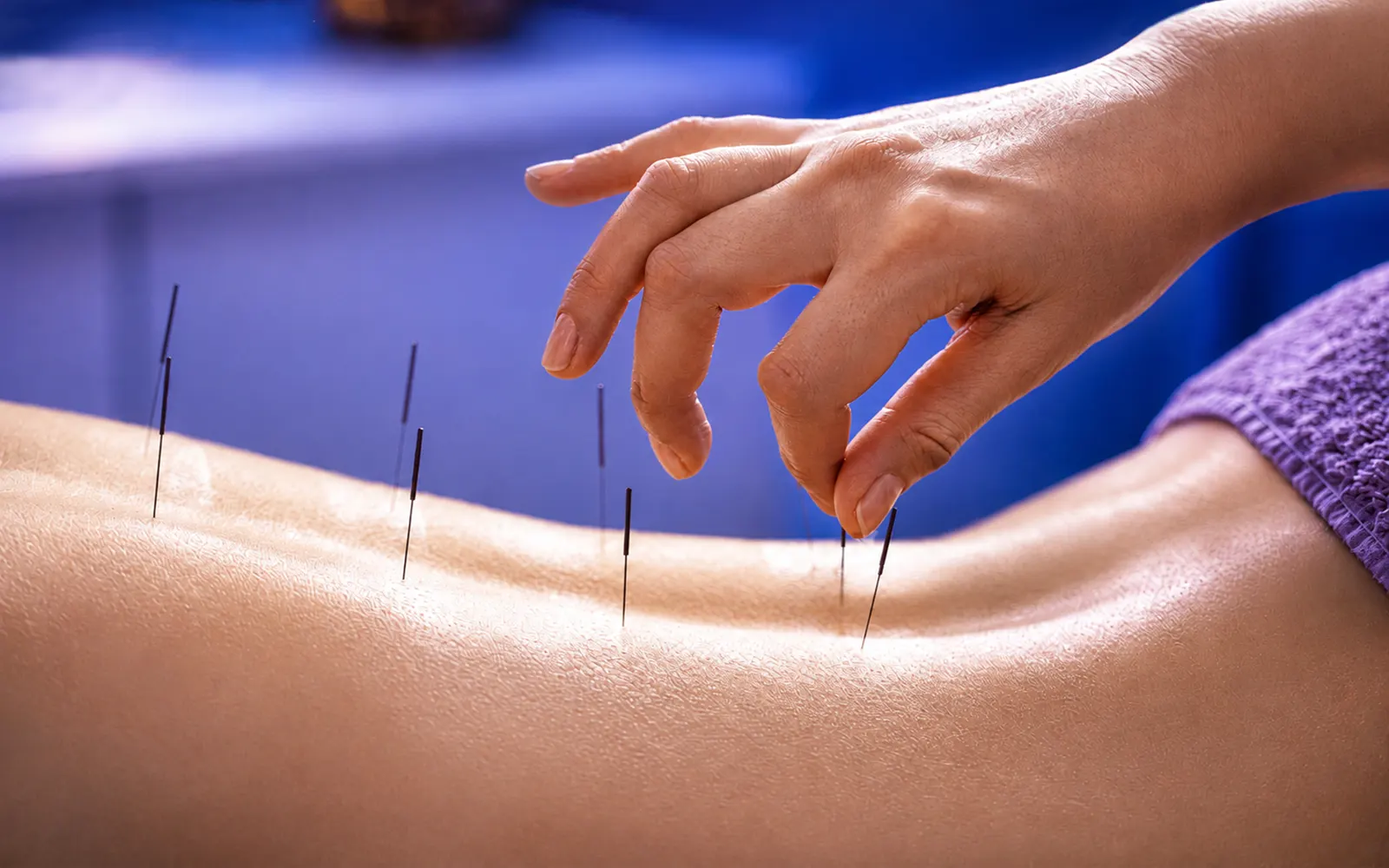
Acupuncture involves inserting very fine needles through the skin at selected points on the body. The needles may be gently manipulated by hand or, in a technique known as electroacupuncture, stimulated with small electrical currents. Acupuncture originated within Traditional Chinese Medicine and has been practiced in some form for at least 2,500 years.
An acupuncture treatment is not necessarily directed only at the exact location where symptoms occur.
For example, someone experiencing a headache may receive needles at points on the hands, arms, legs, or feet as well as points around the head or neck.
Within the traditional framework, these points are selected according to patterns of qi and meridian relationships.
Within contemporary practice, some practitioners may also select points based on anatomy, muscles, nerves, trigger points, or current clinical research.
What Is Acupressure?
Acupressure works with many of the same traditional acupuncture points but does not involve needles.
Instead, pressure is applied with the fingers, thumbs, hands, or specialized devices.
This makes acupressure essentially a noninvasive form of acupoint stimulation. One of the best-studied examples involves pressure or stimulation of the PC6, or P6, point near the wrist, particularly for nausea and vomiting.
Because no needles are required, some acupressure techniques can also be learned for self-care, although professional guidance is advisable when addressing medical conditions.
The Traditional Concept: Qi and Meridians
To understand acupuncture and acupressure, it helps to understand the philosophy from which they developed.
Traditional Chinese Medicine describes the body as containing interconnected pathways through which qi circulates.
Acupuncture points are positioned along these pathways.
In traditional theory, symptoms may result when the movement of qi becomes blocked, deficient, excessive, or otherwise unbalanced. Stimulating carefully selected points is intended to influence that pattern and encourage greater harmony within the system. International acupuncture nomenclature recognizes hundreds of traditional acupuncture points organized along the principal meridians.
This is the traditional explanation.
Modern science has not established meridians as anatomical tubes or demonstrated qi to be a distinct physical energy equivalent to electricity, electromagnetic radiation, or another conventionally measurable form of energy.
That does not necessarily mean acupuncture has no physiological effects.
It means that the traditional explanation and the modern scientific explanation should be distinguished from one another.
What Does Modern Science Say May Be Happening?
Researchers do not yet have a single explanation for how acupuncture produces all of its reported effects.
According to the National Center for Complementary and Integrative Health, evidence suggests that acupuncture may affect the nervous system, influence tissues at the site where needles are inserted, and produce important nonspecific effects associated with expectation, the therapeutic encounter, and other aspects of treatment.
Research has also suggested that acupuncture may affect brain regions involved in processing pain and may promote the activity of the body’s own pain-regulating systems.
This gives us two different ways of looking at the same practice.
The traditional model might describe acupuncture as:
Restoring the flow of qi.
A modern physiological model might describe it as:
Sensory stimulation capable of affecting nerves, tissues, brain activity, pain processing, and other regulatory systems.
These explanations are not scientifically interchangeable, but they illustrate why acupuncture remains such an interesting field of research.
Acupuncture and acupressure occupy an interesting intersection between ancient healing traditions and modern scientific investigation.
Chinese Traditional Medicine

Acupuncture and Acupressure for Different Health Outcomes
Research has investigated acupuncture for dozens of medical and wellness applications.
Some have considerably stronger scientific support than others.
1. Chronic Back and Neck Pain
Pain is one of the most common reasons people in the United States seek acupuncture.
Studies have found that acupuncture can provide relief for some people with chronic back and neck pain. A large body of research reviewed by NCCIH found acupuncture more effective than receiving no treatment, while differences between genuine acupuncture and sham acupuncture were generally smaller. This suggests that both the specific needle stimulation and nonspecific therapeutic effects may contribute to the overall result.
A 2024 systematic review of chronic neck pain similarly found that acupuncture used as an adjunct may provide sustained improvements, although pain relief was not significantly superior to sham acupuncture in some comparisons.
This is a good example of why acupuncture research can be difficult to interpret.
The treatment may help, yet scientists continue to debate how much of the effect depends upon the exact acupuncture point and how much results from other components of treatment.
2. Osteoarthritis and Joint Pain
Acupuncture has also been extensively studied for osteoarthritis, particularly knee osteoarthritis.
Research reviewed by NCCIH found acupuncture associated with improvements in osteoarthritis pain compared with no treatment and smaller improvements compared with sham acupuncture. The American College of Rheumatology and Arthritis Foundation have conditionally recommended acupuncture as one option for osteoarthritis of the knee, hip, or hand.
It is important to distinguish symptom management from structural treatment.
Acupuncture may help some people experience less pain or better function, but it has not been shown to regenerate damaged cartilage or reverse the underlying degenerative process.
3. Headaches and Migraines
Another relatively well-studied area is headache prevention.
Research summarized by NCCIH indicates moderate-quality evidence that acupuncture may reduce migraine frequency, although the additional benefit compared with sham acupuncture appears relatively small. Evidence also suggests it may reduce the frequency of tension-type headaches.
A large Cochrane review involving nearly 5,000 participants concluded that acupuncture could be considered an option for people interested in preventing episodic migraines.
For some people, that could make acupuncture one element of a broader migraine-management plan rather than a replacement for conventional medical evaluation and treatment.
4. Nausea and Vomiting
Nausea is one of the most interesting applications because both acupuncture and acupressure have been studied.
A particular point located near the wrist—commonly referred to as P6 or PC6—has received considerable research attention.
A Cochrane review involving thousands of surgical patients found that stimulation of PC6 using techniques that included acupuncture, electrical stimulation, and acupressure reduced postoperative nausea and vomiting compared with sham stimulation.
More recent research on electrical acupoint stimulation has also reported reductions in postoperative nausea and vomiting, although the certainty of the evidence has varied among analyses.
Because acupressure can stimulate this area without needles, wristbands designed to apply continuous pressure to P6 have become a familiar example of modern acupressure.
Evidence for nausea during pregnancy is less consistent, so pregnancy-related symptoms should still be discussed with a healthcare professional rather than relying exclusively on self-treatment.
5. Cancer Treatment Symptoms and Side Effects
Acupuncture and acupressure are increasingly studied within integrative oncology, not as treatments for cancer itself but as complementary approaches for managing certain symptoms and side effects.
Current NCCIH guidance indicates that acupuncture may help some people with cancer-related pain, treatment-related nausea and vomiting, and possibly fatigue. Clinical guidelines have also considered acupuncture or acupressure for certain treatment-related symptoms.
A review of acupuncture and acupressure for cancer pain found an association with reduced pain and decreased use of analgesic medication, although researchers emphasized the need for more rigorous trials.
There is an essential distinction here:
Acupuncture may help manage symptoms associated with cancer or cancer treatment, but it has not been shown to cure cancer or cause tumors to disappear.
It should therefore be regarded as supportive care when appropriate—not an alternative to oncology treatment.
6. Postoperative Pain and Recovery
Researchers have also examined acupoint stimulation around the time of surgery.
A large 2024 systematic review of transcutaneous electrical acupoint stimulation, which stimulates selected points through electrodes placed on the skin, included 76 randomized trials and more than 9,600 patients. The analysis found reductions in postoperative analgesic use and some improvements in early recovery, while also calling for additional high-quality evidence about clinical application.
NCCIH has similarly reported evidence suggesting that acupuncture or related techniques may reduce pain and opioid use following some surgical procedures.
These findings are part of a broader interest in non-drug approaches that could complement—not replace—appropriate postoperative pain management.
7. Anxiety and Emotional Stress
Acupuncture is also being studied for anxiety.
A 2026 systematic review and meta-analysis of 20 randomized controlled trials involving 1,462 participants found short-term reductions in anxiety compared with sham acupuncture and usual-care or waiting-list controls. However, results varied considerably among studies, and the authors emphasized the need for better standardized and longer-term research.
For emotional well-being, acupuncture may therefore be considered a complementary relaxation or symptom-management approach, rather than a substitute for appropriate psychological or psychiatric treatment when significant anxiety disorders are present.
8. Sleep
Acupuncture, auricular acupressure, and other forms of acupoint stimulation have also been investigated for insomnia.
A 2026 network meta-analysis reviewing multiple acupoint-based approaches reported improvements on several sleep measures but concluded that long-term effectiveness and tolerability remained uncertain.
Sleep is affected by many interconnected factors—stress, pain, medications, medical conditions, circadian rhythm, behavior, and mental health—so no single intervention should automatically be assumed to address every cause of insomnia.
Acupuncture vs. Acupressure: What’s the Difference?
The underlying traditional philosophy is similar, but the method of stimulation differs.
Acupuncture uses fine needles inserted through the skin.
Acupressure uses pressure applied externally to selected points.
Acupuncture allows practitioners to stimulate tissue beneath the skin and may also be combined with electrical stimulation.
Acupressure is less invasive and may be more suitable for people who dislike needles or want a technique that can sometimes be practiced at home.
The evidence base, however, is not identical.
Acupuncture has been studied much more extensively for chronic pain, osteoarthritis, headaches, and many other conditions. Acupressure has promising evidence in areas such as nausea, but many other proposed applications require stronger research.
What Does an Acupuncture Session Feel Like?
Acupuncture needles are very thin.
Some people feel almost nothing when a needle enters the skin. Others describe a brief pinch followed by sensations such as heaviness, tingling, warmth, pressure, or dull aching.
In Traditional Chinese Medicine, a distinctive needle sensation is sometimes referred to as de qi and is traditionally regarded as part of successful point stimulation.
Needles may remain in place for a period while the patient rests.
A treatment plan may involve one session or a series of sessions depending on the condition and the practitioner’s approach.
What Does Acupressure Feel Like?
Acupressure typically involves steady or rhythmic pressure.
Pressure should generally feel firm but tolerable—not intensely painful.
A practitioner might press a point for several seconds or minutes, release it, and repeat the process.
Some methods also massage the point in a circular motion.
Acupressure is sometimes incorporated into massage, physical relaxation practices, self-care routines, or wearable pressure devices.
Are Acupuncture and Acupressure Really Moving “Energy”?
This is where traditional philosophy and modern science diverge.
Traditional Chinese Medicine describes the effects in terms of qi and meridians.
Western biomedical research typically investigates measurable physiological effects involving the nervous system, connective tissue, brain activity, pain pathways, and other biological mechanisms. NCCIH notes that the way acupuncture works is still not fully understood.
A useful approach is therefore to respect the historical framework without presenting an unverified mechanism as established fact.
We can say:
For thousands of years, practitioners have interpreted acupuncture as influencing the flow of qi.
And we can also say:
Modern researchers are investigating how stimulation of acupuncture points influences observable physiological processes.
Both statements accurately represent different ways the practice has been understood.
Are Acupuncture and Acupressure Safe?
When acupuncture is performed correctly by a properly trained practitioner using sterile needles, serious complications appear to be uncommon.
However, acupuncture is not completely without risk.
Improper treatment or nonsterile needles can cause infection, and serious complications such as organ puncture, collapsed lung, or injury to the nervous system have been reported.
The World Health Organization has developed practice benchmarks emphasizing practitioner training, appropriate infrastructure, and safe acupuncture procedures.
Acupressure is generally less invasive because the skin is not punctured, although excessive pressure can cause discomfort or bruising.
People who are pregnant, taking blood-thinning medication, have bleeding disorders, implanted medical devices, serious medical conditions, or are undergoing cancer treatment should discuss complementary therapies with their healthcare professionals.
And most importantly:
Neither acupuncture nor acupressure should be used to delay diagnosis or replace necessary medical treatment. NCCIH specifically recommends discussing complementary approaches with healthcare providers and not substituting Traditional Chinese Medicine for appropriate conventional care.rs are a messy any for hodgepodge of pages and dummy more any more links.
Ancient Wisdom Meets Modern Investigation
Acupuncture and acupressure occupy an interesting intersection between ancient healing traditions and modern scientific investigation.
Their traditional explanation is rooted in the idea that health depends upon the balanced circulation of vital energy through interconnected pathways.
Modern research approaches the question differently.
Instead of asking only:
“Does this move qi?”
Scientists ask:
“What changes in the nervous system?”
“Does pain decrease?”
“Does brain activity change?”
“Does nausea improve?”
“Are the benefits greater than placebo or sham treatment?”
“How long do the effects last?”
Those questions are gradually producing a more nuanced understanding.
In some areas—particularly certain forms of chronic pain, headaches and migraine, osteoarthritis symptoms, and nausea—there is meaningful evidence supporting acupuncture or acupoint stimulation. In other areas, results are preliminary, mixed, or difficult to separate from nonspecific treatment effects.
That is not unusual in medicine.
Understanding how a therapy works often develops gradually as better research methods become available.
The Takeaway
Acupuncture and acupressure are Traditional Chinese Medicine practices designed to stimulate specific points on the body in an effort to restore balance and support healing.
Traditionally, these points are understood as part of meridian pathways through which qi, or vital energy, flows.
Acupuncture stimulates those points using fine needles, while acupressure uses external pressure without penetrating the skin.
Modern research does not yet confirm qi or meridians as physical energy pathways in the conventional scientific sense. However, acupuncture clearly provides sensory stimulation, and research suggests that it may influence the nervous system, tissues, brain processing, pain regulation, and other biological processes.
Scientific evidence is strongest for selected applications, particularly certain types of chronic pain, osteoarthritis symptoms, headaches and migraines, and some forms of nausea. Acupressure and other forms of acupoint stimulation also show promise, especially for nausea, while evidence for many other proposed applications continues to develop.
Perhaps the most interesting aspect of these ancient practices is that they raise a larger question:
Can carefully applied stimulation at one part of the body influence health and perception somewhere else?
Traditional Chinese Medicine has answered that question through the language of qi and meridians for thousands of years.
Modern science is still exploring the question through the language of nerves, tissues, brain networks, physiology, and clinical outcomes.
The terminology may be different, but the investigation continues.
This article is intended for educational purposes only and is not medical advice. Acupuncture and acupressure should be used as complementary approaches when appropriate and should not replace professional medical diagnosis or treatment.