














In a world that often encourages us to move faster, accomplish more, and remain constantly connected, there can be something surprisingly powerful about simply becoming still.
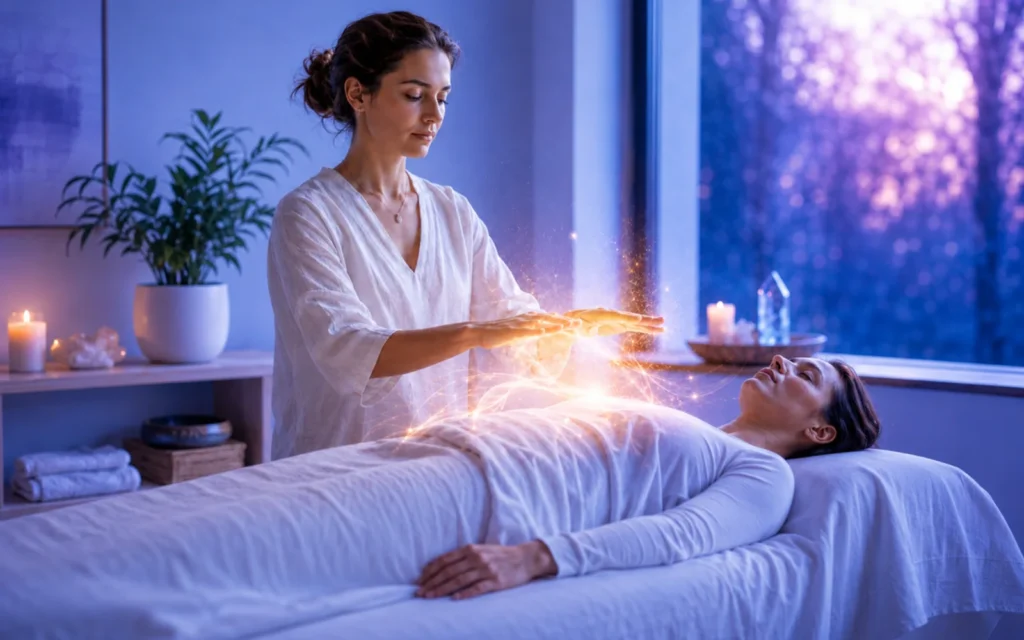
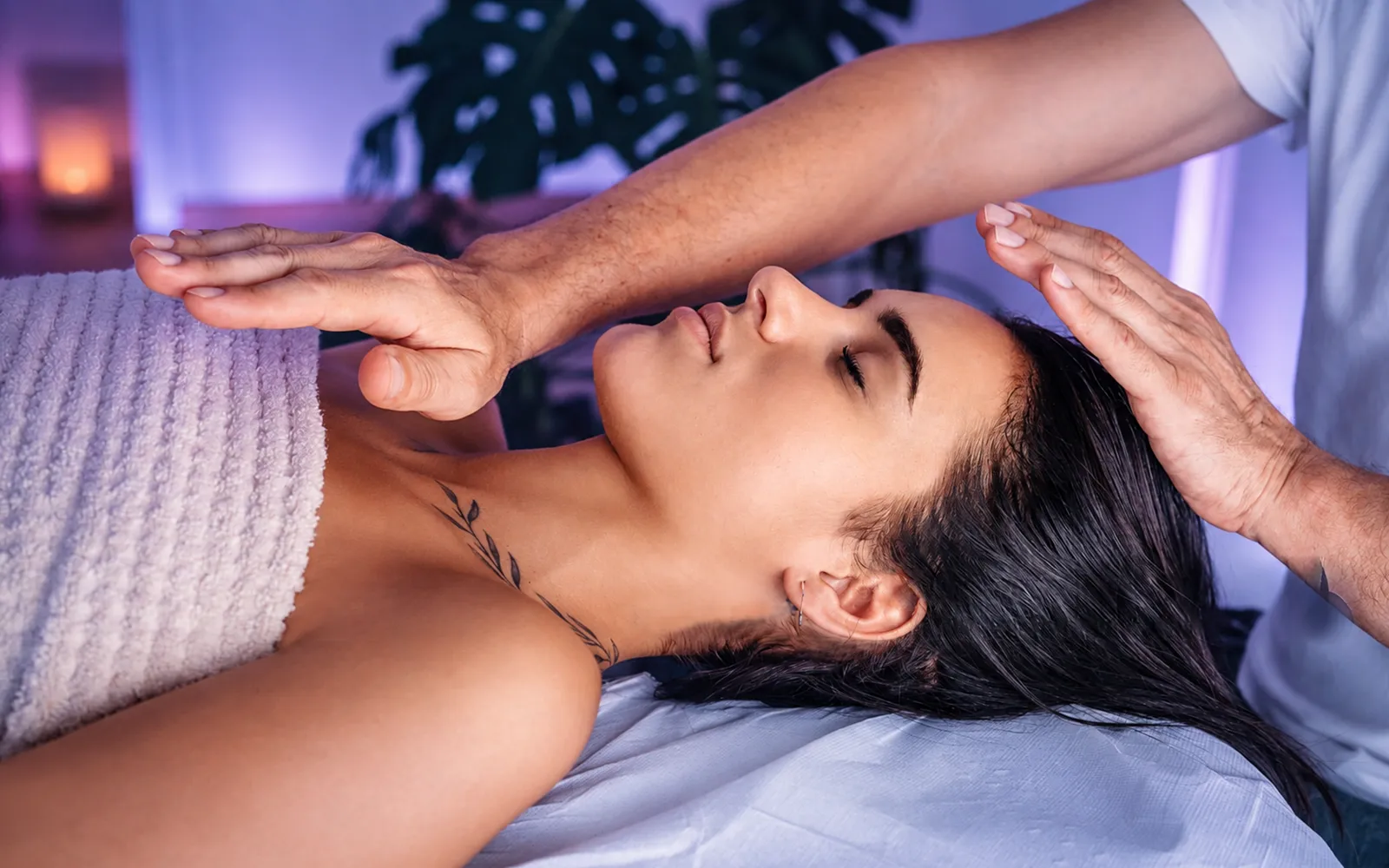
Reiki is a Japanese complementary mind-body practice built around that idea of quiet, focused presence. During a typical Reiki session, a practitioner gently places their hands on or just above different areas of a person’s clothed body. According to Reiki tradition, the practitioner serves as a conduit for universal life-force energy, with the intention of encouraging balance, relaxation, and the body’s natural capacity for healing.
For many people, however, the appeal of Reiki goes beyond the question of how this proposed energy works. The experience itself can be meaningful: slowing down, becoming quiet, receiving compassionate attention, and creating a period in which both mind and body are given permission to rest.
Modern researchers have begun studying Reiki in relation to stress, anxiety, pain, quality of life, and supportive care. Some studies have produced encouraging findings, while others have found little or no difference compared with sham Reiki or other interventions. The overall evidence therefore remains mixed, and Reiki has not been established as an effective medical treatment for any specific disease.
This places Reiki in an interesting position: a traditional energy-based healing practice increasingly being examined through the methods of modern science.
What Is Reiki?
Reiki developed in Japan in the early twentieth century and is most closely associated with Mikao Usui, who began teaching his healing system during the 1920s. The practice later spread internationally and is now offered by independent practitioners as well as in some wellness, hospice, nursing, and integrative-care settings.
The word Reiki is commonly associated with the concept of universal life energy. Within Reiki tradition, this energy is believed to flow through living beings and contribute to physical, emotional, and spiritual well-being.
A practitioner does not ordinarily massage muscles, manipulate joints, or apply significant pressure. Instead, the hands are positioned gently on or several inches above different parts of the recipient’s body.
The traditional intention is to allow Reiki energy to flow where it is needed while the person rests comfortably.
From a practical perspective, Reiki can be described more simply as a quiet, noninvasive complementary practice centered on gentle touch or near-body hand placement, focused attention, and relaxation.
“Sometimes wellness does not begin by doing more—it begins by becoming still enough for the mind and body to experience rest, awareness, and compassionate attention.”

What Happens During a Reiki Session?
One of Reiki’s most appealing qualities is its simplicity.
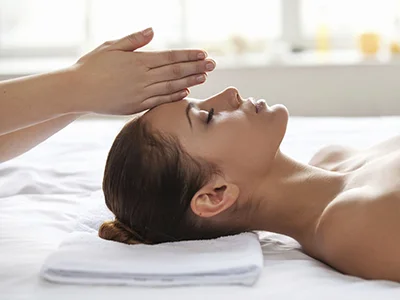
A person generally remains fully clothed and either lies comfortably on a treatment table or sits in a chair. The environment is usually quiet, with an emphasis on comfort and minimal stimulation.
The practitioner moves through a series of hand positions, often spending several minutes near areas such as the head, shoulders, abdomen, legs, or feet. With the recipient’s permission, the hands may lightly touch the body or remain just above it.
A typical Reiki session may include:
- Gentle hands-on or near-body contact
- A quiet, low-stimulation environment
- Several minutes of stillness at each hand position
- Little or no physical manipulation
- An emphasis on relaxation and comfortable breathing
- A period of focused, compassionate attention
Unlike massage, Reiki does not depend on kneading muscles or mechanically changing tissues.
The experience is generally characterized by stillness, gentle attention, and an opportunity to rest.
The Traditional Idea of Life-Force Energy
At the center of Reiki philosophy is the concept that living beings possess or interact with a subtle form of life energy.
Similar concepts can be found in several traditional healing systems. Chinese traditions describe qi, Indian traditions describe prana, and Japanese traditions have long used concepts involving ki.
Within Reiki, practitioners believe that encouraging a harmonious flow of life-force energy may help support physical, emotional, and spiritual balance.
It is important, however, to distinguish this traditional explanation from what modern science has demonstrated.
The National Center for Complementary and Integrative Health has stated that there is currently no scientific evidence establishing the existence of the particular energy field proposed by Reiki theory.
That does not necessarily mean a Reiki session cannot influence how someone feels.
It means the proposed energy mechanism itself has not been scientifically verified.
And that leads to an interesting question:
If people sometimes experience relaxation, comfort, or symptom relief during Reiki, what biological or psychological processes might contribute to those experiences?
Reiki Through the Lens of Modern Science
Researchers do not necessarily need to prove the existence of Reiki energy before studying the practice.
They can study measurable outcomes.
For example, researchers can examine whether people receiving Reiki report differences in pain, anxiety, perceived stress, fatigue, relaxation, or quality of life. They can also compare Reiki with sham Reiki, meditation, progressive relaxation, standard care, or no intervention.
This is important because a Reiki session contains several elements that may themselves influence well-being.
The recipient is usually removed from ordinary distractions. They are encouraged to rest. Another person gives them focused attention. The surroundings may be quiet and calming. Expectations may influence the experience, and gentle physical contact can itself have psychological and physiological effects.
Modern research is therefore attempting to separate the various elements of the Reiki experience and determine whether Reiki has effects beyond those associated with relaxation, expectation, human interaction, and therapeutic context.
Reiki, Relaxation, and Stress
Perhaps the most natural application of Reiki is relaxation.
Consider how unusual it has become for many people to spend 30 or 60 minutes doing almost nothing. No email, no work assignment, no social media, no conversation requiring an immediate response, and no pressure to accomplish something.
A Reiki session deliberately interrupts that pattern.
The person is invited simply to rest.
For someone experiencing chronic stress, that shift in environment may itself be meaningful. Breathing may slow, muscular tension may decrease, attention may turn inward, and the constant stream of external demands temporarily disappears.
Some clinical studies have reported reductions in perceived stress following Reiki. One randomized study involving cancer patients, for example, reported improvements in pain, anxiety, and perceived stress compared with sham Reiki and progressive relaxation conditions, although physiological measures such as cortisol did not differ significantly among the groups.
Findings such as these are encouraging, but they should be interpreted cautiously. One relatively small clinical trial cannot establish Reiki as a proven treatment for stress.
Instead, it becomes one more piece of a developing research picture.
Reiki and Anxiety
Anxiety is not experienced only through thoughts.
It often has a strong physical component: a racing heart, tense muscles, altered breathing, restlessness, difficulty concentrating, stomach sensations, or simply an inability to settle.
Because Reiki intentionally creates an environment of stillness and relaxation, anxiety has naturally become one of the most frequently investigated areas of potential benefit.
Some studies have reported improvements in anxiety, while others have not demonstrated a meaningful advantage over comparison interventions.
For example, one randomized study involving people undergoing wisdom-tooth surgery found that Reiki did not significantly reduce preoperative anxiety compared with sham Reiki or no intervention, although postoperative pain was somewhat lower among those receiving Reiki.
Mixed findings like these are scientifically valuable.
Good research is not simply about confirming that something works. It helps identify where an intervention may be useful, where it may not be, and under which circumstances meaningful effects are most likely to occur.
Reiki and Pain
Pain is another area that has attracted considerable interest.
A randomized placebo-controlled study involving adults with chronic knee osteoarthritis compared Reiki, sham Reiki, mindfulness meditation, and a waiting-list condition. Symptoms improved in both the Reiki and mindfulness groups compared with the waiting-list group, leading researchers to suggest that Reiki deserved further investigation.
Another randomized study involving people receiving hemodialysis reported reductions in pain, fatigue, and itching among participants receiving a series of Reiki sessions compared with routine treatment alone.
These findings are intriguing, but they require an important distinction.
Reiki research generally investigates whether the practice may help someone experience symptoms differently or more comfortably. That is very different from demonstrating that Reiki treats the underlying biological cause of osteoarthritis, kidney disease, cancer, or another medical condition.
Symptom support and disease treatment are not the same thing.
A complementary practice may still have value if it helps improve comfort, coping, or quality of life, but those benefits should not be confused with curing the disease responsible for the symptoms.
Reiki in Supportive Cancer Care
This distinction becomes especially important when discussing cancer.
Reiki should be considered a complementary practice, meaning that it may be used alongside appropriate medical care. It should not be considered an alternative treatment used in place of chemotherapy, radiation, surgery, immunotherapy, or other medically indicated cancer treatments.
Clinical research has examined Reiki in supportive cancer care primarily for outcomes such as anxiety, pain, stress, and distress associated with illness or treatment.
That reflects a potentially meaningful role for complementary therapies.
Their purpose may not be to fight the cancer itself.
Their value may instead lie in helping make the human experience of illness and treatment more comfortable, manageable, and emotionally supported.
This is an important distinction because treating disease and supporting the person living through disease are both legitimate concerns, even though they require different approaches.
Reiki and Quality of Life
Health involves more than whether a disease is present or absent.
It also includes comfort, emotional well-being, independence, relationships, purpose, sleep, resilience, and overall quality of life.
These dimensions become especially important for older adults and for people living with chronic conditions that may not have a simple cure.
Research involving older adults in institutional settings has reported improvements in comfort and quality-of-life measures among people receiving Reiki compared with control groups, although limitations in study design mean stronger research is needed before firm conclusions can be drawn.
Still, studies like these raise a valuable question:
Could a gentle complementary practice improve well-being even when it does not directly treat the underlying medical condition?
That may ultimately be one of the most meaningful areas in which practices like Reiki can be evaluated.
Why Human Touch and Presence May Matter
One of the simplest aspects of Reiki is also one of the easiest to overlook.
It involves focused human attention.
For a period of time, another person is intentionally present with the recipient. There is no computer between them, no hurried conversation, and no complicated task the person must perform.
For someone experiencing chronic illness, emotional exhaustion, loneliness, caregiving stress, or simply the constant pressure of everyday life, that experience may have value.
This does not establish that an invisible life-force energy is being transferred.
But compassionate human presence should not automatically be dismissed as insignificant simply because it is difficult to reduce to a single biological mechanism.
Healing and curing are not always identical concepts.
Medicine may treat a disease.
Supportive practices may help someone feel calmer, more comfortable, cared for, connected, or better able to cope with the experience of illness.
Both dimensions can matter.
What Might Someone Feel During Reiki?
Experiences during Reiki vary considerably.
Some people report warmth around the practitioner’s hands. Others describe tingling, heaviness, lightness, emotional calm, or deep relaxation. Some become sleepy, while others notice very little physically and simply appreciate the opportunity to rest.
There is no particular sensation that a person is required to experience for a Reiki session to feel worthwhile.
It is also important not to assume that warmth, tingling, or other physical sensations automatically prove that life-force energy is being transferred.
The most balanced approach may be simply to notice the experience without feeling obligated to explain every sensation.
Reiki and the Relaxation Response
Regardless of how someone interprets Reiki energetically, the structure of a session can create favorable conditions for relaxation.
The person lies or sits still. External stimulation decreases. Breathing may naturally slow. Attention shifts away from everyday responsibilities. Muscular tension may begin to decrease.
These changes resemble features commonly associated with other relaxation and contemplative practices.
This does not prove that Reiki works through the same mechanisms as meditation or breathing exercises. It does suggest that part of its appeal may come from creating an environment in which the nervous system is given an opportunity to move away from constant activation.
Sometimes the benefit of a wellness practice may not come from forcing the body to change.
It may come from creating conditions that make relaxation easier to experience.
Is Reiki Safe?
One practical advantage of Reiki is that it is noninvasive.
It does not involve needles, medications, supplements, vigorous physical movements, or forceful manipulation.
NCCIH has reported that Reiki has not been shown to have harmful effects.
The greater concern is therefore usually indirect: a person might rely on Reiki instead of obtaining an appropriate medical diagnosis or receiving evidence-based treatment for a serious condition.
For this reason, Reiki is best viewed as an adjunct to appropriate healthcare rather than a replacement for it.
A responsible practitioner should never advise someone to discontinue medication, cancel necessary medical treatment, or rely on Reiki as a cure for a serious illness.
Reiki as a Self-Care Practice
Reiki is unusual among complementary practices because practitioners can also learn forms of self-Reiki.
Instead of receiving Reiki from another practitioner, an individual rests their own hands on different areas of the body while becoming quiet and attentive.
Whatever someone believes about the underlying energy concept, the practice creates a structured period of stillness.
It can become a personal ritual of slowing the breath, relaxing the muscles, directing attention inward, and stepping temporarily away from external demands.
In this respect, Reiki shares certain experiential qualities with meditation, mindfulness, breathing exercises, and other contemplative practices.
The methods and philosophies differ, but each provides an opportunity to interrupt the momentum of everyday stress and intentionally create space for rest.
Reiki Does Not Require Choosing Between Science and Possibility
Conversations about complementary healing practices can easily become polarized.
One position assumes that because a practice has been used for generations, its traditional explanation must automatically be scientifically correct. The opposite position assumes that if science has not confirmed the proposed mechanism, there can be nothing meaningful about the experience.
Neither extreme is necessary.
A more constructive approach is to remain open to experience while remaining rigorous about evidence.
It is possible to acknowledge that many people describe Reiki as relaxing or meaningful while also acknowledging that its proposed energy field has not been scientifically demonstrated.
It is possible to study Reiki for pain, stress, anxiety, or quality of life without claiming that it cures disease.
And it is possible that future research may identify effects whose scientific explanation differs from the traditional theory.
That is one of the reasons research matters.
Science does not require us to dismiss an experience before investigating it.
It requires us to ask better questions about what is happening.
A Complementary Approach to Mind-Body Well-Being
Perhaps Reiki is most useful when it is understood within the broader context of mind-body wellness.
The practice does not need to compete with conventional medicine.
Modern healthcare plays an essential role in diagnosing disease, treating illness, prescribing medication, performing surgery, managing emergencies, and providing evidence-based treatment.
Complementary practices may serve another purpose.
They may provide intentional opportunities for rest, self-awareness, comfort, stress reduction, compassionate attention, and emotional support.
For some people, Reiki may become one of those opportunities.
Its value does not have to depend on promising miraculous results.
Sometimes simply creating a regular space for stillness and relaxation can itself be meaningful.
The Takeaway
Reiki is a gentle Japanese complementary practice in which a practitioner places the hands lightly on or just above the body with the traditional intention of facilitating life-force energy and supporting balance and well-being.
Modern research has investigated Reiki in areas including pain, anxiety, stress, supportive cancer care, fatigue, and quality of life. Some studies have produced encouraging findings, while others have found little or no advantage compared with sham Reiki or other interventions.
The overall evidence therefore remains mixed, and science has not established the existence of the specific life-force energy proposed by Reiki tradition.
Yet the Reiki experience contains several elements that may themselves be meaningful: quiet surroundings, focused attention, gentle touch, intentional rest, expectation, human connection, and an opportunity to step away temporarily from the demands of everyday life.
This allows Reiki to be approached in a balanced way.
It does not need to be presented as a miracle cure.
Nor does an unproven energy mechanism mean that every aspect of the experience must be dismissed.
Reiki may be most appropriately understood as a complementary practice centered on stillness, compassionate attention, relaxation, and the possibility of supporting greater mind-body well-being.
Sometimes wellness does not begin by doing more.
Sometimes it begins by stopping long enough to breathe, become quiet, and give the body and mind permission to rest.
This article is intended for educational purposes only and is not medical advice. Reiki is a complementary wellness practice and should not replace appropriate medical or mental-health diagnosis, treatment, medication, or other necessary healthcare.