















What if one of the most important communication pathways between your brain and body were already working quietly inside you every moment of the day?
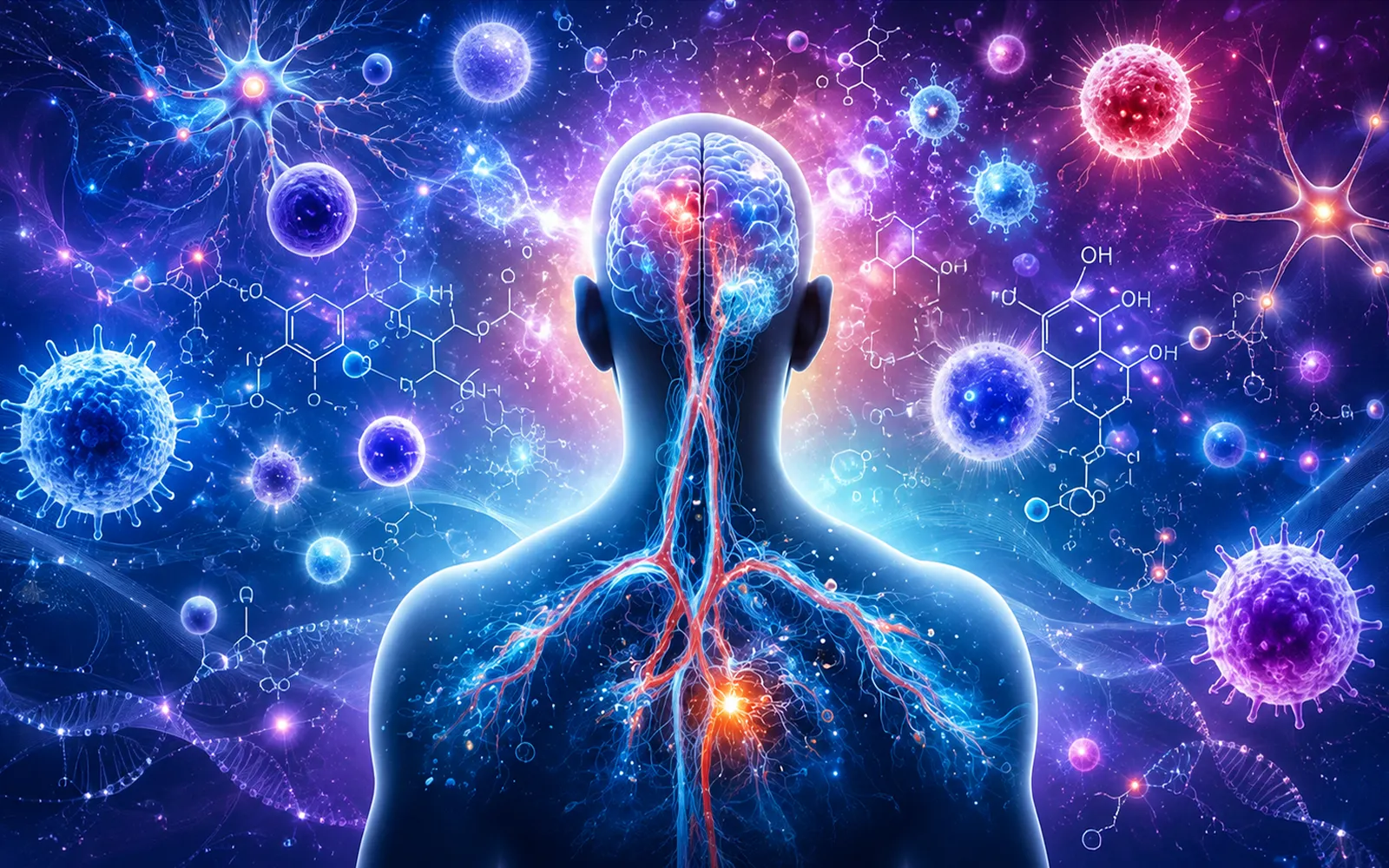
Running from the brainstem through the neck and into the chest and abdomen, the vagus nerve helps connect the brain with the heart, lungs, digestive system, and other internal organs. It is a major component of the parasympathetic nervous system, which supports functions associated with rest, digestion, recovery, and physiological regulation.
Its name comes from the Latin word vagus, meaning “wandering”—an appropriate description for a nerve that travels so extensively through the body.
The vagus nerve participates in heart-rate regulation, digestion, breathing-related cardiovascular changes, gut-brain communication, and many aspects of autonomic balance. Researchers are also increasingly studying its relationships with stress, inflammation, mood, emotional regulation, and immune signaling.
Perhaps most encouraging is that everyday practices such as slow breathing, relaxation, meditation, movement, adequate sleep, and stress management can influence physiological processes associated with autonomic and vagal regulation.
The vagus nerve therefore provides a fascinating biological window into an idea people have recognized intuitively for centuries:
The way we breathe, feel, move, rest, and respond to stress can influence what happens inside the body.
“Every breath is part of the conversation between mind and body—and each conscious breath can help guide us from stress toward balance and recovery.”
Mind Body Works
What Is the Vagus Nerve?
The vagus nerve is also known as cranial nerve X, the tenth of the twelve cranial nerves. It begins in the brainstem and travels through the neck before branching into the chest and abdomen, communicating with organs including the heart and gastrointestinal tract.
One of the most important features of the vagus nerve is that communication travels in both directions. Some vagal fibers carry signals from the brain toward the organs, while many others carry sensory information from the body back toward the brain.
This makes the vagus nerve less like a simple electrical wire and more like part of a sophisticated two-way information network.
Through this continuous communication, the brain receives information about what is happening inside the body while simultaneously helping regulate the organs below.
That bidirectional relationship is one of the reasons the vagus nerve has become such an important subject in modern mind-body research.
The Autonomic Nervous System: Activation and Recovery
To understand the vagus nerve, it helps to understand the autonomic nervous system—the system responsible for regulating many bodily processes without requiring conscious control.
You do not normally have to remind your heart to beat, tell your blood vessels to adjust, or consciously direct your digestive tract to move food. These processes are largely regulated automatically.
Two major branches of the autonomic nervous system are commonly discussed:
- The sympathetic nervous system helps mobilize the body during activity, challenge, or stress.
- The parasympathetic nervous system supports processes associated with rest, digestion, recovery, and energy conservation.
These two systems are not enemies, nor do they operate as a simple on/off switch. Healthy physiology requires the ability to move appropriately between activation and recovery depending on the situation.
The vagus nerve is one of the principal pathways through which parasympathetic regulation reaches the heart, digestive tract, and other organs.
A healthy nervous system therefore does not remain relaxed all the time. It remains flexible—capable of becoming activated when action is necessary and settling again once the challenge has passed.
That ability to recover may be just as important as the ability to respond.
The Vagus Nerve and Heart Rate
One of the clearest examples of vagal influence can be seen in the heart.
Parasympathetic signals traveling through cardiac vagal pathways help regulate heart rate and electrical conduction. At rest, vagal activity contributes significantly to normal regulation of the heartbeat.
Heart rate also changes naturally with breathing. For many people, the heart beats slightly faster during inhalation and slightly slower during exhalation.
This normal phenomenon is known as respiratory sinus arrhythmia. Despite the word arrhythmia, in this context it usually describes a normal breathing-related variation in heart rate rather than an abnormal rhythm.
This close interaction between respiration and cardiovascular regulation is one reason researchers frequently study heart rate variability, or HRV.
What Is Heart Rate Variability?
Heart rate variability refers to the small differences in timing between one heartbeat and the next.
A heart beating 60 times per minute does not necessarily beat exactly once every second like a metronome. The intervals between beats vary slightly, and those variations can provide information about autonomic regulation.
Certain HRV measurements are particularly influenced by parasympathetic cardiac activity and are commonly used in research examining vagally mediated autonomic function.
HRV should not be treated as a simple score of vagus-nerve “health,” however. Higher HRV is not automatically better in every person or circumstance, and values can be affected by age, fitness, breathing, sleep, stress, medications, illness, and many other factors.
Within appropriate research settings, HRV nevertheless provides a valuable window into how the autonomic nervous system responds to breathing, stress, recovery, and other physiological influences.
Breathing: A Bridge Between Conscious and Automatic Function
Breathing occupies a remarkable position in human physiology.
Most of the time, respiration occurs automatically. Yet unlike many other autonomic functions, we can also consciously change it. We can slow the breath, speed it up, deepen it, soften it, or change the relative length of inhalation and exhalation.
That makes breathing one of the unusual physiological processes positioned at the intersection of voluntary behavior and automatic nervous-system regulation.
Research examining slow breathing has found measurable effects on cardiovascular-autonomic function. A large systematic review and meta-analysis involving more than 200 studies found that voluntary slow breathing increased several measures of vagally mediated heart-rate variability during breathing, immediately afterward, and following repeated training.
More recent research has continued to report effects of slow breathing and HRV biofeedback on measures such as HRV, respiratory sinus arrhythmia, and baroreflex sensitivity, although researchers continue to investigate the most effective methods and long-term implications.
This does not mean that every deep breath dramatically “stimulates the vagus nerve.”
The physiology is considerably more complex.
What the research does support is a more useful conclusion:
The pattern of our breathing can influence measurable autonomic processes associated with parasympathetic regulation.
Why Slow Breathing Can Feel Calming
Think about how breathing often changes during fear, anxiety, or acute stress. It may become faster, shallower, irregular, or more effortful.
Now consider breathing during deep relaxation or peaceful sleep. It is often slower, smoother, and more rhythmic.
The relationship works in both directions. Emotional state can change breathing, while deliberately changing the pattern of breathing may also influence some of the physiological processes associated with emotion.
Slow breathing alters the mechanical interaction among the lungs, chest, blood pressure, heart rhythm, and cardiovascular reflexes. Those changes influence autonomic regulation and can increase breathing-related fluctuations in heart rate.
This provides a biological explanation for something many people discover through personal experience:
Changing the breath can change how the body feels.
Does a Longer Exhale Matter?
You may have heard the recommendation to make the exhale slightly longer than the inhale.
There is some physiological reasoning behind this advice because heart rate often increases during inhalation and decreases during exhalation. Researchers have therefore studied breathing patterns that emphasize longer exhalations.
However, current evidence does not suggest that everyone must follow one perfect breathing ratio. A 2025 study comparing equal inhalation and exhalation with a longer-exhalation pattern found reductions in blood pressure after repeated slow breathing but no significant difference between the two breathing patterns in the HRV outcomes examined.
The practical lesson is therefore relatively simple:
Comfortable, slow, regular breathing may matter more than trying to achieve a perfect numerical formula.
A Simple Slow-Breathing Practice
A gentle slow-breathing exercise can be practiced almost anywhere.
Sit comfortably and allow your shoulders, face, and jaw to relax. Breathe in gently through the nose for approximately four seconds, then breathe out comfortably for approximately six seconds.
Continue for several minutes without forcing the breath.
A few principles can help keep the practice comfortable:
- Keep the breathing gentle rather than excessively deep.
- Allow the chest and abdomen to move naturally.
- Shorten the count if four seconds in and six seconds out feels uncomfortable.
- Avoid straining to empty or fill the lungs completely.
- Return to normal breathing if you become dizzy or uncomfortable.
The goal is not to take enormous breaths.
The goal is to allow breathing to become slow, smooth, comfortable, and relaxed.
Research suggests that slow-paced breathing can increase certain HRV measures during the exercise and may help some people reduce immediate anxiety, tension, or repetitive thinking.
Its value may come not from forcing the body to relax, but from creating physiological conditions in which relaxation becomes easier.
The Vagus Nerve and Stress Recovery
Stress itself is not inherently harmful. The body’s stress response is an essential system that helps us meet physical, mental, and emotional challenges.
The more important question is often what happens after the challenge.
Can the body gradually return toward baseline, or does it remain in a prolonged state of activation?
The ability to move appropriately between mobilization and recovery is sometimes referred to as autonomic flexibility.
The vagus nerve participates in this process through parasympathetic pathways affecting the heart, digestive tract, and communication between internal organs and the brain.
This gives us a more useful way to think about nervous-system health. The goal is not to remain calm every second of the day.
The goal is to develop the capacity to respond when necessary, recover when possible, and move flexibly between the two.
Relaxation Is a Biological State
Relaxation is often discussed as though it were simply a mental attitude.
But relaxation also has a physiological component.
When the body moves toward a calmer state, several changes may occur:
- Breathing may become slower and more regular.
- Heart-rate patterns may change.
- Muscle tension may decrease.
- Attention may shift away from threat or urgency.
- Autonomic activity may move toward patterns associated with recovery.
This is one reason practices such as breathing exercises, mindfulness, meditation, yoga, and biofeedback have received increasing scientific attention.
Research does not support the simplistic idea that every relaxation practice directly “tones” the vagus nerve. It does, however, suggest something more useful:
Regular stress-management practices can influence measurable aspects of autonomic regulation.
The Vagus Nerve and Digestion
The familiar phrase “rest and digest” reflects an important physiological relationship.
The vagus nerve plays a major role in communication between the brain and gastrointestinal system. Vagal pathways contribute to digestive motility, secretion, pancreatic function, nutrient signaling, and other processes involved in maintaining gastrointestinal function.
At the same time, sensory information from the digestive tract travels toward the brain through vagal pathways.
This creates an ongoing two-way conversation:
Brain → Gut
and
Gut → Brain
Research into this communication system has become an important part of the rapidly developing field known as the gut-brain axis.
Why Stress Can Affect the Stomach
Many people have experienced the connection between stress and digestion without needing a scientific explanation.
Butterflies before an important event, loss of appetite during worry, an unsettled stomach during anxiety, or digestive discomfort during prolonged stress all demonstrate that emotional experience and gastrointestinal function are interconnected.
These reactions involve communication among the brain, autonomic nervous system, endocrine system, immune system, and digestive tract.
Research suggests that stress can influence vagal and autonomic circuits involved in gastrointestinal motility and secretion, potentially altering digestive function.
The digestive system therefore does not operate independently of emotional experience.
It participates in the same interconnected mind-body network.
The Gut Talks Back
The relationship becomes even more interesting when we consider the information traveling from the gut toward the brain.
Vagal sensory pathways can detect mechanical, chemical, nutritional, and hormonal information from the gastrointestinal system and relay aspects of that information to the brainstem.
Researchers are also investigating interactions among the intestinal microbiome, immune system, hormonal signaling, and vagal pathways within the larger gut-brain network.
This does not mean every emotional state originates in the gut, nor does it mean changing the microbiome automatically changes mood.
The more scientifically grounded conclusion is that communication between brain and body is deeply bidirectional.
The brain influences the gut, and the gut continually provides information back to the brain.
The Vagus Nerve and Emotional Regulation
What does a nerve traveling through the chest and abdomen have to do with emotion?
Potentially quite a lot.
The brain constantly receives information about the internal state of the body through a process known as interoception.
Signals related to heart activity, breathing, digestion, temperature, muscle tension, and other internal processes help the brain construct a sense of how the body is doing.
Vagal pathways contribute to this stream of information, and researchers are increasingly studying how vagal sensory signaling interacts with brain regions involved in emotion and stress regulation.
Animal research has also demonstrated relationships between vagal activity and neural activity within regions such as the prefrontal cortex and amygdala, although findings from animals cannot automatically be assumed to translate directly to human emotional experience.
Even with those limitations, the emerging picture is compelling:
Emotion is not simply something the brain produces in isolation. It is influenced by ongoing communication between the brain and body.
Feelings Have a Physical Component
Anxiety may involve worried thoughts, but it can also involve a faster heartbeat, tightness in the chest, altered breathing, stomach sensations, muscle tension, sweating, and restlessness.
Calm also has a physical component. Breathing may slow, muscle tension may decrease, heart-rate patterns may change, and the body may begin to feel more comfortable.
This helps explain why changing aspects of the body can sometimes influence emotional experience.
We may not always be able to command ourselves simply to “stop feeling stressed.” But we may be able to change the physical context surrounding that stress by slowing the breath, relaxing the shoulders, walking, meditating, stretching, sitting quietly, or moving into a calmer environment.
Those actions provide the brain with a different stream of bodily information.
The relationship between mind and body is therefore not one-directional.
The Vagus Nerve and the Immune System
Another developing area of research concerns the interaction between vagal pathways and immune regulation.
Scientists have identified neural pathways through which the nervous system can influence inflammatory processes. One widely studied concept is the cholinergic anti-inflammatory pathway, in which vagal-related signaling participates in aspects of neuroimmune regulation.
This research has contributed to growing interest in bioelectronic medicine, which investigates whether precisely targeted stimulation of nerves can be used to influence specific physiological processes.
However, an important distinction must be made.
Research into neuroimmune signaling does not mean that ordinary breathing exercises can treat autoimmune or inflammatory diseases simply by “activating the vagus nerve.”
Clinical neural stimulation and everyday relaxation techniques are fundamentally different interventions.
The broader significance is that the research demonstrates just how extensively the nervous and immune systems communicate.
Medical Vagus Nerve Stimulation
The medical importance of the vagus nerve extends well beyond wellness practices.
Vagus nerve stimulation (VNS) is an established form of neuromodulation in which controlled electrical or other forms of stimulation are delivered to vagal pathways using specialized medical technology.
Different forms of VNS have been developed and studied for neurological, psychiatric, inflammatory, and rehabilitative applications.
Medical VNS should not be confused with breathing exercises, meditation, massage, cold exposure, or popular internet claims about “vagus nerve hacks.”
The fact that clinicians can stimulate vagal pathways therapeutically demonstrates their biological importance. But medical VNS involves levels of precision, intensity, and clinical oversight that are very different from self-directed relaxation practices.
Do We Really Need to “Activate” the Vagus Nerve?
Popular wellness language frequently uses phrases such as:
- “Activate your vagus nerve.”
- “Reset your vagus nerve.”
- “Hack your nervous system.”
These expressions are memorable, but they can be biologically misleading.
Your vagus nerve is already active. It participates continuously in communication and regulation among the brain, heart, digestive system, and other organs.
It does not normally sit dormant waiting to be switched on.
A more scientifically accurate goal is to support healthy autonomic regulation and flexibility.
Slow breathing, physical activity, adequate sleep, relaxation, meditation, stress management, supportive relationships, and appropriate medical care may all contribute to the broader conditions in which the nervous system regulates itself effectively.
That may sound less dramatic than “resetting” the nervous system.
But it is also more realistic—and ultimately more useful.
Breathing as a Daily Mind-Body Practice
Perhaps one of the most practical lessons from vagus-nerve research is that we already carry an extraordinarily accessible tool with us every moment:
our breath.
Breathing requires no special equipment, appointment, or elaborate technique. Because respiration interacts closely with cardiovascular and autonomic regulation, consciously slowing the breath provides a practical way of influencing part of the mind-body system.
A few minutes of slower breathing can serve as a transition:
- From work toward rest
- From frustration toward reflection
- From mental activity toward sleep
- From automatic reaction toward intentional response
The purpose does not have to be eliminating stress altogether.
Sometimes the purpose of the breath is simply to create enough space for the nervous system to begin recovering from stress.
Other Ways to Support Autonomic Balance
Slow breathing is only one part of a much larger picture.
The foundations that support autonomic regulation are closely connected with the foundations that support overall health:
- Regular physical activity
- Adequate sleep and reasonably consistent daily rhythms
- Periods of recovery and downtime
- Relaxation or mindfulness practices
- Supportive social relationships
- Time away from persistent stimulation
- Healthy nutrition and hydration
- Appropriate medical care when symptoms are present
Stress-management interventions have demonstrated measurable effects on autonomic markers in some research populations, although results vary depending on the technique, study design, and individuals involved.
The goal is not to spend every moment monitoring the nervous system.
The goal is to create a lifestyle in which activation and recovery can coexist.
A Different Way to Understand Mind-Body Health
The vagus nerve challenges the old idea that mental and physical health exist in completely separate worlds.
The heart sends information toward the brain. The digestive system communicates with the brain. The brain regulates internal organs. Breathing interacts with the heartbeat. Stress affects digestion. Bodily sensations influence emotional experience. The nervous and immune systems communicate.
All of these processes take place within the same human organism.
The vagus nerve is not the entire mind-body connection, but it is one of the clearest anatomical examples of how interconnected that relationship really is.
Rather than imagining the mind as something separate that simply directs the body, modern physiology reveals a continuous conversation in which information moves in both directions.
The Positive Message of Vagal Science
Research on the vagus nerve offers an encouraging perspective.
We cannot consciously control every internal function, nor should we try. The nervous system contains extraordinarily sophisticated automatic regulatory mechanisms that operate without our conscious direction.
But we are not completely disconnected from those systems either.
Through everyday behaviors such as breathing, movement, relaxation, meditation, sleep, and stress management, we can influence some of the physiological conditions in which autonomic regulation occurs.
This does not give us total control.
It gives us participation.
That distinction matters.
Health is not always about forcing the body to do something differently. Sometimes it is about creating conditions that allow the body’s existing regulatory systems to function more effectively.
The Takeaway
The vagus nerve is one of the body’s major communication pathways, linking the brain with important organs throughout the chest and abdomen and playing a central role in parasympathetic regulation.
Its functions and areas of research include:
- Heart-rate regulation
- Digestion and gut-brain communication
- Stress recovery and autonomic flexibility
- Internal sensory signaling and interoception
- Breathing-related cardiovascular regulation
- Emerging areas of emotional and neuroimmune regulation
One of the most practical findings from this field is that slow, comfortable breathing can influence heart-rate variability and other physiological measures associated with parasympathetic regulation.
That does not make breathing a cure.
It makes breathing a meaningful point of connection between conscious behavior and automatic physiology.
And perhaps that is the larger lesson of the vagus nerve.
The mind is not simply directing the body from above, and the body is not merely carrying the mind around. They are communicating continuously.
Every breath is part of that conversation.
By learning to slow down, breathe more consciously, manage stress, move regularly, sleep adequately, and make room for recovery, we may be able to support one of the nervous system’s most valuable abilities: the ability to move flexibly from activation toward recovery and from stress toward greater physiological balance.
This article is intended for educational purposes only and is not medical advice. Breathing and relaxation practices can complement healthy living and appropriate healthcare but should not replace professional evaluation or treatment. Anyone with significant cardiovascular, respiratory, neurological, or other medical conditions should consult an appropriate healthcare professional before beginning a new therapeutic breathing practice.