















What if exercise could strengthen the body while also calming the mind?
That idea lies at the heart of Qigong and Tai Chi, two traditional Chinese mind-body practices that combine slow movement, controlled breathing, focused attention, posture, and relaxation.
For centuries, these practices have been associated with cultivating and balancing qi—often translated as vital energy or life energy. Today, Qigong and Tai Chi are practiced around the world not only as traditional wellness disciplines, but also as gentle forms of exercise, meditation in motion, stress management, and rehabilitation.
Modern research has examined their possible effects on balance, fall prevention, chronic pain, physical function, emotional well-being, quality of life, and several chronic health conditions. The results are encouraging in some areas—particularly balance and fall prevention with Tai Chi—while evidence for other benefits remains preliminary or mixed.
What Is Qigong?
Qigong, pronounced roughly chee-gong, developed in China thousands of years ago and became part of traditional Chinese medicine.
The word is commonly interpreted as the cultivation or skillful practice of qi. Traditional Chinese philosophy describes qi as a vital force or energy associated with life and health.
In practice, Qigong usually involves three elements working together:
movement or posture, breathing, and focused awareness.
The movements are generally slow, smooth, and relaxed. Breathing is often slow and deep, and attention may be directed toward the breath, movement, bodily sensations, or visualization. Some forms of Qigong involve considerable movement, while others are primarily meditative and may be performed standing, sitting, or even with very little movement.
This combination makes Qigong something more than ordinary exercise.
The body is moving, but the mind is participating as well.
What Is Tai Chi?
Tai Chi, also known as Tai Ji Quan, originally developed as a Chinese martial art.
Over time, it became increasingly practiced for health, exercise, meditation, balance, and rehabilitation. Modern Tai Chi typically consists of a flowing sequence of slow movements performed with coordinated breathing, mental concentration, controlled weight shifting, and relaxed posture.
Although Tai Chi and Qigong are often discussed separately, they are closely related. The National Center for Complementary and Integrative Health notes that when Tai Chi is practiced for health, it can be considered a form of Qigong because it integrates physical posture, focused attention, and controlled breathing.
One simple way to think about the difference is this:
Qigong is the broader category of energy-cultivation and mind-body exercises, while Tai Chi is a more structured system of flowing movements that developed from a martial art.
Understanding the Idea of Qi
The concept of qi is central to both practices.
Within traditional Chinese thought, health is associated with the harmonious circulation and balance of qi throughout the body. Practices such as Qigong and Tai Chi are traditionally intended to cultivate, strengthen, regulate, and smooth this flow.
This is the traditional explanation.
From a modern scientific perspective, researchers generally evaluate Qigong and Tai Chi by measuring observable outcomes—such as balance, pain, mobility, cardiovascular function, anxiety, sleep, or quality of life—rather than assuming that qi represents a specific measurable form of physical energy.
That distinction is important.
A person does not necessarily have to adopt the traditional explanation of qi to benefit from slow movement, breathing, attention, relaxation, coordination, and regular physical activity.
At the same time, understanding the traditional concept helps explain why the movements are performed the way they are.
The goal is not simply to exercise harder.
It is to move with awareness.
Movement Without Strain
One of the most distinctive characteristics of Qigong and Tai Chi is the quality of movement.
Instead of rapid, forceful exercise, movements are usually performed slowly and deliberately.
The practitioner pays attention to posture, balance, weight distribution, coordination, breathing, and relaxation.
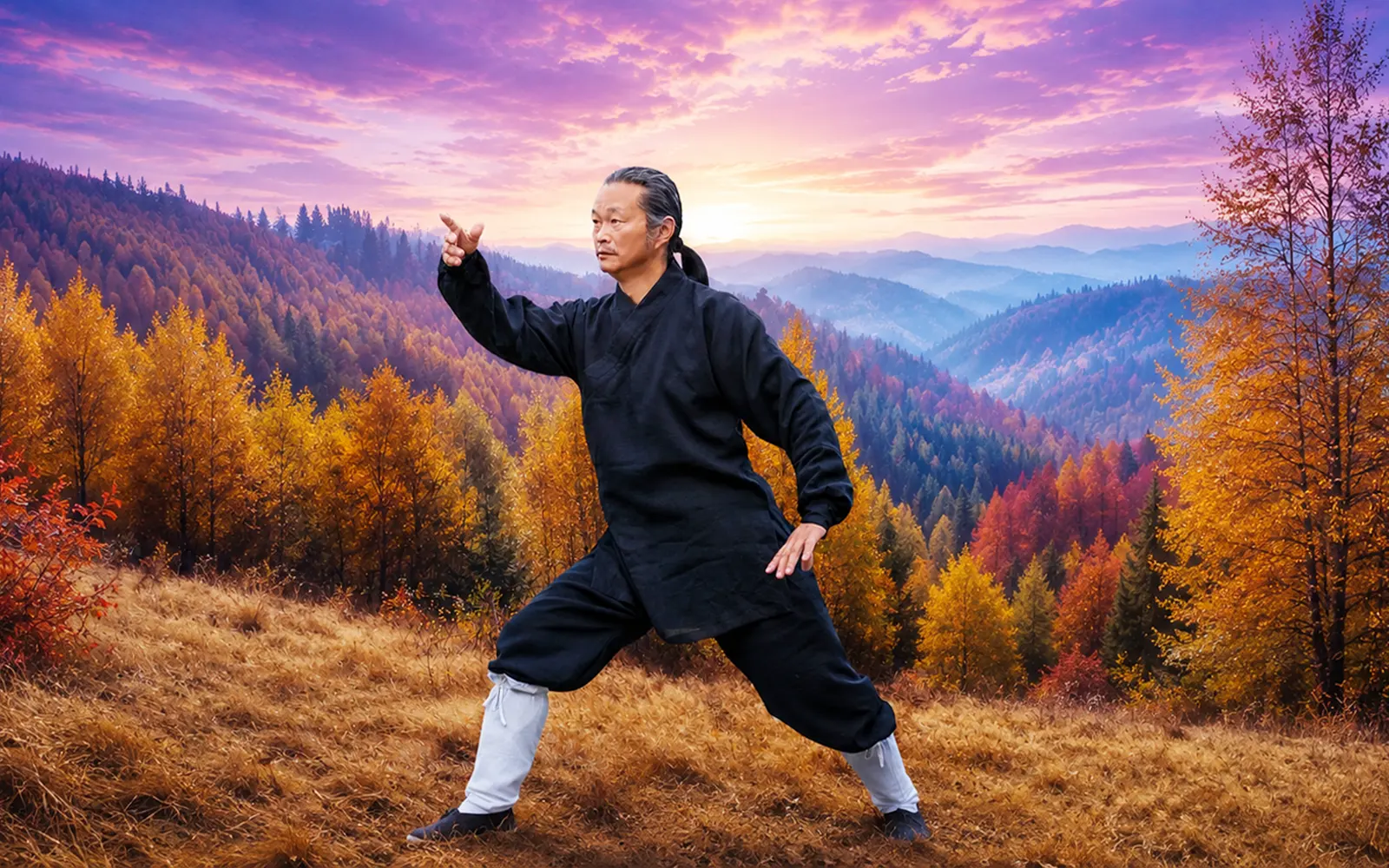
A Tai Chi practitioner might slowly shift weight from one leg to another while the arms move through a circular pattern. A Qigong practitioner might raise the arms gently while inhaling and lower them while exhaling.
The movements may look simple from the outside.
But internally, several processes are occurring simultaneously: balance is being challenged, muscles are controlling posture, breathing is being regulated, attention is being focused, and the nervous system is continually coordinating movement.
That combination may help explain why these practices can have effects that extend beyond conventional ideas of exercise.
The Role of Breath
Breathing is fundamental to Qigong.
Many forms emphasize slow, comfortable, deep breathing coordinated with movement. NCCIH describes Qigong breathing as commonly slow, long, and deep, while the movements themselves tend to be smooth and directed toward relaxation.
The breath also gives the mind something immediate to focus upon.
Instead of thinking continuously about yesterday or worrying about tomorrow, attention returns to:
the breath coming in,
the movement occurring now,
and the breath going out.
In this respect, Qigong and Tai Chi can become forms of moving meditation.
The practitioner is exercising without abandoning mindfulness.
“Perhaps one of the most intuitive applications of Qigong and Tai Chi is stress management.”
Chinese Traditional Medicine
The Mind Is Part of the Exercise
Modern exercise often focuses heavily on the body:
How far did you walk?
How much weight did you lift?
How many calories did you burn?
Qigong asks another question:
Where is your attention while you are moving?
Mental focus is considered an integral part of Qigong practice. Attention may be placed on breathing, posture, particular movements, bodily sensations, or imagery.
That intentional awareness changes the character of the exercise.
Instead of the mind and body functioning as separate activities, Qigong attempts to bring them together.
This may be one reason many people find the practice calming.
Tai Chi and Balance
Among the most compelling areas of Tai Chi research is balance and fall prevention, particularly in older adults.
Tai Chi repeatedly shifts body weight from one leg to another while requiring controlled posture, coordinated movement, and awareness of the body’s position in space.
NCCIH reports evidence that Tai Chi can improve balance and reduce falls among older adults. One large review found evidence that Tai Chi reduced both the rate of falls and the number of older adults who experienced falls.
A 2024 systematic review and meta-analysis focusing on healthy older adults likewise found that Tai Chi improved measures of balance performance.
This is particularly important because maintaining balance, coordination, and confidence in movement can play a major role in preserving independence as we age.
Joint Health, Mobility, and Osteoarthritis
The slow, controlled nature of Tai Chi also makes it attractive to people who find vigorous exercise uncomfortable.
Research has examined Tai Chi particularly closely in people with knee osteoarthritis.
NCCIH reports that research has found improvements in pain, stiffness, physical function, walking, and balance among some people with knee osteoarthritis, although researchers continue to call for higher-quality studies. Tai Chi is also strongly recommended in American College of Rheumatology/Arthritis Foundation guidelines for knee and hip osteoarthritis management.
A 2025 network meta-analysis involving 38 studies and 2,561 participants found moderate-certainty evidence supporting Tai Chi for improving pain and physical function in knee osteoarthritis compared with usual care.
This does not mean Tai Chi repairs damaged cartilage or eliminates arthritis.
Rather, it may help some people move more comfortably and function more effectively despite the condition.
Qigong and Chronic Pain
Qigong has also been studied for pain, but the evidence is less consistent.
Research reviewed by NCCIH has produced mixed findings for musculoskeletal, neck, and low-back pain. Some studies suggest benefit, while others have not found clear effects.
Small studies involving people with fibromyalgia have reported improvements in pain, sleep, physical functioning, and psychological well-being with frequent Qigong practice, but these findings still require confirmation in larger and more rigorous trials.
This illustrates an important principle when evaluating mind-body therapies:
“Promising” is not the same as “proven.”
Stress, Anxiety, and Emotional Well-Being
Perhaps one of the most intuitive applications of Qigong and Tai Chi is stress management.
Slow breathing, deliberate movement, muscular relaxation, and focused attention create a very different physiological and psychological experience from hurried everyday activity.
NCCIH includes Tai Chi among mind-body approaches that may be useful for managing symptoms of stress, while noting that research methods and study quality can make firm conclusions about anxiety difficult.
Qigong research has also reported improvements in anxiety and depressive symptoms in some populations, although many studies have been small or limited in quality.
For this reason, Tai Chi and Qigong may be best viewed as complementary emotional-regulation practices, rather than substitutes for professional treatment when someone is experiencing a significant anxiety or depressive disorder.
Sleep and Relaxation
A practice that slows movement, breathing, and attention may also help some people transition from a state of constant activity toward relaxation.
Some Qigong studies have reported improvements in sleep.
For example, a 2024 study involving community-dwelling adults over age 65 found improvements in psychological well-being, physical health, sleep, and life satisfaction after a 10-week Qigong program. However, the study included only 69 participants and used a quasi-experimental design, so the findings should be considered suggestive rather than definitive.
Another 2024 randomized study of a specific Qigong form found improvements in chronic pain but did not find a significant improvement in sleep quality compared with the control group.
Again, the evidence is interesting—but not uniform.
Parkinson’s Disease and Movement
Because Tai Chi and Qigong challenge posture, coordination, weight shifting, and movement control, researchers have studied them in neurological conditions such as Parkinson’s disease.
NCCIH reports that Tai Chi may help improve balance and reduce falls in people with Parkinson’s disease, although certainty varies among studies. Research involving Qigong has also suggested possible improvements in movement, walking ability, and balance, but the evidence base remains comparatively small.
These practices should be viewed as potential complements to medical and rehabilitative care, not replacements for it.
Cardiovascular and Respiratory Health
Another area of research involves heart and lung conditions.
Studies reviewed by NCCIH suggest that Tai Chi or Qigong added to conventional treatment may improve certain measures of exercise capacity and quality of life in people with conditions such as COPD or chronic heart failure. However, results vary, and in many instances the evidence is not strong enough to establish these practices as specific treatments for the underlying disease.
This distinction matters.
Someone can experience improved mobility, endurance, relaxation, or quality of life without the practice necessarily curing the medical condition itself.
What Might Be Happening Physiologically?
The traditional explanation emphasizes qi.
Modern physiology offers several additional possibilities.
Tai Chi and Qigong combine low-impact physical activity, repeated weight shifting, postural control, muscular coordination, breathing regulation, attention, and relaxation.
Together, those components may influence several systems at once.
Slow weight shifting challenges balance and proprioception.
Controlled movements require muscular stability.
Breathing and focused attention encourage relaxation.
Learning movement sequences challenges coordination and concentration.
Regular practice also provides physical activity without requiring high-impact exercise.
Rather than searching for one single mechanism, it may therefore be more accurate to think of Qigong and Tai Chi as multicomponent mind-body practices.
Their effects may come from the interaction of movement, attention, breath, repetition, relaxation, learning, and social participation when practiced in a group.
A Different Philosophy of Exercise
Western fitness culture often emphasizes intensity:
faster,
harder,
heavier,
more repetitions.
Qigong and Tai Chi offer an interesting counterpoint:
Sometimes improvement comes from slowing down enough to improve the quality of movement.
Instead of forcing the body, the practitioner learns to work with it.
Instead of holding the breath during effort, breathing becomes part of the movement.
Instead of allowing attention to wander, awareness stays with the body.
And instead of measuring success primarily through speed or strength, progress may appear as smoother movement, improved balance, greater relaxation, better coordination, and a deeper awareness of how the body feels.
A Simple Qigong-Inspired Practice
A beginner does not need to memorize a complicated sequence to experience the basic principles.
- Stand comfortably—or sit if standing is difficult—with the spine naturally upright.
- Allow the shoulders and jaw to relax.
- Breathe slowly and comfortably.
- As you inhale, gently raise your hands in front of you.
- As you exhale, slowly lower them.
- Avoid forcing either the movement or the breath.
- Allow the movement to become smooth and continuous.
- Keep your attention on the coordination between the breath, hands, posture, and sensation of movement.
- Continue comfortably for several minutes.
- The purpose is not to perform perfectly.
- The purpose is to become fully present inside the movement.
Is Qigong or Tai Chi Safe?
Both practices are generally considered low-risk when performed appropriately.
NCCIH reports that Tai Chi appears to be safe, with studies finding adverse-event rates similar to other forms of exercise or no intervention; reported practice-related problems were generally minor musculoskeletal aches or pains. Qigong also appears to be a relatively safe form of activity, including for many older adults and people with chronic conditions.
Movements can often be adapted for different levels of mobility, including seated practice.
People with significant balance problems, cardiovascular conditions, recent surgery, serious joint disease, pregnancy, or other medical concerns should discuss a new exercise program with an appropriate healthcare professional and work with a qualified instructor when necessary. NCCIH specifically advises against using either practice to postpone appropriate medical care.
Cultivating Energy—or Cultivating Awareness?
Perhaps the most interesting thing about Qigong and Tai Chi is that they can be understood on more than one level.
Within their traditional framework, they cultivate qi—encouraging energy to become balanced, harmonious, and free-flowing.
From a contemporary health perspective, they cultivate something else that is equally valuable:
ATTENTION.
- Attention to breathing.
- Attention to balance.
- Attention to posture.
- Attention to movement.
- Attention to tension.
- Attention to how the mind and body are interacting at this moment.
- And that may explain part of their enduring appeal.
The Takeaway
Qigong and Tai Chi represent a different approach to wellness—one in which movement, breathing, awareness, and relaxation are practiced together rather than separately.
Traditional Chinese philosophy describes these practices as ways of cultivating and smoothing the flow of qi. Modern research has found measurable benefits in several areas, with some of the strongest evidence supporting Tai Chi for balance and fall prevention in older adults and for physical function and pain management in knee osteoarthritis. Evidence for Qigong, stress reduction, sleep, chronic pain, and various medical conditions is promising in some areas but remains less definitive.
Perhaps their greatest lesson is surprisingly simple:
Health does not always require moving faster. Sometimes it begins by moving more consciously.
When breath, movement, and attention come together, exercise can become more than physical activity.
It can become a practice of awareness, balance, and connection between mind and body.
Disclaimer
This article is intended for educational purposes only and is not medical advice. Qigong and Tai Chi should complement, not replace, appropriate medical diagnosis or treatment.
Recommended reading:
- The William Bengston Healing Method: How Does It Work?
- Emotional Freedom Technique: A Mind-Body Approach to Emotional Healing
- Reiki Healing: Exploring the Power of Energy, Relaxation, and Mind-Body Balance
- Acupuncture & Acupressure: Ancient Healing Points for Modern Wellness
- Rewire Your Brain: The Science of Neuroplasticity and Lifelong Growth