














For decades, the word placebo was often used in a dismissive way.
If someone improved after receiving an inactive pill or simulated treatment, the response might be described as “just placebo”—as though nothing meaningful had actually happened.
Modern neuroscience tells a much more interesting story.
A placebo does not contain an active drug ingredient, but the response to a placebo can involve real activity within the brain and body. Expectations, previous experiences, conditioning, the therapeutic environment, and the relationship between a patient and healthcare professional can influence how symptoms are perceived and, in some circumstances, measurable physiological processes. The National Center for Complementary and Integrative Health describes the placebo effect as a beneficial health outcome related to anticipating that an intervention will help and notes that interactions with healthcare providers can also contribute to such responses.
This leads to a fascinating mind-body question:
If the brain expects relief, can that expectation help activate biological processes that actually produce relief?
For certain symptoms—especially pain—the answer appears to be yes.
The emerging science of placebo research does not suggest that we can simply think every disease away. Instead, it reveals something more scientifically valuable:
The brain is not merely observing healing. In some circumstances, it can actively participate in the experience of it.
What Exactly Is a Placebo?
A placebo is an intervention that looks or feels like a treatment but does not contain the specific active component being tested.
The classic example is a pill containing no active medication.
But a placebo can also take other forms:
a cream,
a simulated procedure,
an inactive injection,
or another treatment-like experience.
Placebos are commonly used in clinical trials so researchers can determine how much improvement comes from the treatment itself versus other influences surrounding treatment.
But the placebo effect is something different from the placebo itself.
The placebo is the inactive intervention.
The placebo effect refers to changes that can occur because of the meaning, expectation, learning, and context associated with receiving treatment.
And that distinction is important.
The pill may be inactive.
The brain receiving the pill is not.
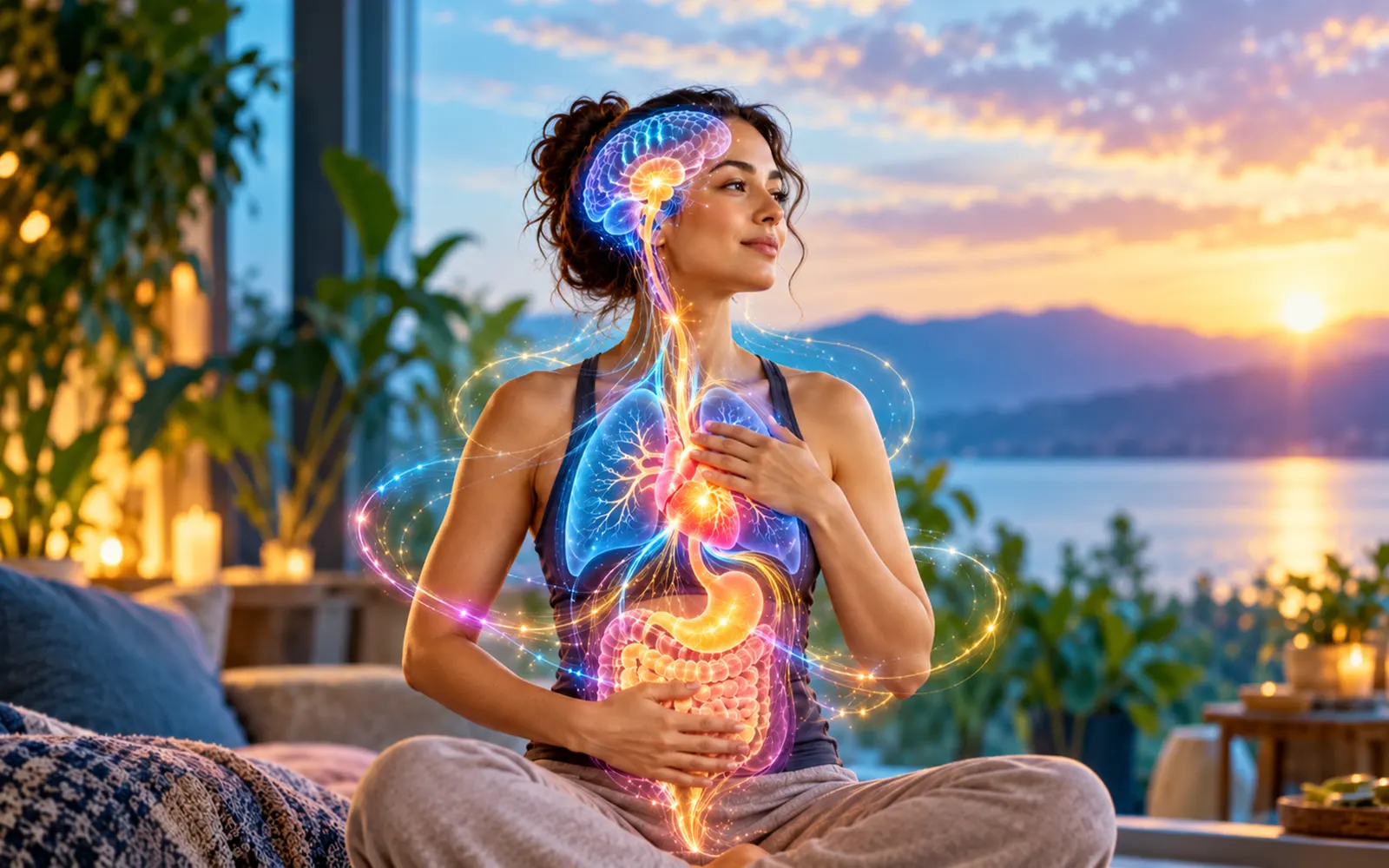
“Expectation is not just a thought—it can become a biological signal that shapes how the brain and body experience pain, relief, and recovery.”
Placebo Effect
Placebo Does Not Mean “Imaginary”
Suppose two people receive exactly the same painful stimulus.
One person believes a powerful pain-relieving treatment has been applied.
The other does not.
Under experimental conditions, those expectations can change not only reported pain but also patterns of brain activity involved in processing that pain.
Human brain-imaging research has linked placebo analgesia with activity in areas including the anterior cingulate cortex, insula, ventral striatum, thalamus, and brainstem pain-regulation systems.
In one randomized fMRI study, an opioid-blocking drug called naloxone reduced both the subjective placebo analgesic response and placebo-related neural activity. Researchers found evidence that placebo analgesia engaged an endogenous opioid pain-control pathway connecting higher brain regions with structures involved in descending pain regulation.
In simple terms:
The brain can recruit some of its own pain-regulating chemistry when relief is expected.
That is very different from saying that the pain was imaginary.
The Brain Does Not Simply Receive Reality – It Interprets It
Our brains are constantly interpreting information.
Consider vision.
The eyes collect light, but the brain constructs what we actually perceive.
The same principle applies to sound, taste, bodily sensations, and pain.
Pain is particularly interesting because it is not a simple meter showing the exact amount of tissue damage.
Pain perception is influenced by incoming sensory signals, but also by:
previous experience,
attention,
emotion,
context,
fear,
sense of safety,
and expectation.
A 2025 randomized brain-imaging study emphasized that pain is shaped by the interaction between sensory input, previous experience, cognitive-emotional states, and expectations. The researchers found that placebo treatment reduced pain through neural patterns distinguishable from those involved in mindfulness meditation, demonstrating that placebo responses can involve identifiable brain processes rather than merely reporting bias.
This gives us a more useful way to think about placebo effects:
Expectation can become part of the brain’s interpretation of what the body is experiencing.
Expectation: Preparing the Brain for What Comes Next
Expectation is one of the central components of many placebo responses.
When a trusted healthcare professional says:
“This treatment should help reduce your pain,”
that statement is not processed in a vacuum.
The brain begins predicting what will happen next.
Those predictions may influence attention, emotional responses, reward systems, and pain-regulating networks.
One human fMRI experiment compared an active topical anesthetic given openly with the same medication administered without the participant knowing it was being used. Pain relief was greater when participants knew they were receiving treatment, and expectation interacted with the active medication at both the subjective and neural levels.
This finding has an important implication:
The treatment and the expectation surrounding the treatment can sometimes work together.
The medicine matters.
But the patient’s experience of receiving that medicine may matter too.
Expectation Can Influence Brain Chemistry
Perhaps one of the most striking demonstrations comes from research involving Parkinson’s disease.
Parkinson’s disease involves disruption of dopamine-producing systems important for movement.
In one study, researchers told participants with Parkinson’s disease that they had different probabilities of receiving active medication—but all actually received placebo.
Using positron emission tomography, researchers observed significant dopamine release under a particular level of treatment expectation. The results showed that expectation of improvement could influence dopamine activity within the brain.
Again, the placebo itself contained no dopamine-enhancing medication.
But the expectation associated with receiving treatment influenced the patient’s own neurochemical system.
That is an extraordinary example of the biological connection between belief, prediction, and physiology.
Conditioning: When the Body Learns What to Expect
Expectation is only part of the story.
Another powerful mechanism is conditioning.
Most people are familiar with classical conditioning from the famous experiments of Ivan Pavlov.
A neutral stimulus repeatedly becomes associated with a biological response.
Eventually, the neutral stimulus itself can begin triggering part of that response.
The same basic learning principle may operate in medicine.
Imagine repeatedly taking a medication that reduces pain.
The pill has a certain appearance.
You swallow it with water.
You are in a particular environment.
Then relief follows.
Over time, the brain may begin associating those surrounding cues with the physiological response.
Eventually, some of the cues themselves may contribute to a learned response.
Human research has shown that expectation and conditioning can produce different kinds of placebo effects. In one controlled study, verbal suggestions strongly influenced conscious outcomes such as pain and motor performance, whereas conditioning influenced certain hormonal responses even when verbal suggestions pointed in the opposite direction.
That suggests something remarkable:
The body can learn associations that influence physiology even when conscious belief is not doing all of the work.
Can the Immune System Be Conditioned?
Researchers have taken conditioning experiments even further by investigating the immune system.
Experimental studies have demonstrated that immune responses can, under particular controlled conditions, become associated with previously neutral sensory cues.
In research using the immunosuppressive drug cyclosporine A, learned associations between a distinctive taste and the drug’s effects produced conditioned changes in immune measures when the taste was later presented without the drug. Animal research has also identified brain regions involved in acquiring and expressing these conditioned immune responses.
This does not mean that people should attempt to manipulate serious immune diseases through expectation or conditioning on their own.
It does demonstrate something scientifically important:
Learning is capable of interacting with biological systems far beyond conscious thought.
The boundary between psychology and physiology is far less rigid than it once appeared.
The Therapeutic Environment Matters
Treatment does not happen in isolation.
Think about everything surrounding a medical encounter:
the appearance of the clinic,
the confidence of the practitioner,
the explanation of what will happen,
the patient’s previous experiences,
the ritual of receiving treatment,
the amount of attention given,
and whether the patient feels understood and cared for.
All of these elements create context.
Researchers explored this directly in a randomized study involving 262 people with irritable bowel syndrome.
Participants received either observation alone, a limited placebo-acupuncture encounter, or placebo acupuncture delivered within a more supportive practitioner relationship characterized by additional attention, warmth, and confidence.
Outcomes improved progressively across those conditions, with the enhanced patient-practitioner relationship producing the strongest response.
The implication reaches far beyond placebo research.
How healthcare is delivered can influence how healthcare is experienced.
Kindness is not a substitute for medical treatment.
Neither is reassurance.
But the therapeutic environment may become part of the total biological and psychological response to treatment.
The Healing Relationship Has Value
Modern medicine is extraordinarily good at identifying molecules, receptors, cells, organs, and diseases.
But human beings do not experience healthcare as molecules alone.
We experience:
being listened to,
being reassured,
having something explained clearly,
trusting the person treating us,
understanding what to expect,
and believing that improvement is possible.
Research into placebo effects suggests that these elements should not automatically be dismissed as irrelevant extras.
They may help shape expectations, reduce uncertainty, alter attention, and influence how symptoms are processed.
The most effective healthcare experience may therefore involve both:
the specific treatment
and
the therapeutic context surrounding that treatment.
The Surprising Science of Open-Label Placebos
Perhaps one of the strangest findings in placebo science is that deception may not always be necessary.
Researchers have studied open-label placebos, in which patients are explicitly told:
“This is a placebo. There is no active medication in this pill.”
You might expect nothing to happen.
Yet randomized trials have sometimes reported improvements.
A multicenter randomized study involving children and adolescents with functional abdominal pain or irritable bowel syndrome found that participants reported less pain and used fewer rescue pain medications during periods when they knowingly received an open-label placebo compared with control periods.
Trials in adults with chronic low-back pain have also reported short-term improvements following openly administered placebos, although a three-year follow-up found no remaining difference between the original placebo and control groups.
This suggests that placebo responses may involve more than simply consciously believing:
“This pill contains medicine.”
Treatment rituals, learned associations, positive expectations, the act of taking something for a symptom, and the body’s previous experiences with healthcare may all contribute.
The science is still developing, but open-label placebo research creates a fascinating possibility:
Some mind-body components of treatment may be harnessed without deceiving the patient.
The Placebo Effect and Pain
Pain remains the area where placebo mechanisms are perhaps best understood.
Placebo analgesia has been associated with endogenous opioid systems, reward circuitry, changes in brain connectivity, and descending pathways through which the brain can regulate incoming pain signals.
Recent research is adding still more detail.
In 2024, NIH-supported scientists identified a previously unrecognized neural circuit involved in expectation-driven pain relief in mice. The pathway connected the anterior cingulate cortex with the pontine nucleus and cerebellum, providing another possible biological route through which expectations can influence pain. Researchers cautioned that human pain is considerably more complex, but the work may point toward new strategies for pain treatment.
The exciting message is not that placebo replaces pain medication.
It is that the nervous system contains internal mechanisms capable of modifying the experience of pain.
Understanding those mechanisms could eventually help medicine use them more effectively.
Why Some People Respond More Than Others
Not everyone experiences the same placebo response.
Some people show substantial improvement.
Others experience little or none.
And even the same person may respond differently depending upon the condition, treatment, previous experience, and context.
Brain-imaging research in people with chronic osteoarthritis pain has found that patterns of functional brain connectivity could predict which individuals were more likely to experience placebo analgesia.
This reinforces an important point:
There is probably no single “placebo personality.”
Placebo responsiveness appears to emerge from an interaction among the individual, the symptom, previous learning, expectations, brain function, and treatment environment.
Like many things in biology, it is a system rather than a single switch.
The Other Side of Expectation: The Nocebo Effect
If positive expectations can sometimes improve symptoms, negative expectations can sometimes move in the opposite direction.
This is called the nocebo effect.
When someone strongly expects discomfort, side effects, or worsening symptoms, those expectations may increase attention to unpleasant sensations and alter the way those sensations are interpreted.
Experimental research has shown that verbally induced expectations can increase pain as well as decrease it.
This does not mean physicians should hide important information about risks.
Patients deserve accurate information.
Instead, it suggests that how information is communicated matters.
There is a difference between saying:
“This treatment frequently causes terrible pain.”
and explaining calmly:
“Some people experience discomfort, but we have several ways to help manage it if it occurs.”
The facts can remain honest while the framing avoids unnecessarily creating fear.
Expectation Is Not the Same as Positive Thinking
This distinction is essential.
Placebo science does not prove that thinking positively cures disease.
Expectation can influence certain symptoms and physiological responses, but there are limits.
A placebo cannot replace insulin in someone who requires insulin.
Expectation does not remove a bacterial infection.
A positive attitude should not replace surgery when surgery is medically necessary.
And symptom improvement does not necessarily mean that the underlying disease process has changed.
Placebo research is most compelling when studying outcomes such as:
pain,
symptom intensity,
emotional distress,
certain motor responses,
and some conditioned physiological processes.
That does not make these effects unimportant.
Symptoms are a major part of human health.
Reducing pain, distress, nausea, or discomfort can meaningfully improve quality of life even when the underlying medical condition still requires conventional treatment.
Placebo Effects Can Work Alongside Real Treatment
One of the most promising implications of placebo research is that this does not have to be an either/or discussion.
It is not:
medicine or mind.
It may be:
medicine plus the brain’s response to receiving medicine.
The fMRI study involving topical anesthetic demonstrated exactly this principle: participants experienced greater pain relief when they knowingly received the active treatment than when the same treatment was administered without their awareness.
That suggests expectations may sometimes amplify the benefit of genuine treatment.
Imagine the clinical possibilities.
Clear communication.
Realistic optimism.
Trust.
A supportive environment.
Confidence in an evidence-based treatment.
Helping patients understand why a treatment may work.
These are not replacements for pharmacology.
They may help create a context in which pharmacology can work alongside the brain’s own regulatory processes.
The Brain Is Constantly Predicting
One emerging way of understanding placebo effects comes from the concept of the predictive brain.
Rather than simply waiting for sensory information and then reacting to it, the brain continually generates predictions about what is likely to happen next.
Incoming signals are interpreted in light of those predictions and previous experiences.
This makes sense from a survival perspective.
A brain that had to analyze every sensation entirely from scratch would be inefficient.
Instead, it uses experience to anticipate the world.
Expectation is therefore not an unusual psychological trick.
It is part of how perception normally operates.
Placebo research gives scientists an opportunity to observe this predictive system in action.
When the brain strongly predicts relief—based on previous experience, conditioning, context, or information—that prediction may influence how incoming bodily signals are processed.
What This Teaches Us About the Mind-Body Connection
The placebo effect offers one of the clearest scientific examples of why separating mind and body can be misleading.
Expectation is psychological.
But expectation occurs in a brain.
A brain contains neurons.
Neurons communicate through chemical and electrical signaling.
Those signals influence other areas of the nervous system.
The nervous system interacts with hormones, muscles, internal organs, and immune processes.
A belief does not float somewhere outside biology.
It becomes part of biology through the activity of the brain and nervous system.
The placebo effect therefore does not require us to choose between psychology and physiology.
It shows us that psychology is expressed through physiology.
The Positive Potential of Placebo Research
The real promise of placebo science is not that doctors should give everyone sugar pills.
It is that researchers may learn how to make legitimate treatments more effective by understanding the brain’s contribution to healing and symptom relief.
Future medicine may become better at deliberately supporting:
positive but realistic expectations,
healthy conditioning,
effective communication,
supportive treatment environments,
patient confidence,
and the body’s own pain-regulation pathways.
The goal would not be to replace treatment.
It would be to understand all of the ingredients that make treatment effective.
Medication may be one ingredient.
A surgical procedure may be another.
Physical rehabilitation another.
But context, expectation, learning, and human interaction may also contribute.
When these factors work together, the patient experiences treatment as a complete biological and psychological event.
An Important Shift in Perspective
Perhaps we should stop thinking of placebo responses as evidence that “nothing happened.”
Something may have happened.
The more useful scientific questions are:
What changed?
Which brain systems were activated?
Which symptoms responded?
How large was the effect?
How long did it last?
Was conditioning involved?
Did expectation contribute?
What role did the practitioner relationship play?
Can the beneficial components be ethically combined with proven treatment?
Those questions transform placebo from an inconvenience in clinical trials into a fascinating subject of scientific investigation.
The Takeaway
The placebo effect demonstrates something remarkable about the human mind-body system:
Expectation can become biology.
Research has shown that placebo responses can involve measurable changes in brain activity, endogenous opioid signaling, dopamine release, pain-regulatory pathways, and conditioned physiological responses.
Previous experience matters.
Conditioning matters.
The therapeutic environment matters.
The way treatment is presented matters.
And the relationship between patient and practitioner may matter as well.
Placebo science does not show that belief can cure every disease.
It reveals something more grounded—and perhaps more profound:
The brain is an active participant in how the body experiences treatment, symptoms, relief, and recovery.
The medicine we receive matters.
But so can what the brain expects that medicine to do.
As researchers continue mapping the pathways behind these effects, the placebo phenomenon may ultimately teach us not how to replace medicine with belief, but how to combine effective medicine with a deeper understanding of the brain’s remarkable capacity to influence the experience of healing.
The placebo effect is not proof that a symptom was imaginary. It is evidence that expectation, learning, and biology are more deeply connected than we once realized.
This article is intended for educational purposes only and is not medical advice. Placebos should not be used as substitutes for necessary medical diagnosis or treatment. People experiencing persistent or serious symptoms should consult an appropriate healthcare professional.