













Your body has been keeping time since long before you ever owned a clock.
Every morning, light enters your eyes and sends a signal to the brain that a new day has begun. Hormones begin changing. Body temperature shifts. Alertness rises. Digestion and metabolism prepare for activity.
As evening approaches, another transition begins. The brain responds to diminishing light, melatonin production increases, alertness gradually declines, and the body begins preparing for sleep.
These predictable biological patterns are known as circadian rhythms.
Circadian rhythms are approximately 24-hour cycles that influence sleep and wakefulness, hormone release, appetite, digestion, body temperature, and many other functions throughout the body. Nearly every tissue and organ contains its own biological clock, coordinated by a master clock in the brain.
This means your body doesn’t merely care about what you do.
It also pays attention to when you do it.
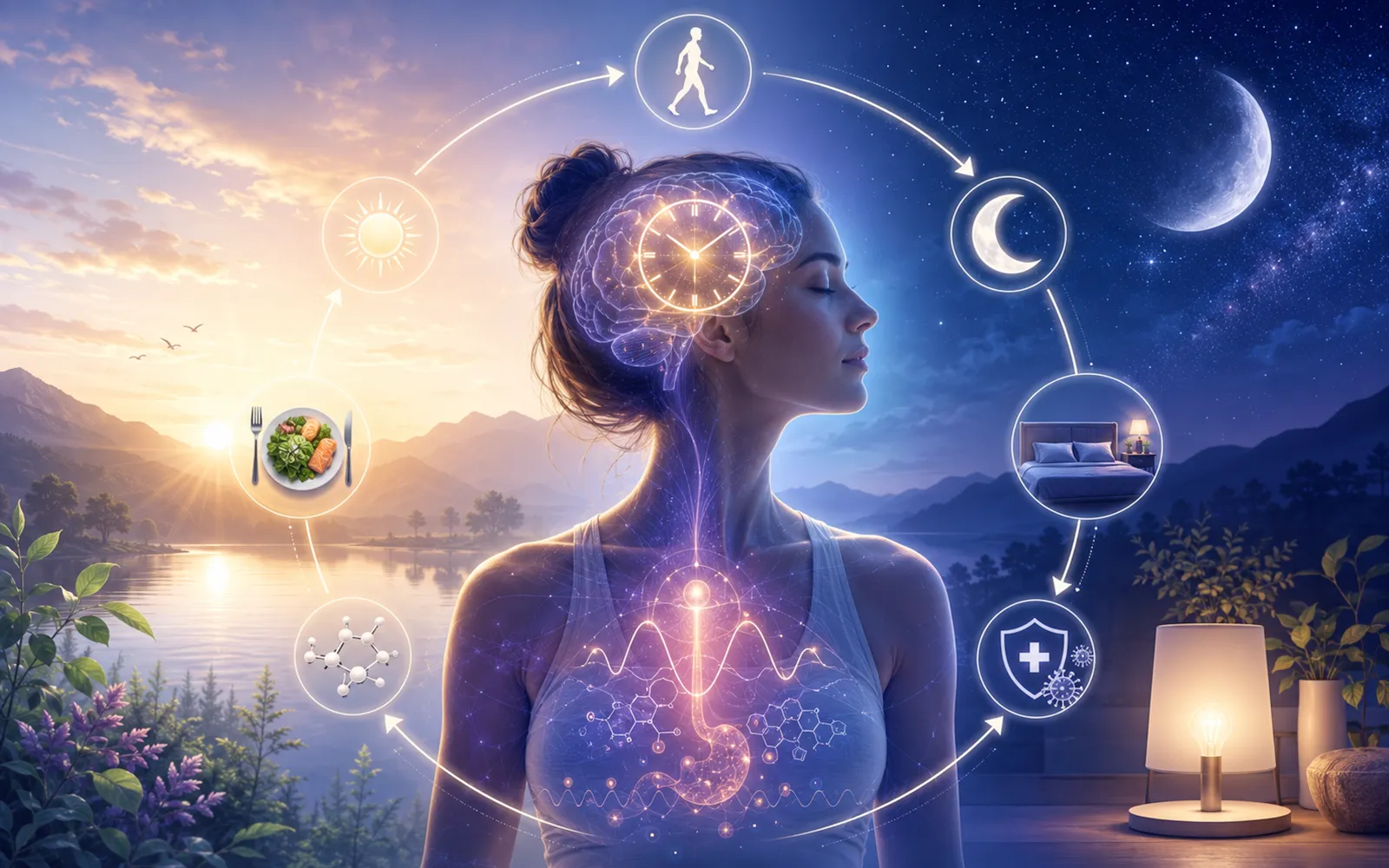
When you sleep, when you eat, when you exercise, when you expose yourself to bright light, and when you begin winding down at night can all provide timing signals to your biological clocks.
That creates an encouraging possibility:
By giving the body stronger and more consistent signals about when it is daytime and when it is nighttime, we may help our natural rhythms work more effectively.
What Is a Circadian Rhythm?
The term circadian comes from Latin words meaning approximately “around a day.”
Deep within the brain is a group of nerve cells called the suprachiasmatic nucleus, or SCN, located in the hypothalamus.
The SCN functions as the body’s central circadian pacemaker.
But it isn’t working alone.
Biological clocks also operate in organs and tissues throughout the body, including the liver, muscles, digestive system, pancreas, and other tissues. The master clock helps synchronize these peripheral clocks so that different biological processes occur at appropriate times.
Think of the body as an orchestra.
The heart has its part.
The liver has its part.
Hormones have theirs.
The digestive system has another.
The immune system has another.
Circadian timing helps ensure that the different sections of this biological orchestra are playing from the same score.
Light Is the Body’s Most Powerful Time Signal
Among all the environmental cues influencing circadian rhythms, light is the most important signal for the brain’s master clock.
Specialized light-sensitive cells in the retina communicate information about environmental light to the SCN.
That information helps the brain determine:
Is it daytime?
or
Is it nighttime?
In the morning and during the day, abundant light supports alertness and reinforces the biological daytime signal.
As darkness approaches, reduced light helps signal that the biological night is beginning.
The SCN also influences secretion of melatonin, a hormone strongly associated with biological nighttime. Melatonin levels normally rise in the evening and help signal that the body is preparing for sleep.
This is why light is much more than something that allows us to see.
Light is biological information.
Morning Light Helps Set the Clock
One of the simplest ways to reinforce a healthy circadian rhythm is to experience light relatively early in the day.
Human experimental research has demonstrated that bright morning light can shift circadian timing earlier. In one study, exposure to bright light the morning after a dim-light day significantly advanced the timing of melatonin onset.
This helps explain why outdoor morning light can be particularly useful for people trying to maintain a regular sleep-wake schedule.
Opening the curtains helps.
Sitting near a bright window may help.
But going outdoors generally provides much greater light intensity than ordinary indoor illumination.
A morning walk therefore does several things at once:
you receive natural light,
you move your body,
you reinforce wakefulness,
and you provide the brain with a clear message:
The day has begun.
Daytime Should Look Like Daytime
Modern life has created an interesting problem.
Many of us spend our days indoors under relatively modest illumination and our evenings surrounded by electric light.
Biologically, that can produce a somewhat confusing pattern:
days that are too dim and nights that are too bright.
An international expert consensus on healthy indoor lighting recommends substantially brighter light during the daytime and much lower circadian-effective light in the hours before sleep. The researchers emphasized that stronger daytime light exposure supports wakefulness and circadian regulation, while evening and nighttime light should be kept considerably lower.
This gives us an easy principle to remember:
Make your days brighter and your nights darker.
The contrast itself is valuable information for the biological clock.
Modern LED Lighting and Circadian Rhythms
LED lighting has transformed our homes.
LED bulbs are efficient, long-lasting, inexpensive to operate, and available in almost every brightness and color imaginable.
But LEDs also create an important circadian consideration.
Not all white light is biologically identical.
Many modern cool-white or daylight LEDs contain relatively high amounts of short-wavelength blue-cyan light—the part of the visible spectrum to which the circadian system is particularly sensitive.
A 2026 study evaluated 52 examples of common household LED, compact fluorescent, and incandescent lamps. Using measures designed to estimate circadian and melatonin effects, the researchers found that cool-white LED lamps produced substantially greater estimated melatonin suppression than warm-white LEDs or incandescent lamps.
This does not mean LED lighting is inherently unhealthy.
Timing changes everything.
Bright, blue-enriched light can be very useful during the day, when the goal is to reinforce alertness and biological daytime.
The same type of lighting late in the evening may send the brain a conflicting message:
“It’s still daytime.”
The solution is not to eliminate LEDs.
It is to use them more intelligently.
Cool Light During the Day, Warmer Light at Night
LED bulbs are commonly described by their color temperature, measured in kelvins (K).
Very approximately:
5000–6500K produces a cooler, daylight-like appearance.
3500–4000K produces neutral white light.
2700–3000K produces warmer household light.
1800–2200K resembles very warm amber or candlelight.
Color temperature is not a perfect measure of circadian impact—the actual light spectrum and brightness also matter—but it provides a useful practical guide.
The 2026 home-lighting study found that tunable LEDs produced dramatically lower estimated melatonin suppression when shifted from a cool 5700K setting toward a very warm 2100K setting.
That means modern smart and tunable LED lighting can actually become part of a circadian-friendly home environment.
During the morning and daytime:
use brighter illumination.
Allow natural daylight into the home.
Use cooler lighting where appropriate.
Then, as bedtime approaches:
dim the lights.
Shift smart bulbs toward warm white or amber.
Turn off unnecessary overhead lights.
Use smaller lamps instead.
By changing the lighting environment, the home itself can begin reflecting the natural transition from day to night.
Brightness Matters as Much as Color
It is tempting to focus only on “blue light.”
But circadian biology is influenced by several interacting factors:
- brightness,
- spectrum,
- timing,
- duration,
- a person’s individual sensitivity to light.
A very bright warm light can still have a biological effect.
A small amount of cooler light may have less effect than an extremely bright source.
And researchers have discovered substantial individual differences in circadian light sensitivity.
The practical message is therefore not simply:
Avoid blue light.
A better rule is:
Get plenty of light during the day, then gradually reduce both brightness and blue-enriched light as bedtime approaches.
A Circadian-Friendly Lighting Routine at Home
An effective lighting pattern can be surprisingly simple.
During the morning, open curtains and blinds as soon as practical and spend some time outdoors when possible.
During the day, allow plenty of daylight into your living and working areas.
During the early evening, begin reducing unnecessary brightness.
During the two to three hours before bedtime, switch from bright ceiling fixtures to lower-level lamps and warmer LEDs.
At night, keep the bedroom as dark as comfortably possible.
If you need a nightlight, choose something very dim and warm rather than a bright cool-white source.
The consensus recommendations for healthy adults similarly emphasize high daytime light exposure, very low circadian-effective illumination during the three hours before bedtime, and near-darkness during sleep.
This doesn’t require living by candlelight.
It simply means designing the home so that night actually feels different from day.
Circadian Rhythms and Sleep
Sleep is influenced by two closely interacting systems.
One is sleep pressure, which generally increases the longer we remain awake.
The other is the circadian timing system, which helps determine when the body promotes wakefulness and when it promotes sleep.
A person can therefore be tired but still find it difficult to sleep if their circadian system is signaling wakefulness.
Conversely, when sleep timing and circadian timing align well, falling asleep and waking can become easier and more predictable.
This is one reason a relatively consistent sleep schedule can be helpful.
Going to bed and waking at dramatically different times from day to day repeatedly changes the timing cues reaching the circadian system.
Consistency gives the brain something useful: predictability.
Your Wake Time May Be Especially Important
Many people focus exclusively on bedtime.
But waking at a reasonably consistent time can provide an important daily anchor because waking is often followed by several strong circadian signals:
- light exposure,
- movement,
- food,
- social activity,
- increased alertness.
Together, these reinforce the transition into biological daytime.
That means a productive sleep routine is not only about what happens before bed.
It also begins with how you start the next morning.
Hormones Follow Daily Rhythms
Circadian rhythms help organize many hormones across the day.
Melatonin is one example.
Cortisol is another.
Cortisol is often called a stress hormone, but that description is incomplete. Cortisol performs many essential functions and normally follows a strong daily pattern influenced by the central circadian system.
In healthy daily rhythms, cortisol is generally higher around the biological morning and lower later in the day.
This pattern helps coordinate metabolism and prepare the body for daytime activity.
Circadian biology therefore isn’t about maximizing or minimizing a hormone.
It is about having biological signals occur at appropriate times.
A healthy rhythm is like music.
The notes matter.
But so does the timing.
Circadian Rhythms and Energy
Have you ever felt mentally sharp at one time of day and sluggish at another—even after eating and sleeping normally?
That is partly because alertness itself has a circadian rhythm.
The brain does not provide exactly the same level of wakefulness throughout 24 hours.
Body temperature also follows a daily rhythm and tends to rise during biological daytime and fall toward nighttime.
Performance and energy therefore reflect more than motivation.
They emerge from interactions among:
- sleep,
- circadian timing,
- food,
- activity,
- light,
- individual chronotype.
Some people naturally function somewhat earlier.
Others naturally function later.
The goal is not to force everyone into the identical schedule.
It is to provide the body with consistent environmental signals that support its own rhythm.
Your Meals Also Tell Time
Light strongly synchronizes the brain’s master clock.
But food provides important timing signals to clocks operating in metabolic tissues.
This has given rise to an emerging field called chrononutrition—the study of how the timing of food interacts with circadian biology.
Human experiments suggest that identical or similar foods can produce different metabolic responses depending upon when they are consumed.
In a randomized crossover trial, women eating lunch at 4:30 p.m. rather than 1:00 p.m. experienced substantially poorer glucose tolerance following the meal, along with differences in energy expenditure and circadian-related measures.
Another randomized crossover study found that eating dinner at 10 p.m. rather than 6 p.m. produced higher nighttime glucose levels and altered fat metabolism in healthy adults.
This doesn’t mean everyone must eat dinner at exactly 6:00.
It suggests that metabolism itself has a daily rhythm.
Why Late-Night Eating Can Be Different
Imagine the body receiving two conflicting messages.
Light is low.
Melatonin is rising.
The brain is preparing for nighttime.
But suddenly a large meal arrives.
The digestive and metabolic systems now receive a strong signal suggesting active feeding time.
Occasional late meals are part of normal life.
The concern is not one midnight snack.
It is the possibility of repeatedly asking different biological systems to operate on conflicting schedules.
A useful principle is therefore:
Whenever practical, allow most eating to occur during your biological daytime and give the body a meaningful overnight period without continuous food intake.
For many people, simply avoiding habitual large meals immediately before bedtime may be a reasonable place to begin.
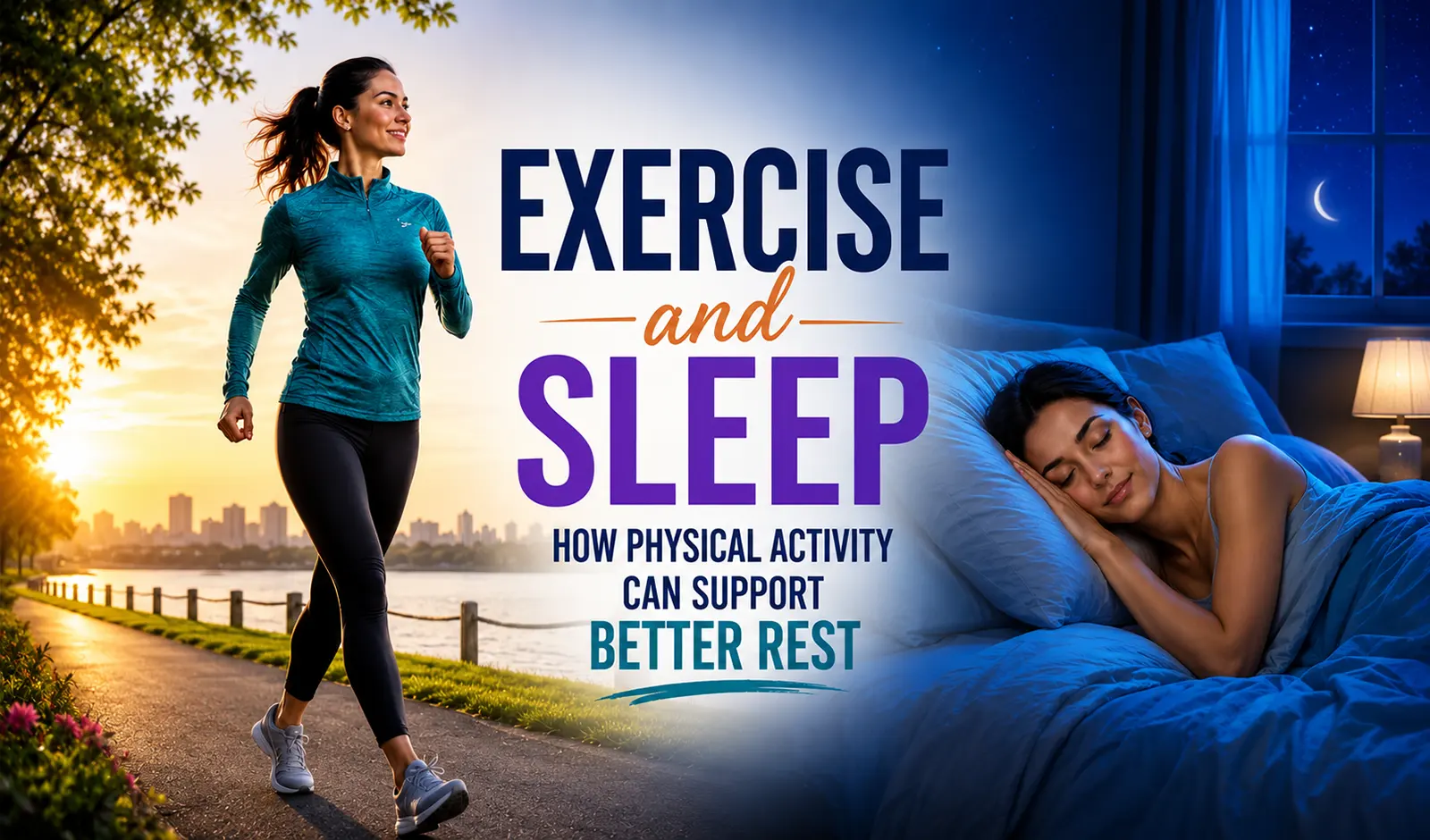
Exercise Is Another Timing Signal
Movement also interacts with circadian biology.
Exercise influences body temperature, metabolism, hormones, and skeletal-muscle signaling.
Research suggests that exercise itself can even shift circadian phase under certain conditions.
In a controlled study of 52 sedentary young adults, five days of scheduled exercise altered the timing of melatonin rhythms, with the direction and magnitude depending partly on whether participants exercised in the morning or evening and on their chronotype.
This doesn’t mean there is one universally perfect time to exercise.
For most people, regular exercise at a sustainable time is more important than chasing the theoretically ideal hour.
But movement can reinforce the body’s daytime signal.
Morning exercise combined with outdoor light may be especially useful for people who want to establish an earlier routine.
Should You Exercise at Night?
You’ve probably heard conflicting advice about evening exercise.
The reality is more nuanced than the rule:
“Never exercise after 6 p.m.”
Responses differ by person, exercise intensity, chronotype, and bedtime.
Some people exercise in the evening and sleep perfectly well.
Others become highly alert after vigorous late-night workouts.
Circadian experiments also show that the timing effects of exercise can differ between early and late chronotypes.
A practical approach is simple:
If evening exercise leaves you relaxed and you sleep well, it may fit your routine.
If intense exercise shortly before bedtime leaves you energized and awake, move it earlier when possible.
Your own sleep response provides useful information.
Circadian Rhythms and Metabolism
Metabolism does not operate at a constant rate and state throughout the day.
The body’s response to glucose, insulin, food, and energy expenditure varies with circadian timing.
This becomes particularly obvious when researchers deliberately misalign sleep, food, and activity schedules.
A 2026 laboratory study simulated night-shift work in healthy adults and found widespread disruption of the timing of circulating metabolites. During circadian misalignment, glucose and insulin responses increased while energy expenditure decreased.
Other controlled studies have similarly found that sleep restriction and circadian misalignment can reduce insulin sensitivity.
This provides another reason to view sleep, light, exercise, and nutrition as interconnected rather than separate health behaviors.
The body processes all of them within the same 24-hour biological framework.
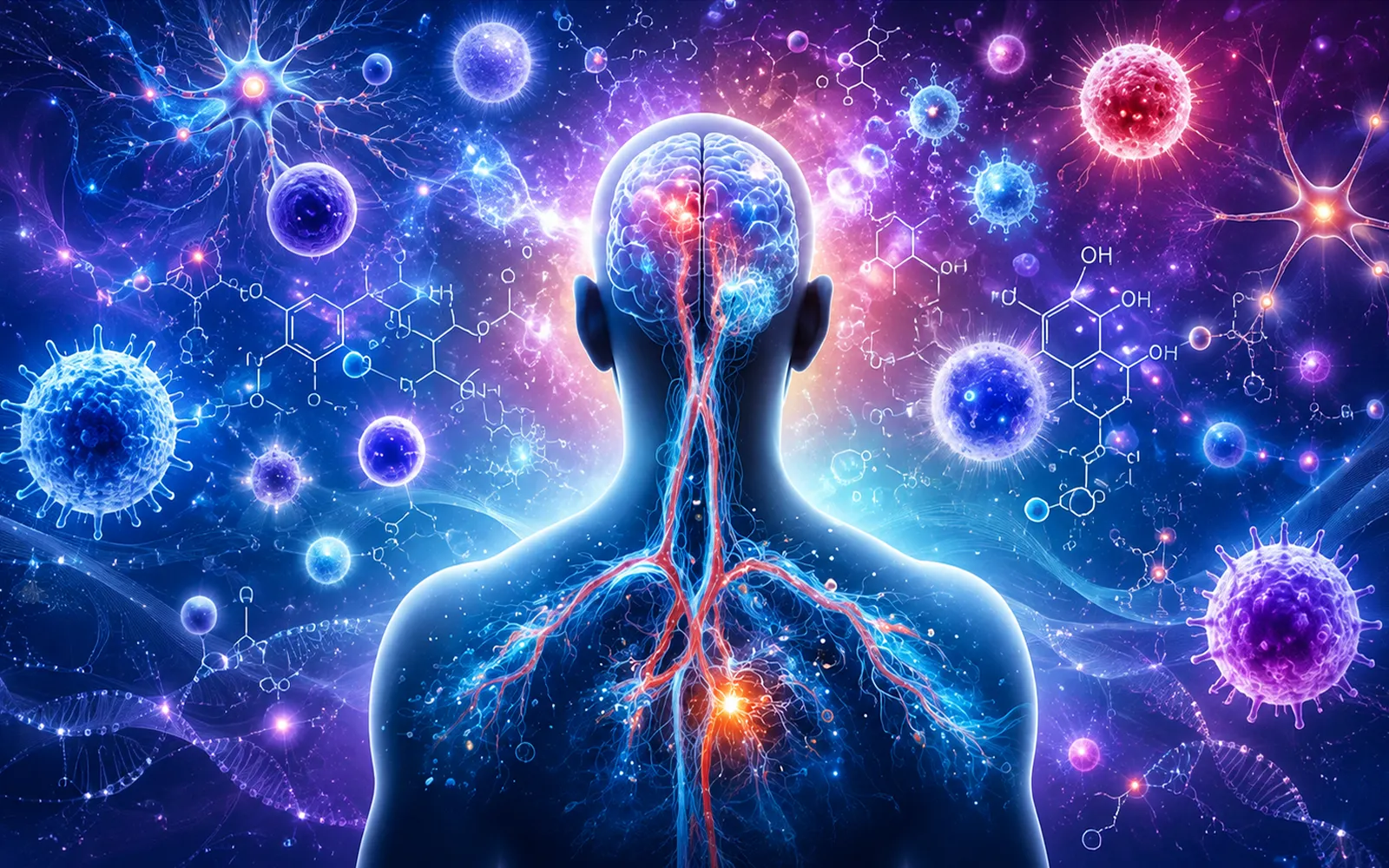
The Immune System Has a Clock Too
Circadian rhythms extend into immune biology.
Immune cells do not behave identically at every hour of the day.
Research has demonstrated daily rhythms in the movement of leukocytes—white blood cells—through blood and tissues. Human immune cells retain circadian patterns in some of the molecular systems controlling this migration.
Animal experiments have gone even further, showing that the internal clocks of immune cells can influence the timing of immune responses.
This does not mean there is a single hour when the immune system is “strongest.”
Immune function is far too complex for that.
Instead, different immune processes appear to be scheduled across the day and night.
Once again, timing is part of biology.
Sleep, Circadian Timing, and Recovery
Recovery is not merely the absence of activity.
During sleep and biological nighttime, important processes involving the brain, metabolism, hormones, tissue maintenance, and immune regulation continue.
That is why repeatedly cutting sleep short while simultaneously shifting the body’s clock can create effects extending well beyond feeling tired the next morning.
The positive side is equally important:
Protecting sleep gives the body an opportunity to perform biological work that is naturally organized around nighttime.
Sleep is not time taken away from productivity.
From the body’s perspective, sleep is productive.
Circadian Misalignment: When the Clocks Disagree
Circadian misalignment occurs when behavior and environmental timing conflict with the body’s internal biological timing.
Jet lag is an obvious example.
Your watch may say 8 a.m.
But your brain still thinks it is midnight.
Shift work can create a more persistent form of this conflict.
Modern lifestyles can produce smaller versions as well:
staying up until 1 a.m. during the week,
sleeping until noon on weekends,
eating very late,
spending almost no time in daylight,
and surrounding ourselves with bright electric light until bedtime.
NIGMS notes that repeated circadian disruption and sleep loss are associated with increased risks for metabolic, cardiovascular, mood, and other health problems.
But this should not make us fearful of an occasional late night.
The human circadian system is adaptable.
The useful question is:
What pattern are you giving your body most of the time?
Social Jet Lag
Imagine waking at 6:30 every weekday.
Then on Friday and Saturday you stay up several hours later and sleep until 10 or 11.
On Monday, the alarm returns to 6:30.
The experience can resemble repeatedly traveling between time zones without leaving home.
This pattern is sometimes called social jet lag.
You don’t need identical bedtimes every night.
Life is not a laboratory.
But keeping sleep and wake times within a reasonably consistent range may reduce the amount of adjustment your biological clock has to make repeatedly.
Consistency is not about perfection.
It is about giving your body a reliable rhythm.
Aging and the Body Clock
Circadian rhythms can change with age.
Sleep may become earlier, lighter, or more fragmented, and the strength of some circadian signals can change over time.
This makes good environmental timing cues particularly valuable.
Morning and daytime light.
Regular activity.
Social engagement.
Consistent mealtimes.
A dark sleeping environment.
These behaviors help provide the circadian system with clear information about where daytime ends and nighttime begins.
Rather than assuming poorer sleep is simply inevitable with age, it can be useful to look at the entire 24-hour environment surrounding sleep.
Your Home Can Support Your Biological Clock
One of the most positive developments in circadian science is that modern technology doesn’t have to work against us.
The same LED technology that allows homes to remain brightly illuminated at midnight also gives us unprecedented control over lighting.
Smart bulbs can automatically change brightness, color temperature, and timing.
Imagine a home lighting schedule like this:
Morning lights gradually become brighter and cooler.
Daytime rooms remain well illuminated.
At sunset, lighting becomes warmer.
Two hours before bedtime, lights dim substantially.
Bright overhead fixtures switch off.
Bedroom lighting becomes very warm and gentle.
At sleep time, the room becomes dark.
Technology can therefore be used not merely for convenience, but to create a home that moves with human biology rather than against it.
A Simple Circadian-Friendly Day
You do not need to reorganize your entire life.
A few consistent signals may go a long way.
Morning
Wake at roughly the same time most days.
Open the curtains.
Get outside for natural light when practical.
Move your body.
Eat if breakfast is part of your routine.
Let the environment clearly communicate:
It is daytime.
Daytime
Seek plenty of daylight.
Stay physically active.
Eat most meals during your active period.
Use bright indoor lighting when necessary.
Evening
Allow activity to gradually decrease.
Avoid making late evening your brightest period of the day.
Reduce unnecessary overhead lighting.
Shift LED lights toward warmer colors.
Avoid routinely eating very large meals immediately before bed.
Before Sleep
Dim the environment further.
Choose quiet or relaxing activities.
Keep your sleeping area cool, comfortable, and dark.
Then repeat the pattern tomorrow.
The power is not in one perfect day.
It is in the rhythm created by repetition.
Don’t Turn Circadian Health Into Another Source of Stress
Circadian science can easily become another wellness checklist:
“Did I get sunlight at exactly the right minute?”
“Was dinner too late?”
“Was my light bulb 2700K or 3000K?”
That misses the larger point.
Your body is resilient.
You can attend a late dinner.
Watch a movie.
Travel across time zones.
Sleep late occasionally.
Stay up celebrating.
Health does not require living according to a stopwatch.
Circadian biology is about patterns, not perfection.
A healthy rhythm should support life—not prevent you from enjoying it.
The Power of Rhythm
Many health recommendations focus on individual ingredients:
eat nutritious food,
exercise,
sleep,
manage stress.
Circadian biology adds another dimension:
timing.
A healthy behavior may become even more supportive when it occurs within a predictable daily pattern.
Sleep at night.
Seek light during the day.
Move during your waking hours.
Allow periods of eating and fasting.
Let nighttime become darker and quieter.
Give your biology contrast.
The human body evolved under one of the most reliable environmental patterns on Earth:
sunrise followed by daylight, sunset followed by darkness, repeated every 24 hours.
Modern life has changed our environment dramatically.
Our biology has not forgotten the rhythm.
The Takeaway
Circadian rhythms are the body’s internal 24-hour timing system, coordinating processes ranging from sleep and alertness to hormones, digestion, metabolism, and immune activity.
Light provides the strongest timing signal to the brain’s master clock.
Food and physical activity provide additional timing information to tissues throughout the body.
Sleep timing reinforces the cycle.
And our daily routines help determine whether these signals point in the same direction or compete with one another.
Modern LED lighting deserves special attention—not because LEDs are inherently harmful, but because bright, cool-white LED light used late at night can provide a powerful daytime-like signal at precisely the time the body expects darkness. Warm, dimmer LED lighting in the evening offers a practical alternative, while brighter light during the day helps reinforce healthy circadian contrast.
Perhaps the most useful message from circadian science is surprisingly simple:
Your body loves rhythm.
You don’t need a perfect schedule.
You need recognizable signals.
Bright days.
Darker nights.
Regular sleep.
Regular movement.
Reasonably consistent meals.
Time for activity.
And time for recovery.
By aligning more of everyday life with the body’s natural 24-hour rhythm, we may support not only better sleep but also greater daytime energy, metabolic regulation, hormonal balance, immune coordination, and recovery.
Health is influenced not only by what we do—but by the rhythm in which we live.
This article is intended for educational purposes only and is not medical advice. People with persistent insomnia, circadian-rhythm disorders, significant sleep problems, or medical conditions should consult an appropriate healthcare professional before making major changes to sleep, light exposure, meal timing, or treatment routines.