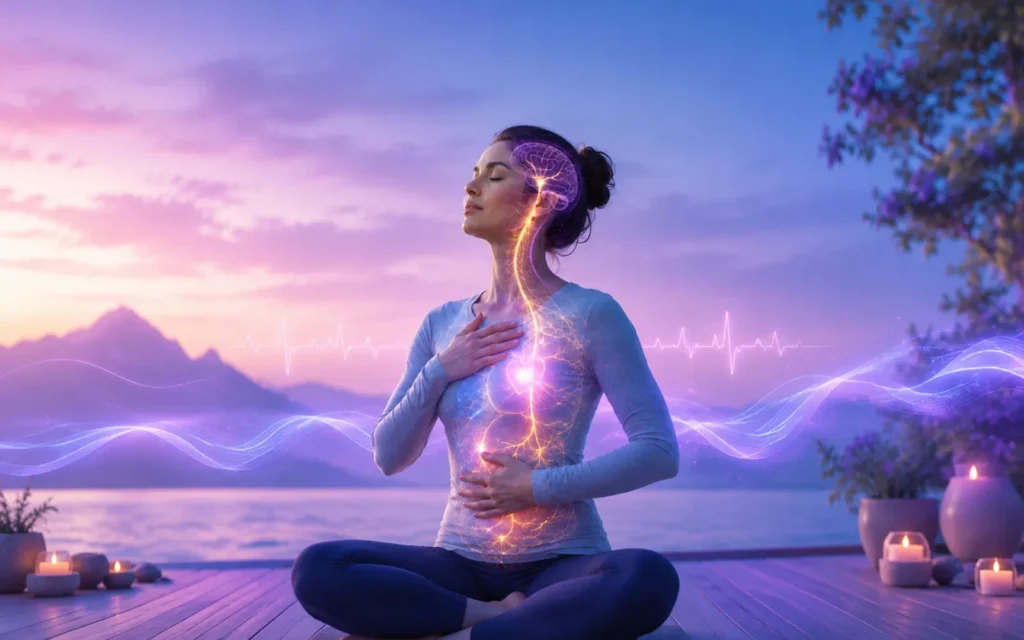





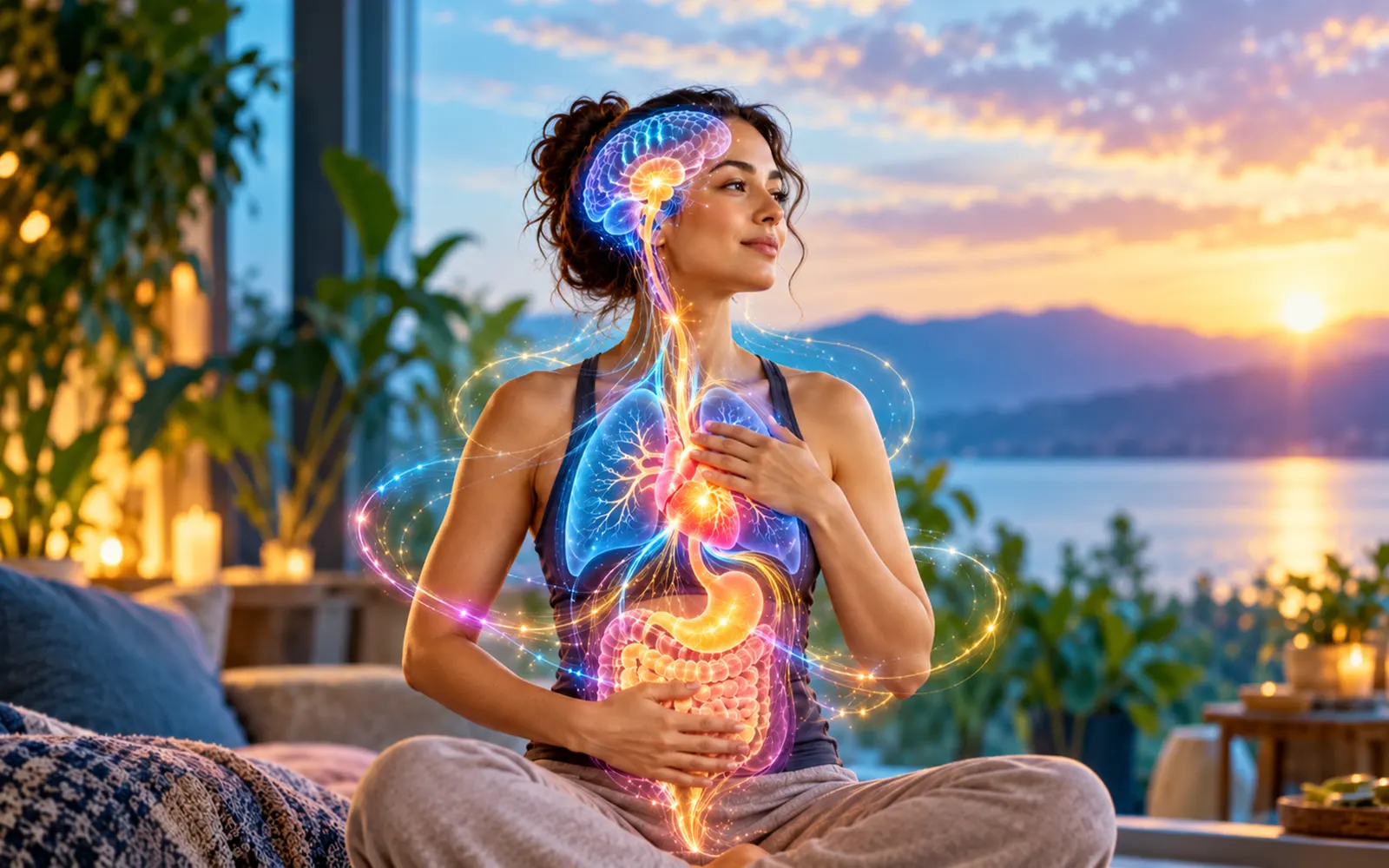






Relaxation sounds simple.
Stop working. Sit down. Take a breath. Let go.
But the biological process underneath that familiar experience is surprisingly sophisticated.
When the mind and body have been responding to pressure, they do not simply flip from “stress” to “relaxed” as though one electrical switch has been turned off. Heart rate, breathing, blood vessels, muscle tension, attention, hormonal signaling, and neural activity can all change at different speeds. Some systems settle quickly. Others take longer.
And relaxation itself is not one single biological state.
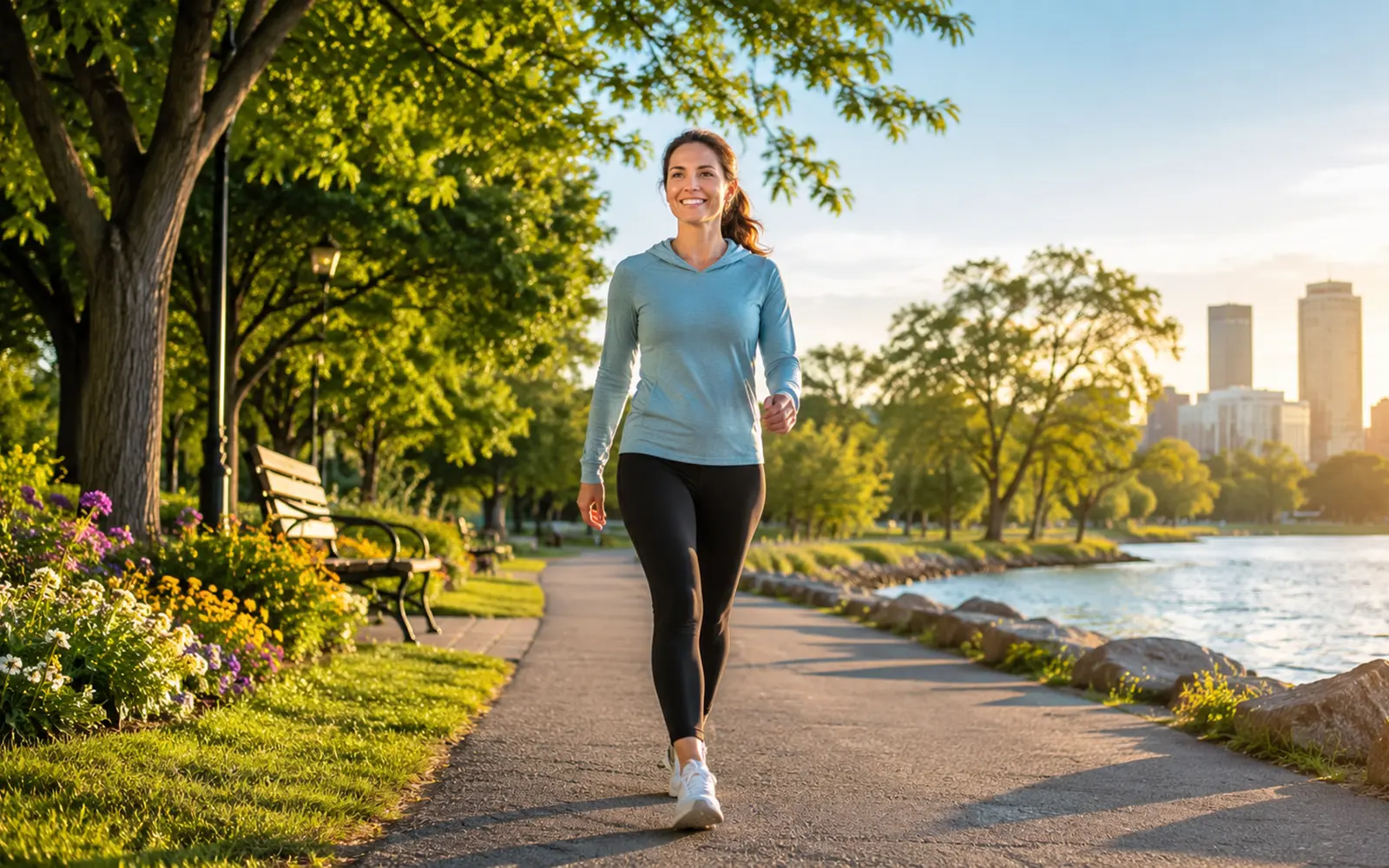
A person quietly reading a book, practicing slow breathing, meditating, receiving biofeedback, lying in progressive muscle relaxation, or walking peacefully outdoors may all describe themselves as relaxed—yet the underlying patterns of attention, breathing, autonomic activity, and brain function may differ.
What these experiences have in common is not complete physiological shutdown.
It is a movement away from sustained mobilization and toward a state in which the body no longer needs to devote the same degree of resources to meeting an immediate challenge.
In other words, relaxation is not simply doing nothing.
It is part of the body’s ability to recover.
The Stress Response Has a Recovery Phase
Stress prepares us to act.
When the brain interprets a situation as demanding or threatening, the autonomic nervous system and endocrine system begin adjusting the body for increased activity.
Heart rate may rise. Breathing changes. Blood pressure can increase. Muscles become more prepared to contract. Attention becomes oriented toward what seems important. Stress hormones help mobilize energy.
These responses are adaptive when circumstances require them.
But a system designed to mobilize also needs a way to stand down.
The National Center for Complementary and Integrative Health describes the relaxation response as a physiological state associated with slower breathing, reduced heart rate and blood pressure, and other changes that contrast with the acute stress response. The term has historical roots in the work of physician Herbert Benson and colleagues beginning in the 1970s, but contemporary stress physiology gives us a much more detailed understanding of the processes involved.
The important point is that stress and relaxation belong to the same adaptive system.
Mobilization matters.
Recovery matters too.
“Stress Mode” Is Useful Language—but the Body Does Not Have One Stress Switch
It is tempting to imagine two settings:
Sympathetic nervous system = stress
Parasympathetic nervous system = relaxation
That model is useful as a first approximation, but physiology is more complicated.
The sympathetic branch of the autonomic nervous system contributes to mobilization during many demanding situations. Parasympathetic activity—particularly vagal influences on the heart—contributes importantly to cardiac slowing, recovery, digestion, and other restorative functions.
But these systems are not always simple opposites.
They can change independently.
They can sometimes be active together.
Different organs may receive different autonomic patterns at the same time.
Even meditation can produce what researchers sometimes call relaxed alertness, with combinations of sympathetic and parasympathetic activity that differ according to the meditation style, experience level, and moment within the practice. A recent review of long-term meditation research found substantial autonomic variability rather than one universal “parasympathetic state.”
So shifting out of stress mode is better understood as changing physiological organization rather than merely switching one nervous-system branch off and another on.
The body becomes less oriented toward immediate mobilization and more able to support recovery, flexible attention, digestion, restoration, and ordinary metabolic regulation.
The Heart Often Changes Before We Notice It
The heart offers one of the clearest windows into this transition.
During psychological stress, heart rate commonly increases through a combination of sympathetic activation and reduced parasympathetic cardiac influence. Meta-analytic research shows that both processes contribute to cardiovascular stress reactivity.
As a stressor ends, parasympathetic influence can return relatively quickly.
The vagus nerve plays an important role here.
Among its many functions, vagal pathways influence the heart’s pacemaker and can slow heart rate rapidly. This ability allows the cardiovascular system to respond flexibly rather than remaining locked at one level of activation.
Researchers often study this recovery through heart rate variability, or HRV—the variation in timing from one heartbeat to the next.
Higher vagally mediated HRV under comparable conditions can reflect greater parasympathetic cardiac modulation, and researchers increasingly study the speed with which this modulation returns after an acute stressor as one aspect of physiological recovery.
But HRV deserves an important caution.
It is not a universal “relaxation score.”
Breathing pattern strongly influences several forms of HRV, and recent methodological guidance warns against interpreting consumer or laboratory HRV measures as direct readouts of overall vagal tone, sympathetic activity, or a simple “sympathovagal balance.”
A watch can tell us something about heart rhythm.
It cannot tell us everything about whether the whole organism is relaxed.
“A healthy stress system is not one that remains calm all the time. It is one that can rise to meet a challenge and then, when the challenge has passed, find its way back toward recovery.”
Breathing Gives Us an Unusual Point of Access
Breathing occupies an interesting position in human physiology.
Most autonomic processes cannot be controlled directly at will.
You cannot simply decide to lower your cortisol level by 20 percent.
You cannot consciously instruct individual blood vessels to dilate.
Breathing is different.
It operates automatically, yet we can also deliberately alter its rate and depth.
That makes respiration one of the few practical ways we can intentionally influence systems that are otherwise largely automatic.
During slow breathing, heart rate tends to rise slightly during inhalation and fall during exhalation through cardiorespiratory interactions strongly influenced by vagal pathways.
A large systematic review and meta-analysis covering more than 200 studies found that voluntary slow breathing increased measures of vagally mediated HRV during breathing, immediately afterward, and following repeated practice.
That does not mean slow breathing simply “activates the vagus nerve” like pressing a button.
Respiration changes cardiovascular mechanics, baroreflex function, neural signaling, and cardiac parasympathetic modulation simultaneously.
Even the HRV changes produced during slow breathing have to be interpreted in relation to the altered breathing pattern itself.
The underlying physiology is more interesting than the slogan.
Breathing can help coordinate a transition toward lower arousal because respiration is deeply integrated with cardiovascular and autonomic regulation.
Why the Exhale Often Feels Relaxing
Many relaxation practices emphasize a slower, less effortful breath and sometimes a somewhat longer exhalation.
There is a physiological reason this can feel calming.
Heart rate normally accelerates somewhat during inhalation and slows during exhalation. Slowing respiration makes these respiratory-linked heart-rate fluctuations more pronounced in many people.
The sensation of relaxation probably reflects more than this single mechanism. Slow breathing can also reduce respiratory frequency, alter baroreflex signaling, change attention, and interrupt the rapid or shallow breathing patterns that sometimes accompany stress.
The key is not to force enormous breaths.
“Deep breathing” is sometimes misunderstood as taking the largest breath possible.
Overbreathing can lower carbon dioxide excessively and produce light-headedness, tingling, or additional anxiety.
Relaxation-oriented breathing is usually better thought of as slower, comfortable, controlled breathing rather than repeatedly filling the lungs to maximum capacity.
The HPA Axis Operates on a Slower Clock
The autonomic nervous system can change rapidly.
The hormonal stress response works on a somewhat different timescale.
When a challenge activates the hypothalamic-pituitary-adrenal axis, or HPA axis, a hormonal cascade ultimately leads to cortisol release from the adrenal glands.
Cortisol has many normal functions and should not be treated as a toxin or simply “the bad stress hormone.”
It helps regulate energy availability, metabolism, immune activity, and adaptation to challenge.
After an acute stressor has passed, negative-feedback systems normally help reduce HPA-axis activation.
Relaxation practices may influence this system as well.
A 2023 systematic review and meta-analysis of 58 studies involving more than 3,500 participants found that stress-management interventions produced modest changes in cortisol measures compared with controls. Mindfulness/meditation and relaxation interventions showed significant effects in the pooled analysis, although cortisol findings varied depending on how and when cortisol was measured.
This is another reason relaxation should not be pictured as an instant reset.
Your breathing may slow within minutes.
Your subjective tension may change quickly.
Hormonal recovery can follow a different timeline.
Different systems are recovering together, but not necessarily at the same speed.
Muscles Carry Stress Too
Stress is not contained entirely in the brain.
The body prepares for action through muscular activity.
Jaw muscles tighten.
Shoulders rise.
Hands grip.
The abdominal wall stiffens.
Postural muscles remain more activated.
Sometimes we do not realize how much tension we are holding until it begins to release.
This is the principle behind progressive muscle relaxation.
Rather than simply being told to relax, a person intentionally contracts and then releases different muscle groups, creating a strong contrast between tension and relaxation.
That contrast can make bodily tension easier to recognize.
Systematic reviews involving thousands of adults have found that progressive muscle relaxation can reduce self-reported stress and anxiety across a variety of populations, although study methods and effect sizes vary considerably.
The method illustrates a broader principle:
Sometimes mental relaxation becomes easier when we first change what the body is doing.
Attention Is Part of the Physiology
Relaxation is often discussed as though the mind merely observes changes happening elsewhere in the body.
The brain is actively involved.
During stress, attention tends to become more strongly captured by perceived threats, unfinished problems, uncertainty, or signals demanding response.
Relaxation practices often reverse that pattern by deliberately narrowing or redirecting attention.
A person may focus on breathing.
A repeated word.
Muscle sensations.
A visual image.
Ambient sound.
Present-moment sensory experience.
This matters because attention helps determine what the brain continues treating as behaviorally relevant.
Meditation research illustrates just how active this process can be.
A 2026 whole-brain meta-analysis of functional neuroimaging studies found that different meditation practices recruit partially distinct neural patterns, with recurring involvement of areas associated with self-monitoring, awareness, attention, and regulation rather than one single “meditation center” in the brain.
Earlier neuroimaging meta-analyses reached a similar conclusion: different contemplative practices produce different patterns of neural activation and deactivation, and convergence across all forms of meditation is limited.
Relaxation therefore is not the brain becoming inactive.
In many practices, it is the brain changing what it is doing.
Relaxed Does Not Necessarily Mean Sleepy
One of the more interesting findings in relaxation science is that deep relaxation can coexist with alertness.
A person practicing focused meditation may have slowed breathing and reduced physical tension while remaining highly attentive.
Someone using biofeedback may be mentally engaged while cardiovascular arousal decreases.
A musician quietly absorbed in playing may feel relaxed without being passive.
This distinction helps explain why relaxation and sleep are not the same state.
Sleep involves specialized changes in consciousness, brain rhythms, sensory responsiveness, hormonal regulation, and sleep-stage architecture.
Relaxation occurs while awake.
The objective is not necessarily to reduce consciousness.
It can instead reduce unnecessary activation while preserving—or sometimes sharpening—attention.
This is the idea behind relaxed alertness.
The body is not preparing for danger.
The mind is not necessarily drifting away.
There is simply less physiological and psychological friction.
Different Relaxation Techniques Enter the System Through Different Doors
There is no single scientifically established “best” relaxation technique.
Different methods begin with different parts of the mind-body system:
- Slow breathing begins with respiration and its interaction with autonomic and cardiovascular regulation.
- Progressive muscle relaxation begins with muscular tension and bodily awareness.
- Guided imagery uses attention and mental imagery to alter emotional and physiological context.
- Meditation and mindfulness practices work primarily through attention, awareness, and the way internal experiences are observed or interpreted.
- Biofeedback makes physiological signals such as heart rhythm or muscle tension visible so people can learn how their actions influence them.
- Autogenic training and self-hypnosis use focused attention and suggestion to cultivate sensations associated with relaxation.
These techniques overlap.
Breathing changes during meditation.
Muscle tension changes during imagery.
Attention shifts during progressive relaxation.
The categories describe where the practice begins more than where its effects necessarily end.
Relaxation Is Not the Same as Distraction
Watching television can feel relaxing.
So can scrolling through a phone.
Either may provide enjoyable distraction.
But subjective comfort and physiological recovery are not always identical.
An activity can temporarily take attention away from stress without necessarily producing the patterns associated with deliberate relaxation practice.
That does not make entertainment bad.
It simply means that being occupied by something pleasant and deliberately cultivating physiological relaxation are not exactly the same process.
This distinction can be useful when someone says:
“I rested all evening, but I don’t feel recovered.”
The body may have stopped working physically while the mind remained stimulated, emotionally activated, or cognitively engaged.
Relaxation depends less on inactivity itself than on whether the systems that were mobilized have an opportunity to reduce their activation.
Why Repetition May Matter
A single relaxation session can change state.
Repeated practice may also make the transition easier to access.
Someone learning progressive muscle relaxation becomes faster at recognizing tension.
A person practicing slow breathing becomes more familiar with a slower respiratory rhythm.
Meditation practice can make attentional redirection increasingly familiar.
Biofeedback teaches people to associate particular actions with visible physiological changes.
This does not necessarily mean the nervous system is permanently being “rewired for calm.”
That language goes beyond what the evidence can usually establish.
But learning is occurring.
The person becomes better at recognizing internal state and practicing responses that have previously helped alter it.
This may be one reason regular practice is often more useful than remembering a relaxation technique only during the most intense stressful moments.
Relaxation Cannot Solve a Stressor That Needs Action
There is an important limit to the entire idea of relaxation.
Not every stress problem should be relaxed away.
If the source of stress is an unsafe environment, excessive workload, unresolved conflict, financial crisis, caregiving burden, illness, or a boundary repeatedly being violated, a calmer nervous system may help us think more clearly—but it does not remove the underlying problem.
Relaxation changes our state.
It does not necessarily change our circumstances.
Sometimes the most adaptive sequence is:
relax enough to think clearly,
then act.
Have the conversation.
Ask for assistance.
Change the schedule.
Seek medical care.
Solve the practical problem.
Leave the unsafe situation.
Relaxation should support effective living, not become a method of tolerating indefinitely what should be changed.
The Body Does Not Need to Reach Perfect Calm
Relaxation can become counterproductive if it turns into another performance goal.
My heart rate isn’t low enough.
My mind is still thinking.
I cannot completely relax.
I’m doing this wrong.
The irony is obvious: trying intensely to relax can itself become stressful.
Physiological regulation is variable.
The goal does not have to be the lowest possible heart rate, maximum HRV, zero muscle tension, or a completely empty mind.
A more realistic aim is greater flexibility.
Can activation increase when action is required?
Can it decrease when the demand has passed?
Can we mobilize without remaining mobilized all day?
Can we recover without needing ideal conditions?
That flexibility may be more biologically meaningful than trying to remain permanently calm.
What Science Can Actually Measure
Researchers interested in relaxation have several windows into the process.
They may measure:
- heart rate and blood pressure
- breathing rate and respiratory patterns
- heart rate variability
- skin conductance
- muscle electrical activity
- cortisol or other stress-related biomarkers
- brain activity or functional connectivity
- subjective feelings of tension, calm, stress, or anxiety
None of these alone defines relaxation.
A person may report feeling calm while one physiological measure changes little.
A biomarker may improve without a dramatic subjective sensation.
Different techniques may influence different outcomes.
This is one reason relaxation research can appear inconsistent when studies use different methods and endpoints.
It is not necessarily that one study is right and another wrong.
They may be looking through different windows.
HRV Wearables Are Interesting—But Do Not Let the Number Become the Goal
Consumer devices have made heart rate variability part of everyday wellness language.
That can be useful.
Longitudinal trends under consistent measuring conditions may provide information about cardiovascular recovery and individual patterns.
But current physiological guidance cautions strongly against overinterpreting HRV.
Breathing, posture, activity, time of day, measurement method, age, fitness, medications, illness, and numerous other factors influence the number.
And respiratory-linked HRV should not be treated as a direct meter of whole-body vagal activity. Recent expert recommendations specifically emphasize the importance of respiration when interpreting these signals.
A person does not need a wearable to know how to relax.
And a device should not transform relaxation into another score to optimize.
What the Evidence Says About Relaxation Techniques
The broad scientific picture is encouraging but not magical.
NCCIH concludes that relaxation techniques are generally safe and may be helpful for stress and anxiety in some contexts, while emphasizing that the quality and amount of evidence vary considerably by technique and medical condition.
Slow breathing has relatively consistent evidence for altering cardiac autonomic measures.
Progressive muscle relaxation has evidence for reducing self-reported stress and anxiety across diverse studies, although heterogeneity is high.
Heart-rate-variability biofeedback has shown promising reductions in stress and anxiety, but newer reviews continue to note variation in study quality and intervention methods.
Meditation has a substantial research literature, but “meditation” itself includes many different practices with different neural and autonomic profiles.
The scientifically responsible conclusion is therefore not that relaxation is a cure.
It is that deliberate relaxation practices can influence measurable psychological and physiological processes associated with stress and recovery.
When Relaxation Feels Uncomfortable
Relaxation is generally considered safe for healthy people.
But not everyone experiences it as immediately pleasant.
NCCIH notes that a minority of people report increased anxiety, intrusive thoughts, or fear of losing control during relaxation practices. Certain techniques may also require additional care for people with some psychiatric conditions or histories of trauma.
That makes sense psychologically.
When external activity becomes quiet, internal sensations or thoughts may become more noticeable.
Someone accustomed to constant stimulation may initially experience stillness as unfamiliar rather than soothing.
The appropriate response is not necessarily to force deeper relaxation.
A gentler method, shorter duration, movement-based approach, or professional guidance may be more appropriate.
Relaxation should increase flexibility—not become another experience a person feels compelled to endure.
Learning to Come Back Down
Perhaps the most useful scientific way to think about relaxation is not as a destination.
It is a recovery skill.
Human beings are supposed to become activated.
The heart should accelerate when the body needs greater output.
Attention should narrow when immediate danger demands focus.
Stress hormones should mobilize energy when circumstances require action.
A nervous system that could never become activated would not be healthy.
The problem is not that we enter stress states.
The problem is when the system repeatedly struggles to leave them.
Relaxation practices provide several ways of influencing that return—through breathing, muscles, attention, imagery, awareness, feedback, or combinations of them.
The details differ.
The larger biological principle remains remarkably consistent:
A healthy stress system is not one that remains calm all the time. It is one that can rise to meet a challenge and then, when the challenge has passed, find its way back toward recovery.
That is what relaxation ultimately represents.
Not escape from life.
Not the elimination of stress.
Not a perfectly still nervous system.
The ability to come back down.
Medical and Mental Health Disclaimer
This article is intended for general educational purposes and is not a substitute for individualized medical or mental-health advice, diagnosis, or treatment. Relaxation practices are generally considered safe, but they may occasionally increase anxiety, uncomfortable bodily sensations, or intrusive thoughts. People with significant cardiovascular, respiratory, neurological, psychiatric, trauma-related, or other medical concerns should seek appropriate professional guidance when needed. New or concerning symptoms—including chest pain, fainting, significant breathing difficulty, or persistent psychological distress—should not automatically be attributed to stress and warrant appropriate evaluation.