













The email arrives. The conversation suddenly becomes tense. A deadline moves closer.
Something goes wrong that you were not expecting. Before you have had time to think through the situation carefully, your body may already be changing.
Your heart beats faster. Breathing changes. Muscles tighten. Attention narrows. Thoughts accelerate. You may feel irritation, fear, urgency, frustration, or an almost irresistible need to do something immediately.
This is the stress response.
We often talk about stress as though it were simply an unpleasant feeling. But stress is much more than that. It is a coordinated biological and psychological response designed to help us meet demands.
The stress response is not inherently a malfunction.
It is part of how human beings mobilize.
The difficulty begins when activation becomes disproportionate to the situation, continues longer than necessary, repeatedly accumulates without sufficient recovery, or pushes us toward reactions that do not serve what actually matters.
This is where emotional regulation becomes important.
Emotional regulation does not mean preventing emotion from occurring. It means developing greater influence over what happens after emotion begins.
The goal is not to become unreactive.
It is to become better able to respond without automatically being ruled by the first reaction.
Stress Begins With a Perception of Demand
A stressful event does not enter the body labeled stressful.
The brain has to interpret what is happening.
- Is this important?
- Is something at risk?
- Can I handle it?
- Do I have enough time?
- Do I have enough control?
- What happens if I fail?
This process is often described as appraisal.
Two people can face the same event and experience very different levels of stress because the event is only one part of the equation. Their expectations, previous experiences, resources, sense of control, health, emotional state, and interpretation of what is at stake can all influence the response.
Even the same person may react differently to the same challenge on different days.
A demanding conversation may feel manageable after a good night’s sleep and far more threatening during an already difficult week.
This is one reason stress cannot be reduced simply to what is happening outside us.
It emerges from the interaction between the demand and the person meeting it.
The Body Mobilizes Before the Situation Is Fully Resolved
Once a situation is evaluated as sufficiently demanding or threatening, several biological systems begin coordinating a response.
Two systems are especially important.
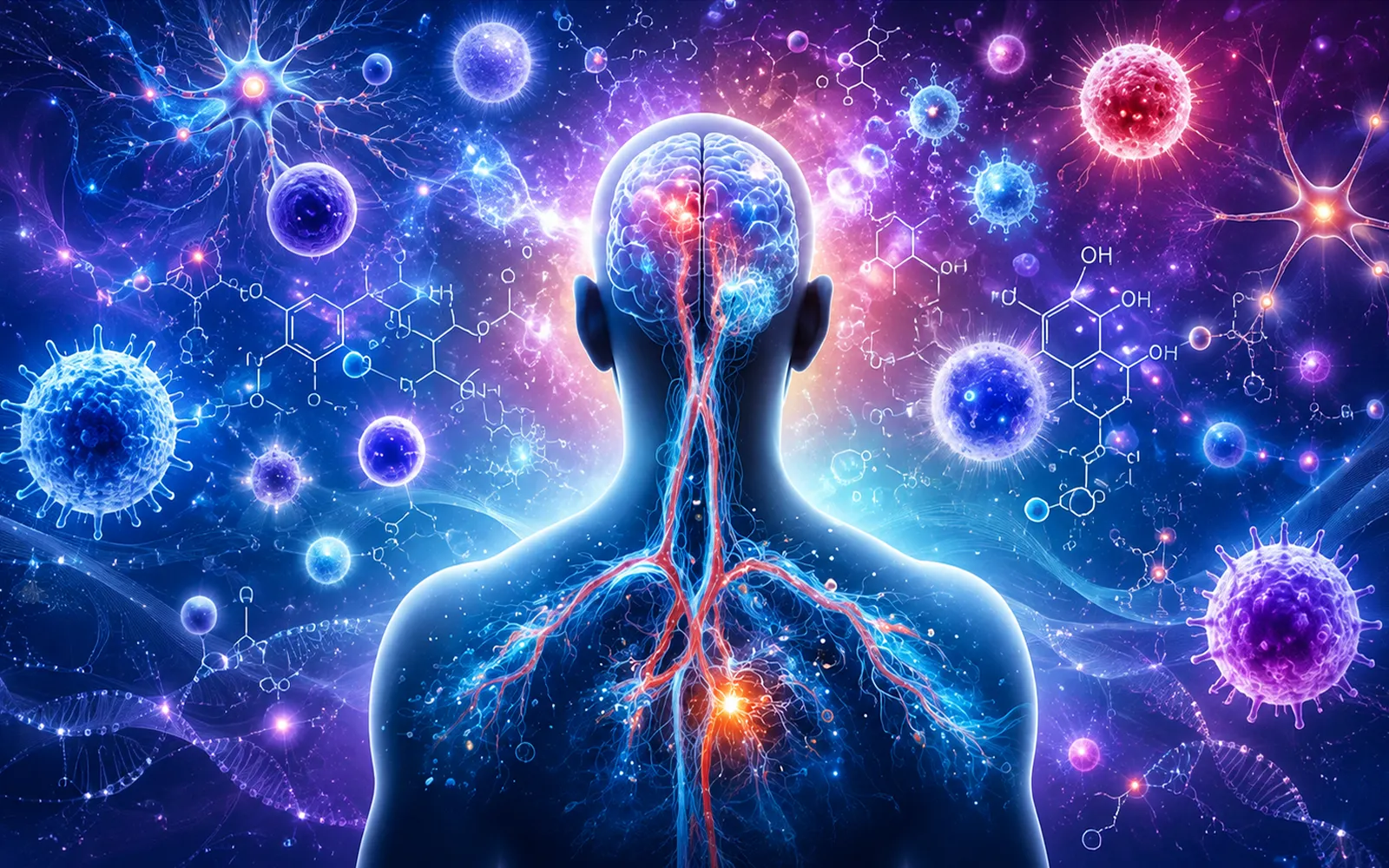
The first acts quickly through the sympathetic nervous system and related release of catecholamines such as adrenaline and noradrenaline.
The second operates through the hypothalamic-pituitary-adrenal axis, usually shortened to the HPA axis, which ultimately contributes to the release of cortisol.
These systems overlap and interact rather than operating as completely separate switches. Together, they help redirect the body’s resources toward dealing with the immediate challenge. Reviews of stress physiology identify the autonomic nervous system and HPA axis as central components of this adaptive response.
The result can be felt throughout the body.
- Heart rate may increase.
- Breathing may become faster.
- Blood pressure can rise.
- Muscles become more prepared for action.
- Sweating can increase.
- Energy availability changes.
- Attention becomes more strongly oriented toward the challenge.
- Digestive and other functions that are less immediately relevant may temporarily receive lower priority.
The familiar term fight-or-flight response captures part of this mobilization, although real human stress responses are more varied than those two behaviors alone.
The essential idea is simpler:
The body is preparing you to deal with something that appears to matter.
Stress Is Designed to Help Us Act
Because chronic stress is associated with health problems, stress itself is sometimes portrayed as an enemy.
That is too simple.
Short-term stress can be useful.
You may need greater alertness before giving an important presentation.
A sudden hazard requires rapid attention.
A difficult physical task requires cardiovascular and muscular activation.
An approaching deadline can focus effort.
The National Center for Complementary and Integrative Health describes occasional stress as a normal response that helps the body cope with challenges, while distinguishing it from prolonged stress that can contribute to health problems.
Stress becomes problematic not because activation exists, but because the relationship between activation, demand, and recovery can become unbalanced.
The system is useful when it turns on appropriately.
It also needs to be able to turn down.
What Pressure Does to Attention
One of the first things we often notice under pressure is a change in attention.
The mind becomes more selective.
That can be useful when a single problem deserves immediate focus.
But stress can also make it harder to keep several pieces of information in mind, shift perspectives, or think flexibly.
A meta-analysis of acute stress research found impairments in working memory and cognitive flexibility under some conditions, although effects varied considerably depending on the person, stressor, timing, and cognitive task.
This helps explain a familiar experience.
During a calm conversation, you may be able to understand another person’s perspective, remember several relevant details, and choose your words carefully.
During an emotionally charged argument, the same abilities may become harder to access.
The mind has not suddenly lost them.
The system has changed priorities.
Under pressure, immediate response can begin competing with deliberate reflection.
Stress and Emotion Are Closely Connected
Stress is not identical to emotion, but the two are deeply intertwined.
A stressful event can generate fear.
Anger.
Embarrassment.
Frustration.
Sadness.
Excitement.
Urgency.
Sometimes several emotions occur together.
Those emotions carry information.
Fear may signal perceived danger.
Anger may indicate that something feels unfair, obstructive, or threatening.
Sadness can accompany loss.
Frustration often appears when an important goal is being blocked.
Emotion therefore is not simply noise interfering with rational thought.
It helps organize attention and action.
Problems arise when the intensity or automatic momentum of the reaction begins determining behavior before we have considered whether that behavior fits the situation.
Anger may produce an urge to attack.
Fear may produce an urge to escape.
Embarrassment may produce an urge to withdraw.
The urge is real.
It is not necessarily an instruction.
That distinction is the beginning of emotional regulation.
“Emotional regulation is not the absence of reaction. It is the growing ability to experience what the mind and body are telling us without allowing the first impulse to make every decision.”


Emotional Regulation Is Not Emotional Suppression
The phrase control your emotions can create the wrong picture.
It suggests that emotional health means keeping feelings contained, hiding them, or refusing to experience them.
Psychologists use emotion regulation much more broadly.
Emotion regulation refers to processes through which people influence which emotions they have, when they occur, and how those emotions are experienced or expressed. One influential model developed by James Gross and colleagues describes regulation as a process involving recognizing a need for regulation, selecting a strategy, implementing it, and monitoring whether it is working.
That means emotional regulation can happen at several points.
We can alter the situation.
Redirect attention.
Change our interpretation.
Modify how we express what we feel.
Allow an emotion without immediately acting on it.
Solve the problem producing the emotion.
Seek support.
Step away temporarily.
Return later when arousal has decreased.
Emotional regulation is therefore not one skill.
It is a repertoire.
Before Regulating an Emotion, Notice That It Is Happening
This sounds obvious. In real life, it often is not.
There can be very little perceived distance between:
I am angry and I am speaking angrily.
Between:
I feel threatened and I am defending myself.
Between:
I feel anxious and I need to escape this.
Emotional awareness creates a small separation between the internal event and the behavioral response.
Instead of simply inhabiting the emotion, we can begin observing it.
My heart is racing.
I’m becoming defensive.
I’m angry.
I notice that I want to interrupt.
Part of me wants to leave.
That does not make the emotion disappear.
It changes our relationship with it.
The experience becomes something occurring within us rather than something that must automatically control what happens next.
Regulation Can Begin Before Emotion Becomes Intense
One reason emotional regulation is broader than “calming down” is that we can sometimes intervene before an emotional response becomes powerful.
The process model of emotion regulation describes several broad places where regulation can occur:
- Situation selection: choosing whether to enter or avoid certain situations when choice is realistic and appropriate.
- Situation modification: changing something about the circumstances themselves.
- Attentional deployment: deciding where attention is directed.
- Cognitive change: reconsidering how the situation is interpreted.
- Response modulation: influencing the emotional, behavioral, or physiological response after it is underway.
These categories are useful because they remind us that regulation is not restricted to what happens at the peak of emotion.
Sometimes the most effective regulation occurs earlier.
If you know an important conversation tends to deteriorate when everyone is exhausted, choosing a better time is emotion regulation.
If constant notifications are creating tension, turning them off is regulation.
If a situation is genuinely unsafe, leaving may be appropriate regulation.
If the situation cannot be changed, then attention, interpretation, acceptance, or response may become more important.
Reappraisal Changes Meaning, Not Reality
One of the most studied emotional-regulation strategies is cognitive reappraisal.
Reappraisal means changing how we interpret a situation in a way that changes its emotional impact.
Suppose your heart begins pounding before speaking to a group.
One interpretation is: My body is telling me I cannot handle this.
Another is: My body is mobilizing because this matters to me.
The physiological activation may initially be similar.
The meaning assigned to it is different.
Research on stress reappraisal suggests that changing how people interpret stress-related arousal can reduce subjective stress in some circumstances, although effects on physiological stress measures are less consistent.
Reappraisal does not mean inventing a positive story about everything.
A serious problem remains serious. A painful loss remains painful.
Someone behaving badly does not become acceptable merely because we reinterpret their behavior.
Useful reappraisal tries to find a more accurate, workable perspective, not a falsely cheerful one.
Instead of: This must not be happening.
Perhaps: I do not like that this is happening, but I can decide how I respond.
Instead of: If I am anxious, I will fail.
Perhaps: I can be anxious and still perform.
Instead of: This conversation has become a disaster.
Perhaps: This conversation is becoming unproductive, and we may need to pause.
That is regulation without denial.
Suppressing Expression Is Different From Regulating the Emotion
Another common strategy is expressive suppression—reducing or hiding the outward expression of an emotion after it has developed.
Sometimes suppression is appropriate.
You may decide that shouting in a meeting would make the situation worse.
You might temporarily contain a reaction because another person urgently needs your attention.
Social life requires some capacity to manage expression.
But concealing the outward signs of emotion is not necessarily the same as reducing the internal emotional experience.
Classic experimental work has often found reappraisal to have a more favorable profile than suppression, while contemporary research increasingly emphasizes that regulation strategies cannot be labeled universally good or bad without considering context.
This nuance is important.
The goal is not:
Never suppress emotion.
It is:
Do not confuse appearing calm with having actually processed what you feel.
Sometimes the Body Needs Attention Before the Story Does
When emotional activation becomes intense, sophisticated reasoning may be harder to access.
This can make advice such as just think differently frustrating.
Sometimes it is more useful to work with the physiological side of the response first.
Slow, controlled breathing is one example.
A systematic review and meta-analysis involving more than 200 studies found that voluntary slow breathing reliably changed heart-rate variability measures associated with parasympathetic cardiac regulation.
A separate meta-analysis of randomized trials found small-to-moderate reductions in self-reported stress from breathwork interventions, although the authors emphasized methodological limitations and the need to avoid overstating the evidence.
Importantly, not every breathing study finds meaningful superiority over comparison conditions. A large randomized trial of coherent breathing, for example, found improvement over time but no advantage over a carefully matched breathing control.
So breathing should not be treated as a neurological reset button.
But it can be one accessible way of influencing physiological arousal.
Other people may regulate more effectively through movement, temporarily stepping away from stimulation, quiet, music, conversation, or another activity that gives activation time to settle.
The important principle is that emotion has a body component.
Sometimes regulation works better when we acknowledge that fact.
A Pause Can Change What Happens Next
A pause does not need to be long.
Sometimes ten seconds is enough to interrupt automatic momentum.
Sometimes we need ten minutes.
Sometimes the wiser response is:
I want to continue this conversation, but I don’t think I can do it constructively right now.
The pause is not always avoidance.
Avoidance means repeatedly escaping experiences that need to be faced.
A deliberate pause can be preparation for a better response.
The distinction depends on what happens afterward.
Do we return?
Do we solve the problem?
Do we communicate?
Do we make the decision?
Or do we use regulation only to avoid discomfort indefinitely?
Good emotional regulation does not remove us from life.
It helps us participate more effectively.
The Best Strategy Depends on the Situation
Popular psychology often searches for the best emotional-regulation technique.
Research increasingly points toward a different idea: flexibility.
A strategy that works well in one situation may work poorly in another.
If a problem can be solved, problem-solving may be useful.
If a situation cannot be changed, acceptance may be more realistic.
If emotional intensity is extremely high, temporary distraction may create enough distance to recover.
If an interpretation is distorted or unnecessarily threatening, reappraisal may help.
If anger is signaling a genuine boundary violation, the answer may not be to reduce anger indefinitely. It may be to use the information and communicate the boundary effectively.
Reviews of regulatory flexibility argue against assuming that individual strategies have universally positive or negative effects. Adaptation depends partly on matching the strategy to the person, emotion, objective, and circumstances.
Emotional maturity is therefore not mastering one technique.
It is developing more than one option.
Stress Can Make Regulation Harder Precisely When We Need It Most
There is a frustrating paradox in emotional regulation.
The stronger the pressure, the harder deliberate regulation may become.
Stress can affect working memory and cognitive control—the same capacities involved in stepping back, reconsidering a situation, and implementing a thoughtful strategy.
Research specifically examining stress and cognitive emotion regulation has produced mixed findings. Some studies find impairment, others little change, and some even find improved regulation under particular conditions.
A 2025 systematic review concluded that acute stress effects on emotional regulation may depend on the timing and relative activity of the sympathetic nervous system and HPA-axis response, as well as sex, emotional intensity, and the regulation strategy being used.
This complexity helps explain something practically important:
We should not expect ourselves to display our most sophisticated emotional skills automatically during the most intense moments of life.
Regulation improves with recognition and practice.
Skills become easier to access when they are familiar.
Responding Without Being Ruled by the Reaction
When pressure begins building, a practical regulation sequence might look something like this:
- Notice activation. What is happening in your body, thoughts, and impulses?
- Name the emotional state as accurately as you can. Angry, frightened, embarrassed, frustrated, hurt, overloaded, uncertain?
- Separate the emotion from the action urge. Feeling something does not require immediately doing what the emotion suggests.
- Ask what the situation actually requires. Is there a problem to solve, danger to leave, conversation to have, boundary to set, or uncertainty to tolerate?
- Choose a regulation strategy that fits. Reappraise, pause, breathe, redirect attention temporarily, solve the problem, communicate, accept what cannot currently be changed, or seek support.
- Act deliberately. Regulation becomes meaningful when it improves what happens next.
- Allow recovery afterward. Even a well-handled stressful event can leave the body activated for a while.
This is not a formula for perfect emotional control.
It is a way of creating more space between reaction and response.
Regulation Is Not the Same as Always Becoming Calm
Sometimes the appropriate result of emotional regulation is calm.
Sometimes it is not.
Imagine discovering that someone has repeatedly violated an important boundary.
The healthiest response may still include anger.
If you witness something unjust, emotional discomfort may be appropriate.
If you lose someone important, the goal should not be to regulate grief out of existence.
If a situation is genuinely dangerous, reducing fear until you feel completely relaxed would make little sense.
Emotion regulation is not successful merely because emotional intensity decreases.
Sometimes successful regulation means tolerating an emotion while choosing what to do with it.
This protects Mental Wellness from becoming another demand to feel good all the time.
Human beings need the full range of emotion.
The skill lies in maintaining enough freedom within that emotional range to act according to reality and values rather than impulse alone.
When Stress Does Not Fully Turn Off
The acute stress response is designed for mobilization and recovery.
Problems become more likely when significant activation is frequent, prolonged, or repeatedly reactivated without sufficient opportunity to recover.
Researchers use the term allostasis to describe the body’s process of maintaining stability through physiological adjustment. Allostatic load refers to the cumulative wear associated with repeated or poorly regulated adaptation over time.
This concept should not be interpreted to mean that every stressful week is damaging the body.
Nor is allostatic load something people can diagnose from how stressed they feel.
It is a research framework for understanding how repeated demands can influence multiple biological systems over time.
Long-term stress has been associated with sleep problems, headaches, digestive symptoms, mood difficulties, cardiovascular effects, and other health concerns.
This is why emotional regulation alone cannot solve every stress problem.
Sometimes the source of stress itself needs to change.
Workload may need adjustment.
Conflict may need addressing.
Boundaries may need strengthening.
Caregiving support may be needed.
Financial or practical assistance may matter more than another relaxation technique.
We should never use emotional regulation to teach people to tolerate indefinitely what genuinely needs to be changed.
Recovery Is Part of Regulation
Much attention goes toward what we do during the stressful moment.
But what happens afterward matters too.
The nervous system needs opportunities to shift away from continuous mobilization.
That may come through sleep.
Physical activity.
Quiet.
Social connection.
Time outdoors.
Enjoyable hobbies.
Relaxation practices.
Periods without incoming demands.
The exact form can differ between people.
Recovery does not mean doing nothing forever.
It means allowing activation to decline sufficiently that the body and mind are not continually preparing for the next threat before the previous response has resolved.
In this sense, stress regulation includes more than handling the crisis well.
It includes knowing how to come back afterward.
Stress Is Not the Same as Anxiety
Stress and anxiety overlap, but they are not identical.
NIMH describes stress as generally being a response to an external cause, while anxiety can persist even without an immediate external threat. Both can produce worry, tension, sleep disruption, physical discomfort, and other symptoms.
This distinction is useful because ordinary stress responses should not automatically be pathologized.
Feeling nervous before an important event does not necessarily mean an anxiety disorder.
Being angry during conflict does not mean someone has an emotional-regulation disorder.
Feeling temporarily overwhelmed during an unusually difficult period can be a normal human response.
At the same time, persistent distress deserves attention when it begins interfering with sleep, relationships, work, concentration, routine activities, or the ability to function.
The goal is neither to diagnose ordinary emotion nor to dismiss prolonged suffering as “just stress.”
Regulation Gives Us More Than One Possible Response
Pressure will continue to be part of life.
No amount of emotional skill eliminates uncertainty, conflict, disappointment, responsibility, or situations in which something genuinely important is at stake.
And perhaps that should not be the goal.
The stress response exists because human beings need the capacity to mobilize.
Emotion exists because what happens to us matters.
What we can develop is greater freedom between the moment the system activates and the behavior that follows.
- We can notice.
- Interpret.
- Pause.
- Reconsider.
- Speak.
- Act.
- Set a boundary.
- Accept what cannot be controlled.
- Solve what can.
- Recover.
And try again when we do not handle the moment as well as we hoped.
Emotional regulation is not the absence of reaction. It is the growing ability to experience what the mind and body are telling us without allowing the first impulse to make every decision.
The stress response gives us energy for action.
Emotional regulation helps us decide what kind of action the situation deserves.
Together, they reveal an important part of Mental Wellness:
We do not need to become people who never react.
We can become people who have more than one way to respond.
Mental Health and Medical Disclaimer
This article is intended for general educational purposes and is not a substitute for individualized medical or mental-health advice, diagnosis, or treatment. Persistent or severe anxiety, emotional distress, sleep disruption, panic-like symptoms, significant difficulty regulating emotions, or symptoms that interfere with relationships, work, or normal daily functioning should be discussed with an appropriately qualified healthcare or mental-health professional. New or concerning physical symptoms—including chest pain, fainting, severe shortness of breath, or symptoms that could indicate a medical emergency—should not automatically be attributed to stress and warrant appropriate medical evaluation.