














Carbohydrates have become one of the most misunderstood parts of nutrition.
Bread, rice, potatoes, fruit, pasta, beans, oatmeal, sweets, and soda all contain carbohydrates, yet they do not affect the body in exactly the same way. At the same time, the phrase “blood sugar spike” has become so common that an ordinary rise in glucose after eating is sometimes treated as though something has gone wrong.
That can make everyday eating unnecessarily confusing.
The basic physiology is actually straightforward:
When you eat digestible carbohydrates, your body breaks much of them down into glucose. Blood glucose rises, insulin helps move that glucose into cells, and glucose levels gradually move back toward their usual range.
That rise after a meal is not automatically a problem. It is part of normal metabolism. MedlinePlus
What matters more is what kind of carbohydrate you are eating, how much you eat, what accompanies it, how active and metabolically healthy you are, and how effectively your body handles the glucose that enters the bloodstream.
That distinction gives us a much more useful approach to carbohydrates:
Do not try to eliminate blood sugar movement. Build meals that provide useful carbohydrates in forms the body can handle well.
What Happens to Carbohydrates After You Eat Them?
Carbohydrates come mainly in three forms: sugars, starches, and fiber.
Sugars are relatively small carbohydrate molecules. Starches are longer chains of sugar molecules. During digestion, most sugars and starches are broken down into smaller sugars that can be absorbed, including glucose.
Fiber behaves differently. Much of it escapes digestion in the small intestine, which is one reason fiber-rich carbohydrate foods can behave differently from highly refined carbohydrate foods.
Once glucose reaches the bloodstream, your pancreas responds by releasing insulin.
Insulin is often talked about negatively in diet culture, but insulin is not the enemy.
It is an essential hormone.
Insulin helps glucose move from the bloodstream into cells, where it can be used for energy. It also helps the body store energy for later use. As blood glucose comes back down, insulin secretion decreases. NIDDK
That cycle happens every day.
- Eat.
- Digest.
- Absorb.
- Use.
- Store.
- Repeat.
Blood Sugar Is Supposed to Rise After a Meal
This point deserves emphasis because it clears up much of the confusion surrounding carbohydrates.
If you eat a meal containing carbohydrate, blood glucose normally rises afterward.
That alone is not evidence of metabolic damage.
The healthy body is designed to handle changing glucose levels. The pancreas detects the rise, insulin is released, tissues take up glucose, and the liver and muscles can store some of it for later use.
The problem in diabetes is different.
With insulin resistance, cells do not respond to insulin as effectively as they should. The pancreas may initially compensate by producing more insulin. If that compensation eventually becomes insufficient, glucose remains elevated in the bloodstream more than it should. NIDDK
That is very different from saying:
“Any rise in blood sugar is harmful.”
For someone without diabetes, trying to eliminate every post-meal rise can turn normal physiology into something to fear.
A better goal is healthy glucose regulation, not a perfectly flat glucose line.
The Amount of Carbohydrate Still Matters
Food quality is important, but quantity matters too.
A small serving of rice produces a different carbohydrate load from a very large bowl.
One slice of bread is different from four.
One piece of fruit is different from several glasses of juice.
The more digestible carbohydrate eaten at one time, the more glucose potentially enters circulation during digestion.
This is particularly important for people with diabetes, which is why carbohydrate counting can be useful when matching meals with medications or mealtime insulin. CDC
For someone without diabetes, however, there is usually no need to count every gram.
Portion awareness is often enough.
The practical question becomes:
Is carbohydrate one part of the meal—or nearly the entire meal?
A plate dominated by pasta, bread, and dessert creates a very different nutritional situation from a plate containing vegetables, protein, a reasonable portion of pasta, and healthy fat.
“A healthy carbohydrate diet is not necessarily a low-carbohydrate diet. It is a diet in which better carbohydrate sources occupy more of the space.”
Carbohydrate Quality Matters Just as Much
A bowl of lentils and a bottle of soda both contain carbohydrate.
That does not make them nutritionally equivalent.
The World Health Organization emphasizes carbohydrate quality, including food source, fiber content, digestibility, and the degree to which carbohydrate foods have been refined. Its guidance favors carbohydrate sources such as whole grains, vegetables, fruits, and legumes. World Health Organization
The current U.S. Dietary Guidelines similarly emphasize whole, nutrient-dense foods while reducing reliance on refined carbohydrates, added sugars, and highly processed foods. Health.gov
That distinction is more useful than simply dividing foods into “carbs” and “non-carbs.”
Compare: oatmeal with nuts and berries with a sugary breakfast pastry.
Or:
beans with vegetables and brown rice with a large sweetened beverage and refined snack food.
Both meals may contain carbohydrate.
But their fiber, food structure, micronutrients, protein, fat, energy density, and speed of digestion can be very different.
Fiber Changes the Way a Carbohydrate Food Behaves
Fiber is one major reason whole or minimally processed carbohydrate foods often behave differently.
Fiber can slow digestion, contribute to fullness, support bowel health, and reduce the speed at which some carbohydrate-containing foods deliver glucose.
That is why beans, lentils, oats, barley, intact whole grains, vegetables, and whole fruits generally deserve a different place in the diet from refined carbohydrate foods stripped of much of their natural fiber.
The American Diabetes Association’s 2026 guidance emphasizes minimally processed, nutrient-dense, high-fiber carbohydrate sources rather than treating all carbohydrate foods as interchangeable. Diabetes Journals
This is also why simply asking:
“How many carbs are in this?”
does not tell the whole nutritional story.
Also ask:
“What kind of food is carrying those carbohydrates?”
Whole Fruit Is Not the Same as Fruit Juice
Fruit illustrates this beautifully.
An orange contains natural sugars.
So does orange juice.
But eating the orange provides the fruit’s intact structure and fiber and requires chewing. Drinking juice concentrates the liquid from multiple pieces of fruit into something that can be consumed very quickly.
That changes the experience for both appetite and glucose.
CDC guidance notes that fruit juice generally raises blood glucose more quickly than whole fruit, while whole fruit provides fiber that juice largely lacks. CDC
That does not mean 100% fruit juice must never be consumed.
It means whole fruit is usually the better everyday choice.
That same principle appears repeatedly in nutrition:
The closer a carbohydrate food remains to its original structure, the more of its natural nutritional package it often retains.
Beans Are Carbohydrates Too—and That Is a Good Thing
Beans and lentils provide another useful example.
They contain substantial carbohydrate.
But they also provide:
fiber, protein, minerals, and a food structure that takes time to digest.
Calling beans “high carb” while ignoring everything else about them would miss what makes them valuable.
The same applies to many whole grains, fruits, vegetables, and dairy foods.
Carbohydrate content is one characteristic of a food.
It is not the food’s entire nutritional identity.
Refined Carbohydrates Are Easier to Eat Quickly
Refining grains usually removes parts of the original grain, including much of the fiber.
The resulting food can be softer, quicker to digest, and easier to eat in larger quantities.
White bread, many crackers, sugary cereals, pastries, and numerous packaged snacks can therefore deliver substantial carbohydrate without the same fiber or food structure found in intact grains and legumes.
That does not mean eating white rice or white bread occasionally is harmful.
The concern is what dominates the diet.
If most carbohydrate comes from highly refined grains, sweets, sugary drinks, and heavily processed snacks, there is less room for foods that provide fiber and a broader range of nutrients.
Current ADA guidance therefore places greater emphasis on minimally processed carbohydrate sources and recommends minimizing refined grains, sweets, sugar-sweetened beverages, and heavily processed foods for people with diabetes or at increased diabetes risk. Diabetes Journals
The same food-quality principle is useful for the general population.
A Potato Is Not the Same as a Bag of Potato Chips
Carbohydrate discussions can become misleading when foods are judged by one nutrient.
Potatoes contain starch.
That does not make potatoes inherently unhealthy.
A baked potato eaten with vegetables and a protein source is a very different meal from a large serving of potato chips or fries accompanied by a sugary drink.
The preparation changes the food.
The portion changes the meal.
What accompanies it changes the nutritional context.
This is why practical nutrition works better at the meal level than at the level of isolated carbohydrate molecules.
Protein, Fat, and Fiber Change the Meal
Carbohydrates are rarely eaten in laboratory isolation.
In real life, meals contain combinations of nutrients.
Protein, fat, fiber, and the physical structure of the food can all change digestion and the post-meal glucose response.
CDC meal-planning guidance notes that eating carbohydrate foods along with protein, fat, or fiber can slow or modify how quickly blood glucose rises compared with consuming rapidly absorbed carbohydrate alone. CDC
Controlled feeding research also shows that adding protein can meaningfully alter post-meal glucose and insulin responses, although the effects differ among people with and without diabetes. PubMed
This does not mean you should add large amounts of fat to every carbohydrate meal merely to flatten the glucose curve.
Instead, build balanced meals naturally.
Rice with vegetables and chicken.
Oatmeal with berries and nuts.
Whole-grain toast with eggs.
Fruit with yogurt.
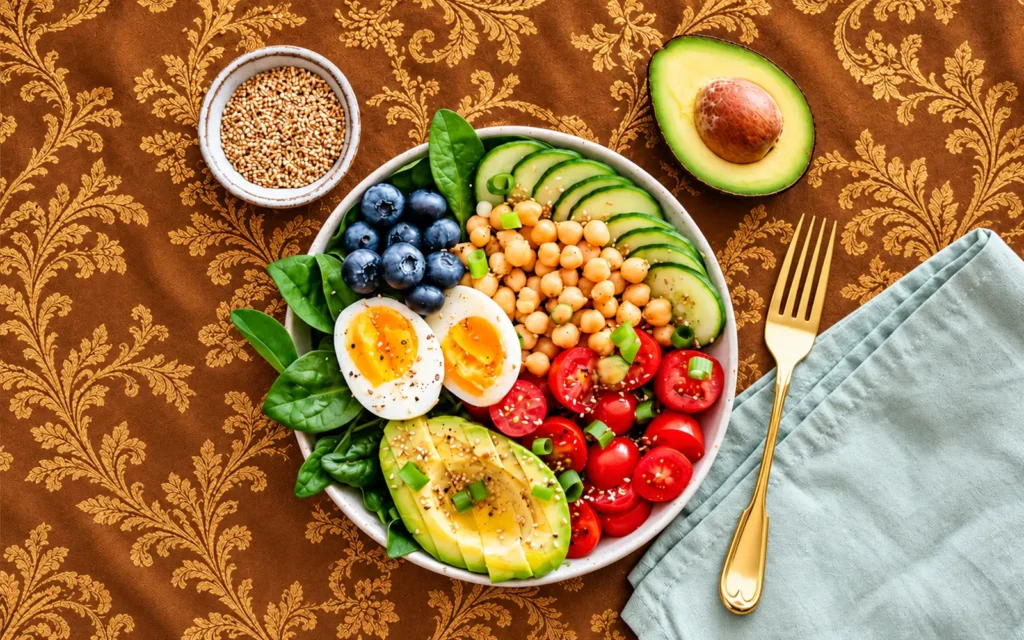
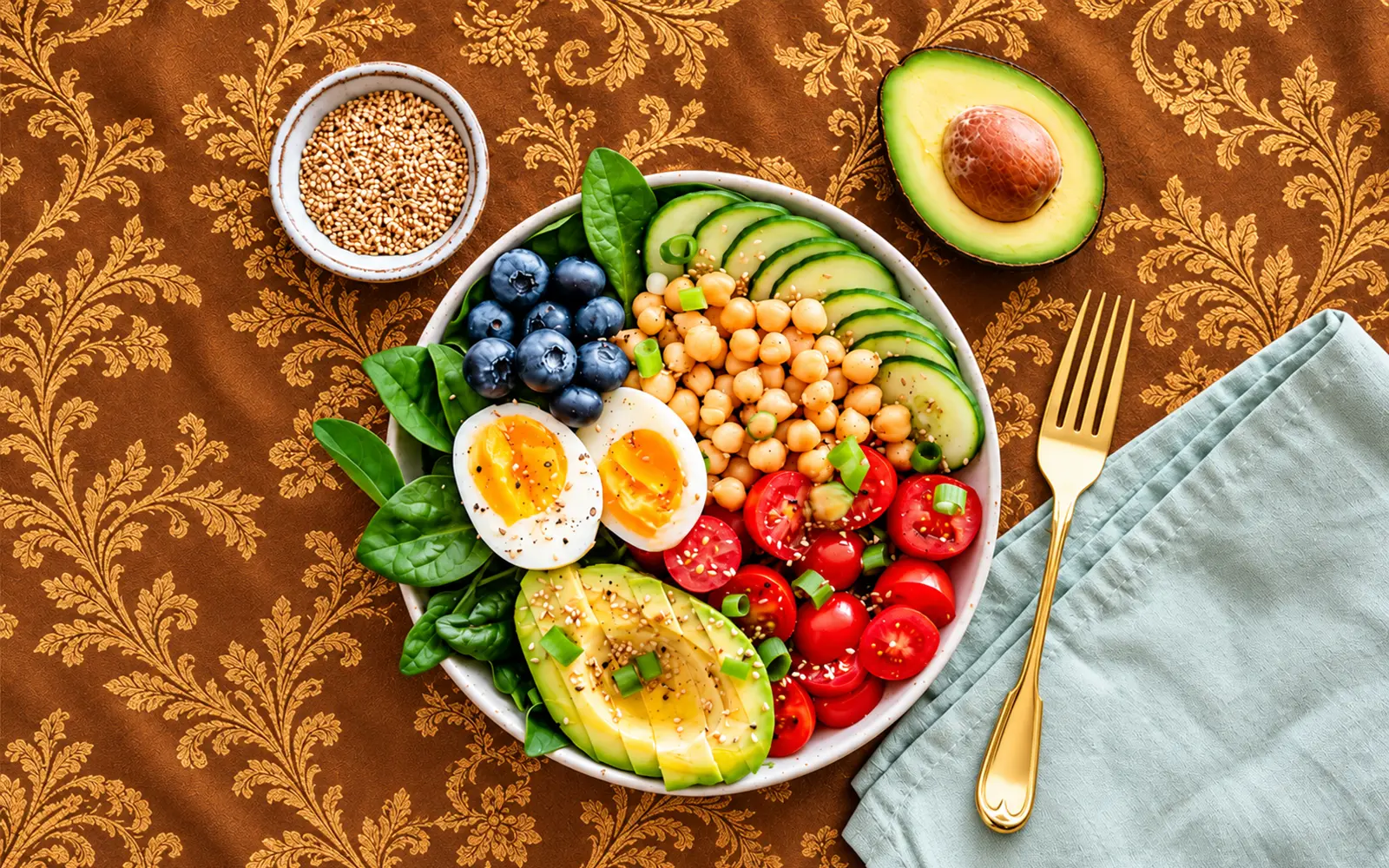
Beans with vegetables and avocado.
Pasta with vegetables, olive oil, and a protein source.
Those meals make nutritional sense for reasons far beyond glucose alone.
Use a Simple Plate Instead of Complicated Mathematics
For many people, the easiest way to make carbohydrate portions more balanced is not carbohydrate counting.
It is the plate.
A practical starting point for many meals is:
- Fill roughly half the plate with non-starchy vegetables.
- Use about one-quarter for protein, such as fish, chicken, eggs, tofu, beans, or another appropriate source.
- Use about one-quarter for a carbohydrate-rich food, such as whole grains, potatoes, corn, rice, pasta, beans, or another starch.
- Add healthy fats naturally through foods such as olive oil, nuts, seeds, avocado, or fish.
- Choose water or an unsweetened beverage most often.
This closely resembles the plate method used in diabetes nutrition education, but it also works as a simple general template for building balanced meals without counting every nutrient. CDC
It is not a rigid formula.
Some meals will look different.
The value is simply that carbohydrate becomes part of the meal rather than the whole meal.
Sugary Drinks Are One of the Easiest Places to Make a Change
If someone wants to improve the carbohydrate quality of their diet, beverages are often the simplest starting point.
- Soda.
- Sweet tea.
- Energy drinks.
- Sweetened coffee drinks.
- Fruit drinks.
These can deliver large amounts of rapidly consumed carbohydrate without requiring much chewing or providing much fiber.
That makes them very different from eating carbohydrate as part of a meal containing vegetables, whole grains, fruit, legumes, protein, and healthy fat.
Both the ADA and current U.S. dietary guidance recommend reducing sugar-sweetened beverages and favoring water or unsweetened alternatives. Diabetes Journals
For many people, that one change can be more meaningful than worrying about whether a carrot or banana contains too much sugar.
Added Sugar and Natural Sugar Are Not Identical Food Situations
Chemically, glucose and fructose do not become different molecules simply because they came from fruit instead of a sweet.
But foods are more than isolated sugar molecules.
The sugar in berries comes packaged with water, fiber, vitamins, minerals, and plant compounds.
The lactose in plain yogurt comes with protein, calcium, and other nutrients.
Added sugar in a soft drink arrives in a much different nutritional package.
This is why asking whether a food “contains sugar” is usually less useful than asking:
What food is the sugar in?
and
What else am I getting with it?
Nutrition recommendations distinguish naturally occurring sugars in foods such as fruit and milk from sugars added during processing or preparation for precisely this reason. Real Food
Glycemic Index Can Be Useful—but Do Not Let It Run Your Diet
The glycemic index, or GI, ranks carbohydrate-containing foods according to how strongly they raise blood glucose under standardized testing conditions.
The concept can teach something useful.
Some carbohydrate foods are digested and absorbed more rapidly than others.
But GI also has limitations.
Real meals contain mixed foods.
Portions vary.
Cooking changes starch.
Ripeness can matter.
Protein, fat, and fiber affect the overall meal.
And two foods with similar GI values may have completely different nutritional profiles.
The ADA’s 2026 review describes evidence around glycemic index and glycemic load as useful but complex, with mixed effects across clinical studies. Diabetes Journals
So use GI as one clue, not as a grading system for your entire diet.
Choosing beans, intact whole grains, vegetables, and whole fruit will often move the diet in the right direction without memorizing a glycemic-index chart.
You Do Not Need to Fear Rice, Bread, Pasta, or Potatoes
Healthy eating frequently becomes harder than necessary when common foods are turned into villains.
Rice can fit. Bread can fit. Pasta can fit. Potatoes can fit.
The useful questions are:
How much?
How refined is it?
What else is on the plate?
How often am I eating it?
What carbohydrate foods make up the rest of my diet?
You might choose whole-grain bread more often than refined bread.
Use beans or lentils in some meals instead of relying entirely on grain-based starches.
Serve a moderate portion of rice alongside vegetables and protein rather than making rice nearly the entire meal.
Add vegetables and protein to pasta rather than simply doubling the pasta portion.
Leave the skin on a potato when appropriate and build a balanced meal around it.
That is practical carbohydrate management.
No prohibition required.
What About Eating Carbohydrates Last?
You may have heard that eating vegetables or protein before the carbohydrate portion of a meal can lower the glucose rise afterward.
There is some evidence for this.
Systematic reviews suggest that consuming vegetables and/or protein before carbohydrate may reduce the early post-meal glucose response. But newer reviews also emphasize methodological limitations, small studies, and uncertainty about how important this strategy is over the long term. PubMed
So there is no need to turn dinner into a carefully choreographed sequence.
If you enjoy starting a meal with salad or vegetables, that is perfectly reasonable.
But what you eat regularly matters far more than whether you ate the broccoli five minutes before the rice.
That keeps the priority where it belongs.
One of the Simplest Tools Is to Move After You Eat
There is another way to influence what happens to glucose after a meal that has nothing to do with eliminating carbohydrate:
use your muscles.
Muscle activity increases glucose use.
Research comparing exercise before and after meals has found that activity performed after eating can reduce the post-meal glucose rise, with walking being a simple and effective option. PubMed
Recent research also finds that interrupting prolonged sitting with brief activity breaks can lower post-meal glucose and insulin responses. PubMed
You do not need a workout after dinner.
For someone who is able to do so, a 10- to 15-minute comfortable walk after a meal can be a realistic habit.
Walk around the neighborhood.
Walk the dog.
Walk through the office.
Do light household movement.
The lesson is bigger than glucose:
food and movement are parts of the same metabolism.
Insulin Resistance Changes the Situation
For people with insulin resistance, prediabetes, or type 2 diabetes, carbohydrate deserves more individualized attention.
With insulin resistance, muscle, liver, and fat cells do not respond normally to insulin. The pancreas may compensate by releasing more insulin, but over time it may become unable to maintain normal glucose regulation. NIDDK
In that situation, carbohydrate amount, distribution, food quality, medications, activity, body weight, sleep, and other factors may all matter.
But even here, there is no universally correct carbohydrate percentage.
The American Diabetes Association’s 2026 Standards state that the optimal amount of carbohydrate for people with diabetes remains individualized. Some people may benefit from reducing carbohydrate intake, but the guidance continues to emphasize minimally processed, nutrient-dense, high-fiber carbohydrate foods rather than simply eliminating carbohydrates. Diabetes Journals
That is an important distinction.
A person may reduce:
- sugary drinks,
- large refined-grain portions,
- sweets,
- or highly processed snack foods
- without eliminating:
- fruit,
- beans,
- vegetables,
- whole grains,
- or other nutritious carbohydrate foods.
Diabetes Makes Blood Sugar Numbers More Important
Someone using insulin or glucose-lowering medication is in a different situation from a healthy person wondering whether oatmeal causes a “spike.”
Carbohydrate counting can be essential for people using mealtime insulin.
Medication timing matters.
Hypoglycemia matters.
Individual glucose targets matter.
Continuous glucose monitoring may be medically useful.
For people with diabetes, nutrition decisions should therefore be coordinated with the treatment plan rather than based solely on general nutrition advice. The ADA specifically recommends individualized medical nutrition therapy for people with prediabetes or diabetes. Diabetes Journals
This article’s broader message should not be used to override individual medical guidance.
You Do Not Need to Flatten Every Glucose Curve
The growing availability of continuous glucose monitors has made post-meal glucose visible in a way that was once largely limited to diabetes care.
That information can be useful in the right context.
But numbers can also create anxiety when normal physiology is interpreted without context.
A rise after eating carbohydrate is expected.
The meaningful issue is the body’s overall ability to regulate glucose—not whether the graph moved upward after lunch.
For most people without diabetes, the more productive questions remain:
What kind of foods do I eat regularly?
Are my meals balanced?
Am I active?
Am I maintaining good metabolic health?
Those questions tell us much more about long-term nutrition than chasing the flattest possible response to every meal.
A Practical Carbohydrate Strategy
If you want to improve your diet without turning every meal into a metabolic experiment, focus on a few principles.
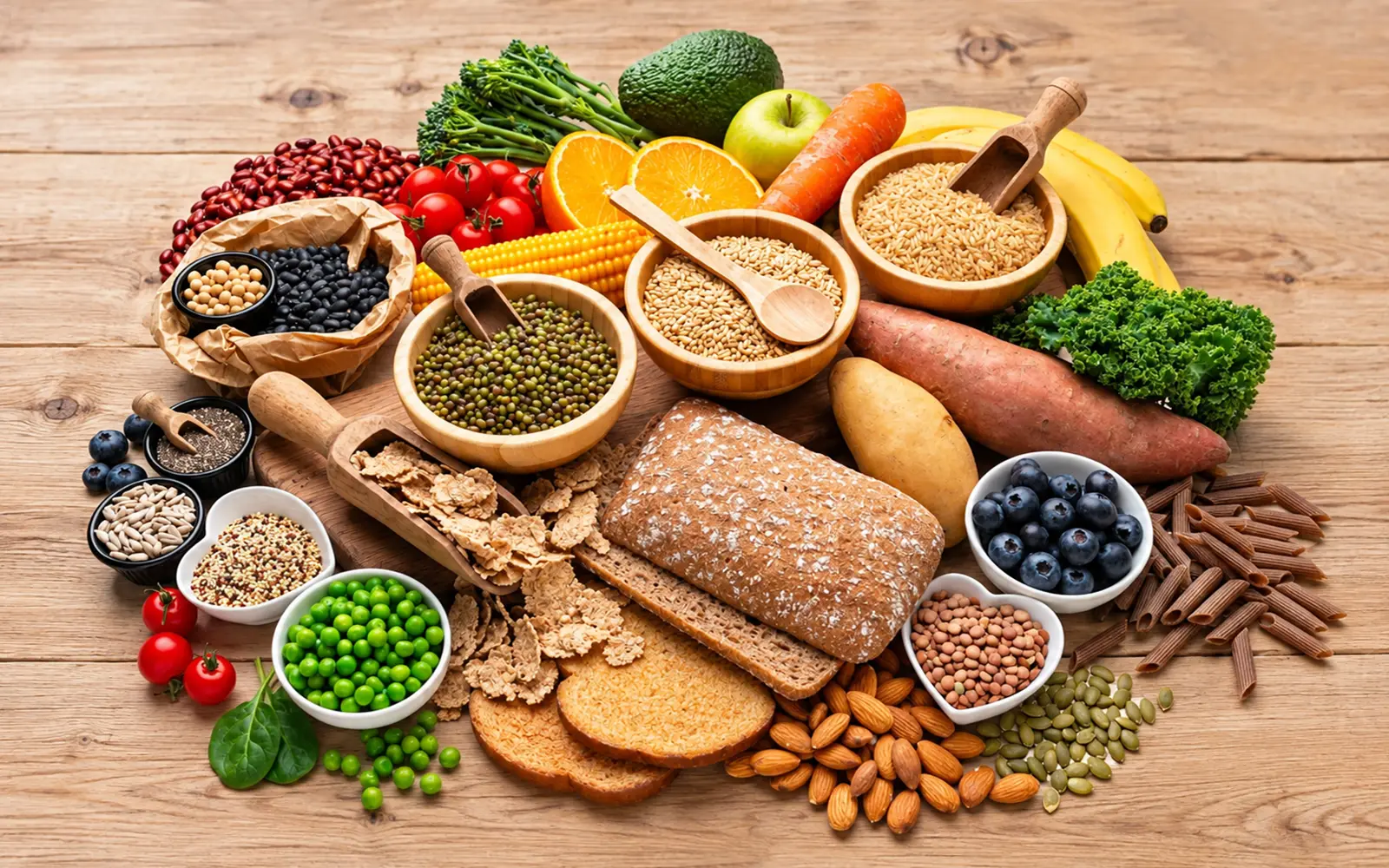
Choose beans, lentils, vegetables, whole fruit, whole or minimally processed grains, and other fiber-rich foods as regular carbohydrate sources.
Eat refined grains because you enjoy them—not because they have displaced nearly every whole-food carbohydrate from your diet.
Keep portions proportional to the meal.
Pair carbohydrate foods naturally with vegetables, protein, and healthy fats.
Choose whole fruit more often than juice.
Make water your everyday beverage rather than relying on sugary drinks.
Include sweets in reasonable proportion instead of allowing them to become a major carbohydrate source.
Stay physically active, and consider a short walk after meals when practical.
You do not need to do all of these perfectly.
The goal is a better pattern.
What a Day of Better Carbohydrate Choices Can Look Like
Healthy carbohydrate eating does not need to look unusual.
Breakfast could be oatmeal with berries, walnuts, and yogurt.
Lunch could include a bean-and-vegetable bowl with rice and avocado.
A snack might be an apple with peanut butter.
Dinner could include salmon, roasted vegetables, and potatoes.
Dessert might be fruit—or occasionally something sweet simply because you enjoy it.
That day contains plenty of carbohydrate.
It also contains fiber, protein, healthy fat, micronutrients, and whole foods.
That is the key distinction.
A healthy carbohydrate diet is not necessarily a low-carbohydrate diet. It is a diet in which better carbohydrate sources occupy more of the space.
The Practical Bottom Line
Carbohydrates do raise blood glucose.
They are supposed to.
The body’s job is to digest them, absorb glucose, release insulin, use that glucose for energy, store what is needed, and restore balance.
The healthiest response is not to become afraid of that process.
It is to give the body better material to work with.
Favor carbohydrate foods that bring fiber and nutrients with them.
Pay attention to portions.
Build meals rather than eating isolated refined carbohydrates.
Drink fewer carbohydrates.
Use your muscles regularly.
And remember that metabolic health is influenced by the overall pattern of eating and living, not the glucose response to one banana or one slice of bread.
The most useful question is therefore not:
“Will this food raise my blood sugar?”
Many carbohydrate foods will.
Ask instead:
“Is this a carbohydrate food that contributes something worthwhile to my diet—and does it fit sensibly into the meal?”
That question leads to much better choices.
Nutrition and Health Disclaimer
This article is intended for general educational purposes and is not individualized medical or nutritional advice. People with diabetes, prediabetes, hypoglycemia, pregnancy-related glucose concerns, kidney disease, or other conditions affecting glucose regulation may need individualized carbohydrate goals. Anyone using insulin or glucose-lowering medication should follow their treatment plan and discuss major dietary changes with their healthcare team or a registered dietitian nutritionist.