











For years, dietary fat was treated as something to minimize.
Low-fat foods filled grocery shelves. Fat was blamed for weight gain. People learned to look at the grams of total fat on a label before considering much else about the food.
Nutrition science now gives us a more useful way to think about it.
Fat is not a nutritional problem to eliminate. It is an essential part of a healthy diet. What matters is where that fat comes from, what type it is, how much the overall diet contains, and what foods it replaces.
Your body uses fat to build cell membranes, produce signaling molecules, store and provide energy, support normal physiological functions, and absorb the fat-soluble vitamins A, D, E, and K. Certain fatty acids are considered essential because the body cannot make them and must obtain them from food. MedlinePlus
The practical message is therefore not “eat less fat.”
It is:
Choose more of your fat from foods rich in unsaturated fats, keep saturated fat in reasonable proportion, minimize industrial trans fat, and pay attention to the quality of the whole food rather than judging it by one nutrient alone.
That approach is both simpler and more useful.
Fat Is Something the Body Actually Needs
Dietary fat performs several jobs that carbohydrate and protein cannot completely replace.
Fat is a major component of cell membranes. Those membranes are not simply wrappers around cells—they help regulate communication, transport, and cellular function.
Fat also provides a concentrated source of energy. Each gram contains about nine calories, compared with about four calories per gram of carbohydrate or protein. That higher energy density is useful, but it also means portions of oils, nuts, nut butters, cheese, and other fat-rich foods can add substantial energy quickly.
Dietary fat also helps the digestive system absorb vitamins A, D, E, and K. These vitamins are called fat-soluble because their absorption is enhanced by the presence of fat. MedlinePlus
Then there are the fats the body cannot make on its own.
The omega-6 fatty acid linoleic acid and the omega-3 fatty acid alpha-linolenic acid, or ALA, are essential fatty acids and therefore must come from food. Omega-3 fats EPA and DHA, found mainly in seafood, also play important physiological roles. Office of Dietary Supplements
So the question is not whether fat belongs in the diet.
It does.
The more useful question is which fats should make up most of it?
The Three Fat Categories Worth Understanding
Nutrition discussions can make dietary fat seem more complicated than it needs to be.
For practical purposes, three broad groups matter most.
Unsaturated fats
These include monounsaturated and polyunsaturated fats.
They are found in foods such as:
- olive oil,
- avocados,
- nuts,
- seeds,
- fish,
- and many liquid plant oils.
Polyunsaturated fats include omega-3 and omega-6 fatty acids.
Current guidance from organizations including the World Health Organization and American Heart Association favors unsaturated fats as the primary type of dietary fat, particularly when they replace foods high in saturated or trans fat. World Health Organization
Saturated fats
Saturated fats occur naturally in many foods, including:
- butter,
- cheese,
- cream,
- fatty cuts of meat,
- coconut oil,
- palm oil,
and numerous baked and prepared foods.
Saturated fat is not a poison, and eating a food containing saturated fat does not make the meal unhealthy.
The concern is the overall amount and what could replace some of it.
Higher saturated-fat intake can raise LDL cholesterol in many people. Replacing some saturated fat with unsaturated fat can lower LDL and is generally associated with better cardiovascular outcomes. www.heart.org
Trans fats
Trans fats deserve the clearest treatment.
Industrially produced trans fats, historically created through partially hydrogenated oils, raise LDL cholesterol and increase cardiovascular risk. The FDA determined that partially hydrogenated oils were no longer generally recognized as safe and has largely removed them from the U.S. food supply. U.S. Food and Drug Administration
Small amounts of naturally occurring trans fats can still be found in meat and dairy from ruminant animals, but industrial trans fats are the form nutrition policy has especially targeted.
For everyday eating, there is little reason to deliberately seek them out.
“Dietary fat is not something the body needs us to eliminate. It is something the body needs us to choose wisely.”
The Most Important Idea: What Are You Replacing?
This may be the most useful concept in the entire subject of dietary fat.
Suppose someone eats less butter.
What happens next?
If butter is replaced with olive oil, the dietary effect is different from replacing it with a highly refined sugary food.
If fatty processed meat is replaced with salmon, beans, or nuts, that is different from simply removing the meat and eating more refined snack foods.
This is why saying “reduce saturated fat” by itself does not tell the whole story.
Replacement matters.
WHO guidance specifically recommends replacing saturated fat primarily with polyunsaturated fat, monounsaturated fat from plant sources, or carbohydrate from foods naturally rich in fiber, such as whole grains, vegetables, fruits, and legumes. World Health Organization
That translates easily into ordinary meals.
Instead of asking:
How do I remove fat?
Ask:
What would be a better source of fat here?
That small shift produces much more useful decisions.
Unsaturated Fats Make a Good Everyday Foundation
For most people, unsaturated-fat-rich foods are the easiest place to begin.
Olive oil can replace some butter or solid fat in cooking.
Nuts and seeds can replace some highly processed snack foods.
Avocado can add richness to meals.
Fish can replace some higher-saturated-fat meat meals.
Beans, lentils, tofu, nuts, and seeds can replace some meat while also contributing fiber and other nutrients.
Liquid plant oils such as olive, canola, soybean, sunflower, safflower, and similar oils are generally richer in unsaturated than saturated fat. The American Heart Association continues to recommend these types of oils as alternatives to saturated-fat-rich fats. www.heart.org
You do not need every meal to be carefully engineered around fatty-acid chemistry.
The pattern matters.
If most of your added fats and naturally fat-rich foods come from olive oil, nuts, seeds, avocado, fish, and other unsaturated-fat sources, you have already accomplished much of what the evidence supports.
Olive Oil Is Useful—But It Is Not Magic
Olive oil deserves its positive reputation.
It is rich in monounsaturated fat and is a central part of Mediterranean-style eating.
It is an excellent choice for salad dressings, sautéing, roasting, marinades, and many other everyday uses.
But olive oil does not need to become another nutrition miracle.
Adding large amounts of olive oil to an otherwise poor diet does not automatically make the diet healthy.
The benefit comes partly from what olive oil replaces.
Using olive oil instead of butter for some cooking, for example, shifts the fat profile toward unsaturated fat.
That is much more meaningful than simply adding another source of calories because a food has been labeled “healthy.”
Nuts and Seeds Give You More Than Fat
Nuts and seeds are another good example of why looking only at isolated nutrients can be misleading.
Yes, they contain substantial fat.
But most nuts and seeds are rich in unsaturated fats, and they also provide combinations of protein, fiber, minerals, and other plant compounds.
That makes a handful of nuts nutritionally different from a food containing the same number of calories primarily from refined flour, sugar, and saturated fat.
Fat content alone cannot tell us the quality of a food.
The food carrying the fat matters too.
This is why whole-food sources of fat can fit naturally into a healthy diet even though they are calorie-dense.
Fish Brings Omega-3 Fats Into the Picture
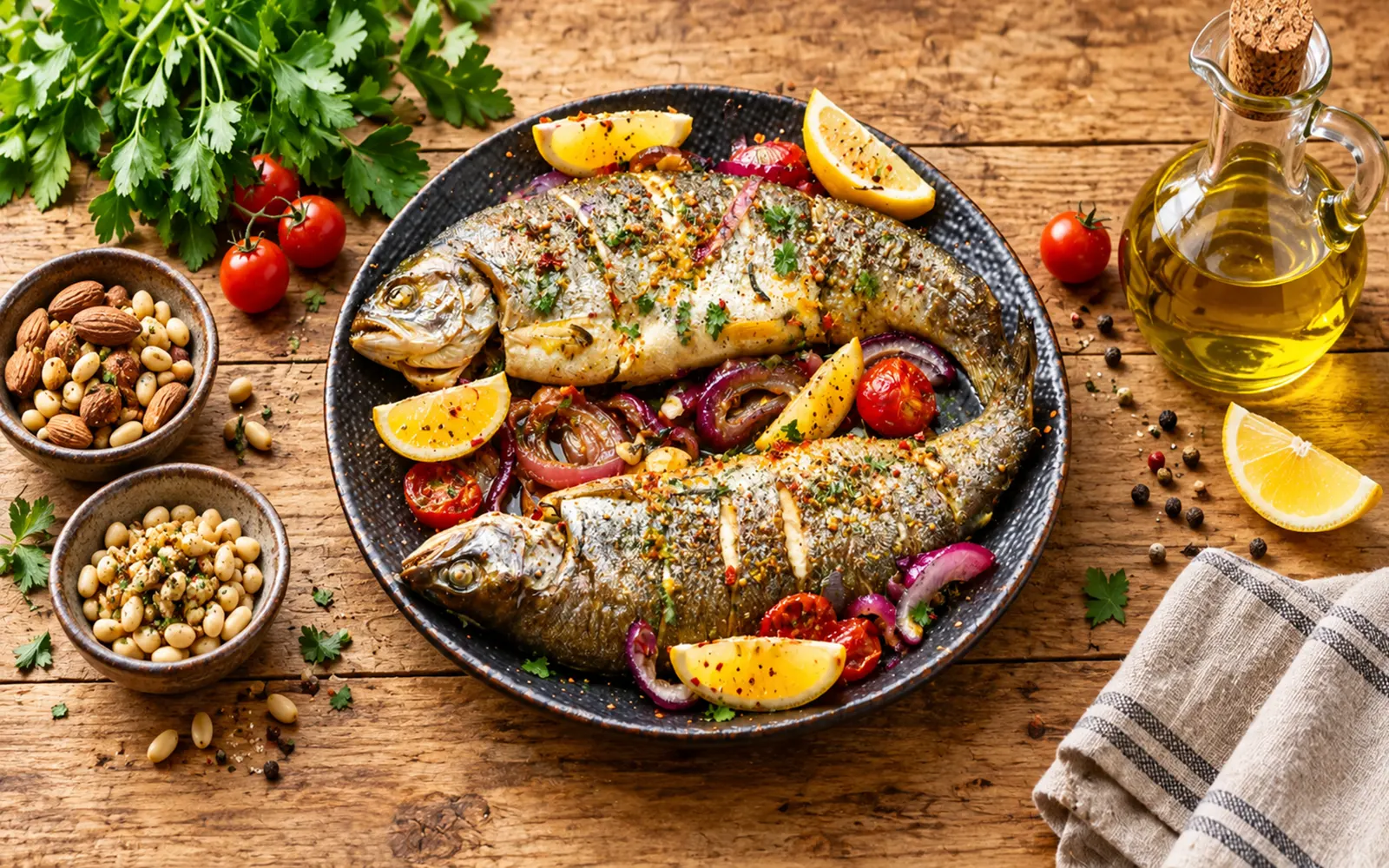
Fatty fish such as salmon, sardines, trout, herring, and mackerel provide the long-chain omega-3 fats EPA and DHA.
These differ from the plant omega-3 ALA found in foods such as walnuts, flaxseed, chia seeds, and certain plant oils.
The body can convert some ALA into EPA and DHA, but conversion is limited. Seafood therefore provides a direct dietary source of EPA and DHA. Office of Dietary Supplements
That does not make plant omega-3 foods unimportant.
They contribute essential ALA and can be part of a nutritious eating pattern.
The useful approach is variety rather than choosing one source and dismissing the others.
What About Omega-6 Fats?
Omega-6 fats sometimes receive a negative reputation because they are involved in biological pathways related to inflammation.
That has led to the idea that omega-6-rich foods should broadly be avoided.
That conclusion is too simple.
Linoleic acid—the main dietary omega-6 fatty acid—is actually essential, meaning the body requires it from food. Office of Dietary Supplements
Foods and oils containing omega-6 fats do not automatically create harmful inflammation simply because an omega-6 fatty acid participates in inflammatory pathways somewhere in human metabolism.
For practical nutrition, there is no need to become preoccupied with calculating an exact omega-6-to-omega-3 ratio.
A more sensible approach is to include sources of omega-3 fats while getting most dietary fat from nutritious foods rather than allowing highly processed foods to dominate the diet.
Saturated Fat Does Not Need to Become a Forbidden Food List
Butter contains saturated fat.
So does cheese.
So does beef.
Coconut oil is high in saturated fat even though it comes from a plant.
That does not mean these foods must disappear.
Current WHO guidance recommends keeping saturated fat below about 10% of total energy intake, and the current U.S. Dietary Guidelines also state that saturated fat generally should not exceed 10% of daily calories. World Health Organization
But most people do not need to calculate percentages at every meal.
A practical approach is easier:
Let unsaturated fats do more of the everyday work.
Use olive or another unsaturated oil frequently.
Eat nuts and seeds.
Include fish.
Choose plant proteins regularly.
Then allow foods containing saturated fat to fit within that broader pattern rather than making them the primary source of fat throughout the day.
For someone with elevated LDL cholesterol or established cardiovascular disease, more specific saturated-fat targets may be appropriate and should be individualized with a clinician or qualified dietitian.
Butter Can Fit—It Just Should Not Be the Only Fat
Butter provides flavor and has legitimate culinary uses.
The question is not whether butter is “good” or “bad.”
Ask instead:
What role does it play in the overall diet?
Butter on toast occasionally is very different from butter being the primary cooking fat at breakfast, lunch, and dinner while the diet contains little fish, nuts, seeds, or plant oils.
A practical household strategy might be:
use olive or another unsaturated oil for much of everyday cooking,
use nuts, seeds, avocado, or nut butter in other meals,
and use butter where its flavor or cooking properties genuinely matter.
That reduces saturated fat without turning eating into deprivation.
Coconut Oil Is Still a Saturated Fat
Coconut oil creates another common point of confusion.
Because it is plant-derived, it is sometimes grouped mentally with olive oil.
Nutritionally, they are very different.
Coconut oil contains a high proportion of saturated fatty acids, while olive oil is predominantly monounsaturated.
That does not make coconut oil forbidden.
It simply means it should not be treated as interchangeable with olive oil when the goal is to favor unsaturated fats.
If you enjoy coconut flavor in a particular dish, it can fit.
For routine everyday cooking, an unsaturated oil is generally the more useful default.
Dairy Is More Than Its Fat Percentage
Milk, yogurt, and cheese contain varying amounts of saturated fat.
But dairy foods also differ in protein, calcium, fermentation, added sugar, sodium, and overall food structure.
That is why reducing nutrition to one component can become misleading.
If someone consumes a great deal of saturated fat or has high LDL cholesterol, switching some dairy choices to lower-fat versions can be an easy way to reduce saturated fat.
On the other hand, a modest amount of full-fat plain yogurt or cheese within an otherwise balanced diet should not automatically be treated as a dietary failure.
Current U.S. guidance has moved toward greater emphasis on whole-food context while still advising that saturated fat generally remain below 10% of daily energy. Real Food
The broader dietary pattern remains more informative than one serving of cheese.
Eggs Are Not Simply “A Fat Food”
Eggs are another food that often gets pulled into discussions about fat.
They contain both fat and dietary cholesterol, but they are not predominantly a source of saturated fat.
Eggs also provide protein and several vitamins, minerals, and other nutrients.
For most people, the more useful question is not whether an egg contains fat.
It is what the overall meal looks like.
Eggs served with vegetables and whole-grain toast are nutritionally different from eggs routinely accompanied by large portions of processed meat, buttered refined bread, and fried potatoes.
Again, food context matters.
Red Meat Depends on the Cut, Amount, and What Replaces It
Red meat can contribute protein, iron, vitamin B12, zinc, and other nutrients.
It can also contribute significant saturated fat, particularly in fattier cuts.
Leaner cuts contain less.
Processed meats introduce additional considerations such as sodium and processing that go beyond fat itself.
A practical approach does not require treating meat as all-or-nothing.
Instead, vary protein sources.
Some meals can use fish.
Others beans or lentils.
Others poultry.
Others tofu.
Nuts and seeds can contribute as well.
Red meat can then occupy a place in the diet without becoming the default protein at nearly every meal.
The current scientific evidence reviewed for U.S. dietary guidance found cardiovascular benefit when some foods higher in saturated fat were replaced with plant proteins, whole grains, vegetables, and foods rich in unsaturated fats. Dietary Guidelines
Fat Does Not Automatically Make You Gain Body Fat
Because dietary fat is energy-dense, it is easy to make a misleading leap:
Eating fat makes you fat.
Human metabolism does not work that simply.
Body-fat gain occurs when energy intake chronically exceeds energy expenditure, regardless of whether that excess ultimately came from fat, carbohydrate, protein, or combinations of foods.
However, fat does contain more than twice the calories per gram of carbohydrate or protein.
That means some fat-rich foods can deliver a large amount of energy in small portions.
A tablespoon of oil is easy to add.
So is another handful of nuts.
So is several spoonfuls of nut butter.
These foods can be nutritious while still contributing meaningful calories.
The lesson is portion awareness, not fear of fat.
You do not have to choose between healthy fats and healthy body weight.
Both can coexist.
Low-Fat Does Not Automatically Mean Healthier
The low-fat era taught an important lesson.
When fat is removed from a food, something often replaces it.
Sometimes that is beneficial.
Sometimes manufacturers add refined starches, sugars, or other ingredients to maintain taste and texture.
A low-fat cookie remains a cookie.
A fat-free dessert does not become nutritionally equivalent to fruit.
A low-fat highly refined snack may still offer little nutritional value.
The FDA eventually removed “calories from fat” from the Nutrition Facts label because the type of fat is more meaningful than simply knowing what proportion of calories came from fat. U.S. Food and Drug Administration
That is a useful principle for shopping:
Do not choose a product just because the front says “low fat.”
Look at the food as a whole.
How to Read the Nutrition Facts Label Without Overthinking It
For packaged foods, the label can still be helpful.
Look first at the serving size so you know what the numbers actually represent.
Then look at:
total fat,
saturated fat,
trans fat,
fiber,
added sugar,
sodium,
and the ingredient list.
You do not need to find the food with the lowest total fat.
A nut butter may contain far more total fat than a low-fat cookie and still be a much more nutritious choice.
Instead, use saturated and trans fat information as part of a broader assessment.
If a food is very high in saturated fat and you eat it frequently, ask whether there is an easy alternative.
If not, simply place it in the context of the rest of your diet.
A Simple Way to Improve the Fat in Your Diet
You do not need to rebuild your meals around nutritional biochemistry.
A few substitutions can shift the overall pattern considerably:
- Use olive oil or another unsaturated plant oil for much of everyday cooking instead of relying mainly on butter, lard, or coconut oil.
- Add nuts or seeds to meals and snacks when they fit rather than treating their fat content as something to avoid.
- Include fish, particularly omega-3-rich fish, as one of several regular protein choices.
- Let beans, lentils, tofu, and other plant proteins replace some higher-saturated-fat meat meals.
- Use avocado, hummus, nuts, seeds, or olive-oil-based dressings as practical sources of richness and flavor.
- Enjoy foods such as butter, cheese, higher-fat meats, and coconut-based dishes in proportions that leave room for plenty of unsaturated-fat sources.
- Do not replace fat with refined carbohydrates and sugary foods simply to make a meal “low fat.”
These are substitutions, not prohibitions.
That distinction makes healthy eating much easier to sustain.
The Best Fat Choice Often Depends on the Meal
Nutrition advice sometimes creates the impression that one cooking fat should win every contest.
Real kitchens do not work that way.
Olive oil may be excellent for roasted vegetables, salad dressing, or sautéing.
Canola or another neutral unsaturated oil may work better when you do not want a strong flavor.
A small amount of butter may be the ingredient that makes a particular recipe work.
Nuts or tahini may provide the fat in another dish.
Fish provides its own naturally occurring fat.
Avocado may provide creaminess without any added oil.
Healthy eating becomes much simpler when you stop searching for one perfect fat and instead build a diet in which the overall balance favors nutritious sources.
What About Highly Processed Foods?
Some of the greatest improvements in dietary fat quality happen naturally when highly processed foods occupy less of the diet.
Pastries, fried snack foods, fast-food meals, certain desserts, and packaged baked products may combine saturated fat with refined starch, added sugar, sodium, and high energy density.
The problem is not always one isolated fat molecule.
It is the complete food.
Current U.S. guidance emphasizes whole and minimally processed nutrient-dense foods as the foundation of eating. Health.gov
This is one reason it can be more useful to ask:
What foods make up most of my diet?
rather than obsessing over whether one ingredient is permitted.
You Do Not Need a Perfect Fat Ratio
Nutrition becomes unnecessarily difficult when every meal turns into arithmetic.
How much omega-3?
How much omega-6?
What percentage monounsaturated?
Exactly how many grams saturated?
For people managing particular health conditions, tracking may sometimes be useful.
For most healthy adults, food-level choices can accomplish much of the same goal with far less mental effort.
If your diet regularly includes:
vegetables and fruits,
whole grains,
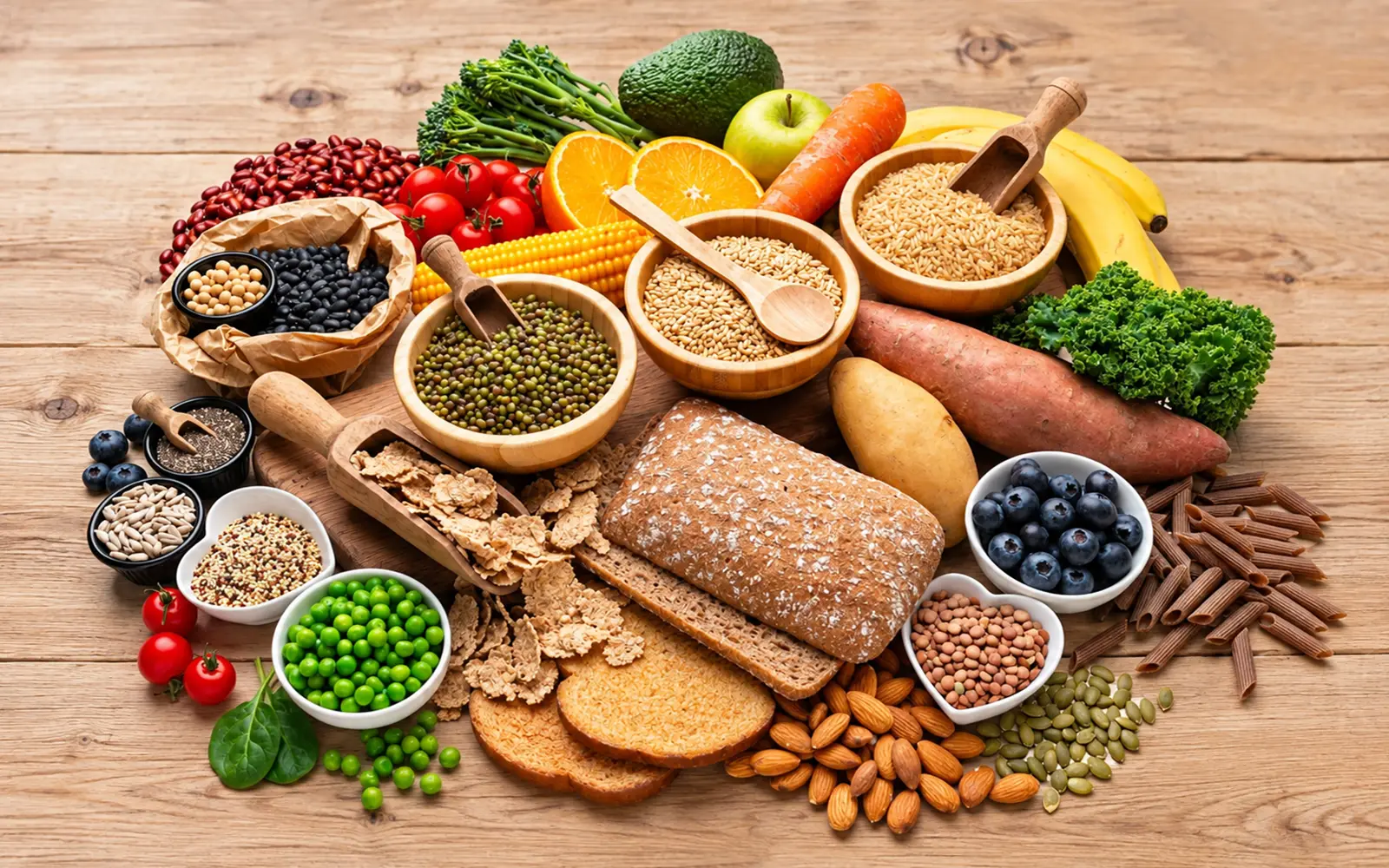
beans and other legumes,
nuts and seeds,
fish or other nutritious protein sources,
olive oil or other unsaturated fats,
and relatively fewer foods dominated by saturated fat, industrial trans fat, refined carbohydrates, and heavy processing,
you are already applying the central principle.
The numbers exist to guide the pattern.
They do not need to become the pattern.
The Takeaway Is Not “Fat Is Good”
Nutrition often swings from one extreme to another.
For years:
Fat is bad.
Then:
Fat is good.
Neither statement is very useful.
Dietary fat is a category containing many fatty acids carried in many different foods.
Some fats are essential.
Some foods rich in fat are highly nutritious.
Some types of fat are better choices for regular use than others.
Some fat-rich foods are easy to overconsume because they are extremely energy-dense.
And some industrial fats have clear health disadvantages.
The useful conclusion is more balanced:
Fat belongs in a healthy diet, but the source and type matter.
Build Meals Around Better Sources, Not Restrictions
A practical approach to dietary fat can be remarkably uncomplicated.
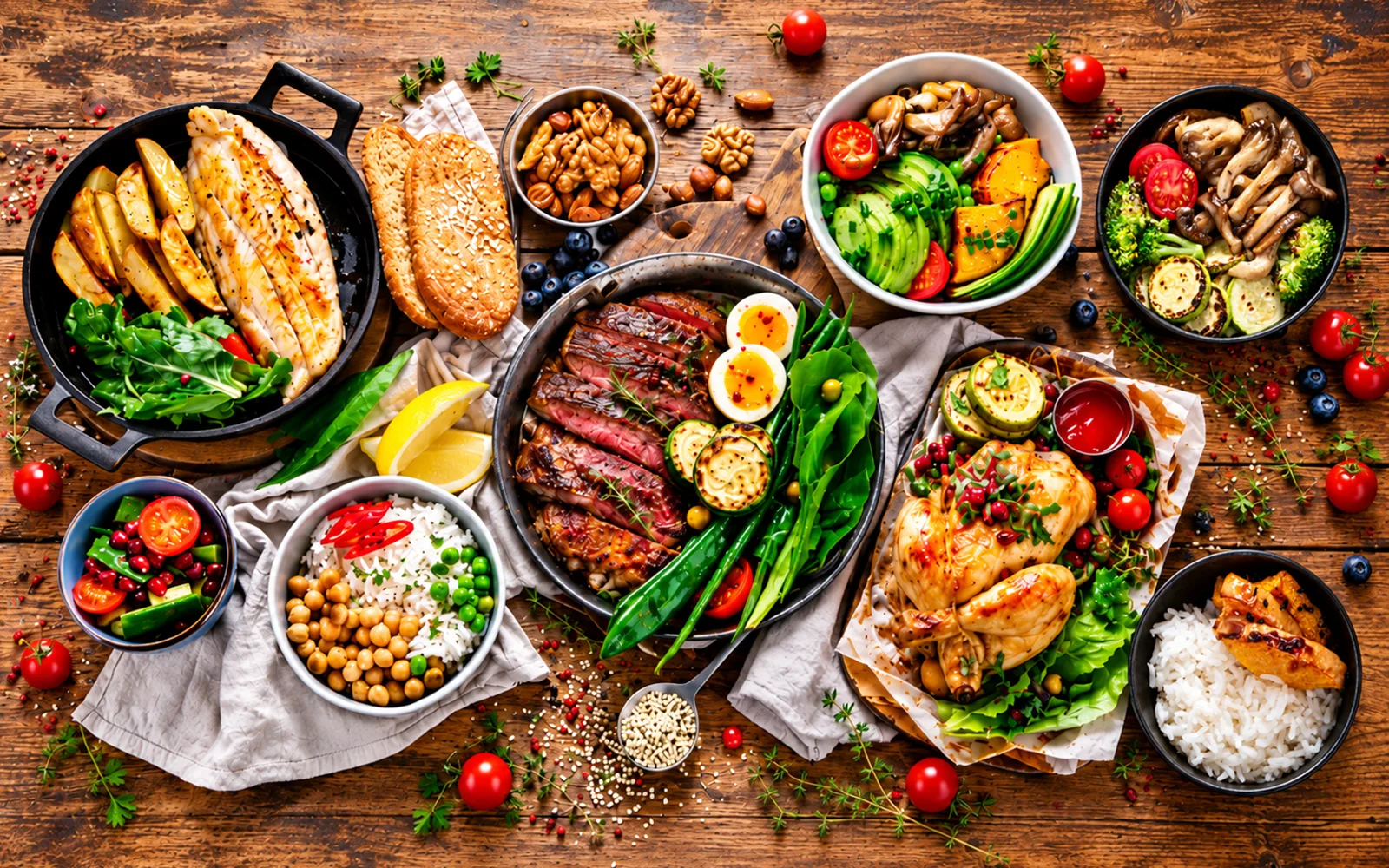
Put vegetables on the plate.
Choose a useful source of protein.
Include whole grains or other fiber-rich carbohydrates where they fit.
Then allow healthy sources of fat to make the meal satisfying.
Olive oil over vegetables.
Nuts in oatmeal.
Seeds in yogurt.
Avocado with beans.
Salmon with whole grains and greens.
Tahini with roasted vegetables.
Peanut or almond butter with fruit.
These foods do more than add fat.
They contribute flavor, texture, nutrients, and satisfaction.
That is an important part of healthy eating too.
A diet that is nutritionally sound but unpleasant is unlikely to remain anyone’s diet for long.
The Practical Bottom Line
You do not need to fear dietary fat.
You also do not need to add fat to everything simply because certain fats are considered healthy.
The most useful strategy is to improve the balance of the fats already present in your diet.
Favor foods rich in unsaturated fats.
Include omega-3 sources.
Keep saturated fat in proportion rather than making it the dominant form of fat.
Avoid industrial trans fat.
Remember that the whole food matters.
And most importantly, think in terms of replacement.
Replacing butter with olive oil is different from simply removing butter.
Replacing some fatty meat with salmon, beans, or nuts changes more than the fat profile.
Replacing a highly processed snack with nuts changes the entire nutritional package.
Those are the choices that accumulate over time.
Dietary fat is not something the body needs us to eliminate. It is something the body needs us to choose wisely.
Once that principle is understood, the subject becomes much less confusing.
Instead of asking, “Is fat good or bad?”
A better question is:
“Where is most of my fat coming from—and is there an easy way to make some of those sources better?”
That is a question we can actually use at the grocery store, in the kitchen, and at the table.
Nutrition and Health Disclaimer
This article is intended for general educational purposes and is not individualized medical or nutritional advice. Dietary-fat needs and recommendations may differ for people with cardiovascular disease, high LDL cholesterol, diabetes, gallbladder or pancreatic disorders, fat-malabsorption conditions, certain genetic lipid disorders, or other medical concerns. Individual treatment goals should be discussed with an appropriate healthcare professional or registered dietitian.