



















Hydration has become surprisingly complicated for something the human body has managed for a very long time.
Carry a gallon jug.
Drink eight glasses.
Add electrolytes.
Avoid plain water during exercise.
Buy alkaline water.
Use a hydration powder every morning.
Replace sodium after every workout.
Social media and beverage marketing can make ordinary hydration sound like a daily chemistry experiment.
For most people, it does not need to be.
Water should provide the foundation of everyday hydration. Most of the electrolytes we need come naturally from the foods we eat. Electrolyte drinks become more useful when fluid and salt losses are unusually high—such as during prolonged exercise, heavy sweating, hot conditions, or significant gastrointestinal illness.
The challenge is not finding one perfect amount of water that applies to everyone.
It is learning when ordinary drinking is enough and when circumstances change what the body needs.
Why Water Matters So Much
Water is involved in virtually every system in the body.
It helps regulate temperature, supports circulation, transports nutrients and metabolic products, lubricates joints, protects tissues, assists digestion and bowel function, and allows the kidneys to remove waste.
The CDC notes that adequate water helps the body maintain normal temperature, cushion joints, protect sensitive tissues, and eliminate waste through urine, perspiration, and bowel movements.
We continually lose water through:
breathing,
urine,
bowel movements,
and evaporation from the skin.
Exercise and heat can increase those losses dramatically through sweat.
The purpose of drinking is therefore not to accumulate as much water as possible.
It is to replace enough of what the body loses to keep its internal fluid environment within a healthy range.
How Much Water Do We Actually Need?
This is where one of the most persistent hydration misunderstandings begins.
There is no universal requirement that every adult drink eight glasses of plain water every day.
The National Academies established an Adequate Intake for total water of approximately:
3.7 liters per day for adult men
and
2.7 liters per day for adult women.
But those numbers include all water from beverages and food, not just glasses of plain water. In the dietary data used to establish the recommendations, approximately 19% of total water came from food.
That translates roughly to around 3.0 liters of beverages per day for men and 2.2 liters for women under the conditions represented in those population data.
Even those amounts should not be interpreted as precise personal prescriptions.
The National Academies explicitly notes that healthy people can maintain normal hydration across a considerable range of water intakes and that the Adequate Intake is not a minimum requirement that every person must hit exactly each day.
A person who is small and sedentary in a cool environment may need less.
Someone working outdoors in summer or exercising intensely may need far more.
“Good hydration is not about drinking the most water or adding electrolytes to everything. It is about giving the body the right amount of fluid—and the right minerals—when circumstances actually call for them.”
Your Food Is Helping Hydrate You Too
Hydration does not come only from a bottle.
Many foods contain substantial amounts of water.
Fruit.
Vegetables.
Soups.
Yogurt.
Milk.
Oatmeal.
Beans.
Cooked grains.
Even foods we do not think of as especially watery contribute something to total intake.
This means someone eating plenty of fruits, vegetables, soups, and other water-rich foods may obtain more fluid from meals than someone eating a relatively dry diet.
It also explains why drinking recommendations should not be separated completely from food.
Hydration is part of nutrition.
Do We Need to Count Every Ounce?
For most healthy adults living ordinary lives, probably not.
The body has a sophisticated system for regulating fluid balance.
Changes in blood concentration and volume are detected by the brain and other systems. Hormones influence how much water the kidneys conserve. Thirst encourages drinking when water availability begins to fall.
The National Academies concluded that for the vast majority of healthy people, thirst and normal beverage consumption with meals are generally sufficient to maintain hydration under everyday conditions.
That gives us a much more practical starting point than carrying a calculator:
Drink when you are thirsty.
Have fluids with meals.
Drink more when circumstances increase your losses.
Pay more deliberate attention if age, heat, exercise, illness, or medication makes thirst a less reliable guide.
Hydration should be responsive rather than obsessive.
When Water Needs Increase
Your fluid needs can rise substantially without anything being wrong.
The CDC specifically identifies several situations in which the body may need more water:
hot weather,
greater physical activity,
fever,
vomiting,
and diarrhea.
Pregnancy and breastfeeding also change total water requirements.
Altitude, very dry environments, heavy protective clothing, and long periods of outdoor work can increase water loss as well.
This is why there is no meaningful answer to the question “How much water should everyone drink?”
The useful question is:
How much am I losing today?
What Are Electrolytes?
Water is only part of the fluid-balance story.
Body fluids also contain electrically charged minerals known as electrolytes.
Important electrolytes include:
sodium,
potassium,
chloride,
magnesium,
and calcium.
They participate in fluid balance, nerve signaling, muscle contraction, normal heart rhythm, and many metabolic processes.
For example, potassium is essential for normal cellular function, nerve transmission, and muscle contraction. Magnesium participates in hundreds of biochemical reactions and helps regulate movement of calcium and potassium across cell membranes.
Electrolytes are essential.
That does not mean we ordinarily need to drink them from a bottle.
Most Electrolytes Come From Food
On an ordinary day, meals do most of the electrolyte replacement for us.
Sodium comes from salt and many foods.
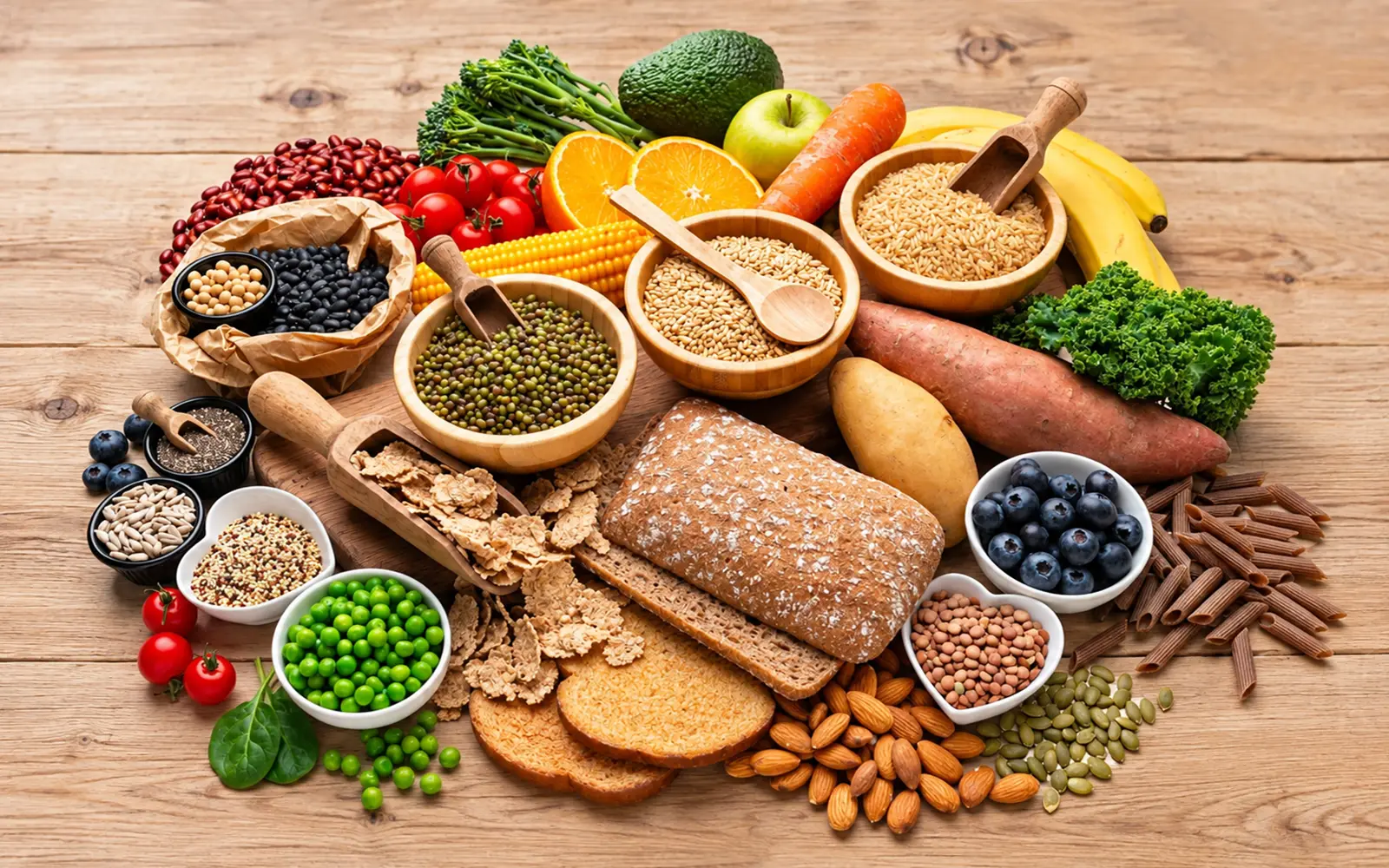
Potassium is abundant in foods such as potatoes, beans, lentils, fruits, vegetables, dairy products, and some fish.
Magnesium occurs in nuts, seeds, legumes, whole grains, and leafy vegetables.
Calcium can come from dairy foods, fortified alternatives, some greens, canned fish with bones, and other sources.
A person eating an adequate, varied diet usually receives these minerals repeatedly throughout the day.
That means someone sitting at a desk, walking around town, or doing a moderate gym workout generally does not need an electrolyte beverage merely because electrolytes are physiologically important.
Essential does not mean we need to supplement it every few hours.
Sodium Is the Electrolyte We Lose Most Through Sweat
Exercise changes the situation because sweat contains both water and electrolytes.
Sodium and chloride are the primary electrolytes lost in meaningful quantities through sweat, although potassium and smaller amounts of other minerals are also present.
Sweat losses vary enormously.
Some people sweat relatively little.
Others can soak through their clothing during the same activity.
Sweat sodium concentration varies too.
Some athletes finish with obvious white salt marks on clothing or skin.
Others lose considerably less salt.
Temperature, humidity, exercise intensity, body size, genetics, heat acclimatization, and individual physiology all influence the picture.
This is why sports hydration recommendations increasingly emphasize individual fluid and sodium losses rather than one formula for everyone.
For Ordinary Exercise, Water Is Usually Enough
This is one of the clearest practical takeaways.
If you are taking a walk, doing an ordinary gym workout, cycling recreationally, or exercising for less than about an hour under moderate conditions, plain water is generally sufficient.
The National Athletic Trainers’ Association states that as a general rule, physical activity lasting less than one hour does not require anything beyond water.
That means the average 30- or 45-minute workout does not automatically require:
an electrolyte packet,
a sports drink,
a sodium capsule,
or a specialized hydration formula.
If you start reasonably hydrated, drink according to thirst, and eat normal meals afterward, the body can usually restore both fluid and electrolytes without special intervention.
When Electrolytes Begin to Make More Sense
The picture changes when sweat loss becomes substantial.
Electrolyte-containing fluids can become useful during:
- prolonged exercise, particularly sessions extending beyond roughly an hour;
- intense exercise with substantial sweating, even when duration is somewhat shorter;
- hot or humid conditions, where sweat losses can rise dramatically;
- long-distance endurance events, particularly those lasting several hours;
- repeated workouts or competitions, when recovery time is short;
- heavy occupational sweating, such as prolonged outdoor physical work;
- situations in which someone knows they lose unusually large amounts of sodium in sweat.
For prolonged or intense exercise, beverages containing both carbohydrate and electrolytes can support fluid replacement while also supplying fuel.
This is when a sports drink or electrolyte beverage becomes a functional tool rather than simply flavored water.
The Longer and Hotter the Exercise, the More Individual Hydration Becomes
Consider two people who exercise for 30 minutes indoors.
Their hydration requirements may be relatively simple.
Now consider two people running for three hours in summer.
One loses 0.6 liters of sweat per hour.
The other loses 1.5 liters.
One has relatively low sodium concentration in sweat.
The other finishes covered with visible salt crystals.
Giving those two people exactly the same hydration instructions makes little sense.
For athletes and very active people, one practical method of estimating sweat loss is to compare body weight before and after a representative training session while accounting for fluids consumed.
If someone repeatedly loses substantial body mass during long workouts, greater fluid replacement may be appropriate.
If body weight actually increases during a long event, that can indicate excessive drinking.
That distinction is important because both too little and too much fluid can create problems.
More Water Is Not Always Better
Hydration advice sometimes assumes that if a little water is good, a great deal must be better.
The body does not work that way.
Drinking far more fluid than the body can excrete can dilute blood sodium and lead to hyponatremia.
During endurance events this is known as exercise-associated hyponatremia.
It has occurred in marathon runners and other endurance athletes who consumed fluids faster than they lost them.
And importantly, drinking a sports drink does not make overdrinking safe. Sports drinks are still largely water and are generally not concentrated enough to prevent dilution if consumed excessively.
The National Athletic Trainers’ Association specifically advises athletes not to gain body weight during exercise through excessive drinking.
The goal is not maximum hydration.
It is appropriate hydration.
You Do Not Have to Replace Every Drop of Sweat Immediately
Another misconception is that every ounce lost must be replaced the moment it leaves the body.
During ordinary activity, that is unnecessary.
Humans routinely tolerate modest temporary changes in body water.
For long or competitive exercise, preventing large fluid deficits can help maintain cardiovascular function, temperature regulation, and performance.
But replacement does not have to become a drop-for-drop obsession during every workout.
For most recreational activity, thirst, access to fluid, normal meals, and post-exercise drinking work well.
More precise strategies become relevant as exercise duration, heat exposure, sweat losses, or performance demands increase.
After Exercise, Food Can Be Part of Rehydration
Suppose you finish a moderately long workout sweaty and thirsty.
You do not necessarily need to replace everything with an electrolyte beverage.
A meal plus water can accomplish a great deal.
Food supplies sodium, potassium, carbohydrate, protein, and other nutrients while water restores fluid.
A sandwich and water.
Yogurt, fruit, and water.
Rice, vegetables, and chicken.
Beans with a meal and something to drink.
Soup.
These combinations supply both fluid and electrolytes.
For most people who have time to eat normally after exercise, rehydration does not have to come entirely from a sports bottle.
Electrolyte drinks are especially useful when recovery has to happen rapidly, the person has lost a great deal of sweat, appetite is limited, or another strenuous session is coming soon.
Sports Drinks Have a Purpose—But the Purpose Matters
Sports drinks are sometimes treated as either essential health products or sugary beverages that nobody should ever drink.
Both descriptions are too simplistic.
During prolonged exercise, carbohydrate in a sports drink can provide usable fuel while sodium helps replace sweat losses and can support fluid retention and palatability.
In that setting, sugar is not simply an unwanted ingredient.
It can be part of the product’s purpose.
But the same beverage consumed while sitting at a desk performs a very different nutritional role.
For someone who is not losing substantial fluid or energy through activity, a sugary sports drink may simply add calories and added sugar that are not needed.
The CDC lists sports drinks among sugar-sweetened beverages that generally provide calories without being necessary for routine hydration.
Context changes the answer.
A beverage designed for a two-hour run does not automatically make sense for a two-hour meeting.
Electrolyte Powders Are Not Automatically Better Than Water
The same principle applies to the rapidly expanding market for electrolyte powders and tablets.
Some contain mostly sodium.
Others include potassium and magnesium.
Some contain carbohydrate.
Others use noncaloric sweeteners.
Some are formulated for endurance athletes.
Others are marketed simply as everyday wellness products.
There is nothing inherently wrong with using one.
But the useful question is:
What loss am I trying to replace?
If you have not been sweating heavily, vomiting, experiencing diarrhea, or facing another reason for substantial fluid and electrolyte loss, your regular food may already be doing the job.
Adding electrolytes to every glass of water does not create a superior form of hydration for everyone.
“Salty Sweaters” May Need More Sodium
Some people genuinely lose much more sodium in sweat than others.
Clues can include:
very salty-tasting sweat,
white salt deposits on clothing,
frequent prolonged exercise in heat,
and large sweat volumes.
Athletes with particularly high sweat rates and high sweat-sodium concentrations may benefit from more deliberate sodium replacement during long-duration activity. NATA specifically notes that unusually high sweat sodium concentration combined with very high sweat rates can justify individualized supplementation.
That does not mean everyone who sweats should begin adding large quantities of salt.
For the general population, excessive sodium intake remains an important cardiovascular concern.
The National Academies recommends reducing sodium intake when it exceeds 2,300 mg per day for generally healthy adults because reductions from higher intake levels are expected to reduce cardiovascular and hypertension risk.
This apparent contradiction disappears when we consider context.
Someone losing large quantities of sodium through hours of sweating has different short-term needs from someone consuming a high-sodium diet while largely sedentary.
Nutrition rarely works well when special circumstances are turned into universal rules.
Potassium and Magnesium Are Important—But Usually Not Urgent Workout Replacements
Electrolyte marketing often highlights potassium and magnesium alongside sodium.
Both are physiologically important.
But that does not mean significant amounts must be consumed during every workout.
Sweat losses of sodium are generally more consequential during prolonged exercise, while potassium and magnesium needs are ordinarily better addressed through the overall diet.
Potassium-rich foods include beans, lentils, potatoes, fruits, vegetables, dairy foods, and fish.
Magnesium-rich foods include nuts, seeds, legumes, whole grains, and leafy vegetables.
The National Academies’ Adequate Intake for potassium is 3,400 mg per day for adult men and 2,600 mg for adult women, reflecting the importance of obtaining potassium through the overall diet.
For most people, improving food quality is a more meaningful potassium strategy than searching for a sports drink containing a few hundred milligrams.
Electrolytes Are Not a Guaranteed Cure for Muscle Cramps
Muscle cramps are commonly blamed on dehydration or electrolyte loss.
Sometimes fluid and sodium losses may contribute, particularly during prolonged activity in heat.
But research does not support the idea that exercise-associated cramps are simply the result of being low in electrolytes.
A 2026 systematic review found that prior history of cramping was the clearest predictor of future exercise-associated cramps, while hydration and electrolyte measures did not show consistent relationships.
Earlier evidence likewise suggests that fatigue and altered neuromuscular control often play important roles.
So if someone repeatedly cramps during exercise, automatically drinking more electrolyte solution may not solve the problem.
Training load, fatigue, conditioning, pacing, heat, individual susceptibility, and other factors also deserve attention.
Hydration matters.
It simply does not explain every cramp.
Illness Is Different From Exercise
Electrolyte replacement becomes particularly important when fluid is being lost rapidly through vomiting or diarrhea.
In this situation, the body is losing both water and dissolved minerals.
For mild gastrointestinal illness, adults may be able to maintain hydration with water, broths, and other fluids.
When losses become substantial, oral rehydration solutions, or ORS, can be especially useful.
ORS is deliberately formulated with glucose and electrolytes in proportions designed to promote water and sodium absorption in the intestine.
The World Health Organization describes oral rehydration solution as an effective treatment for dehydration caused by diarrhea, using the intestine’s ability to absorb glucose and sodium together to improve fluid absorption.
This is not the same purpose as a sports drink.
Sports Drinks and Oral Rehydration Solutions Are Not Interchangeable
Sports drinks are formulated primarily for physical activity.
Oral rehydration solutions are formulated for clinical fluid replacement.
That distinction matters.
The CDC specifically notes that during severe diarrheal illness, properly formulated oral rehydration solutions replace losses more appropriately than ordinary sports drinks.
Sports drinks generally contain less sodium and often more sugar than a clinical ORS formulation.
For an athlete, that carbohydrate may be useful fuel.
For someone losing large quantities of fluid through diarrhea, the physiological problem is different.
The right drink depends on why hydration has been lost.
Older Adults Need to Be More Deliberate About Hydration
Hydration deserves particular attention later in life.
The sense of thirst can become less pronounced with age, and older adults are more likely to take medications or have health conditions that affect fluid balance.
During hot weather, the CDC specifically advises adults age 65 and older to drink more water than usual and not wait until they feel thirsty.
That creates an important exception to the simple “drink to thirst” rule.
For many younger, healthy adults under ordinary conditions, thirst works remarkably well.
For older adults—particularly during heat—regular fluid intake may need to become a deliberate habit.
Keeping water nearby, drinking with meals, having fluids between meals, and eating water-rich foods can make adequate intake easier.
At the same time, some people with heart failure, kidney disease, or other conditions may be instructed to restrict fluid.
Those medical instructions take priority over general hydration advice.
Coffee and Tea Still Count as Fluid
Another persistent misconception is that coffee and tea automatically dehydrate you.
Caffeine can temporarily increase urine production, particularly in people unaccustomed to it.
But moderate caffeine consumption does not appear to create a net body-water deficit in people who consume caffeinated beverages regularly.
The CDC includes plain coffee and tea among low-calorie beverage choices that can contribute to daily fluid intake.
That does not mean coffee should replace every glass of water.
It means the cup of coffee at breakfast does not somehow subtract fluid from your daily total.
A Practical Hydration Strategy for Most People
Hydration becomes much easier when the advice is matched to the situation.
For most healthy adults, a sensible approach is:
- On an ordinary day: Let water be your main beverage, drink with meals and in response to thirst, and remember that food contributes fluid too.
- During ordinary exercise lasting less than about an hour: Water is generally enough.
- During prolonged or intense exercise, especially in heat: Drink according to your losses and consider electrolytes—particularly sodium—and carbohydrate when appropriate.
- After heavy sweating: Water plus an ordinary meal can replace both fluid and electrolytes for many people; use a specialized beverage when losses are large or rapid recovery is important.
- During significant vomiting or diarrhea: Replace both fluids and electrolytes; use an appropriate oral rehydration solution when losses are substantial rather than assuming a sports drink is equivalent.
- During hot weather, especially in older adulthood: Drink proactively rather than relying exclusively on thirst.
- Do not force excessive fluid: Drinking beyond your body’s losses provides no added benefit and can become dangerous.
That is enough guidance for most daily situations.
Hydration should make life easier, not turn drinking into another health metric that must be optimized every hour.
How Can You Tell Whether You Are Drinking Enough?
No single home measure is perfect.
Thirst is useful under ordinary circumstances.
How frequently you are urinating provides some information.
Urine that remains persistently very dark and concentrated can accompany dehydration, although vitamins, medications, foods, and medical conditions can also change urine color.
Feeling unusually thirsty, dry-mouthed, lightheaded, fatigued, or overheated can also occur with fluid deficit—but those symptoms have many other possible causes.
For athletes, body-weight changes before and after repeated training sessions can provide a more useful estimate of exercise-related fluid loss.
For everyday life, there is generally no need to monitor hydration with laboratory precision.
If you drink regularly, respond to thirst, adjust for heat and exercise, and are not experiencing persistent signs of dehydration, the body’s regulatory systems usually do the rest.
Hydration Does Not Have to Become a Wellness Competition
There is a cultural tendency to turn ordinary physiological needs into performance goals.
More steps.
More protein.
More sleep score.
More water.
But drinking four liters is not inherently healthier than drinking three.
Clear urine all day is not a medal.
An expensive electrolyte drink is not evidence of superior hydration.
The body is trying to maintain balance, not win a drinking contest.
That is perhaps the most useful way to think about hydration:
Drink enough to replace what you are losing—not as much as you can tolerate.
When Water Is Enough—and When It Is Not
The answer to our original question can now be surprisingly concise.
Most days, water plus an ordinary nutritious diet is enough.
Your food supplies electrolytes.
Your thirst system helps regulate intake.
Your kidneys adjust water and electrolyte excretion.
You do not need to micromanage the process.
Electrolyte replacement becomes increasingly useful when the situation moves away from ordinary life:
long-duration exercise,
heavy sweating,
high heat,
rapid repeated training,
or significant fluid losses from illness.
And in those situations, the type of electrolyte replacement should match the type of loss.
A sports drink can be useful during prolonged exercise.
An ordinary meal can restore electrolytes after a moderate workout.
An oral rehydration solution is more appropriate for significant gastrointestinal fluid loss.
Different problems require different solutions.
Good hydration is not about drinking the most water or adding electrolytes to everything. It is about giving the body the right amount of fluid—and the right minerals—when circumstances actually call for them.
Once that distinction is understood, hydration becomes much simpler.
Water remains the everyday foundation.
Food supplies most electrolytes.
And specialized hydration becomes a useful tool when the body is genuinely losing more than ordinary food and water can conveniently replace.
Nutrition and Health Disclaimer
This article is intended for general educational purposes and is not individualized medical, nutrition, or exercise advice. Fluid and electrolyte needs can change substantially with kidney disease, heart failure, liver disease, endocrine disorders, medications, pregnancy, gastrointestinal illness, prolonged exercise, and other health conditions. People who have been instructed to restrict fluids, sodium, potassium, or other electrolytes should follow their healthcare professional’s guidance rather than general hydration recommendations. Severe dehydration, confusion, fainting, persistent vomiting or diarrhea, inability to keep fluids down, or symptoms of heat illness require appropriate medical attention.