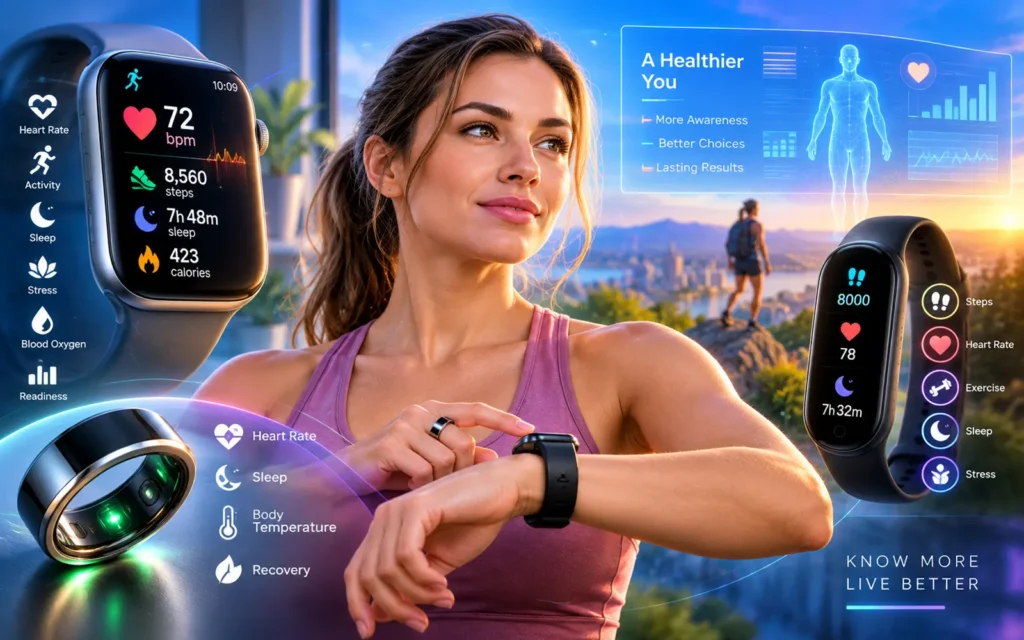















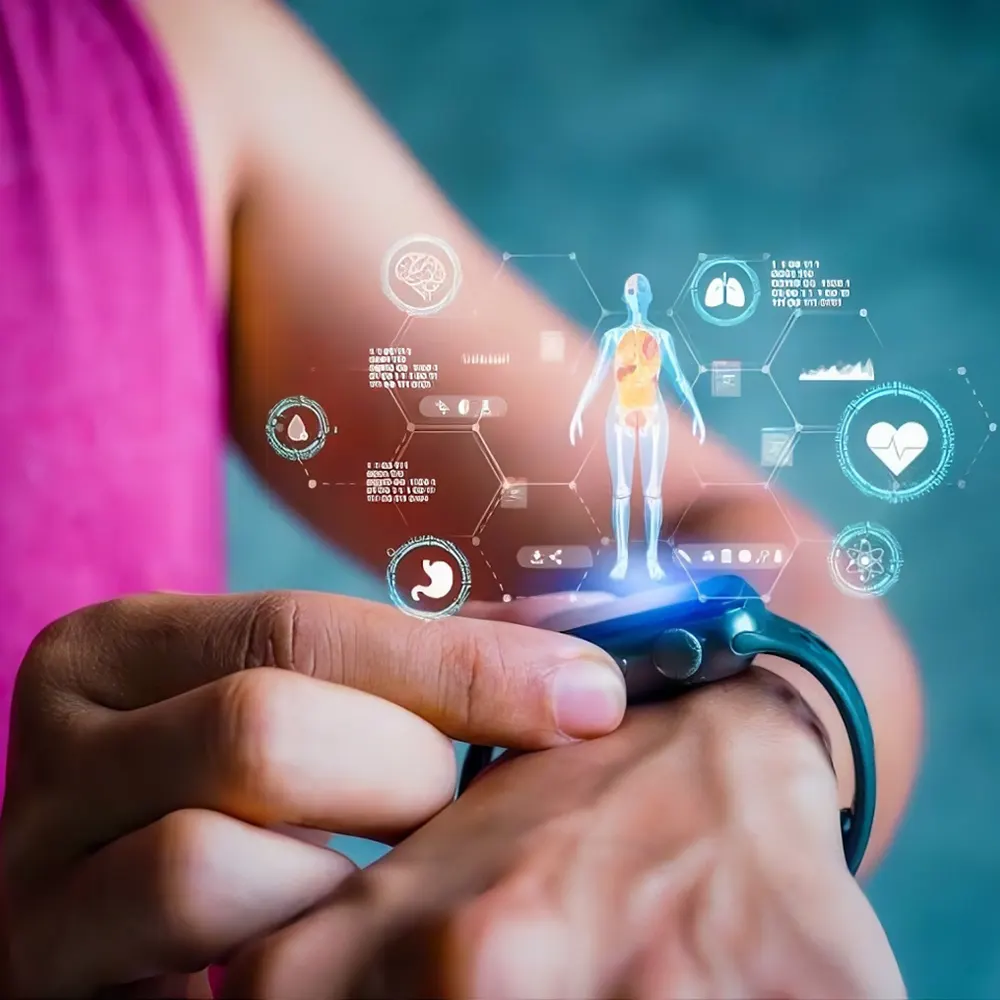
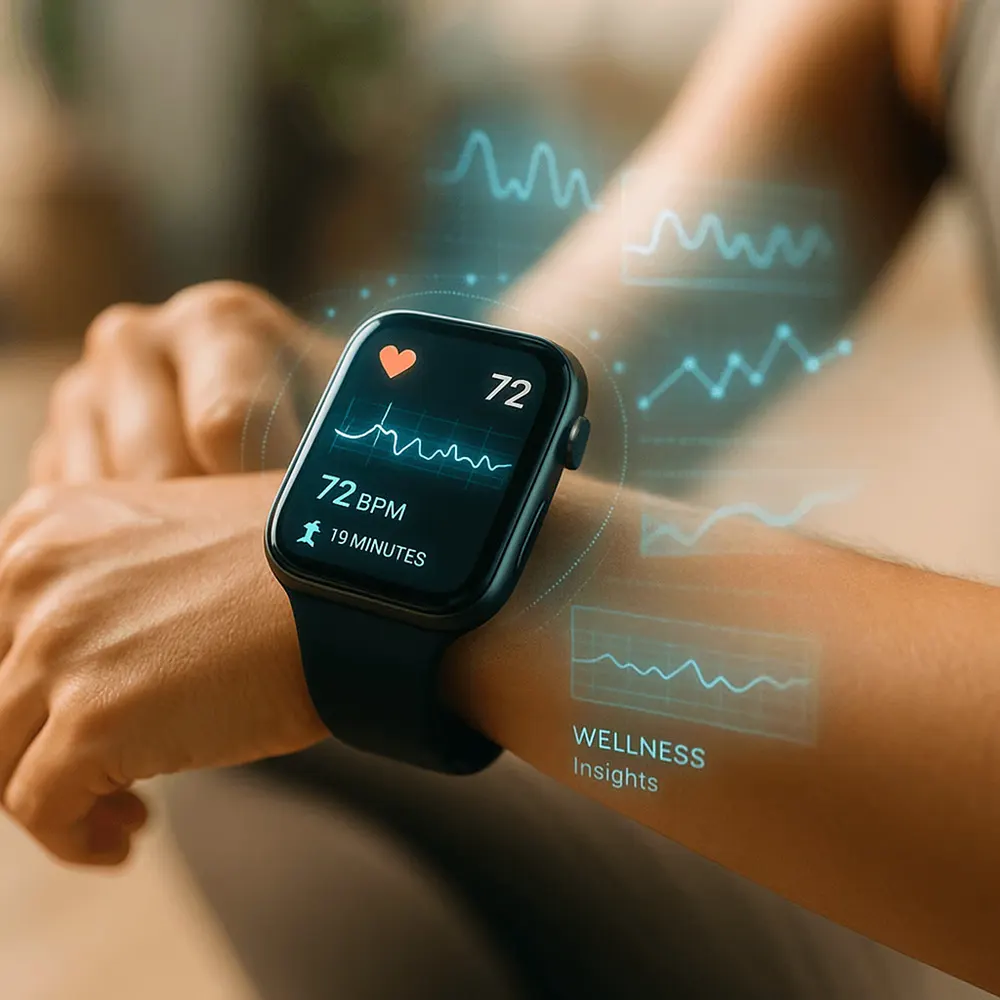
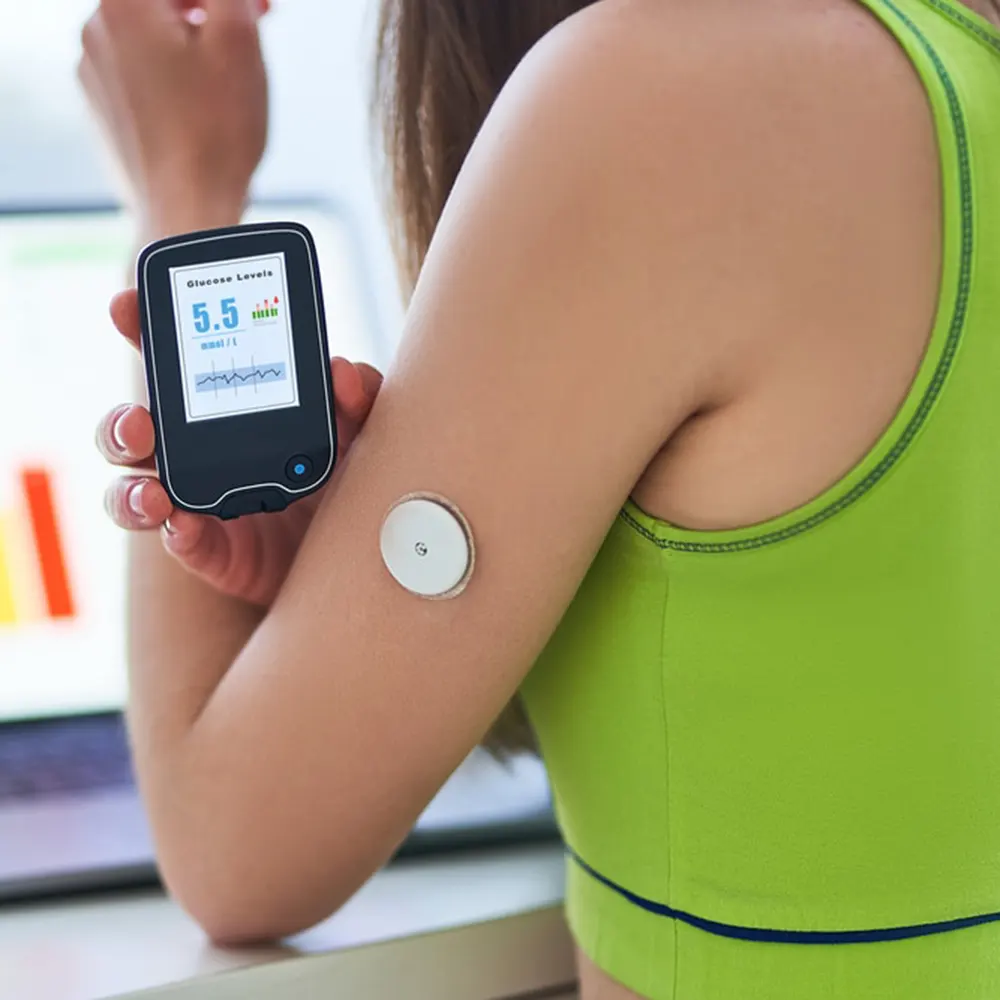
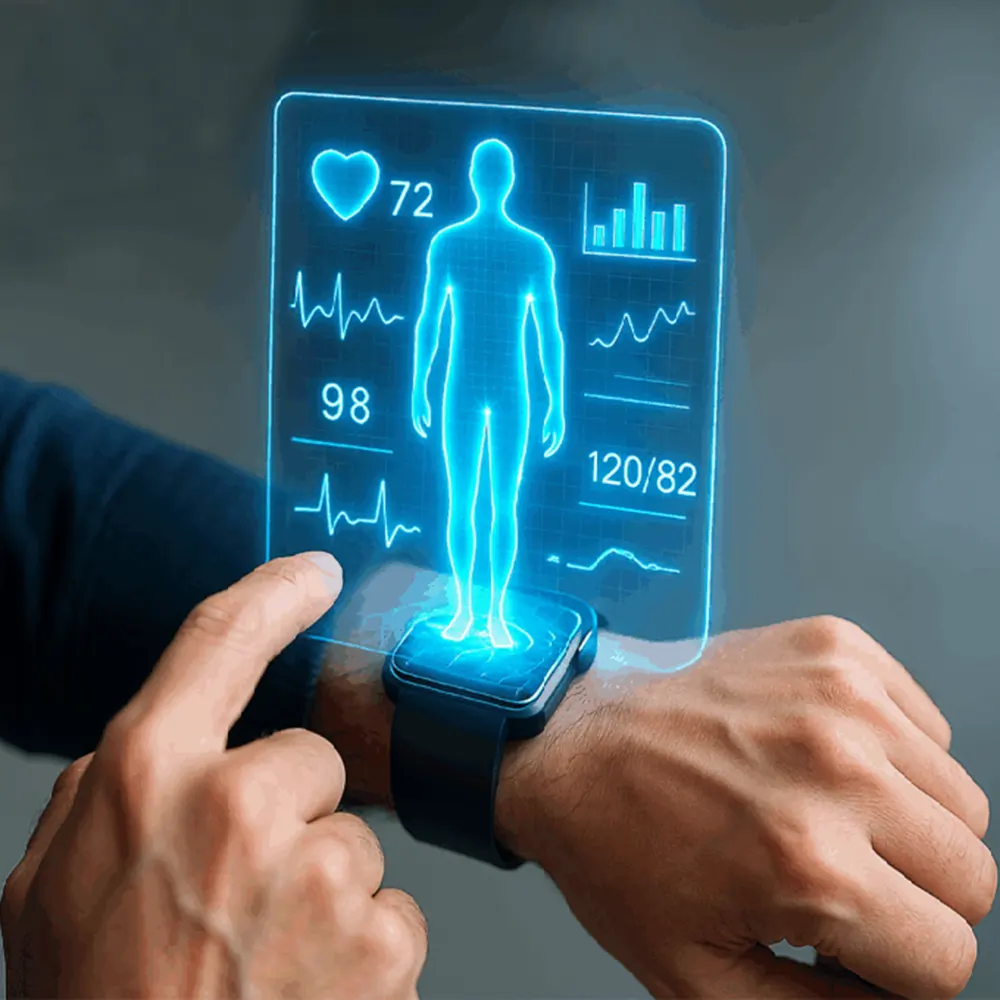
Your watch says you slept 7 hours and 18 minutes.
It counted 8,642 steps.
Your resting heart rate was 58.
You burned 2,317 calories.
Your blood oxygen level was 97 percent.
Your stress score was elevated.
Your recovery score says you are only 63 percent ready for the day.
Presented together on the same screen, all of these numbers can look equally authoritative.
They are not.
Some are closely connected to physical signals the device actually detected. Others are calculated from those signals. Still others are higher-level interpretations created by algorithms combining several measurements with assumptions about physiology, behavior, and sometimes your personal history.
That distinction may be the single most important thing to understand about wearable technology.
A smartwatch, fitness tracker, or smart ring does not literally observe your sleep, stress, fitness, recovery, or calories.
It observes signals.
Software then decides what those signals probably mean.
That does not make wearable data useless. Far from it. Modern wearables can provide remarkable amounts of information outside a laboratory, continuously and with little effort from the person wearing them.
But to use that information intelligently, we need to know where measurement ends and estimation begins.
Your Wearable Is a Sensor Platform Before It Is a Health Expert
Underneath the polished dashboards and colorful scores, a wearable begins with hardware.
Depending on the device, it may contain optical sensors, accelerometers, gyroscopes, temperature sensors, electrodes, GPS receivers, barometers, electrodermal sensors, or combinations of them.
These sensors respond to physical phenomena.
An accelerometer detects changes in movement and acceleration.
A temperature sensor detects temperature at or near the skin.
Electrodes in some smartwatches can detect electrical potential across the body to generate a limited electrocardiographic signal.
Optical sensors shine light into the skin and detect changes in reflected light as blood volume changes with each pulse.
That optical method is known as photoplethysmography, or PPG. It is one of the foundational sensing technologies in modern wrist- and finger-worn devices. The raw PPG signal reflects pulsatile changes in blood volume, from which pulse rate and other cardiovascular information can be derived.
The important word is derived.
Even something as familiar as heart rate may already involve signal processing.
The wearable detects a pulse waveform, filters noise, identifies repeating peaks or frequencies, and calculates a rate.
By the time the display says 72 beats per minute, several computational steps may already have occurred.
There Are Different Layers Between Your Body and the Number on the Screen
A useful way to understand wearables is to imagine three layers.
- Sensor signals: movement, reflected light, electrical voltage, temperature, skin conductance, pressure, location, or altitude-related signals collected by the hardware.
- Derived measurements: heart rate, step count, respiratory rate, estimated oxygen saturation, distance, sleep/wake periods, or similar values produced by processing one or more sensor signals.
- Interpretive estimates: calories burned, sleep stages, VO₂ max, stress, recovery, readiness, training load, or other higher-level scores created by algorithms that combine data with physiological models and assumptions.
The farther a number moves from the original sensor signal, the more opportunities there are for uncertainty to enter.
That does not automatically make higher-level estimates poor.
It simply means they answer a different question.
A heart-rate reading may be asking, How frequently are pulse waves occurring right now?
A recovery score may be asking something much broader: Given several physiological and behavioral signals, what does our algorithm infer about your current state?
Those are not equivalent forms of knowledge.
“A wearable does not know your health directly. It knows signals from your body, applies algorithms to those signals, and offers estimates that become useful only when we understand what they can – and cannot tell us.”
Heart Rate Is One of the Things Wearables Often Do Relatively Well
Heart rate illustrates the strengths of consumer wearables.
Numerous validation studies have compared wrist-based heart-rate measurements with electrocardiography or chest-strap reference measurements.
A large systematic review and meta-analysis of wrist-worn PPG devices found relatively small average differences during sleep, rest, walking, and running, although accuracy deteriorated during some activities such as resistance training and cycling and varied among devices.
A 2024 umbrella review evaluating systematic reviews of consumer wearables similarly found relatively good overall heart-rate performance, while emphasizing considerable variation among devices, activities, and measurement conditions.
Why can exercise sometimes make measurement harder?
Motion is one reason.
The optical sensor is trying to detect subtle changes in reflected light caused by pulsatile blood flow while the device itself may be moving across the skin. Signal-processing algorithms must distinguish the cardiovascular signal from motion artifact and other noise.
Sensor contact, device position, circulation, activity type, environmental conditions, and individual characteristics can also matter.
So a wearable heart rate should not be thought of as infallible.
But compared with many higher-level wearable outputs, heart rate is relatively close to the underlying signal the device senses.
Calories Burned Are a Very Different Kind of Number
Now consider the calorie counter.
A wristwatch does not contain a miniature metabolic laboratory.
The gold-standard methods for measuring energy expenditure involve approaches such as indirect calorimetry—measuring oxygen consumption and carbon dioxide production—or, for longer-term free-living energy expenditure, techniques such as doubly labeled water.
Your wearable generally has neither.
Instead, it estimates energy expenditure from combinations of information such as movement, heart rate, age, sex, body size, activity classification, and proprietary mathematical models.
That additional inference introduces substantially more uncertainty.
Systematic reviews have repeatedly found that energy-expenditure estimates are among the weaker outputs of consumer activity trackers. One large review found poor accuracy across brands for energy expenditure even when step counts and heart rate performed considerably better.
A 2026 systematic review found that newer trackers have improved substantially in areas such as heart rate and step counting, yet energy-expenditure estimates still commonly showed errors on the order of roughly 10 to 40 percent relative to reference methods.
This creates an important practical distinction.
Your watch may know that you moved without knowing precisely how much energy your body used to perform that movement.
Those are different measurement problems.
Step Counts Look Simple—but They Are Still an Interpretation
A device does not literally see your feet take steps.
Its accelerometer detects movement.
An algorithm then decides which patterns of acceleration resemble steps and which should be classified as something else.
Modern devices have become increasingly good at this during ordinary walking. The 2026 systematic review found substantial improvement over earlier generations, with errors often falling below 5 percent during steady-state walking in newer devices.
But step accuracy can change when movement becomes unusual.
Walking very slowly.
Pushing a shopping cart.
Using walking aids.
Moving the arms while stationary.
Performing household tasks.
Engaging in activities that do not resemble ordinary walking.
The issue is not that accelerometers are defective.
The algorithm has to translate movement into a behavioral category.
That translation is where interpretation enters.
Sleep Tracking Requires the Device to Infer Something It Cannot Directly See
Sleep creates an even more interesting problem.
In a sleep laboratory, polysomnography measures brain electrical activity, eye movements, muscle activity, heart rhythm, breathing, oxygen saturation, and other signals. Sleep stages are classified using this collection of physiological information.
A wristwatch or ring usually does not measure most of those signals.
Instead, consumer devices commonly combine movement with cardiovascular information from PPG and sometimes temperature, oxygen-related signals, or other sensors.
From this, algorithms estimate when you were awake or asleep and may further classify periods as light sleep, deep sleep, or REM sleep.
That can be useful.
But your wearable is inferring sleep architecture without directly measuring brain activity.
A 2024 meta-analysis comparing consumer wrist-worn sleep trackers with polysomnography found statistically significant differences in measures including total sleep time, sleep efficiency, sleep latency, and wake after sleep onset.
Another 2024 review found that devices combining accelerometry with PPG generally had advantages over movement-only systems for distinguishing sleep stages, while also identifying substantial needs for better validation, standardized reporting, and broader evaluation across populations.
A useful rule follows:
Your wearable may provide useful longitudinal clues about your sleep, but a nightly sleep-stage graph should not be treated as though electrodes were recording your brain in a sleep laboratory.
A Sleep Score Is Even Further Removed From the Sensors
Then comes the sleep score.
Perhaps you receive an 82.
What exactly does 82 units of sleep mean?
There is no universal biological quantity called “82 sleep.”
The score is an algorithmic summary.
One manufacturer might weight total sleep heavily.
Another may emphasize timing.
Another might incorporate awakenings, resting heart rate, HRV, temperature, or estimated sleep stages.
Two devices worn by the same person can therefore produce different scores without either device necessarily malfunctioning.
The number is meaningful primarily within the framework that created it.
This is an important characteristic of modern wellness technology.
A precise-looking number can represent an imprecise biological concept.
Decimal places and colorful graphs do not automatically create physiological certainty.
Your Watch Does Not Directly Measure Stress
A similar issue appears with wearable stress tracking.
Psychological stress is not one molecule or one signal.
Stress can alter heart rate, heart-rate variability, sweating, breathing, skin conductance, temperature, movement, and other physiological processes.
Some wearables can detect several of these signals.
Machine-learning systems then attempt to recognize combinations that resemble patterns observed during stressful conditions.
Recent reviews show substantial interest in using HRV, electrodermal activity, heart rate, respiration, and other wearable signals for stress detection. But they also identify important problems involving small datasets, differences in labeling, variable hardware, and limited ability of models developed under one set of conditions to generalize reliably to different people and real-world situations.
The deeper limitation is conceptual.
Physiological arousal does not always mean psychological distress.
Excitement can elevate heart rate.
Exercise dramatically changes autonomic signals.
Caffeine may alter cardiovascular activity.
Heat changes skin responses.
Poor sleep can influence HRV.
Illness can change resting physiology.
So when a wearable reports “high stress,” it has not looked inside your mind and discovered that you are psychologically overwhelmed.
It has detected a physiological pattern that its algorithm interprets as being compatible with stress.
That can still be useful.
It simply should not be confused with knowing how you feel.
Recovery and Readiness Scores Combine Several Uncertainties Into One Convenient Number
Recovery scores can feel especially persuasive because they seem to answer a question we genuinely care about:
How ready am I today?
Wearables may incorporate resting heart rate, HRV, sleep duration, sleep staging, recent exercise, respiratory rate, temperature trends, or other information into a single readiness or recovery metric.
The problem is not necessarily that these inputs are irrelevant.
Many have plausible relationships with recovery.
The issue is that the final score may be several layers removed from direct sensing.
If sleep stages contain estimation error and HRV is sensitive to measurement conditions, then combining those values inside a proprietary algorithm does not eliminate their uncertainty.
It creates a new interpretation from them.
And because many commercial scoring systems are proprietary, users may not know exactly how individual inputs are weighted—or when an algorithm update changes those weights.
This is a central distinction in Wellness Tech:
A composite score can be convenient without being a direct physiological measurement.
It may help organize information.
It should not automatically outrank everything else you know about your body.
HRV Is Valuable—but Easily Overinterpreted
Heart rate variability has become one of the most discussed wearable metrics.
HRV measures variation in the timing between successive heartbeats.
Those intervals are influenced by autonomic regulation and can change with breathing, exercise, recovery, sleep, illness, stress, alcohol, and many other conditions.
HRV therefore contains useful physiological information.
But it is not a direct gauge labeled “nervous-system health.”
Breathing strongly influences some HRV measures. Posture, measurement duration, time of day, age, activity, medications, illness, and measurement technique also matter.
This is why HRV is often most meaningful when interpreted under reasonably consistent conditions and against your own baseline, rather than compared casually with another person’s number.
A single unusually low reading may mean something.
It may also be noise.
A trend that persists under comparable measurement conditions usually deserves more attention than one isolated datapoint.
VO₂ Max on a Watch Is an Estimate of a Laboratory Measurement
VO₂ max provides another useful example.
In an exercise laboratory, maximal oxygen uptake is measured by analyzing respiratory gases while someone exercises at progressively increasing intensity.
A smartwatch cannot perform that measurement from the wrist.
Instead, it estimates aerobic capacity from relationships among heart rate, workload or running speed, movement, demographic information, and other variables.
A systematic review and meta-analysis found that exercise-based wearable algorithms performed better than estimates generated from resting information, but individual errors remained large enough to warrant caution for clinical or high-performance use.
A newer 2025 systematic review found that several wearables produced acceptable VO₂-max estimates in specific populations and exercise conditions, but performance continued to depend on the device, algorithm, population, and testing method.
Again, the wearable is not measuring oxygen consumption.
It is estimating what the laboratory measurement would probably have been.
That distinction does not make the estimate meaningless.
It tells you how to interpret it.
Oxygen Saturation Demonstrates Why Context Matters
Some modern wearables estimate peripheral blood oxygen saturation, or SpO₂, using optical sensing.
This technology is related to conventional pulse oximetry, but wrist-based reflectance measurements present different challenges from medical finger sensors.
Studies of specific smartwatch models have sometimes produced encouraging results under controlled conditions, while systematic reviews also document outliers and limitations.
Optical measurements can be affected by motion, blood flow to the skin, environmental light, sensor placement, temperature, pigmentation, and other conditions. Research evaluating PPG-derived oxygen saturation continues to examine how such factors affect accuracy across people and devices.
This matters because the consequence of being wrong depends on what the number is being used for.
A rough wellness trend is one thing.
Using a wearable reading to decide whether a serious breathing problem requires medical attention is quite another.
The higher the stakes, the higher the standard of measurement should be.
Accuracy Is Not One Property a Device Either Has or Does Not Have
People often ask:
Is my fitness tracker accurate?
The better question is:
Accurate for what?
The same device can perform very well for heart rate, reasonably well for steps, inconsistently for sleep, and poorly for energy expenditure.
Accuracy may also change according to:
activity type,
movement intensity,
sensor placement,
device fit,
signal quality,
the individual being measured,
environmental conditions,
firmware,
algorithm version,
and the particular model of the device.
A 2024 umbrella review examining systematic reviews across consumer wearables found considerable variation between outcomes and estimated that existing validation studies represented only a small fraction of all device-and-metric combinations that would need evaluation for truly comprehensive validation.
Consumer technology evolves faster than traditional research.
By the time investigators thoroughly validate one model, a new generation may already be on store shelves.
Precise Is Not the Same as Accurate
There is another distinction worth knowing.
A device can produce remarkably consistent numbers and still be wrong.
Suppose your wearable estimates that you burn 2,400 calories every typical weekday.
The real value might consistently be closer to 2,100.
The device is reproducible.
It is not necessarily accurate.
For certain wellness purposes, consistency may still be valuable.
If the device uses the same method every day, changes over time may reveal meaningful patterns even when the absolute value is imperfect.
That is why trends can sometimes be more useful than isolated numbers.
A resting heart rate gradually rising above your usual pattern may attract attention.
Sleep duration declining for several weeks may reveal a behavioral change.
Daily activity consistently falling may prompt you to move more.
But even trends deserve context.
An algorithm update can change the trend.
A new device worn on a different location can change it.
Illness can change it.
Travel can change it.
Seasonal routines can change it.
The graph records what the device detected and inferred.
It still requires interpretation.
More Data Does Not Automatically Mean More Knowledge
Wearables have solved one of the historic problems of health measurement: scarcity.
Instead of measuring something once at a doctor’s appointment or during a laboratory study, we can now collect thousands of data points while living ordinary life.
That is enormously valuable.
But abundance creates a new problem.
We can measure more than we know how to interpret.
A person may now know:
overnight HRV,
resting heart rate,
sleep-stage percentages,
respiratory rate,
skin-temperature deviation,
blood oxygen,
activity load,
recovery score,
sleep score,
stress score,
and estimated fitness level—
before breakfast.
At some point, the question changes from:
What can I measure?
to:
Which of these measurements actually helps me make a better decision?
That is a much more demanding standard.
A Useful Wearable Should Change Something Worth Changing
The greatest value of a wearable may not be physiological precision.
It may be feedback.
A step counter can remind someone that they have barely moved all day.
A sleep tracker can reveal consistently late bedtimes.
A resting-heart-rate trend may encourage someone to notice illness, overtraining, or recovery patterns.
An activity history can show that the exercise someone remembers doing regularly has actually become sporadic.
These insights do not require every number to be perfect.
A technology becomes useful when it helps someone recognize a meaningful pattern and make an appropriate decision.
This is why measuring and improving well-being are two separate questions.
Collecting sleep data does not improve sleep.
Recording steps does not create physical activity.
Displaying stress scores does not regulate stress.
A device can provide feedback.
Behavior still has to change.
The Device Knows the Signal Better Than It Knows the Story
Suppose your resting heart rate is higher than normal.
The wearable may detect that pattern accurately.
What it may not know is why.
You slept poorly.
You exercised intensely yesterday.
You drank more alcohol than usual.
You are dehydrated.
You are becoming ill.
You are anxious about something.
You traveled across time zones.
You took a medication that affected your heart rate.
Or the sensor simply produced an unusual reading.
The wearable sees the signal.
You supply much of the context.
This is why the person and the technology work best together.
The device is extraordinarily good at continuous observation.
Humans remain better positioned to understand whether yesterday involved a hard workout, an argument, a flight across the country, a fever, a celebration, or a sleepless night.
Health is more contextual than most dashboards appear.
Wellness Technology Is Not Always Medical Technology
Consumer wearables also sit within an important regulatory distinction.
In January 2026, the U.S. Food and Drug Administration updated its guidance on general wellness products. The guidance distinguishes low-risk technologies intended to support healthy lifestyles from products intended to diagnose, monitor, treat, or guide management of diseases and medical conditions.
Under this framework, a product may display trends, ranges, baselines, or summaries related to areas such as activity, sleep, stress, or recovery and still function primarily as a general-wellness product.
Medical claims create a different regulatory question.
For example, the FDA has specifically warned against relying on unauthorized wearable devices that claim to measure blood pressure for medical purposes because inaccurate readings could delay appropriate treatment or lead people to make unsafe medical decisions.
This does not mean general-wellness devices are unreliable.
It means a wellness feature and a medically validated function should not automatically be treated as interchangeable simply because they appear on the same watch.
The Same Watch Can Contain Features With Different Levels of Validation
This is another source of understandable confusion.
One physical device may contain:
a general activity tracker,
a wellness-oriented sleep score,
an estimated fitness metric,
and a separately regulated medical-device function.
They may all appear in the same app.
Yet they have not necessarily undergone the same type of validation.
The hardware does not confer equal evidentiary status on every number it displays.
Each function has to be evaluated according to what it claims to measure and what evidence supports that particular use.
Your Health Data Has Value Beyond the Health Insight
There is another limitation of health tracking that has nothing to do with sensor accuracy.
Wearables can accumulate intimate information.
Sleep timing.
Exercise patterns.
Heart rate.
Location.
Menstrual or reproductive information.
Weight.
Stress-related signals.
Health concerns.
Daily routines.
In the United States, consumers sometimes assume that all health information is protected by HIPAA.
That is not the case.
The Department of Health and Human Services explains that HIPAA generally does not protect health information users voluntarily enter into or store in consumer apps that are not provided by a HIPAA-covered entity or its business associate. Other laws may apply instead.
The Federal Trade Commission’s updated Health Breach Notification Rule specifically addresses many health apps and connected technologies outside traditional HIPAA coverage and requires certain entities to notify consumers when unsecured identifiable health information is breached.
So choosing a wearable is not only a question of sensor quality.
It is also reasonable to ask what happens to the data after the sensor collects it.
Five Questions to Ask Before Believing a Wearable Number
Instead of deciding that wearables are either trustworthy or untrustworthy, it is more useful to evaluate each metric individually.
Ask:
- What did the device actually sense? Was it movement, optical pulse data, electrical activity, temperature, skin conductance, location, or something else?
- How many steps separate the sensor from the number I see? Heart rate may be relatively close to the signal; a recovery score may combine several layers of estimation.
- Has this exact type of measurement been independently validated? Evidence for one device model, algorithm, activity, or population may not automatically apply to another.
- Am I looking at a single reading or a consistent trend? Longitudinal patterns under similar conditions are often more informative than isolated anomalies.
- What decision am I about to make from this information? The more medically consequential the decision, the less appropriate it is to rely on an unconfirmed consumer-wearable estimate.
These questions transform health tracking from passive number collecting into informed interpretation.
Your Own Experience Still Counts as Data
Modern wearables can create an odd reversal.
A person may wake feeling energetic, rested, and ready to exercise.
The watch says recovery is poor.
Which one should they believe?
There is no universal answer.
A wearable may detect something the person has not noticed.
The person may also possess contextual information the algorithm does not have.
Subjective measures—fatigue, mood, soreness, motivation, pain, perceived recovery—are not automatically inferior because they come from experience rather than electronics.
In exercise research, subjective measures have often shown meaningful relationships with training load and recovery. Technology adds another source of information; it does not make bodily awareness obsolete.
The strongest use of wearables may therefore be integration rather than obedience.
What does the device show?
How do you feel?
What happened yesterday?
Is the pattern unusual?
Does it persist?
Does another reliable measurement agree?
Those questions are often more useful than allowing one score to decide the day.
When a Wearable Reading Deserves Confirmation
Consumer tracking becomes more consequential when a device reports something substantially outside your normal range.
An unusually high or low heart rate.
Repeated irregular-rhythm notifications.
Persistently low oxygen readings.
A substantial unexplained change in physiological patterns.
Symptoms occurring alongside an abnormal reading.
In those situations, the wearable may be valuable precisely because it prompts further attention.
But confirmation matters.
A consumer wearable should not be used to dismiss concerning symptoms merely because its readings look normal, nor should one unusual wellness reading automatically be interpreted as evidence of disease.
Wearables can create signals worth investigating.
Diagnosis is a different task.
The Best Wearable May Be the One That Helps You Notice What Matters
The future of wearable technology will almost certainly involve more sensors, more machine learning, and increasingly sophisticated attempts to infer internal states from continuous data.
Some of those capabilities will become remarkably accurate.
Others will remain useful approximations.
New measurements will appear.
Old ones will improve.
Algorithms will change.
The challenge for users will not simply be keeping up with the technology.
It will be maintaining a clear distinction between what was sensed, what was calculated, and what was interpreted.
That distinction allows us to appreciate wearable technology without asking it to know more than it actually can.
A smartwatch can detect patterns a human being would never remember.
A ring can quietly collect months of overnight physiological data.
A tracker can reveal habits we might otherwise misjudge.
Those are substantial capabilities.
But the device does not know whether a hard day was meaningful, whether anxiety came from excitement or fear, whether a poor night’s sleep was worth it because you stayed awake talking with someone you love, or whether today’s lower activity reflects illness, recovery, travel, or simply a conscious decision to rest.
Those meanings still belong to us.
A wearable does not know your health directly. It knows signals from your body, applies algorithms to those signals, and offers estimates that become useful only when we understand what they can—and cannot—tell us.
The smartest wearable may eventually become very good at interpreting the body.
The smartest way to use one is to remain an informed interpreter yourself.
Health Technology Disclaimer
This article is intended for general educational purposes and is not medical advice or a substitute for professional diagnosis, monitoring, or treatment. Consumer wearables vary considerably in their intended use, regulatory status, sensors, algorithms, and validation. Do not use an unconfirmed consumer-wearable reading to make medication changes, delay medical care, or dismiss concerning symptoms. Unexpected or persistent abnormal readings—particularly when accompanied by chest pain, fainting, significant shortness of breath, neurological symptoms, or other concerning changes—should receive appropriate medical evaluation.