



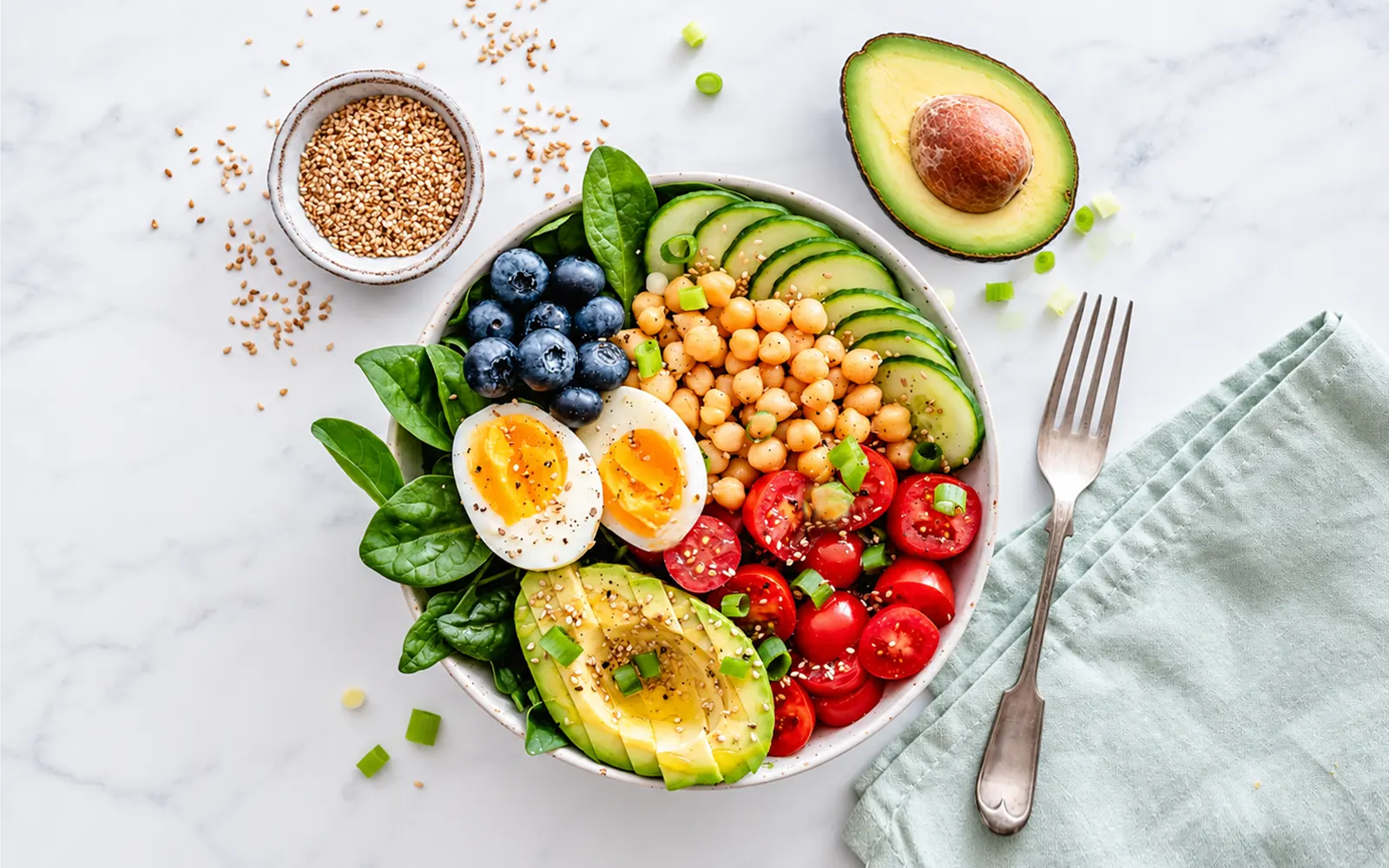

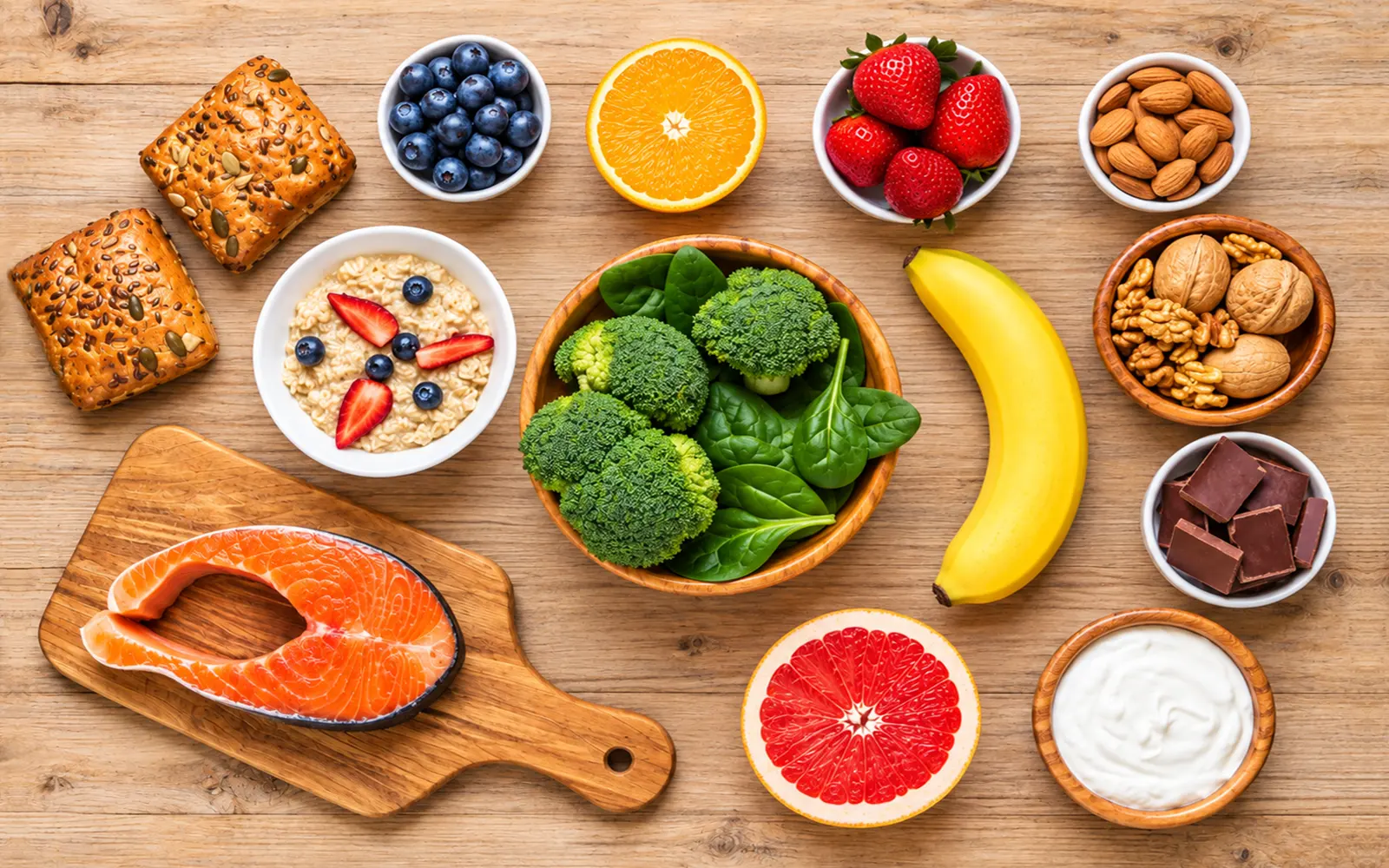








The idea of a “brain food” is appealing.
Eat blueberries for memory.
Walnuts because they look like a brain.
Fish for omega-3s.
Leafy greens to stay mentally sharp.
Take the right supplement and protect yourself from cognitive decline.
There is some legitimate science behind several of these foods and nutrients. But when nutrition research is viewed as a whole, a more useful conclusion emerges:
The brain appears to benefit less from one exceptional food than from a consistently nourishing way of eating that also supports the heart, blood vessels, metabolism, and overall health.
That may sound less exciting than discovering a miracle ingredient, but it gives us something much more valuable: practical choices we can actually use.
A major systematic review conducted for the 2025 Dietary Guidelines Advisory Committee examined 83 studies on diet and cognitive outcomes. It concluded, with moderate-strength evidence, that dietary patterns higher in vegetables, fruits, legumes, nuts, fish or seafood, and unsaturated plant fats—and lower in red and processed meats and sugar-sweetened beverages—are associated with lower risk of age-related cognitive decline, mild cognitive impairment, dementia, and Alzheimer’s disease.
That does not mean diet can guarantee that someone will avoid dementia.
It means we know enough to make food choices that are favorable to cognitive health without pretending we know more than we do.
The Brain Is Not Separate From the Rest of the Body
When people think about cognitive health, they often imagine neurons, memory centers, and brain chemistry.
But the brain is also an extraordinarily active organ dependent on a constant blood supply.
Blood vessels deliver oxygen and glucose.
Cardiovascular health affects cerebral circulation.
Blood pressure matters.
Blood glucose matters.
Cholesterol matters.
Stroke and small-vessel disease can damage brain tissue.
The National Institute on Aging specifically emphasizes the connection between cardiovascular and cognitive health and recommends attention to conditions such as high blood pressure, diabetes, and high cholesterol as part of supporting brain health.
The 2024 Lancet Commission on dementia prevention likewise identifies several potentially modifiable factors related to vascular and metabolic health, including hypertension, high LDL cholesterol, diabetes, obesity, physical inactivity, smoking, and excessive alcohol use.
This gives nutrition a role that is both important and realistic.
Food may support the brain partly by helping support the systems that keep the brain supplied, metabolically stable, and structurally healthy.
Eating for brain health is, to a considerable extent, also eating for cardiovascular and metabolic health.
“The most useful ‘brain diet’ may not be a special diet at all, but a consistent way of eating that supports the blood vessels, metabolism, nutrient needs, and overall health on which the brain depends.”
The Strongest Evidence Is About the Whole Diet
Nutrition science has spent decades investigating individual nutrients.
Vitamin E.
Omega-3 fatty acids.
B vitamins.
Antioxidants.
Flavonoids.
Each is biologically interesting.
But research repeatedly points back toward the overall diet.
The USDA’s comprehensive review found that dietary patterns associated with more favorable cognitive outcomes generally shared several characteristics: more vegetables, fruits, beans or legumes, nuts, fish or seafood, and unsaturated fats, with less red and processed meat and fewer sugar-sweetened beverages.
Notice what is absent from that conclusion.
There is no requirement to eat one particular berry.
No special oil is guaranteed to protect memory.
No single nutrient is presented as the answer.
Instead, many ordinary foods work together to create a diet that provides fiber, healthy fats, vitamins, minerals, protein, and a wide range of plant compounds while also helping support cardiovascular and metabolic health.
That is a far more useful way to think about food and the brain.
Mediterranean and MIND Eating Offer Useful Models
Two dietary approaches appear frequently in brain-health research: the Mediterranean diet and the MIND diet.
Mediterranean-style eating emphasizes vegetables, fruits, legumes, whole grains, nuts, fish, and unsaturated fats such as olive oil while giving red meat, sweets, and highly refined foods a smaller role.
The MIND diet—short for Mediterranean-DASH Intervention for Neurodegenerative Delay—combines elements of Mediterranean and DASH-style eating and places additional emphasis on foods such as leafy green vegetables and berries.
Observational research has repeatedly associated stronger adherence to these approaches with slower cognitive decline or lower dementia risk. The National Institute on Aging describes both as promising but emphasizes that the evidence is not conclusive.
That qualification became especially important after a three-year randomized trial involving 604 cognitively healthy older adults at increased dementia risk.
Participants assigned to the MIND diet improved slightly on cognitive testing—but so did participants in the comparison group who received dietary counseling and mild calorie restriction. The difference between groups was not statistically significant, and MRI measures also did not differ significantly.
That does not mean the MIND diet failed as a healthy diet.
It means we should not claim that following its exact rules has been proven to prevent cognitive decline.
The practical lesson is more durable:
Mediterranean- and MIND-style eating give us useful examples of the kinds of foods that repeatedly appear in research on healthier cognitive aging, even though no named diet has been proven to make dementia impossible.
Vegetables Deserve a Regular Place on the Plate
Vegetables appear consistently in dietary patterns associated with better cognitive health.
That makes biological sense. They contribute fiber, potassium, folate, carotenoids, polyphenols, vitamins, and numerous other compounds.
Green leafy vegetables receive particular attention in MIND-diet research.
Large observational studies have associated higher intake of green leafy, cruciferous, and other deeply colored vegetables with slower cognitive decline, although observational data cannot prove that the vegetables themselves were solely responsible.
Randomized trials examining fruits and vegetables have also reported improvements in certain measures of memory and attention, although the evidence base is still relatively small and varied.
For everyday eating, the conclusion does not need to be complicated.
You do not have to find the most neuroprotective vegetable.
Eat vegetables regularly, include variety, and allow them to occupy a meaningful part of meals.
That is more defensible than chasing a particular “brain vegetable.”
Berries Are Interesting—but They Are Still Food, Not Medicine
Berries attract attention because they contain anthocyanins and other polyphenols that have been investigated for effects on vascular function, oxidative stress, signaling pathways, and cognition.
Some trials and observational studies are encouraging.
But there is not enough evidence to say that eating blueberries—or any other berry—prevents Alzheimer’s disease.
That does not make berries unimportant.
It puts them in the right perspective.
Berries are nutrient-dense fruits that can contribute fiber, vitamins, and plant compounds within an overall healthy diet.
If you enjoy them, they are an excellent choice.
If you do not, cognitive health does not depend on forcing yourself to eat blueberries.
Other fruits remain valuable.
This distinction matters because nutrition becomes less useful when one food is elevated above the way of eating that surrounds it.
Fish Has More Evidence Than Most Individual “Brain Foods”
Fish deserves somewhat more attention because the association with cognitive health has been studied extensively.
A 2024 meta-analysis of 35 observational studies found that people reporting higher fish consumption had lower observed risks of cognitive impairment, dementia, and Alzheimer’s disease than those reporting the lowest intake, although results varied across studies.
A newer 2026 systematic review likewise found that regular fish consumption was often associated with better preservation of several cognitive domains, although findings were not uniform and the evidence remained observational.
Fish contributes protein, vitamin B12, selenium, and—depending on the species—EPA and DHA omega-3 fatty acids.
DHA is an important structural fatty acid in the brain, which has led naturally to the question:
If fish appears beneficial, why not simply take fish-oil capsules?
The answer illustrates an important principle in nutrition.
Eating Fish and Taking Omega-3 Capsules Are Not the Same Question
Observational studies of fish consumption are generally more encouraging than clinical trials of omega-3 supplementation for cognitive protection.
A 2024 systematic review examining omega-3 supplementation trials found that most studies in cognitively healthy people, people with mild cognitive impairment, and people with Alzheimer’s disease did not demonstrate substantial cognitive benefit; the authors concluded that the evidence does not support general omega-3 supplementation as an established strategy for Alzheimer’s prevention.
A newer overview of systematic reviews found a statistically significant but small average cognitive benefit from omega-3 supplementation, while emphasizing that results remain heterogeneous and that larger, better-targeted trials are needed.
So the practical conclusion is not:
Omega-3s don’t matter.
It is:
Eating fish as part of a healthy diet has stronger real-world support than assuming an omega-3 supplement can reproduce all of the benefits associated with that food pattern.
Fish brings more than isolated fatty acids.
And people who eat fish may also be replacing other foods.
Nutrition happens through substitutions as well as nutrients.
Nuts, Beans, and Whole Grains Support the Same Direction
Nuts, legumes, and whole grains appear repeatedly in dietary patterns associated with better cognitive outcomes.
Each contributes something different.
Nuts provide unsaturated fats, fiber, minerals, and plant compounds.
Beans and lentils provide protein, fiber, potassium, folate, slowly digested carbohydrate, and other nutrients.
Whole grains retain more fiber and micronutrients than highly refined grains.
There is no compelling reason to declare one of these foods the superior brain food.
Their importance comes from what happens when they become regular parts of the diet—and what they replace.
Beans replacing processed meat.
Nuts replacing chips.
Oatmeal replacing a highly sweetened breakfast food.
Whole grains replacing some refined grains.
These substitutions improve the quality of the diet while supporting cardiovascular and metabolic health, which in turn is relevant to cognitive health.
Unsaturated Fats Make More Sense Than Fear of Fat
The brain itself contains substantial amounts of lipid, but that does not mean simply eating more fat improves brain function.
The useful distinction is the type and source of fat.
Dietary patterns associated with better cognitive and cardiovascular outcomes generally emphasize unsaturated fats from foods such as fish, nuts, seeds, and plant oils while giving saturated-fat-rich foods a smaller role. The USDA cognitive-health review specifically included unsaturated vegetable oils and fats among the characteristics of patterns associated with lower cognitive risk.
This is another place where brain-health eating looks remarkably similar to heart-health eating.
That overlap is probably not accidental.
What About Ultra-Processed Foods?
Research on ultra-processed foods and cognition is newer than the evidence surrounding cardiovascular disease or diabetes, but the direction is concerning.
A 2026 systematic review found that most included studies reported an association between higher ultra-processed-food intake and poorer cognitive outcomes, including memory, executive function, cognitive decline, mild cognitive impairment, or dementia. However, the authors emphasized that much of the evidence remains observational and that methodological differences prevent firm causal conclusions.
Earlier meta-analyses also associated high ultra-processed-food intake with dementia risk, although results showed substantial heterogeneity.
This fits with what we established in our discussion of processed foods more generally.
Frozen vegetables are not the concern.
Canned beans are not the concern.
Plain yogurt is not the concern.
The more relevant issue is a diet dominated by sugary drinks, highly refined snacks, packaged sweets, processed meats, and other foods that can displace vegetables, fruits, legumes, whole grains, nuts, fish, and other nutrient-dense choices.
For cognitive health, as for general health, the practical goal is to keep ultra-processed foods from becoming the foundation of the diet.
Vitamin B12 Shows Why Adequacy Matters More Than Megadoses
Not every nutritional issue is about long-term dietary patterns.
Sometimes a specific nutrient genuinely matters.
Vitamin B12 is required for normal development and function of the central nervous system and for the formation and maintenance of myelin, among other roles.
Deficiency can produce neurological symptoms and should be identified and treated appropriately.
This is particularly relevant because B12 absorption can become less efficient in some older adults, and certain gastrointestinal conditions and medications can increase deficiency risk.
But here is the important distinction:
Correcting a deficiency and taking extra vitamins when you are already sufficient are not the same thing.
NIH’s Office of Dietary Supplements reports that randomized trials generally have not found that vitamin B12 supplementation—alone or with other B vitamins—improves cognitive function or prevents dementia in older adults who are not benefiting from correction of an actual deficiency.
This is a good example of how nutrition should be understood.
Enough is essential.
More is not automatically better.
Do Multivitamins Help the Aging Brain?
Recent multivitamin research deserves mention because the findings are more encouraging than many previous supplement trials.
Across several COSMOS randomized studies involving more than 5,000 older adults, daily multivitamin/mineral supplementation produced modest improvements in global cognition and episodic memory compared with placebo.
That is interesting evidence.
It is not evidence that multivitamins prevent Alzheimer’s disease.
A related analysis found no statistically significant reduction in new cases of mild cognitive impairment or dementia during three years of follow-up, although the trial had limited statistical power for those outcomes.
The distinction is worth preserving.
A daily multivitamin may eventually prove useful for some older adults as one component of nutritional adequacy.
It should not be advertised as dementia insurance.
And it certainly should not replace a nutritious diet.
More Supplements Do Not Mean More Brain Protection
The supplement aisle can make cognitive health look like a biochemical shopping problem.
Omega-3.
B12.
Vitamin D.
Antioxidants.
Herbal extracts.
“Memory formulas.”
“Brain support.”
“Focus blends.”
The National Institute on Aging remains appropriately cautious: no vitamin or supplement is currently established as a reliable way to prevent Alzheimer’s disease or age-related cognitive decline, even though particular products and nutrients remain under study.
That conclusion is important because supplements can create an illusion of precision.
A capsule contains a measurable quantity of a specific substance.
But cognitive aging is influenced by vascular health, genetics, physical activity, sleep, hearing, social engagement, education, metabolic health, smoking, alcohol exposure, depression, brain disease, and many other factors.
No nutrient exists outside that larger biology.
Alcohol Is Not a Brain-Health Strategy
Older nutrition advice sometimes included moderate wine consumption as part of Mediterranean-style eating.
That should not be interpreted as a reason to begin drinking.
Excessive alcohol use is itself recognized as a modifiable dementia risk factor in the Lancet Commission’s prevention framework.
There is no need to add wine in pursuit of cognitive health.
The beneficial features of Mediterranean-style eating—vegetables, legumes, whole grains, nuts, fish, fruit, and unsaturated fats—remain completely available without alcohol.
What Nutrition Can Tell Us With Reasonable Confidence
After separating stronger evidence from the more speculative claims, the useful message becomes surprisingly straightforward.
For supporting long-term cognitive health, the evidence favors a diet that regularly includes:
- Vegetables, including leafy greens and a variety of colors.
- Fruits, with berries as one good option rather than a requirement.
- Beans, lentils, and other legumes as regular sources of fiber and protein.
- Whole grains in place of more highly refined grains when practical.
- Nuts and seeds as nutrient-dense sources of unsaturated fat, fiber, and minerals.
- Fish and seafood, particularly as alternatives to some processed or red meat meals.
- Unsaturated plant fats, while keeping saturated-fat-heavy foods in a smaller role.
- Fewer sugar-sweetened beverages, processed meats, and ultra-processed foods as everyday staples.
- Adequate essential nutrients, including attention to vitamin B12 when deficiency risk is present.
This does not require following a perfect MIND score or importing special “brain foods.”
It looks remarkably like a high-quality diet for the rest of the body.
That is one of the most important conclusions in the entire subject.
What Nutrition Cannot Promise
Diet matters, but its limits should be equally clear.
Nutrition cannot tell us that a person who eats perfectly will never develop dementia.
It cannot guarantee that someone with a poor diet will develop it.
It cannot reliably reverse Alzheimer’s disease through food.
It cannot identify one fruit, vegetable, oil, fish, or supplement that protects the brain by itself.
And it cannot reduce cognitive health to what appears on a dinner plate.
The 2024 Lancet Commission emphasizes that dementia risk develops through many interacting influences across the lifespan. Nutrition is one modifiable piece of that larger picture, not the whole explanation.
This is not a reason to dismiss nutrition.
It is a reason to use it intelligently.
Think About the Brain When You Think About Blood Pressure and Blood Sugar
One of the most practical changes in perspective is to stop imagining brain health as something separate that begins in old age.
Supporting healthy blood pressure in midlife matters to the brain.
Supporting normal glucose regulation matters.
Avoiding smoking matters.
Maintaining physical activity matters.
Managing cholesterol matters.
Nutrition contributes to several of these pathways.
That means the meal choices made for cardiovascular and metabolic health may also be helping protect the environment in which the brain has to function for decades.
A vegetable-rich meal is not just “feeding neurons.”
It may be helping support blood pressure, vascular health, glucose regulation, weight management, and nutrient adequacy at the same time.
The brain benefits from the same body those choices are supporting.
Make Brain-Healthy Eating Ordinary
Perhaps the least useful way to approach cognitive nutrition is to wait until memory becomes a concern and then begin searching for specialized brain foods.
A better approach is to make ordinary nutritious foods normal much earlier.
Keep vegetables and fruit available.
Use beans and lentils regularly.
Choose whole grains often.
Snack on nuts instead of always reaching for refined snacks.
Eat fish if you enjoy it and it fits your diet.
Use unsaturated fats as your usual fats.
Keep sugary drinks and heavily ultra-processed foods from dominating.
Address a real nutrient deficiency when it exists instead of assuming that more supplementation is always protective.
These choices may not feel dramatic.
That is precisely why they are sustainable.
Cognitive health develops over decades.
It makes sense that the nutritional approach most likely to support it would also be built over decades.
Food Can Support the Brain Without Becoming a Cure
Nutrition research will continue to identify particular nutrients, foods, and biological pathways that may influence cognitive aging.
Some findings will become more convincing.
Others will fade when tested in larger trials.
But we do not have to wait for every question to be resolved before making sensible choices.
We already have moderate evidence that diets emphasizing vegetables, fruits, legumes, nuts, fish, and unsaturated fats—and containing less processed meat and sugary beverages—are associated with better cognitive outcomes.
We know cardiovascular and metabolic health matter to the brain.
We know genuine nutrient deficiencies should be corrected.
And we know no single food or supplement has been shown to guarantee protection from dementia.
That gives us a conclusion that is both cautious and practical:
Feed the brain by supporting the whole body that keeps it alive.
“The most useful ‘brain diet’ may not be a special diet at all, but a consistent way of eating that supports the blood vessels, metabolism, nutrient needs, and overall health on which the brain depends.”
That is less about finding the perfect brain food and more about making better food decisions often enough that they become part of everyday life.
Nutrition and Health Disclaimer
This article is intended for general educational purposes and is not individualized medical, nutritional, or cognitive-health advice. Memory changes and cognitive symptoms can have many causes, including medication effects, vitamin deficiencies, sleep disorders, depression, thyroid conditions, neurological disease, and other medical problems. New, persistent, or worsening cognitive changes should be evaluated by an appropriately qualified healthcare professional rather than treated through diet or supplements alone. People with medical conditions affecting nutrition or absorption should seek individualized dietary guidance.